Category: Royals & History

  • Harry Windsor and the Poisoned Chalice

    Christmas Day when I was twelve was made hideous by my younger sister’s tantrums all day because she thought I had one more walnut than she had had in our Christmas stockings. I had four, and she had three. The next day the fourth walnut was found under her bed where it had rolled.

    I was reminded of this when I read Harry, ‘Prince of England’, as he calls himself, sharing his angst with the world over the time William had three sausages and he had only two, while his older brother had a bigger bedroom than he.

    Like my poor sister, he has drunk deep of the poisoned chalice of jealousy and envy.

    Five years after the Walnut Debacle, my headmaster at boarding school was writing to my father that my sister was obsessed with jealousy of me, as a reason for some of the mayhem she was creating.

    Disturbed  children with painful backgrounds rarely do well at school, and Harry is a classic example. 

    But unlike my sister who had lost our mother at age five, and with a father fighting in North Africa and then Italy, and no family, Harry was surrounded by love, with not just a very concerned father, but devoted grandparents, aunts, loving cousins, a friend and companion in lieu of a nanny appointed to always be there for him, and various dedicated military men who made it their business to mentor him.

    With all this love and support Harry is still stuck in self pity and victimhood, and is still possessed of a burning sense of injustice that he didn’t get the same goodies as his brother.

    He says he’s done lots of therapy (with that same brother’s support, he tells us) to move on from the grief of losing his mother – though he doesn’t acknowledge that his attitude towards his brother is jealousy.

    But therapy is designed to help people cope better with their problems and their lives, and not to change their personalities. Unfortunately Harry’s personality has been revealed to us in his autobiography, his interviews and self-indulgent films for Netflix.

    And his real self is not a pretty sight. Perhaps the most extraordinary aspect of the Harry saga is his level of ingratitude. Rules have been broken for him, strings pulled, excuses made, cover-ups concocted either to explain away his behaviour or to get him what he wants.

    Somehow he scraped into Sandhurst with two questionable A levels, and somehow got through the four to five day long officer selection board during which time a team of senior officers watch, note and assess every aspect of a candidate’s behaviour. 

    During my assessment at Westbury, I still remember the unnerving sound of the officers scribbling their notes on their mill boards throughout all the test sessions, inside and out.

     I remember a question right out of left field – what book are you reading at the moment? Fortunately the book I was reading was also being read by the Colonel at that moment too, and we had an amicable chat – what books would Harry have been able to list:  ‘How to look after a polo pony,’  or a: ‘ Guide to choosing in-offensive fancy dress’?

    Luckily the experienced staff sergeants and sergeant majors at Sandhurst have nursed  kings and princes from many countries through the Academy, from Jordan, Oman, Dubai, Bahrain, Qatar to Luxembourg, so Harry was in practised hands at Sandhurst.

    Yet during his time in the army he brought it into disrepute when he gained headlines for wild antics –  playing naked pool in Las Vegas, (his CO was not pleased) tossing girls in full evening dress into a stately house swimming pool, (until stopped by the butler) and staggering out of nightclubs barely able to stand up, (supported by a sober military mentor). 

    After being caught smoking cannabis as a teenager, Charles took him to a rehabilitation centre to help him see the long term consequences, yet in 2023 he was recorded as saying 

    that: “psychedelics are a fundamental part” of his life and that he used “psychedelics, ayahuasca, psilocybin, mushroom.”.

    Which leads me to wonder if these mind altering drugs may be responsible for some of his irrational behaviour and vengeful pursuit through the courts of those who incur his displeasure, or who thwart his desires for status and recognition, including round the-clock- police protection.

    The Anglican church broke its rules so Harry could have a big, fat, white wedding like his brother, even though his father had had to make do with a registry office when he married a divorced woman. But after the wedding the green-eyed monster pounced again, when instead of moving into a 20 room apartment like his brother, he had to settle for the same three bedroom cottage that William had used when he was first married.

    The faithful, loyal Duke and Duchess of Gloucester were turfed out of the 20 room apartment in Kensington Palace where they had lived for 47 years so Harry could move in. But his new wife preferred Windsor Castle – the Queen gave them a five bedroom cottage in the grounds instead.

    In his book Spare, Harry details his rows and disagreements with his brother and sister-in- law, and the annoyance of the ‘grey men in suits’ who were trying to keep his circus on the road, and disguise his irresponsible behaviour, as they had been doing ever since Harry had left school  – hard work for them, but which Harry felt was obstruction and interference. 

    And now he has removed himself from behind that shield of help and protection, the world has seen who and what the real Harry is. And the strange thing is that Harry himself has revealed it, reminiscing about his school days when he mocked a disabled teacher at school as she made her way painfully backwards down the stairs, and disparaging the first girl he had a sexual experience with.

    It’s an absolute taboo in the forces to mention lives lost in combat, but Harry boasted of killing 25 Taliban who probably had wives and children like him, describing shooting them from a helicopter.

    As Captain General, an honour he inherited from the Duke of Edinburgh, he skipped the  memorial service for Royal Marines who were killed in the 1989 Deal barracks IRA bombing, a tone deaf dereliction of duty, in order to posture at the Lion King premier with his wife, and angle for work for her.

    And since his departure from Royal duties, this person who didn’t even have the courtesy to speak to or visit to tell his future father-in-law he was marrying his beloved daughter, has undermined, maligned, lied about and sabotaged his own family.

    He has colluded with his wife, who has fuelled his jealousy, in a campaign of revenge for all his imaginary injustices and has become a professional victim in which his steadfast family, the grey men, the press, the legal system and anyone else who thwarts him are villains out to get him. In the years since he married, the party-loving, rebel young prince has morphed into a resentful, tone-deaf, middle-aged man exuding self-righteous, offended dignity

    Many commenters keep quoting the Prodigal Son as grounds for forgiving and welcoming Harry back into the family. But they miss the point about being forgiven. The Prodigal Son had repented, but Harry doesn’t think he’s done anything wrong. 

    Instead, he’s demanded apologies from the family he told radio listeners during his engagement had welcomed Meghan, and had become: “the family she had never had.”

    (Never mind the father and uncles who’d paid for, supported and loved her.)

    My husband has a saying you can’t fix stupid, which puts me in mind of the ancient Sufi 

    adage: ‘He who knows not and knows not that he knows not, is stupid – avoid him.’

    The next line is: ‘He who knows not and knows that he knows not is ignorant – teach him’.

    But sadly no-one seems to have been able to teach Harry anything. 

    He remains in a permanent state of not knowing and unawareness, and permanently too, in the claws of the green-eyed monster. Like my late sister he will probably be unable to escape this misery for the rest of his life. As Quaker William Penn said, “The jealous are troublesome to others, but a torment to themselves.” 

    Food for threadbare gourmets

    I’m always fascinated by chefs and the like who disclose what are the staples that they always keep in their larder or pantry, aside from the obvious like bacon and eggs. For me, this is virgin olive oil, pasta, tins of tomatoes and parmesan in the fridge.

    When there’s nothing ready to eat in the fridge, and there’s no flicker of inspiration, these handy ingredients are the answer. Chopped fresh or tinned tomatoes are gently fried in the olive oil while the pasta is cooking, and parmesan grated. When the pasta is ready, tip it into the tomato mixture, toss it together, and sprinkle the parmesan on each  helping.

    Torn shreds of fresh basil are delicious if you have fresh basil on hand. I cook the pasta in cold water, a la Nigella Lawson, and find it avoids the dreaded clumping as long as it’s given a stir every now and then.

    Food for thought

    Those who do not have power over the story that dominates their lives, power to retell it, to rethink it, deconstruct it, joke about it, and change it as times change, truly are powerless because they cannot think new thoughts.

    Salman Rushdie
  • California Markled

    Whistleblowers are traditionally punished for whistling, and when I first wrote about M. Markle back in the distant day, one reader castigated me as bitchy. Another said I had skewered my victim with the accuracy of an Exocet missile.

    The story began of course, back in the dark ages of 2018, with the engagement interview and later at a meeting of the Fab Four, with her information for us all that she was going to hit the ground running (part of her campaign to bring the 1000 year old monarchy up to date.)

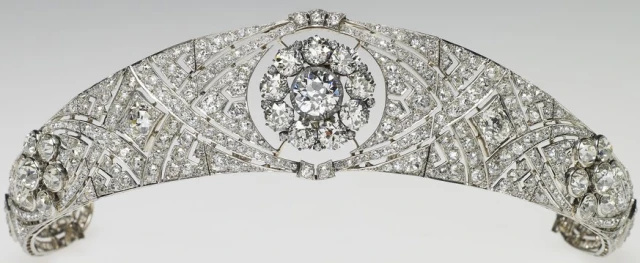
    Then the strange saga began – first with what we all know as Tiara – Gate, when Harry pronounced the immortal words – “what Meghan wants, Meghan gets.” But she didn’t – instead of the tiara feared to have Russian links which might trigger an international incident (with Putin over a tiara?) the poor bride had to settle for the magnificent diamond bandeau tiara, especially made for Queen Mary in 1932, and this Queen Never wore jewellery that wasn’t magnificent.

    Next came the Tragedy of the Tights – with tiny bridesmaids having to wear bare legs in new shoes ( sore, blister creating ) instead of traditional white tights, and Princess Catherine three weeks out of childbirth and difficult pregnancy, getting stick, either for causing our heroine to cry according to Markle herself, or the postnatal mother with two other under fives to cope with, to cry . 

    Private emails later published unforgivably by a duplicitous Harry who didn’t realise how tough they made his wife sound, show a rather uncompromising Markle berating Catherine for not joining all the other mothers for fittings. Later Markle, during a tour of South Africa whinged about being vulnerable as a mother during and after birth, but this had never occurred to her when relating to a fragile Catherine who suffered hyperemesis gravidarum throughout her pregnancy – nasty morning sickness for nine months, (I know what it’s like )

    Then there was the Mystery of the Invisible Family. No “Daddy” (as she later called him to “wring the public’s heart”, she wrote to Jonathan Knauf about her father spat), no uncle who wangled an internship for her at the embassy in Argentina, (didn’t last long as she failed the exams ) no bishop uncle, no brother or sister or extended family who figure in old family photos. All Markled.

    Just Doria, the absent mother during her childhood when her father brought her up, and a parade of Hollywood names like Oprah Winfrey and the Clooneys who admitted they’d never met Markle.

    All the rules were bent for Harry and his American bride – King Charles and Camilla were not allowed to marry in a church as Camilla was divorced, just the registry office for them – but touchy Harry got his way, and the Church of England broke its own rules and laid on the  works for divorced Meghan Markle.

    She went full on, dressed like a Royal virgin bride, and inserted into the lovely Anglican ritual the top, African American, activist bishop who overran by his stipulated five minutes with a full blown radical rant of over fifteen minutes, railing about poverty, racism and war. She organized a gospel choir who performed ‘Stand by me’, and a beautiful black English teenage cello player also performed in the church.

    As she stepped out of the Rolls Royce once used by the Duchess of Windsor on her way to the Duke’s funeral, she slapped aside the helpful hand proffered by a royal attendant, and processed into the St George’s alone, until met by a courteous Prince Charles who escorted her to the besotted groom.

    Afterwards they danced and partied into the night accompanied by their new Hollywood mates, while Harry’s besties and old school friends were left out of this jolly, a telling hint of things to come… the first obvious Markling, though we may have missed the other less important dropped buddies, like Liz Cundy and Piers Morgan.

    Later, in the notorious Oprah interview sprinkled with lies and barbs directed at the family which had welcomed them, broken all its long established rules, and given them a 30 million wedding, a house, and significant marks of good will, M. Markle described the ‘framed’ document hanging on the wall of their Montecito home, which was the certificate of their ‘secret wedding’ three days before the spectacle put on for the peasants and hoi polloi.

    She described how they ‘called up’ the Archbishop of Canterbury ( I could just imagine this ‘woke’ smug prelate pulling up his episcopal skirts and running over to Kensington Palace to do their bidding) to come round and marry them in the garden. He was obliged to disown his part in this imaginary ceremony, saying that to have done so would have been a criminal act, with no license, no witnesses etc etc.

    To my knowledge no one has called them out on this story and asked to see the ‘Framed Certificate’.

    Before they flounced off on what eco-warrior Harry called “their Freedom  Flight” on yet another private jet, ( they always use private jets, while the Wales fly commercial on private trips and business class on official trips) M. Markle had managed to ruffle a good few feathers, and incurred much ridicule too, including the time she wrote uplifting messages on bananas to give to female street sex workers in Bristol.

    Later it wasn’t ridicule, but disbelief and then rage at her misuse of power in a way that no Royal had ever done before – showing her contempt for the ordinary Brit, when she had forty dedicated tennis watchers turfed out of the Wimbledon seats they had queued and paid for, so she could sit in splendid isolation with two friends, showing off to them how powerful and special she was.

    Catherine tried to mend matters by taking her to the tennis with Pippa the following day, but even then, M Markle refused to conform with the formal dress code, but shuffled in wearing over – long trousers and a casual striped shirt. When Oprah questioned her, she denied that Catherine had been helping her defuse the scandal.

    Sadly she even manipulated royal aides to unknowingly lie to the public when she allowed them to announce the birth of her son, while she’d already gone home from hospital with him three days before.

    Everything she did seemed to demonstrate her contempt both for the ancient Royal institution and for the ordinary and openhearted Brits who had welcomed her so warmly a few years before. And it seemed as though she just didn’t ‘get’ what the institution was about.

    She was recorded on their Australian tour saying as people shook hands with her:

     “I can’t believe I’m not getting paid for this”.

    When she and her “Prince of England ” as he pompously described himself in a recent interview, left the country in 2020 they castigated the Brits, and the Royal Family as racist and victims of ‘unconscious bias.’ Meghan Markle had lasted one year and eight months in England.

    Ensconced in California, opening her heart – if she had one – to Oprah Winfrey, she claimed she had been silenced, she had had to give up her car keys and her passport  – so how did she manage to slip out for Serena Williams’s ( slow motion Markling in progress?) gift of a $400,000 to $500,000 baby shower in New York, and holidays with the Clooneys and Elton John at their Mediterranean villas?

     Harry told us he found her weeping on the floor because she was so desperate during pregnancy –  (what was wrong with sofa or a bed, I’ve used both for that purpose) and she recounted how close to suicide she became. At the same time she was guest editing Vogue magazine at her own request, working with her buddy Edward Enninful (since Markled) and designing stuff for Dress Smart – a women’s charity. What a woman !

    Since then, her mockery of the loving and beloved Queen with her infamous courtesy and war of words – including a shot at the Queen – ‘We can all live lives of service. Service is universal;’ her continual attempts to one up Princess Catherine, trying to steal her thunder every time Catherine wows the public in a gold dress, or climbs a mountain or two; putting out pictures of the back of her children’s heads as soon as Catherine issues an anniversary photo or announcement, and her strange undignified stunts like twerking in the delivery room, or leaping into a swimming pool on her birthday, have not endeared her to critics like me.

     For six years now she has carried on her vendetta against the blameless family she obviously despises, never missing an opportunity to undermine them, even boasting to the magazine The Cut that she’d never been asked to sign an NDA, as though she didn’t recognise that the family had never expected her to bad-mouth, undermine and lie about them to the world. Decent people don’t either air or invent dirty family linen to expose to the outside world, never mind the whole world.

    Is her penchant for making her daughter walk barefoot in crowded places like Disneyland where thousands of people walk and spit out their chewing gum, or in a garden centre on the gravel, or on the grass at Montecito with beetles or bugs underfoot, meant to demonstrate what a carefree informal life her children enjoy, compared to the immaculate Wales children? Is the daughter’s unkempt untrimmed hair ending in rats-tails some gesture to show what freedom they all have? Beats me.

    This diatribe about one of the world’s most disliked women according to some polls has allowed me to get my disgust of this strange, compulsive liar and poseur off my chest.

    Good thing I am too unknown and insignificant to be Markled like so many of her besties like poor Jessica Mulroney, or sued like so many of her other critics. 

    And now California has been Markled. For how long I wonder.

    England is cold and wet or dry and too hot, depending on climate change, while California is warm and sunny, and swarms with minor celebrities who would willingly gush over a faux duchess. I don’t think England need worry for long about the return of the Markles.

    Food for Threadbare Gourmets

    Since I learned that older women ( like me) need a lot more protein than younger women, I’ve become an authority on protein counts in food, as opposed to calories.

    One of my favourite staples after learning this blinding piece of intelligence, are green Puy lentils  – so delicious I can eat them on their own, but just as good as an accompaniment to salmon, chicken or just fried onions and mixed vegetables- even sausages.

    No soaking needed. Just a wash. Fry gently an onion, stick of  celery and a finely chopped carrot in olive oil. Cook until soft, then add a clove of chopped garlic, and fry for a minute. 

    Then add a cup of lentils, three cups of chicken stock, a bay leaf, two sprigs of thyme or  some dried thyme, salt and black pepper, and simmer until the lentils are soft and have absorbed all the liquid, about 25 minutes. If the lentils are still firm and the liquid is all absorbed, add a little more and cook till the lentils are soft but firm, not mushy.

    Take out the bay leaf and thyme sprigs and serve. I often have plenty left over, and re-heat in the microwave with added knobs of butter, or a splurge of virgin olive oil to keep the lentils lubricated.

    Food for Thought

    There are three forms of culture; worldly culture, the mere acquisition of information; religious culture, following rules; elite culture, self-development.

    Sufi Master  -Revelation of the Veiled

  • Gossip and gaiety – a Kaleidoscope of Extraordinary Lives

    When my husband and I became an item he told his friends to look me up on the internet.

    One of them said to me that she’d never known anyone who figured on the internet before, and this prompted me to search my memory for people I knew who were described on the internet.

    It turned out there were an awful lot – thanks partly to a career in journalism when I’d interviewed some amazing people..

    Leaving aside the privilege of interviewing celebrities who were masters in their field, like Dr Spock and Dr Seuss, wonderful ballet dancer Robert Helpman, and David McTaggart, founder of Greenpeace, who I interviewed in Auckland harbour as he set sail on his first protest voyage to the French nuclear tests in the Pacific-  the first story about Greenpeace – there were other categories .

    There were the fascinating interviews with people like the Maori Queen, novelist Iris Murdoch and Aborigine tennis champion, Yvonne Goolagong.

    There were the’ encounters’  – connecting through a best friend, with eccentric author, Barbara Cartland who wrote 723 books,  chatting with Sir Edmund Hillary at a fundraising lunch for his local surf  club, and watching as all eyes were riveted on the tall figure of Raine Spencer, Barbara Cartland’s daughter, and later Princess Diana’s reviled and then beloved stepmother, as she walked across the dining room at the Eagle’s Nest in the Hilton in Hongkong to talk to me. She had huge blue eyes, a complexion like porcelain, and oozed beauty and charm. 

    There was a conversation with Princess Alexandra, the Queen’s cousin at Government house, when  she asked me how I coped as a solo mother and a full time journalist.

    Prince Phillip joked about working above the shop, ( Buckingham Palace) when I told him I worked from home, and then on board Britannia there was the Queen, another woman with big blue eyes, and porcelain complexion.

     She was asked by a fellow journalist when we were talking, what Kava, the Fijian drink she’d just sipped in the Islands, was like.

    She was about to tell us, when she suddenly realised she would offend the people of Fiji, so she quickly quipped – ‘like a nice cup of tea.’

    And then there were the friends, and when I looked them up on Google, I realised what amazing lives so many of them had lived.

    Nicholas Groves – Raines was a lanky school mate when I knew him in the early fifties, famous at school in the Cameron Highlands in Malaya  for catching numbers of what were known as buzz bombs. Big sticky beetles with large clicking wings which made a piercing buzzing sound as they flew. After storing them in matchboxes, he released them one morning during assembly, and we all shrieked and ducked and covered our heads with our hymn books to avoid the weirdly buzzing panic stricken creatures blundering around, getting tangled in our hair. 

    His google entry describes this mischievous youth as

     ‘an acclaimed Scottish architect and conservationist renowned for rescuing and restoring ruined and neglected historic buildings across Scotland.  He has been celebrated for saving more significant historic listed buildings in Scotland than any other private individual. In 2017, he was awarded the Lifetime Achievement Award by the Royal Incorporation of Architects in Scotland.

    Then there was John Blashford – Snell, a young officer cadet, who one lunch time took me punting on the lake at Sandhurst, and when the ancient craft began to sink midlake had to ignominiously tow me back to shore in his now soaking khaki uniform.

    His Google entry describes him as a ‘renowned British explorer, former Royal Engineers officer, and author who has led over 100 expeditions worldwide. Famous for combining adventure with scientific research and humanitarian aid, he founded the Scientific Exploration Society and is the creator of the youth initiative Operation Drake/Operation Raleigh.  

    ‘He led the first successful descent of the Blue Nile in Ethiopia,  mapping the dangerous river and essentially pioneering modern whitewater rafting. He headed the British Trans-Americas Expedition, completing the first-ever vehicular crossing of the notoriously impenetrable Darién Gap swamp and jungle in Panama, and directed the first major scientific navigation of the  Zaire /Congo River, focusing on medical research regarding river blindness.

     The last I heard of him a few years ago in his eighties, he was looking for a medical officer to join him on an expedition to Mongolia!

    Footie was my next famous friend, our lecturer in constitutional history at officer cadet school. Footie’s real name was Edgar Feuchtwanger, but generations of irreverent officer cadets had called him Footie for short. Later he and I became good friends and I loved him.

     His Google entry among other things says Edgar, was a:

    ‘German-born British historian, who died at 100 year old  at his home. As a Jewish child in 1930’s Munich, Feuchtwanger had an intimate view of the rise of the Nazi Party through the daily life of one of his closest neighbors, Adolf Hitler, and wrote the bestseller  “I was Htler’s Neighbour” amongst many other books – ahistorian who was a vocal critic of Hitler and the Nazis.

    A few years later, as a gay giddy twenty year old, John Gouriet swam into my consciousness. 

    He was my best friend’s boyfriend, a captain in the 15/19th hussars, and we had a fun foursome with my cavalry boyfriend. Later when we had all married other people, John became famous “as a right-wing political activist who campaigned relentlessly in the 1970s against what he saw as the abuse of power by trade “…one of these campaigns was known as Operation Pony Express when John organised the delivery of the post when Post Office workers went on strike.        

    In later years, John Adair was the man I wished I had plumped for instead of the other man I was seeing at the time. John’s Google entry describes him as  a British academic who was a leadership theorist and author of more than 40 books (translated into 18 languages) on business, military and other leadership. I knew him when he was a lecturer at Sandhurst, and I was a lecturer at WRAC cadet school, and he was witty and kind and clever and a lovely dancer at summer balls.

    David and Elspeth were friends in Hong Kong when as young marrieds we made a foursome, who since we had amahs to baby-sit enjoyed an interlude of partying, dancing in night clubs and having fun before my marriage broke down, and I lost so many friends. David’s very long Google entry reads in part:

     ‘Sir David Robert Ford, KBE, LVO  was the fifth and the last non-ethnic Chinese Chief Secretary of Hong Kong and Deputy Governor of Hong Kong from 1986 to 1993 and was Hong Kong Commissioner in London until 1997  He was also very briefly Governor before Hong Kong was handed over to the Chinese.’

    Andrew Grima’s Google entry said among other things that he was the most influential jewellery designer of the post-war period, widely regarded as the father of modern jewellery. Prince Phillip commissioned him to make lovely brooches and earrings for the Queen and Princess Anne.

    I interviewed him when he came to buy pearls in Hong Kong, and we became good friends. He introduced me to high society and suddenly I was enjoying witty lunches at the home on the peak of Hong Kong’s then Chief Secretary, and dancing at balls in marble halls. 

    He was a big gentle dark haired man who had started life as an engineer, and on joining his father in law’s firm as an accountant segued into designing beautiful avant garde jewellery which set the tone for modern jewellery, snapped up by high society, pop stars, and everyone in between.

    Too many other distinguished people passed  through my life in Hong Kong to write about – French couturiers, singers, artists, musicians, dancers, writers, even a good, kind and talented diplomat who ended up being lynched on Shanghai station and then imprisoned in the besieged embassy in Peking, and who later became an eminent MP and knight of the realm . In the 60’s Hong Kong was a glamorous and stimulating place. 

     I finally ended up in New Zealand with my two children. Again, this life turned out to be full of fascinating people, among them a woman who became a close friend, Babette Hayes. She was French Syrian and after the war grew up in France and London, before emigrating to Australia. There she electrified Sydney with both her French gourmet cooking and cookbooks, and even more spectacularly  as a pioneer of beautiful creative interior design.

     One of her Google entries describes heras Australia’s first stylist,  recognised for her ground breaking work in magazine styling and her committment to raising standards of interior design and decoration… She loved my house, and photographed it for the Australian magazine Belle.

    Life in NZ was dramatic and traumatic in many ways, and among the extraordinary persons I became close to was probably this country’s blackest sheep, though, when I first knew him, I like everyone else was deceived by his persona- erudite, upright, art connoisseur, statesman, humanitarian. 

    In the end Bill Sutch was discovered to be a Russian spy, and though tried and exonerated in the 70’s, after his death and the crumbling of the USSR and opening the files, it was found that he’d been recruited in New York in the 50’s, when working at the UN at the height of the Cold War. 

    But perhaps the most colourful and incredible life I encountered was an admiral from the First World War. His Google entry merely records his distinguished military service, ending on a mission to Sydney in 1919, but that doesn’t even cover a fraction of his extraordinary life. After his first wife died, he roistered around the world on his yacht until anchoring in the harbour at Monte Carlo in the mid thirties when he was 68. 

    One night a 24 year old blonde socialite slipped off the deck of the yacht moored alongside, and joined the Admiral. Off they sailed, and had four children, besides the two from the Admiral’s first marriage. They rubbed shoulders with the likes of Noel Coward, and the Windsors and Barbara Hutton in the South of France, and after the war, when Monaco  became too expensive, moved to a rambling villa by the sea in a remote fishing village in Spain. They took with them the speed boat given to Clementina, the youngest daughter, after she’d rescued Barbara Hutton’s son from a hideous water skiing accident in the harbour at Monte Carlo.

    When I encountered them the Admiral was 92, Dora, his wife, 54, the two younger children nineteen and eighteen, and their tutor Mark, a fair haired handsome Canadian of 34. He was Dora’s lover, and looked after everyone, and also the wistaria shrouded villa. It was built around a courtyard, with lots of geraniums in big pots and a fountain, and they were all dependent on the ancient Admirals’ dwindled pension.

    The following year everything had changed. 

    The Admiral had died, Dora was in London, and Mark was dead from polio.

    After a delicious affair with one of the James Bonds – Shaun Connery –  beautiful blue-eyed Clementina with waist length fair hair – married a Polish Prince. The eldest son was sailing yachts in the Mediterranean for millionaires, and the youngest son turned the charming villa into an exclusive Mediterranean getaway for aristocratic friends and contacts. Even now it still flourishes as a luxury hide away for the exclusive few. 

    The Admiral’s son by his first wife had died in a Nazi concentration camp after being captured and tortured as an SOE agent, and decorated for valour, while the eldest daughter had married a Spanish nobleman who was shot by Republicans as he opened the front door. She ended up in South America married to a millionaire. The lives of this intrepid family spanned both the world and history..

    As Mae West once said,  “You only live once, but if you do it right, once is enough.” 

    Looking back through my life, I’m amazed at these extraordinary lives. Poet Rupert Brooke wrote a poem ‘These I have loved’… I can’t say I loved all the people in this list of friends, acquaintances and oddities, but I have relished them. 

    And in another poem he says – “happiness crowned the room when you were there and you and you”… and again, I feel that these lives, though I haven’t loved all the owners of them,  have added such fun and fascination and crowned mine. I feel, like Helen Keller ” that so long as the memory of certain beloved friends lives in my heart, I shall say that life is good.”

    Food for threadbare gourmets

    Only sausages in the fridge last night, so I fell back on a postwar childhood recipe.

    It went down a treat.

    Fry pieces of chopped bacon with onion and garlic. Add a tin of tomato baked beans and cooked sausages  chopped into bite sized pieces. I added some tomato puree for extra taste and a little water to lubricate the mixture and served it with mashed potato creamed with lashings of butter and a little cream.

    I had some cooked puy lentils from the night before, so I separated the onion bacon mixture and used the lentils instead of the baked beans for me – very good.

    Food for thought

    “The purpose of our lives is to be happy.” — Dalai Lama

    #lives #history #famous people

  • What princes can learn from frogs

    The last time I wrote on this subject I was called bitchy by someone I like and admire so I’m treading carefully today. I’m referring to the current soap opera that I follow with fascination – no, not the busty beautiful Armenian family who seem to rivet the States, but a family nearer home (mine!)

    The arguments for a republic versus a monarchy are not my domain, but in passing I’d say: do the third of the world’s population who belong to the Commonwealth and accept Elizabeth Windsor as their Queen, really want to swap this benign system for one in which their country is both ruled and represented by a Macron or a Sarkosy, or going further afield, a Berlusconi or a Putin? (I’m sticking resolutely to Europe for these comparisons rather than looking across the Atlantic to another controversial power situation.)

    A minor point would be the sheer expense of changing all the millions of letterheads and signs, from the Royal Mail, to Her Majesty’s forces, even to a commission to serve in the army – I still treasure the wording on mine: “To my trusty and well- beloved”.. So I dip my toe very cautiously into the waters of controversy that I’m probably about to stir up as fiercely as they’ve already been muddied. I have both questions which will never be answered, and thoughts which may well be labelled bitchy again! The world-wide airing of family linen by a woke American TV hostess provoked many of these thoughts, one of which was why didn’t the aggrieved pair who did the shaming and blaming to the whole world, just talk it over with their family?

    It’s fascinating to analyse many of the extraordinary statements made, so many of which turned out to be untrue. The first of which was the smiling bombshell dropped, that the happy couple had had a private and secret ceremony three days before their wedding – that splendid ceremonial ritual for which the Royal family and the British taxpayer paid millions.

    It felt as though Harry’s wife was implying that the spectacle was just for the peasants, but the real thing was their private ceremony, saying they “called up the Archbishop”, conjuring up a picture of the Primate of all England picking up his cassock and scurrying over to their garden for this touching little ceremony. ‘We have the certificate framed and hung on our wall’, she informed her gullible interviewer.

    Well, I’d like to see a picture of this document in its frame, hanging on a wall in California. The Archbishop, interviewed in an Italian magazine, has said that to have conducted such a misleading ceremony without all the required provisos of witnesses, certificates, and legal processes would be “to have committed a serious criminal offence”. So we can all breathe easy, the wedding which millions of people watched with such hope in their hearts Was the real thing, not the sham that Harry’s wife was suggesting. So we were not hood-winked after all. But why did she want to hoodwink us? Did she want us to feel she was too grand to share her vows with the public and family who were paying for it?

    Then there was the brushing away of the question from Oprah that perhaps the new arrival had been welcomed into the family, showing a picture of Catherine and her sister taking Meghan to Wimbledon. ‘Things aren’t always how they look’, said Meghan evasively. No wonder she was evasive. That picture had been taken the day after Meghan had turfed forty tennis lovers out of the seats they had paid for, so she could sit with two friends in grand and conspicuous splendour uncontaminated by the great unwashed. She had sent her security men to forbid two other tennis fans from taking pics of her, the only problem being that one, a former Wimbledon player, was taking a selfie with Roger Federer, as was the elderly immigrant of many years attendance at the matches.

    The next day, Catherine mounted a rescue operation to try to save Meghan’s face. She roped her sister Pippa in, to make it look like a casual girls afternoon together, and they sat among the crowd, Catherine and her sister observing the Wimbledon requirements to dress up, while Meghan just wore a casual shirt and skirt.

    Similarly at their very last engagement in the UK, the Commonwealth Service at Westminster Abbey, when everyone is asked to wear red, white or blue, Harry’s wife ignored the convention, and wore the Kermit green outfit which has since become such a talking point. And strangely all through the service, where the camera focused on the faces of the Royal family listening solemnly and sombrely to the sermon and the service, Meghan is smiling brightly and inappropriately all the way through… why, I wonder?

    There hasn’t been much attention paid to one of the reasons Meghan was accused of bullying, but I find it fascinating. Apparently when Harry had a shooting party at Sandringham for his friends, Meghan had ordered red blankets for each of the guests. The staff got the wrong red, according to statements made about bullying. But why Was Meghan doling out red blankets? Was there not enough bedding in the bedrooms at Sandringham where generations of Royal family had slept? Or did she feel that the decor was so fusty or whatever, that she’d improve it with red blankets? Either way it was a subtle criticism of the Queen’s home, and disrespect for the generous grandmother who had lent it to her grandson.

    And talking of Sandringham, one of the public criticisms of the “family Meghan had never had” in Harry’s words, was that the couple felt unwelcomed. Yet they turned down invitations to spend Christmas at Sandringham with the whole family, and refused to go to Balmoral for the traditional summer holiday with everyone in the family. Instead, Meghan flew to New York for the weekend to watch her friend Serena play tennis.

    The Queen bent every rule she had applied to other engaged members of the family and included Meghan and her mother at traditional family gatherings, including the big Christmas lunch at Buckingham Palace for cousins and more distant family members. The public airing of so many petty grievances, imaginary slights, exaggerated claims and outright untruths was a strange decision for a couple who had said they were leaving their duties and their family in order to enjoy privacy in California.

    These and many other thoughts filter through my mind as I watch the soap opera which continues to play out. The dignity and sadness of Prince Phillip’s passing is once again being muddied by Sussex decisions – the day after he returned to the US, Harry driving ninety two miles to lunch with an elderly Californian billionaire on his just bereaved grandmother’s birthday, and the re- issuing of the infamous tell- all ‘Finding Freedom’, which will now include the Oprah Winfrey accusations, and all the angst and arrows directed at the Royal family and the British public with which the alienated pair have so freely wounded them.

    In a recent blog I used the headline ‘Truth Matters’, and to see how destructive it has been to watch two people give ‘their truth’ in order to have revenge ( what for) or to justify walking away from commitments and responsibilities has been deeply saddening. The self-serving attempts by privileged adults to undermine the reputations of well meaning people, trying to trash and dis-respect an ancient institution, and bad mouthing a whole country and it’s customs are neither kind, nor compassionate or any of the things this woke couple keep preaching about.

    Such ingratitude was all the more surprising from a couple who had enjoyed privileges, palaces, and private jets, couture clothes and continual luxury holidays, while the people they patronisingly lectured about saving the planet, got on with the daily drudgery of earning just enough money to survive. Meghan complained that she was only surviving but not flourishing – yet this is the fate of many others too.

    In fact, Prince Harry and his wife are a constant reminder to me how imperfect I am as a human being because they evoke in me such enjoyment of schadenfreude. As so many people have commented, it’s like watching a train crash, but sadly as in any train crash, there’s a lot of damage. Maybe the lesson the terrible two are teaching me is the necessity of integrity, and the value of non-judgement.

    And as Marcus Aurelius said nearly two thousand years ago: “When you wake up in the morning, tell yourself: the people I deal with today will be meddling, ungrateful, arrogant, dishonest, jealous and surly. They are like this because they can’t tell good from evil. But I have seen the beauty of good, and the ugliness of evil, and have recognized that the wrongdoer has a nature related to my own – not of the same blood and birth, but the same mind, and possessing a share of the divine…”

    While the pain of Harry and Meghan’s attacks on family and country was unfolding, his ninety-nine year old grandfather died. The world has learned from all his eulogies what a magnificent life he lived, full of good deeds, duty, and devotion to his wife, family and country.

    I wrote to a friend in the US: “Have been feeling rather sad today about the death of Prince Philip, a much maligned man, especially in the nefarious and destructive Netflix episodes. He was a fine man, and I was fascinated to learn that among the two thousand books in his own library, were 650 books on birds, an amazing five hundred on religion, several hundred on horses, and over two hundred poetry books. He was also a talented painter, an interesting, clever and kindly man, very good to Diana, much underrated and un- appreciated… married to the Queen for 73 years, and loyal and faithful, in spite of all the untrue nasty gossip hawked around by Netflix et al. RIP”

    And I shared a moment which was so typical of him… my daughter’s godmother, who in her retirement was a guide at St George’s Windsor, had sent my daughter a silver chain and pilgrim medallion struck to mark some historic anniversary. She wore it to receive her Duke of Edinburgh Gold Medal from Prince Philip at Government House in Wellington. He immediately noticed her chain and talked to her about it, having recognised it was a St George’s souvenir… how many men, in all that crowd, would have noticed and recognised what one of the teenagers was wearing?

    duke.jpg duke.jpgThe photo of the Duke which I placed here,, of the Duke examining the medallion keeps disappearing on reader’s blogs… no doubt I will understand the arcane ways of WordPress one day.

    I met him at a function on their Jubilee tour, he was a gorgeous man, and so relaxed and friendly. I told him I worked from home, and he agreed that it was a great system, saying he too worked above the shop!!!

    And I loved this story from my oldest friend, from when we were both twenty. She wrote to me: “I must admit to quite a few tears, it is so sad, he was an amazing man, now at last the public will find out his true value.My father took a polo team to Windsor one year, calling themselves ‘Low arrow cottage!’ They were four middle aged men who loved their hunting and their horses and enjoyed their polo, although not that good! They joined the tournament, and one of their number got injured, Prince Philip strolled over to my father and said , “I see you are a man down, would you like me to play for you?” Which he did, until they got knocked out, how kind was that !”

    You see, Harry and Meghan, as Kermit the Frog once said, “It’s nice to be important but it’s important to be nice.”

    Food for Threadbare Gourmets

    What no recipe, several readers queried after my last blog! That was some time ago, as my computer collapsed, taking everything with it, and I’m still gathering the lost chords, including my blog, addresses, and all the other blogs I used to read… However, I have still been eating, and here is a dish I gave to my vegan granddaughter, which I also enjoy. Take a cup or so of green puys lentils, pour two cups of vegetable stock over them ( I use chicken stock if I’m cooking these for myself ) and start them boiling. Meanwhile, in a tablespoon of good olive oil, saute half an onion, a carrot and a courgette, chopped very small, and add two bay leaves, garlic and thyme to taste. Tip them into the lentils, add some tomato puree or a dollop of soya sauce, and cook till the lentils are soft but not mushy, adding more liquid if necessary. I serve these with salmon, or grilled sausages, and even enjoy them on their own, with a sprinkling of extra olive oil on top… almost calorie -free good protein …

    Food for Thought

    Life isn’t a matter of milestones, but of moments. Rose Kennedy

    Ask not what your country can do for you but what you can do for your country. Rose’s son

    Let us not seek the Republican answer or the Democratic answer, but the right answer. Let us not seek to fix the blame for the past. Let us accept our own responsibility for the future. Him again.

  • Truth does matter

    It must be hard for a plainish, dumpy, brown-eyed actress to play the part of a vivacious and witty, beautiful blue-eyed woman, possessed of a tiny waist, lovely legs, and an exquisite complexion. Mind you, this actress has form. She also played the wife of King George V1 in the US film, ‘Hyde Park on the Hudson.’

    Illustration from the post “Truth does matter”

    George VI was portrayed as a good mannered but pompous prat, while his proverbially charming, warm and outgoing wife was played by Colman as a hard, bitter, bitchy snob. This was a Hollywood version of the King and Queen, so hardly surprising that an America film for an American audience would distort the characters of these two decent people. Even the great President Roosevelt, a profound and intelligent man, was portrayed by Bill Murray as a manipulative philanderer, so no surprises there.

    Typical of that Queen, who became the Queen Mother, was when she was touring New Zealand in 1966, and at Clyde, the male photographers jostled and hustled seventeen -year- old cadet Eileen Wockner out of the way. Years later, Eileen told me how the Queen Mother noticed, and stopped the proceedings, so Eileen could take her picture in peace, and later posed especially for her, pretending to weigh gold – just the sort of kind and perceptive action which made her beloved throughout her sixty-six years as a Queen.

    Such simple acts of perception and sensitivity don’t make it into The Crown. The debate at the moment over the latest version of the Netflix Crown series saddens me. It must appal the people themselves, who are being portrayed in such a cynical bitter light. I was so alienated by the distortions and untruths in the first instalments that I haven’t watched any since.

    When I met the Queen, I spoke to an intelligent, witty woman, putting her whole heart into the job she’d been born to. Prince Phillip, her highly intelligent and much maligned partner, was born to the job too – twice as Royal in genealogical terms as the Queen, he was never the self -indulgent, spoiled and immature spouse, dodging Royal duties as portrayed by the screen writers – nor was he a philanderer – another brush with which he was tarred. He likes women, like many men who were brought up by, or surrounded by a bevy of sisters – both of which were his fate, with a truant father and hospitalised mother.

    In spite of his distinguished war record in the Royal Navy, he was often derided as ‘Phil the Greek’ by the ignorant and prejudiced. But unlike Prince Harry’s wife, who in spite of the cheering crowds and warmth and enthusiasm with which she was welcomed, still complained of prejudice against her, Prince Philip adopted the dignified royal mantra of never explain and never complain.

    He’s also been pilloried for being a rotten father, but this too is untrue even though Prince Charles in his darkest moments has bad-mouthed him. None of his other children have complained of the father who was quoted as saying “It’s no good saying don’t do this or that, you can warn them or say this is the situation you’re in, these are the choices, on balance this is a sensible one. Go and think it over and come back and let me know what you think”… His biographer Basil Boothroyd, who followed him around observing him, said Prince Philip ran family life as a committee and watched the affection between him and his children.

    Though the Queen was not a noticeably maternal person with her two elder children, as a more mature mother, and as an experienced monarch, she was able to give her younger children a lot more mothering – as she did too, with Princess Margaret’s children – usually taking them on holiday with her own while their parents were off to the West Indies.

    Philip was always a supportive parent to his children – more so with the three younger ones. Prince Charles’s fate, that of many previous eldest Royal sons, was to have anxious conscientious parents trying to groom him for kingship and making mistakes from the best of intentions.

    Having invaded the Queen’s private life, and damned her with imaginary mockery and coldness in her response to the tragedy of Aberfan ( one look at the deep grief on the devastated Queen’s face on newsreel is enough to contradict Colman’s hardness) it was inevitable, I suppose, that writer Peter Morgan should have delved into the tragedy of Charles and Diana’s marriage with such salacious relish, given his past excesses.

    I walked out of his acclaimed play, then film, ‘The Audience’ about the Queen’s weekly audience with all the prime ministers of her reign. Once again in this un-satisfying pseudo- documentary, he skewed the facts, shifted the truth and caricatured the characters, including the Queen, played by Helen Mirren. Her energy was so heavy and her humour so mocking, her heavy wigs so ugly, that there was almost nothing of the real person in her impersonation of an attractive, witty and intelligent monarch.

    Morgan’s portrayal of Princess Anne was puzzling too… while happy to expose her marital skirmishes and relationship with her bodyguard, he didn’t bother to show her in her finest hour, during the kidnap attempt in the Mall, when several people were shot and badly wounded, and she resisted the kidnapper. Her courage and refusal to panic or show the slightest discomposure as he tried to drag her out of the car – ‘Not bloody likely!’ she exclaimed as she resisted – were a nation’s delight at the time.

    The admiration of the country was won too, by the Queen’s courage and composure when she was shot at six times while leading her Guards down the Mall on horseback, two years after the IRA had also attacked at the end of her birthday parade. Then, they left four dead men, eight dead horses and thirty-one wounded men lying all over the road. (the Queen once called it “the worst day of my life”) And as an ex-army person myself, I also admired her perfect salute unlike the shabby amateurish attempt of Olivia Colman’s. Every recruit is taught how to perform correctly this simple military gesture of respect.

    Respect is a quality missing from this script. The tally of distortions, untruths, destructive interpretations and fictional scenes in The Crown doesn’t just change history into fiction – and it’s a mean-spirited un-enlightening version at that – not just white washing the facts, but black painting and tarring them with nonsense and negativity.

    But there’s something much more significant.

    Before Mel Gibson released his fictional and prejudiced account of Scotland’s history in the film ‘Braveheart’ – a tirade against the English from an American/Australian – relations between Scotland and England had been amicable ever since the Scots request for Union in 1707. Then, the English Parliament had paid off the Scots’ debts in exchange.

    After ‘Braveheart’ had been seen and believed in Scotland, the whole relationship was disrupted, with surveys showing that the Scots now believe the English were as perfidious as Gibson had portrayed them. This was when the demand for independence gained the traction which is now pulling the Union apart.

    Similarly and sinisterly now, some surveys have shown that more than fifty per cent of watchers in England alone, believe and disapprove of the Netflix fictional and derogatory version of how the Royal family live their lives – with pettiness, arrogance, and mean-spiritedness.

    The Crown series is undermining the respect, regard, affection and approval of the people on whose support the monarchy depends. While Prince Harry and his wife have recently demeaned the dignity of their family, The Crown is successfully and regrettably doing the same thing, with potentially more damaging effects.

    Historians may mark the decline and gradual fall of this thousand- year old unifying institution from this moment in time – when a disastrous and destructive work of fiction was delivered into the homes of many people who believe it must be fact. The ethics of blackening people’s characters and inventing questionable behaviour when they are alive and in no position to defend themselves is another matter.

    So sadly, this trivial and dishonest Netflix money spinner seems to be yet another nail in the coffin of respect for the past, and for the rituals that bind a community and a country. It is loosening the safeguards against politics, money and power becoming the dominant force in the nation.

    The mayhem the world is watching in the dis- United States of America is a reminder that the monarchy may be a hereditary and imperfect institution, but it also provides stability, and still has a function to play, and services to perform in one of the world’s oldest democracies. Constitutional monarchs can’t interfere in politics, but do perform the duties of a head of state who is above lobbying, campaigning, or manipulating power. So yes, it seems logical to end with ‘Long live the Queen!’

    Food for threadbare gourmets

    As ‘sumer is icumen in’, in the words of the 13th century English song, I have a glut of tomatoes. I played around with the thought of the big beefsteak tomatoes I ate in France as a child, stuffed with real golden mayonnaise – a true taste of summer.’

    So I cut a sliver off the bottoms of my smaller tomatoes so they would sit properly on the plate, and hollowed out the insides, keeping the tops and seeds to use elsewhere.

    I mashed blue cheese with some good bought mayonnaise and stuffed some. For others I used real homemade mayonnaise, with ripe avocados mashed in, and stuffed the third row with simple homemade mayonnaise. With baby spinach leaves and warm sour dough bread and unsalted butter, they made a simple satisfying light supper

    Food for Thought

    Just a thought in these divided times: Hear no evil, see no evil, speak no evil.

    Anonymous

  • Dynasties, duties and decisions

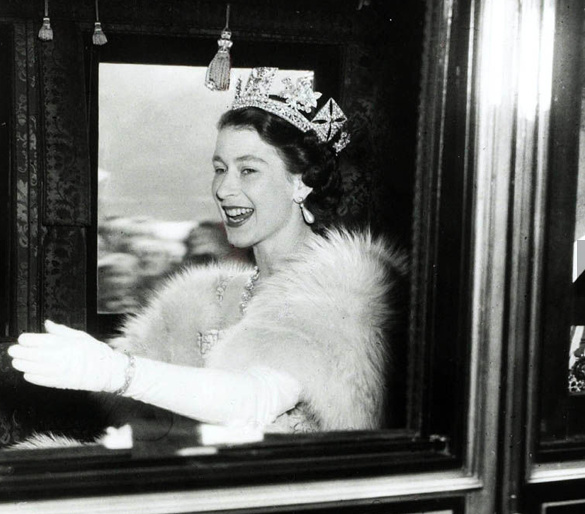
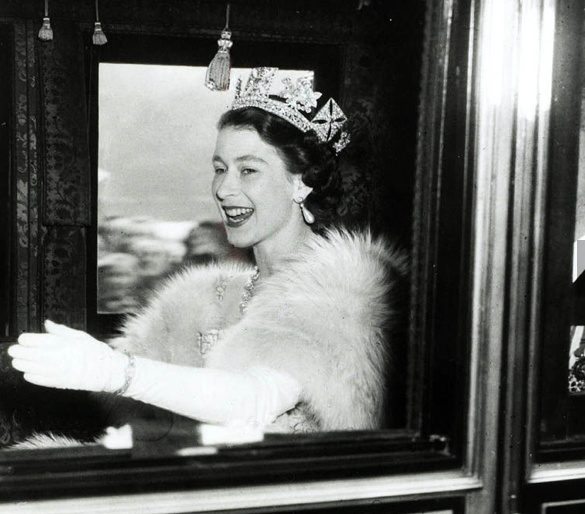
    The Queen on her way to open her first Parliament in 1952 When I worked on a magazine, in an idle moment I picked up a tome lying around. It was a biography of Queen Mary, this Queen’s grandmother, and written by James Pope Hennessy, who the Royal family considered a ‘safe pair of hands.’ So he had access to all the Windsor archives. (sadly, being a safe pair of hands wasn’t enough to stop him being murdered by his gay lover a few years later) The book became an obsession, filled with trivial delicious gossip and detail as well as history, and ending with flimsy folded pages of yard long pull-out family trees of all the British and European monarchies, their marriages and inter-marriages, offspring, ancestors… and genealogy became another hobby.

    A friend gave me my own copy of the book, and I followed it up with the acquisition of biographies of everyone else, from Queen Victoria and her numerous offspring, who became Queens, Grand Duchesses and Empresses of duchies, kingdoms and empires all over Europe. I gobbled up the histories of her successors, the Edwards, the George’s, Alexandra, Elizabeth’s, and so on.

    Illustration from the post “Dynasties, duties and decisions”

    I devoured Victoria’s letters to her daughter, the Princess Royal who became Empress of Germany, who with her tragic husband battled Bismarck and then Bismarck’s pupil, her son, the notorious Kaiser Wilhelm; Victoria’s letters to her second daughter Alice, Grand Duchess of Hesse-Darmstadt, and the disaster of both haemophilia and diphtheria which claimed her family. And Alice’s six-year-old son saying why can’t we all go together, as another sibling died. And the eerie events that followed, when his sister Tsarina Alexandra and all her family died together in the cellar at Ekaterinburg, and he, by now, Grand Duke, dying in an air crash with all his family, wife, children, mother in law, on their way to a wedding in England, and finally Mountbatten, Alice’s grandson, dying with members of his family and others in the IRA atrocity in Ireland.

    I learned about Edward the Seventh’s affairs, including his longest and deepest commitment to Mrs Keppel, the present Duchess of Cornwall’s great grandmother, the anorexia and vanity of ravishingly beautiful Empress Elizabeth of Austria who used to wear damp skin-tight leather riding habits to accentuate her figure, and was assassinated by an anarchist as she walked to a ferry in Geneva; poor George who became King when his brother abdicated, in agony for much of his childhood from splints to correct knock knees, and the physical strictures he suffered from having to stop being left handed – no wonder he stammered as an adult.

    I absorbed Sir Charles Petrie’s acute psychological analysis of the ruling house of Britain when he described the brutal Cumberland streak, a reference to Queen Victoria’s sadistic uncle; the conscientious Coburg inheritance, from noble Prince Albert, whose last action as he was dying of typhoid was to avert war between the US and Britain in 1861, a war which could have changed the course of history; and the artistic, self-indulgent, party-loving, charming Hanoverian streak inherited from the Prince Regent who was known as Prince Charming back in the 1840’s, and personified more recently by Princess Margaret. These personality types are still obvious to this day in each generation of the Royals.

    So when a publisher commissioned me to write a book on the Royal’s relationship with NZ, I had already primed the pump, as it were. One of the fascinating aspects of following such a well -documented family is to see how heredity plays its part in each generation – including William’s conscientious Coburg nature, like his grandmother the Queen’s, to Harry’s red Spencer hair, a legacy of Sarah, first Duchess of Marlborough three hundred years ago. She had a mane of glorious red hair which in one of her famous rages, she chopped off to spite her devoted husband, John. After this great Duke of Marlborough died, she found a box with her hair in it, lovingly preserved by her husband. That red hair has descended through every generation of the Spencer – Churchill family including to Winston Churchill and Princess Diana’s brothers and sisters.

    So when Prince Harry married his American bride with her exotic heritage, like everyone else I was fascinated and intrigued for all the many reasons commenters and pundits have expounded. And fascinated too, by the enthusiasm with which the British people took the newcomer to their hearts – great crowds wherever the couple went, huge mobs of thrilled and enthusiastic spectators at their lavish wedding and the excitement when a new baby was announced ( though somewhat mixed, since the announcement seemed timed to overshadow the Queen’s grand daughter’s wedding)

    Since then as everyone knows, the fairy story has dissolved in the light of common day, diverse personalities and controversial decisions. As the opposing sides have argued, Royal Family fans versus the Sussex’s, I’ve been saddened by the distortions of truth, which have ended up tarnishing the Queen and Catherine, William’s blameless wife.

    For example, the defenders of Meghan’s decision not to bring Archie, the Queen’s great grandson, to see his family, argued that the Queen left her two eldest toddlers for six months. She did. But she left them with their doting grandmother, the Queen Mother, and their aunt Princess Margaret.

    She had no choice. When she took up the tour of the Commonwealth to thank each country for their support during WW2, which George VI had been unable to do because of ill health, it was aborted in Kenya on the death of her father. The following year she tried again and during my research for the book I’d been commissioned to write, I found they stayed nearly every night at a different town and new hotel all over the world.

    Even when they wearily got to their destination each night in this country, choirs came and serenaded them outside, every evening, so they had to go out and thank them before collapsing inside. No point in dragging their toddlers from one strange place to another every day. By contrast, when Charles and Diana brought William, he learned to crawl on the lawn of Government House in Auckland where they were able to make their base.

    Others pointed to Catherine leaving her children for a week’s second honeymoon, but again they were with their doting grand- parents, not just a friend of their mother’s. Which is one of the odd things about Arche’s situation, that his grandmother, his only other family member, doesn’t do what most devoted grand-parents do, and take the opportunity to be with him when his parents aren’t. Though Meghan says she’s done the right thing as she wants her son to grow up in a loving fun-filled environment, he’s actually been wrenched away from his wider family, with a clutch of happy fun-filled young cousins, family summer holidays at Balmoral and Christmases at Sandringham.

    The worst thing of all, to me, is the way both the Royal Family and the UK have been vilified in order to justify what many people feel is a dereliction of duty. To call the family ‘toxic’, and the country ‘racist’ is not just untrue but deeply hurtful to everyone involved. To those who call England racist I can only point to the front bench of the present government. The three great offices of state in Britain are the First Lord of the Treasury, the Prime Minister’s formal title, the Chancellor of the Exchequer and the Home Secretary. The last two offices are held at this moment by the sons and daughters of Pakistani and Ugandan immigrants. The Lord Mayor of London is the son of Muslim Pakistani immigrants. Similarly, the Labour party is well stocked with WOC and even Men of Colour both from the West Indies and other parts of the world!

    Sadly these accusations are repeated by some vocal and disaffected men and women of colour and others, both in England, and on American television and in their media, blackening England’s name and reputation as a kind and tolerant society, which it always has been, which is why so many refugees have made their way to it over the centuries.

    It was in England that Lord Chief Justice Lord Mansfield, made the first great declaration on freedom and slavery, when he decreed in 1772 that the slave Somersett, who had escaped his American master, should be free, and that any slave who set foot on English soil automatically became free. Slavery, he said, was odious and had no basis in English common law. It was finally abolished in 1834 throughout the much-maligned British Empire, and the Royal Navy patrolled the seas for sixty years with a special anti-slavery squadron to stamp out slave trafficking by other nations. It cost some thousands of sailor’s lives, as well as money.

    George Orwell wrote in 1940 that ‘England is perhaps the only great country whose intellectuals are ashamed of their own nationality. In left-wing circles it is always felt that there is something slightly disgraceful in being an Englishman and that it is a duty to snigger at every English institution, from horse racing to suet puddings. It is a strange fact, but it is unquestionably true that almost any English intellectual would feel more ashamed of standing to attention during ‘God save the King’ than of stealing from a poor box.‘

    Sadly the huge rent in the fabric of the Royal family with the defection of two senior members, is being reflected in the country as a whole; in a split between the voices of common sense and tradition, and the voices of woke, liberal elites – the ones George Orwell was describing eighty years ago. The voices of common sense and tradition were those which rejected ‘isms and ideologies of the ‘woke’ factions in the recent election.

    And these decent hardworking people are for the most part, patriotic – anathema to liberal elites. Yet as Orwell explained: ‘By ‘patriotism’ I mean devotion to a particular place and a particular way of life, which one believes to be the best in the world but has no wish to force on other people. Patriotism is of its nature defensive, both militarily and culturally. Nationalism, on the other hand, is inseparable from the desire for power.’

    The people who cheered on Meghan and Harry at their wedding, were patriots, and they welcomed the introduction of a lively new foreign addition to their ranks. Yet now those same decent people of England with their proud history of tolerance, and of opposition to racism/slavery when it was still accepted elsewhere, are having to live with the label of racism pinned on them by their own much-loved Prince Harry and his wife of less than two years.

    And the Royal family who welcomed that wife are having to live with the label she gave them of being ‘toxic.’ As usual they are carrying on, keeping on, doing their duty to their dynasty and to their country. The monarch has the daily three-hour long perusal and signing of Parliamentary business, and constant reception of overseas diplomats and potentates, as well as the obvious tasks – like opening a sewerage plant in Norfolk, (as the 93- year- old Queen did a few weeks ago).

    She and other family members carry on with the cutting of ribbons in Wolverhampton, planting trees in Abergavenny, visiting hospitals in Scunthorpe, meeting ambassadors, conferring with charities who need their support, visiting the regiments of the armed forces, pinning medals on veterans, marking anniversaries and state occasions, shaking hands, making small talk, oiling diplomatic relations between countries and peoples, bringing a sense of caring and continuity to society, swotting up the details of the people they’re meeting and the places they’re visiting, doing the boring unglamorous aspects of being in service, and living their motto: never complain, never explain. It’s served them well for nearly a thousand years. They also know that privilege entails responsibility. It’s called noblesse oblige.

    Food for Threadbare Gourmets

    I needed a cake, but didn’t have the time to nurture a long bake in the oven, so I experimented with this cake that only takes 20 minutes to cook. It was a great success, but tasted even better the next day. It’s all mixed in a saucepan in which 250 gms of butter, one cup of sugar, 2 tablsp of cocoa and one tablesp of golden syrup are melted. Don’t let it boil. When cool, add 2 cups SR flour, one cup of almond meal, a teasp of vanilla essence and a pinch of salt. Mix it all together. No eggs.

    Grease and line a cake tin, and bake for 20 minutes only, so it’s a little fudgy. When cool ice with chocolate icing… icing sugar, butter, cocoa and a little milk beaten till smooth. Next time I make it I might experiment with brown sugar …

    Food for Thought

    Folksinger Pete Seeger has been called America’s tuning fork. He said: ‘I feel most spiritual when I’m out in the woods. I feel part of nature. Or looking up at the stars. I used to say I was an atheist… According to my definition of God, I’m not an atheist. Because I think God is everything. Whenever I open my eyes I’m looking at God. Whenever I’m listening to something I’m listening to God… And maybe I am… I think God is literally everything, because I don’t believe that something can come out of nothing. And so there’s always been something. Always is a long time.’

  • It isn’t racist to be disappointed

    Queen Mary Diamond Bandeau Tiara worn by Meghan Markle on her

    wedding day

    Illustration from the post “It isn’t racist to be disappointed”

    Hitler said she would make a good queen. He was referring to Wallis Simpson, by then the Duchess of Windsor, after they’d had a friendly get together in pre-war Germany.

    I thought of this when I read that someone in the US had said what a good queen Meghan Markle, now Duchess of Sussex would make. And I thought too that neither Hitler, or even Ms Markle had any idea what the concept of the British monarchy was all about as I read the latest press release from a ‘source close to the Duchess’. The release informed us that the Duchess would not be joining the Royal family for Christmas and would be spending Thanksgiving at Frogmore Cottage with her mother, when they would visit a homeless shelter to ‘help the homeless cook traditional stuffed turkey and pumpkin pie’.

    This essentially New World party has no relevance to the British, so I did wonder at the announcement of a visit to a local homeless shelter, weeks in advance. Most intending Mother Theresa’s or Lady Bountiful’s perform this sort of philanthropy unobtrusively and without fanfare, with no virtue signalling publicity or photographers on hand.

    I wondered too how these lonely desperate people, with no warm home and loving family around, would feel when confronted with a beaming stranger either dressed up to the nines in Givenchy, or sporting skinny jeans and an over-size shirt, and accompanied by the de rigueur security men – slightly bewildered I wouldn’t be surprised.

    People who criticise the American addition to the Royal family are usually accused of racism, but this lazy and one-size-fits-all label is not accurate. Prince Harry’s bride was welcomed with open arms, for the sake of the little boy who’d walked behind his mother’s coffin and who had a special place in many English hearts. Everyone bent over backwards to make their union work.

    The Queen did an unprecedented thing and invited Meghan to Sandringham for Christmas, to spend with the ‘family she’d never had’, as besotted Prince Harry explained tenderly on radio. Catherine, Duchess of Cambridge was not invited until she was well married, like all the previous fiancees.

    When Prince Charles remarried a divorcee, he could not be married in a church according the Church of England rules, and had to have a registry office wedding, and a church blessing afterwards. This requirement was waived for Meghan, also a divorcee, who enjoyed the full panoply of royal privileges, including the traditional loan of one of the Queen’s tiaras, and a carriage ride through Windsor, costing the British taxpayers millions in security. Her wedding cost both the Queen and the taxpayer over $40,000,000 pounds. No one begrudged it. The new bride was welcomed with enthusiasm.

    But she never said thank you. What she did do was buy more expensive couture clothes than any other English or European Royal, only a quarter of which were made by British designers. She flew to New York by private jet for a $350,000 baby shower, she sat in splendid isolation after turfing forty British Wimbledon spectators out of the seats which they had queued and paid for, and assuming that two people who were taking selfies of themselves with Federer in the background were photographing her, had her security guards stop them using their phones.

    When her friend Serena Williams was beaten, she showed her disappointment, but did not congratulate the winner, a Canadian girl who was a member of the Commonwealth for which Meghan had been made an ambassador by the Queen. She left as soon as Serena’s match was over, when it would have been both polite and diplomatic as a member of the Royal Family to watch the British Wimbledon champion Andie Murray, who was next up, play his match.

    The dog loving English people were puzzled that a dog lover should leave her two rescue dogs behind in Toronto in spite of the unconvincing explanations. They were also puzzled when she and her Prince left the splendour of Kensington Palace, to spend over $3,000,000 on a house at Windsor, with all the extra costs to the taxpayer of security, which were covered when all the Royals shacked up at KP, as Kensington Palace is known.

    Writing woke messages saying ‘you are loved’ and ‘you are brave’ on bananas to give to sex workers provoked national hilarity, but it wasn’t seen as so funny when Meghan embarrassingly dodged her royal duty by claiming maternity leave in order not to meet President Trump. Yet she surfaced a few days later to sit in a carriage and stand on the balcony of Buckingham Palace for the Queen’s birthday celebrations.

    Turning up to parade down the red carpet at the glamorous ‘Lion King’ London premier in a hideously expensive dress costing $4,924, when Prince Harry should have been at a solemn memorial service with the Royal Marines didn’t go down well either. Telling an African-American star in the line-up, who’d congratulated her on the great job she was doing, that ‘They don’t make it easy for us”, a reference to the English people/plebs who support her extravagant life-style, went down like a brick too.

    Neither did it go down well that the couple refused to share the date of their baby’s birth, the names of his godparents or issue any photos of him – traditional Royal custom – which is part of the unspoken contract between the Royals and the public. There was more heartburning when it was discovered that various American TV personalities, including Ellen de Generes, who Meghan had never met before, had had invitations to tea and were able to boast – on TV – that they had cuddled the baby who was off- limits to the British public.

    And more ire, when pictures of good old Archbishop Tutu were taken with the hitherto invisible baby. Many people, myself included, felt that it should have been Thomas Markle, his grandfather, seeing the baby. This is the man who brought up Meghan when her mother was not around during her childhood, and paid for her expensive schooling, university and overseas trips – on one of which Meghan was photographed posing outside Buckingham Palace – though she had told the public that she’d never heard of Prince Harry before she met him!

    Thomas Markle is the old man who to date has met neither his son-in-law or his grandson, but according to his daughter, in happier days when she was worried about her freckles, lovingly consoled her with the words that a face without freckles would be like a sky without stars. While he was working at the TV studios, she would turn up after school, and he’d steer her away from facets of the filming he thought in-appropriate for a little girl to watch – a caring father coping with parenting alone while he worked for their living …

    The apparent snubs to the Queen in turning down not just the Sandringham Christmas get together, but also the traditional summer gathering of the Royal family at Balmoral, and then zapping off to New York a few days later to watch her friend Serena’s tennis final, has not endeared the Duchess to the British public. None of these faux pas, extravagances, and many other ill-judged actions have anything to do with race.

    They are the justified criticisms made of a woman who seems to have no interest in the customs and culture of the family and society she chose to marry into; a woman who, while enjoying all the perks of her extraordinary new life, insists on privacy, and at the same time goes out of her way to be photographed and publicise her doings and achievements on Instagram.

    Criticism of the new arrival in the family who has ‘singlehandedly modernised the Royal Family’ according to her PR team, stems from disappointment, not racism. In the unspoken contract and loyalty between the Sovereign and the people, the Royals have various rituals and duties to perform as a quid pro quo for their immensely privileged life-style.

    Their profession and ‘career’ is service to their country, to be performed in whatever way the government of the time requires, and observance of ancient precedents. The public knows it’s a daunting task to learn the ropes of this 1,000 -year-old institution, so all they expect is for a new entrant to learn the ways and customs of the institution, using humility, a desire to learn, and determination to do the job.

    So the arrival of Meghan who said she was going to hit the ground running, and who seems to feel it’s her role to change the lives of the English people who’ve enjoyed a free society and democracy all their lives; a newbie attempting to educate them about climate change, female empowerment, racism, and other self- appointed missions, irritates them.

    They don’t want their lives changed (unless they can enjoy some of the perks of her privileged life-style). They don’t want to be lectured about carbon emissions by someone who flies in private jets, and hops across oceans and continents for holidays, weddings and celebrity occasions.

    It doesn’t go down well for someone from another country to seem to criticise the British culture and members of the Royal Family on TV, to tell us that the British stiff upper lip is ‘internally damaging’, and that in spite of no money worries, a healthy baby, a loving husband, a luxurious home, and a wardrobe to die for, she finds life tough and no-one has asked ‘are you okay?’

    It was her decision during maternity leave to ask Vogue editor, Edward Enninful, to allow her to guest-edit a controversial edition of that luxury magazine, and her decision too, to organise the design of some fairly ordinary clothes for a charity which had been up and running for some years before. Since most of us cope with our babies plus other challenges without nannies and staff, for their PR staff to use the word ‘gruelling’ to describe their lives (several holidays, overseas trips to tennis and a Rome wedding this year) seems puzzling.

    Most people have tough hardworking lives, and find self-pity, a sense of entitlement, and what feels like hypocrisy when actions don’t match words, unattractive. So for all these reasons, and many others, the second American woman to marry into the British Royal family is almost as unpopular as the first one. And as in the case of Wallis, there is great relief that Meghan is not likely to become queen either, barring a complete annihilation of four or five other members of the family.

    The saddest thing of all is that so much genuine goodwill towards Prince Harry and Meghan seems to have been squandered, despite the in-ept rescue attempts by their American publicity team, and this has left many loyal supporters of the monarchy throughout the Commonwealth feeling disappointed. To bowdlerise a great Englishmans’s words, ‘never has so much been lost, so quickly, by so few.’

    As for the 93- year- old Queen, adapting Shakespeare’s words would no doubt be sadly true for her at the moment: ‘Uneasy lies the head that bears the crown’.

    Food for Threadbare Gourmets

    The cupboard was bare – and the fridge. All I could rustle up the day before our big shop, was one chicken drum stick, half a parsnip, two carrots, half a leek, plenty of onions and my staple, red lentils.

    While the onions were having a quick zap to soften them up in the micro- wave, I fried the chicken leg to seal it, and chopped carrots, parsnip and leek small, keeping one carrot back to grate, to give the intending mess of pottage some texture. Onions, chicken and vegetables went into a saucepan, along with two thirds of a cup of washed lentils, garlic, salt, pepper and a chicken cube.

    Boil gently for half an hour or until the chicken is falling off the bone. This collection of scraps turned into a thick comforting soup on a cold day.

  • Coronation, luxury, opera and Latin

    Image result for runnymede hotel penang The Runnymede Hotel from the sea A life – another instalment of my autobiography before I revert to my normal blogs

    The Queen’s Coronation was big in Malaya and it was big for me too! On our drive down to Taiping to join my father and his regiment for the celebrations we passed through one kampong after another, with a richly coloured Coronation arch festooned with flowers and streamers and pictures of the Queen welcoming us into every village … everyone seemed to be involved.

    When we had arrived from the train and ferry at the Runnymede Hotel several months before, it was discovered that the porter who picked up the trunk with my clothes in it amongst other things, had disappeared with it. This meant that my new summer dress and my new and unworn swimming costume had gone, and I now had little more than the clothes I stood up in- a well-used green striped skirt cut down from a summer dress of my stepmother’s two years before, and a green air-tex shirt.

    My stepmother had coped with this disaster with insouciance, but I was in despair since I knew my clothes were unlikely to be replaced any time soon. I managed to make a new skirt with some fabric given to me, and as time went on, different people bequeathed dresses which they said they no longer wanted and which I learned how to alter to fit me.

    But the loss of the swimming costume was a misery in the tropics where everyone swam most days. Now in Taiping for the week of the Coronation, I was staying with a couple whose daughter was in hospital with appendicitis, and after we had visited her once a day, these two lovely people took it upon themselves to spoil me. Not only did they buy me a swimming costume, but a pair of shoes – I had been managing with some humiliatingly ugly tartan cloth ones my stepmother had bought for me in the local Chinese market. The wife also gave me one of her dresses and let me try on all her evening dresses and her makeup. It all felt wonderful.

    When I turned up for the Coronation Parade and re-joined my parents in my new finery, I saw my stepmother looking rather coldly at these kind people and I, but my cup was overflowing, and I didn’t worry.

    After the festivities and two weeks holiday spent amid clouds and cool forests at the top of a mountain called Maxwell Hill we all went back to Penang, where I waited another three months before being accepted into the boarding school in the Cameron Highlands. Apart from my school terms I spent eighteen months living beside the water in this beautiful environment.

    Each day began with the long walk between pillars which seemed as big as those on the portico of St Paul’s Cathedral, but in this case, they were holding up the huge ballroom, about a hundred feet long. At the end was the dining area, where the Chinese maitre d’hotel met each family and conducted them to their regular table with as much flourish as though they had been pre-war English milords, miladies, famous writers and intrepid tourists in the thirties. (He had probably been on the staff then himself, having somehow survived the Sook Ching massacres -the wholesale killings of the local Chinese – by the Japanese during the war) My step-mother was one of the ladies he met with particular deference and a favoured smile.

    Our service was always quicker than less favoured mortals. It had nothing to do with my father’s mediocre rank or mediocre income. I supposed it had something to do with my step-mother’s unbending dignity and courtesy -she ‘nothing common did or mean’… it took me a while to see that others did do mean things, I was so used to her being, as my father’s sergeant -major put it -” a lady.” (Which didn’t mean to say I found it pleasant living with her. She might not manage anything common or mean, but she had ways of dealing with people like me who she didn’t like!).

    After a hearty English breakfast beginning with cereal, ending with toast and marmalade, and bulked out with sausages, bacon and egg in the middle, coffee or tea, we all filtered back up the stairs to our rooms. The amahs had already tidied them and made the beds, so we prepared ourselves for the day – for the wives, a little shopping, ending at the Cold Storage Co. for feasts of iced coffee and sundaes in blissful icy air-conditioning to which I was sometimes invited. Or it might be a trip to the swimming pool, and hot curry puffs and ginger beer shandies in deck chairs round the pool… having no swimming costume I just sat around enviously.

    Wives who were happy to leave their toddlers with an amah would sit on the hotel verandah by the sea, just by the huge flame tree where the children took turns on the swing, while their mothers played canasta or mah-jong. Or they just gossiped over coffee.

    Husbands sometimes managed to get back for a weekend with their families every few weeks. One regiment stationed at Alor Star had its hands full with constant bandit activity, and at the last minute their leave would be cancelled for an emergency. A mock groan was the only outward sign of disappointment the wives allowed themselves when the message came, and when one young woman, newly- pregnant, couldn’t bite back her tears of disappointment before the others noticed, there was much comment at her lack of control.

    There were some who didn’t follow the regular routines of the others… they were outsiders, who didn’t join the regimental groups or the more exclusive cliques. They may have been free spirits, and seemed to have busier, more satisfying lives than the daily routines of the others, but, sometimes too, I felt their loneliness. The other women wordlessly disapproved, as though being an army wife was being part of a team that the outsiders were refusing to join.

    After a generous lunch with several courses from soup or a starter through to pudding and cheese in the great dining room, the hotel would fall silent. Every-one retired to their room for a nap – including, I suspect, all the staff -because the place was deserted between two and four. Except for the amahs and house-boys, who were busy whitening shoes and doing the dhobi, washing, ironing, and starching our full-skirted cotton dresses – Horrockses were the prettiest and most sought- after. Some wives had their dresses made up locally but you could tell at a glance when fashion trends took about two years to reach us.

    During this silent two hours in the afternoon, the various teenagers in the hotel would coalesce, playing tennis, giggling, talking, and sharing, I remember, the whole series of books on Tarzan in the jungle. Unfortunately for me, I quickly became bored with them and Tarzan, and after a few weeks was back on my own, stemming boredom with what my stepmother dismissively called, my highbrow pleasures- whatever poetry and history I could find, all and any literature. This left me indifferent to Tarzan.

    Some childless friends of my parents who lived in Penang permanently took a fancy to me, and began inviting me to their fascinating house filled with books and art. They introduced me to opera on their new-fangled long- playing records and took me to a film of Faust. I was hooked and took back with me to school a precious gift from them of a 78 record of Joan Hammond’s standard, “Oh, my beloved daddy”. I never got to play it. It warped in the heat during the way up from Tapah on the journey to school in the Cameron Highlands.

    Between four and four-thirty, all over Malaya, in rest-houses and residencies, homes and hotels, the amah knocked on the door of every bedroom, and deposited a tray with a pot of tea, a plate of rich tea biscuits and a clump of the tiny, sweet, Malayan bananas. This we would consume at leisure, dressed in a cool cotton housecoat, and if we were lucky, enjoy for an hour the coolness of convection rain which fell at the same time every day, in sudden sheets. The coolness lasted only as long as the rain, and then the sun would return, and steam would rise and it would feel hotter and stickier than before.

    Simultaneously with the tea-tray, the house-boy would deliver the clean laundry, our stiff, rustling, starched dresses, and white shoes cleaned with white Meltonian polish. After a shower, we dressed for dinner, and descended the stairs for the ritual of salted pea-nuts in cut glass saucers and drinks before dinner. Sometimes one of my father’s friends would ask if they could include me in a round of Pimms, which I thought the height of sophistication, but usually it was lemonade for me, or better still, a delicious fresh lime.

    And then for the third time in a day, the long walk down the pillared ball-room for another stately meal at our own tables, before sitting on the veranda under the stars in the warm tropical night, sipping coffee with dreadful tinned and boiled milk from tiny, old fashioned coffee cups. The scent of frangipani hovered amidst the inevitable cigarette smoke, and sometimes a sampan with a single fisherman would drift silently past where the sea lapped against the garden wall, and as he scooped his net, or dragged his oars, a shower of gleaming phosphorescence would show us where he was on the dark water.

    During the months I was waiting to be accepted into boarding school in the Cameron Highlands, my parents arranged tutoring for me in the mornings. To keep up with my Latin, I attended a Chinese convent where they had a Latin class every morning at seven o’clock, so I set out to walk through the deserted streets at six thirty. I nearly died of embarrassment as no European was ever seen actually walking at that hour in the morning, and everyone stared at me.

    It was a pointless exercise, because I couldn’t understand the accents of the Chinese nuns reading Latin. I was completely defeated, and never kept up with the place in Virgil that we were supposed to be translating.

    I came up against this problem again, during my French oral exam for School Certificate the following year. We were laboriously ferried down from school to Tapah, with all the palaver of armoured transport, troop carriers, guns and all, and on to Ipoh to visit a Chinese convent where the nuns spoke French, and were accredited to examine us.

    This was a ponderous joke, which we all mutually recognised but never acknowledged, because they knew that our school-girl French was not up to understanding their Chinese -French, and they couldn’t understand our clumsy Anglo- French. So they gave us the benefit of the doubt and we all passed our French oral.

    To be continued

    Food for threadbare gourmets

    When we’d eaten all we could of the roast chicken at Easter, I boiled up the carcass. The resulting jelly was too good to put in a soup. I made a risotto with it instead. I pre-cooked an onion in the micro-wave, and then tipped ut into a frying pan, lubricated with chicken fat from the roast chicken. Three chopped mushrooms and a teaspoon of garlic (from a jar!) went in next, and adding more chicken fat, I poured in a cup of Arborio rice.

    When it was translucent I added a glass of good white wine, and before it had all boiled away started adding the chicken stock which also had small chunks of chicken from the carcass in it. There was enough to cook the rice completely, and when I started to run out at the end I added some milk… then cream, then a good knob of butter. When the rice was soft, I stirred in a couple of table spoons of freshly grated parmesan, and covered the pan for five minutes.

    When we tucked in, I nearly swooned with greedy delight… each grain of rice glistening with stock and butter and cream was sumptuous. It didn’t even need any more parmesan, it was so delicious. I will never cook risotto again unless I have real chicken stock… bouillon cubes just don’t cut it any more!

    Food for thought

    Always say “yes” to the present moment. What could be more futile, more insane, than to create inner resistance to what already is? what could be more insane than to oppose life itself, which is now and always now? Surrender to what is. Say “yes” to life — and see how life suddenly starts working for you rather than against you. Eckhart Tolle, spiritual teacher

  • All people great and small

    Illustration from the post “All people great and small”

    He wrote to a ninety-one- year old woman begging to be allowed to be a footman in her household, even if it was just for a day. Her secretary wrote back to the young Fijian and said yes, this could be arranged. So a few weeks later, when the Queen entered a state room to meet an assortment of ambassadors, governors and other Very Important People, the young Fijian was in attendance, resplendent in his Royal household footman’s uniform. She saw him straight away and ignoring all the Very Important People waiting to exchange a few pallid jokes and platitudes with her, she walked straight across the room to talk to her newest recruit. The guests probably assumed he was an even more important person then they were….

    I love such little vignettes which give an unexpected insight into character. On this occasion, the Queen’s humanity would have meant an unforgettable experience for the young man from the Commonwealth and the other side of the world.

    I think of the story I read in a blog, when a South African blogger I used to follow was taking her dying daughter for a specialist appointment. While they were waiting outside the lift, the daughter sitting in her wheelchair, the doors opened, and out stepped a tall African. On seeing the mother and daughter, he walked over to them, and bent down and had a few gentle words with the dying woman, before smiling at her mother and continuing on his way… another act of kindness and connectedness – from Nelson Mandela who could well have just continued on his busy way.

    I loved reading about Albert Schweitzer, the famous doctor, musician and founder of the hospital at Lambarene in Africa, standing on a train platform in the US where he had been invited. One minute the old man was talking to his group, the next, he was nowhere to be seen. And then someone saw him down at the end of the platform, carrying the suitcases of an old woman, helping her onto the train.

    The Queen’s mother was famous for these sort of spontaneous kindly deeds, though one of my favourite stories was of her as a young woman… she had a sweet tooth even then and was happily chewing a caramel as she drove through Liverpool… she caught the eye of a young policeman, and tossed him a caramel, which he caught! Did he chew it too, or keep it in a glass cabinet as an unlikely relic?

    A shopkeeper whose shop was on her route to Cheltenham races once wrote to her to say he would like to present her with a bunch of flowers when she drove past on her annual visit. She replied, and for the next eighteen years, until she stopped attending the race meeting, she stopped to talk to him on her way. By then, a crowd was always waiting too, and she never failed to stop and chat with her faithful admirer.

    Her grandson’s wife, Diana, not one of her favourites, also had this gift. Few people know of the time when she was visiting this country as a twenty-one -year old. She came out of a reception in Wellington, the country’s capital, and a noisy group of IRA sympathisers was waiting for her with hostile banners and angry shouts. Gathering her courage so as not to disappoint the other people who were waiting to see her, this brave young woman walked over to them, and ignoring the heckling of the Irish, talked to the others. That took real character.

    And later, in Auckland, she came out of a banquet late at night, and seeing a little girl standing in a knot of spectators, crossed the road in the pouring rain, red shoes and white tulle dress getting soaked, and bent down to talk to her and take the posy being offered.

    General de Gaulle has never been one of my favourite people. Hating the British who sheltered him, gave him offices, staff, aeroplanes, money to support him throughout the war, he could rudely say to Mr and Mrs Churchill while lunching with them at Number 10, and discussing how to handle the French fleet in North Africa, he said it would give the French great satisfaction to turn their guns onto the British. This, of course, was the man who was able to write a history of the French Army without ever mentioning Waterloo.

    But many years later, sitting next to Churchill’s youngest daughter Mary, when she was the wife of the British ambassador, he asked how she passed her time. She blurted out, ‘walking my dog’, and was deeply touched that he spent the rest of the lunch discussing the best places to do this. Even de Gaulle had a heart! He showed it again, writing a tender and touching letter to Lady Churchill on the first anniversary of Churchill’s death.

    And talking of animals James Herriott the Yorkshire vet who wrote the popular series ‘All Creatures Great and Small’, was the vet to some of my closest friends. He lived up to his reputation. Anthony told me that when they first moved to Yorkshire and signed up with Herriott, then just an unknown country vet, their cat seemed unwell. It was Sunday but they rang their vet anyway. Herriott was enjoying Sunday drinks before lunch at a friend’s home, but he dropped everything and came to the house to treat Anthony’s cat.

    These are not great acts of heroism, but little random acts of goodness, kindness or humanity, spontaneous responses in circumstances where pomp and ceremony were often the order of the day… and that’s why they are so revealing… they demonstrate character and connectedness. And there are many people who are not public figures who also respond to everyday situations with spontaneity and kindness, and we never hear of them… let us now praise famous men, as the psalmist wrote… and some there be which have no memorial.

    When I listed all the beautiful gifts a friend had given me over the years, and all her acts of kindness and imagination towards me, my love said why don’t you write and tell her. I said I have and I do…. But I made a mental note to tell all my other friends too, how much their friendship and love have meant to me over many years.

    I thought about all the wonderful things people tell about their loved ones at their funerals. I always hope the spirits of the dead may be hovering to hear these words of love and appreciation. But how much more they would have enjoyed these tributes during their lifetimes. So one of my resolutions for the rest of my life-time is to make sure those I know and love also Know how much they are loved and valued… not just for their deeds or gifts but for the essence of who they are. Seeing a person’s essence is to recognise their soul. There can be nothing more satisfying than to know you have been Seen, that you have been recognised for who you are, and that who you are is precious, beautiful and utterly loveable.

    This is a priceless gift which should be the birthright of every child, and this is my daily prayer: that the parents of all children may see and love the essence of each child, so they grow up undiminished by self- doubt. Then they can feel, and are, whole and happy and loving themselves. A world of loving souls would be a world without fear, and a world of peace, the sort of world we all long for – where peace and goodwill to all men would obliterate the divisions of race, religion and other limiting ideas which separate and divide us. For, as Thich Nhat Hahn says: ‘We are here to awaken from the illusion of separateness.’

    Food for threadbare gourmets

    The picture is my kitchen dresser groaning with summer produce. We’ve had lots of fresh asparagus this spring, but I had reached satiety with asparagus with melted butter, asparagus with vinaigrette dressing, and asparagus with a complicated Japanese dressing. So when I was the grateful recipient of a harvest of fresh broad beans from my daughter-in law’s garden, I decided to try something else. This is it!.

    Wrap enough asparagus stalks for two in a sheet of kitchen paper, putting the join underneath so it doesn’t blow open. Sprinkle the paper with water, and cook the asparagus for just over a minute in the micro-wave. At the same time, chop and fry in a little butter a small piece of good thick ham, then pour in cream, a capful of brandy, a couple of chopped garlic cloves, (I used chopped garlic from a jar!) and half a teaspoon of Dijon mustard. Boil it all up until it thickens.

    Blanch the broad beans -enough for two. Cook in boiling water until tender – I used small fresh ones, so didn’t need to pop then out of their outer skin. Then cut the asparagus stalks in two, and add them and the broad beans to the ham and cream mix. Eat with good bread to mop up the delicious juices – and I had a glass of champagne too, to enhance the feeling of well-being!

    Food for thought

    Until he extends his circle of compassion to include all living things, man will not himself find peace. Albert Schweitzer

  • Fashion and fun

    As I mulled over the ins and outs and ups and downs of buying a grey T-shirt – I’m short of cool T-shirts as my clothes are still packed up in my old school trunk, (few people know what these are nowadays) where they’ve been since we moved to the forest. We’re building onto the little cabin we inherited when we moved here, and I’m still, as it were, existing on the iron rations I put into a small suit case when we came here. Somehow I hadn’t envisaged managing without my extensive wardrobe for months.

    There’s a word for Foodies like me – is there also one for clothes maniacs… clothies? If there is, that’s me. But my frivolous machinations ground to a halt when I stumbled on an article about the latest exhibition of Diana’s clothes. Everyone knows who Diana is, don’t they? The ingenuous teenager who married her Prince, and discovered on their honeymoon that he was still in touch with his long- term married mistress? The anorexic skinny beauty who blossomed into a glorious woman, who wore heavenly clothes throughout the various stages of her life? She’d have been fifty-six this year.

    The exhibition seems to chronicle the trajectory of the Princess’s life, from the ingenue soft blouses and dresses worn by the young bride, through to some of the ravishing evening dresses she began wearing as she gained her confidence. Then come the dresses which showed off her figure and astonishing beauty… and with the clothes, all those photos showing her a step away from Prince Charles, with symbolic distance between them, as they arrived together with her wearing these beautiful clothes.

    She found her confidence when she embarked on her affair with her riding instructor, Guards officer James Hewitt, the man who’s since earned the well-deserved name of ‘Love-rat’. He wrote several books, and made millions out of publishing her letters and detailing their affair, which began when a miserable Diana had discovered that Charles had re-newed his affair with Camilla Parker-Bowles.

    The legions of Diana’s admirers (I was one of them) were furious that, as the Guardian once put it: ‘an older woman with no dress sense and birds-nest hair had trounced the people’s fairy-tale Princess? Who did she think she was?’

    The story goes that some of her infuriated supporters even pelted the hapless Camilla with bread rolls when she went shopping in her local Wiltshire supermarket. Which reminded me of a previous Charles and his mistress, the much more attractive Charles the second. His witty lover, Nell Gwyn, was subjected to much the same abuse, only verbal as her carriage passed. The angry citizens thought this was the carriage of Charles’ French Catholic mistress. Nell pulled down her carriage window, and smiling at the hostile faces confronting her, uttered the immortal words: “Good people, I am the Protestant whore.” Which dispersed the crowds.

    There’s no record of Camilla’s reaction to the bread rolls – in fact, throughout the years, she always remained silent.

    But back to our muttons–or moutons in French. The dresses chart Diana’s life, but don’t, I think, include the famous little black dress she wore the night Charles admitted adultery on television. The tall, slim ravishing blonde with legs to die for, stole his thunder effortlessly in the sensational black dress, which she had had in her wardrobe for two years and never worn before.

    All her dresses had built-in bras, so no bra straps showing – and they were also designed so there was never the dreaded ‘visible panty line (VPL). Disappointingly to me, the red jacket and purple skirt she wore when sitting in front of the Taj Mahal, alone and making a statement, is not in the exhibition. Red and purple – who else would wear such a brilliant combination?

    That was one of the things I missed after Diana’s tragic and devastating death, the fun of filling my eyes with her gorgeous outfits. And then the jewels – costume brooches worn in unexpected places, dancing with a priceless emerald necklace turned into an American Indian type head-band worn across her forehead, faux pearls slung backwards and knotted over a plunging backless velvet dress…

    Diana’s successor, the ex- Kate Middleton, or Katherine as she is known to her family, often seems a careful, rather dull dresser, except on grand occasions when she looks wonderful. So I’ve become an afficionado of other less well known royals on the world stage, though apparently doted on in their own countries.

    The most flamboyant is Queen Maxima of the Netherlands, former business woman and daughter of a minister in one of Argentina’s murderous and tyrannical regimes. She overcame this hurdle to marrying the heir to the Dutch throne, and has now evolved an interesting style of dressing. I marvel at her huge hats, ponchos, and daring colour combinations.

    The Belgian Queen Mathilde, born a noblewoman in Belgium and formerly speech therapist and psychologist, is another blonde beauty with a great sense of style, and great legs too. She wears bright colours and elegant matching hats… the Royal way of dressing Queen Elizabeth has pioneered and perfected. Queen Letizia, the ex-television anchor and newsreader on Spanish TV, who also captured a Crown Prince, has a severe, solemn beauty. Her exquisite clothes have the same rather austere, elegant quality, but I don’t feel the joyfulness of Diana’s style – which for me was the benchmark of fun and fashion.

    Crown Princess Mary of Denmark, the former Australian PR consultant, who spent three years learning Danish before marrying her Prince, is an attractive brunette like Kate, and they look like sisters when seen together. She always looks stylish, poised, and wears interesting clothes. But somehow with all these lovely Royals, there’s none of the excitement and joie de vivre that Diana projected in her gorgeous clothes. Queen Maxima comes the nearest to projecting that excitement while doing her round of good works and international visits like all the rest of them – shaking hands with popes, presidents, sovereigns and sheiks.

    Needless to say, all these women sport magnificent jewels and glittering tiaras when required. I doubt that the latest fashionista to loom on our horizon owns a tiara – but then again – her extraordinary husband may have bought one to demonstrate that he can mix it with the best of them! If so, it’s hidden away at the back of a wardrobe in Trump Tower – or more likely stashed away at the bank.

    When Melania Trump appeared at her husband’s inauguration in that delicious, pale blue outfit, I thought, aha, another glorious clothes horse in the mould of a previous beautiful First Lady. But we see so very little of her. When we do, her clothes are gorgeous… yet there’s so much controversy swirling around her, that rather like Carla Bruni, President Zarkozy’s beautiful model wife, it’s hard to enjoy the spectacle whole-heartedly.

    ‘The apparel oft proclaims the man,’ Polonius advised his son Laertes, and like everything in Shakespeare’s famous speech, it still rings true. So how does my grey T-shirt stand up to all these gorgeous outfits worn by glamorous women?

    I want to wear it with grey trousers brought from Marks and Sparks in Plymouth, Devon, over ten years ago when flares had come back briefly, and with flat, grey lace-ups which assist my broken leg to walk – a special offer from a mail order catalogue – two pairs for fifteen dollars – how could I go past them? I’ll wear a grey, black and red scarf to brighten up the grey – I’ve had it for twenty years – it was a Christmas present from a Dutch friend who told me she’d found it on a second- hand stall at the local market. And of course – red dangly earrings – all so appropriate in a remote forest far from the fashion centres of the world. But as you can see, I never give up!!!

    Food for threadbare gourmets

    Caught on the hop when invited to an impromptu lunch tomorrow by a bachelor neighbour. Can I bring something I foolishly asked? Yes, something sweet, was the prompt reply. We don’t want to go into town to shop for another few days and I haven’t bothered to keep all my stocks of goodies since we are staying of sweet stuff, and I only cook the barest minimum since my game leg finds it hard to stand.

    I finally remembered my emergency store – tiny pastry tartlets in a sealed pack, and lemon curd in the fridge. I usually serve them with crème fraiche, and am leary of whipped cream separating. So will just have to bite the bullet and whip the cream with icing sugar which helps it to stay stiff. I simply use two tablespoons to a cup of cream… so much for giving up sugar!

    Food for thought

    Lift up the self by the Self.

    And don’t let the self droop down

    For the Self is the self’s only friend

    And the self is the Self’s only foe.

    Bhagavad Gita Chapter 6, verse 5