Category: Spirit & Mindfulness

  • Beauty that connects

  • Love Actually

    Illustration from the post “Love Actually”

    Over forty years ago I found myself visiting a man imprisoned in a psychiatric ward.He had no family, no other visitors, and the story of his life was a search for the only person who had ever loved him. His mother.

    He was thirteen when he had his first brush with the law, and was placed in a juvenile delinquent institution after he attacked his mother’s lover with a baseball bat when his mother was the victim of domestic violence. Back then domestic violence was not taken as seriously as it is now.

    He ran away to get back to his mother and from then on was placed in stricter and harsher environments. Having no trade, skills or any means of support he ended up robbing a bank. This is a gross simplification of his tragic descent into despair and the appalling experience of solitary confinement in the prison hospital.

    His cell was bare, no books or television, yet with all the deprivation of twenty years in and out of prisons, he was an articulate and sensitive man. In retrospect his whole life had been a search for love, and yet he’d had no opportunity to find or develop relationships, or to find a person to love.

    He sat on one side of a table placed across a bleak corridor in the hospital, we sat the other side. With warders standing nearby, he told us that his one amusement was watching the birds from behind the bars of his tiny cell window. He saved crumbs from his meals and fed them to one particular sparrow who came to the window sill. It was obvious as he spoke that he loved that little sparrow, and that the sparrow was giving his life some meaning.

    He didn’t need to know whether the sparrow loved him. The sparrow filled his need to love. I still remember when my first great love sent me a Dear John letter. (Dear John oh how I hate to write, dear John I must let you know tonight that my love for you has died )

    I was twenty- one. When I read it, my head spun and the world seemed to go black amid the giddyness. As time went on, I realised that one of the worst things about it was feeling was that I could no longer love him. At which I also realised that there was no need to stop loving him… loving was what made me feel less bereft, and loving him filled the gap in my heart until I was able to move on.

    A teacher on one of our personal growth courses once observed that when a person lives alone, they often make a loving connection with a creature, if they have no-one to love – pets, birds, wild creatures become their beloved companions. Even snails can become the beloved – Elisabeth Tova Bailey wrote one of the most exquisite books about love, when she became aware that a snail lived in the wild cyclamen a friend had dug up and brought to her sick room.

    Her loving descriptions of the tiny creature and its habits, and the knowledge she acquired about one of our humblest companions living alongside us on this planet teeming with life, gave me a deeper understanding of the value of all life. Loving this tiny snail gave the sick woman joy and meaning to her life.

    Being loved somehow doesn’t seem as sustaining as loving. ‘Lord grant that I may not so much seek to be loved, as to love,’ was the prayer of St Francis, who loved ‘all creatures great and small’, in the words of the hymn. Krishna Murti described another aspect of love in his journal.

    ‘He had picked it up, he said, on a beach; it was a piece of sea-washed wood in the shape of a human head. It was made of hard wood, shaped by the waters of the sea, cleansed by many seasons. He had brought it home and put it on the mantelpiece; he looked at it from time to time and admired what he had done.

    One day, he put some flowers round it, and then it happened every day; he felt uncomfortable if there were not fresh flowers every day and gradually that piece of shaped wood became very important in his life. He would allow no-one to touch it except himself; they might desecrate it; he washed his hands before he touched it.

    It had become holy, sacred, and he alone was the high priest of it; he represented it; it told him of things he could never know by himself. His life was filled with it and he was, he said unspeakably happy…’

    This beautiful story electrified me. It showed me that by loving, whatever the object may be, loving gives life and meaning to whatever it touches. My friend Oi, who I’ve written about in another blog once told me about a very rich friend, whose house was filled with opulent treasures, which Oi found overpowering. But, she told me, as the years passed, and she visited her friend, though all the treasures were still there, gleaming and cherished, she felt differently about them. She said they had been so lovingly cared for and cherished by their owner, that they no longer had the patina of wealth, but exuded their intrinsic beauty.

    So it’s the loving that matters, that transforms and gives meaning. Which is why the experiment I once read in which people in prison were given an abandoned dog to rehabilitate, were rehabilitated themselves. Love heals.

    Here in our forest, where we are not allowed dogs or cats who might kill the threatened species of flightless birds who shelter beneath the thick undergrowth, we have become devoted to the wild quails who make their way into our garden. We began feeding them, discovering that the food they love best is budgie seed.

    Every year they return with their tiny fluffy babies, who scamper after their parents like little windup toys; and we now have dozens of beautiful little creatures who push through the undergowth out of the forest and march determinedly down the drive to feast. When they hear our voices, they break into a run. We spend far too much on birdseed, and in lockdown, it is the one thing we make sure we always have plenty of. They start arriving early in the morning and when we hear their sharp call, one or other of us leaps out of bed, still half asleep, to scatter seed

    Loving them makes us ‘unspeakably happy’. There must be many other people in these strange days who find that having the time, no longer trying to stuff too many duties and activities into their day, they can now discover the world of small things around them, and find it utterly loveable. Birds singing, leaves unfolding, spiders spinning their miraculous webs – all these things can be food for the soul and can remind us of the goodness of life even in ‘these interesting times’, in the words of the Chinese proverb.

    Food for Housebound Gourmets

    The cupboard is bare – not of food, but of inspiration, Having put my back out and drugged up with painkillers, unable to stir from bed without yelps of pain, I’ve been calling instructions to Himself in the kitchen, on how to boil an egg, or where to find the butter…

    Food for thought

    By having a reverence for life, we enter into a spiritual relation with the world. By practicing reverence for life we become good, deep, and alive. Albert Schweitzer

  • Another Bright Beautiful Spirit

    Illustration from the post “Another Bright Beautiful Spirit”

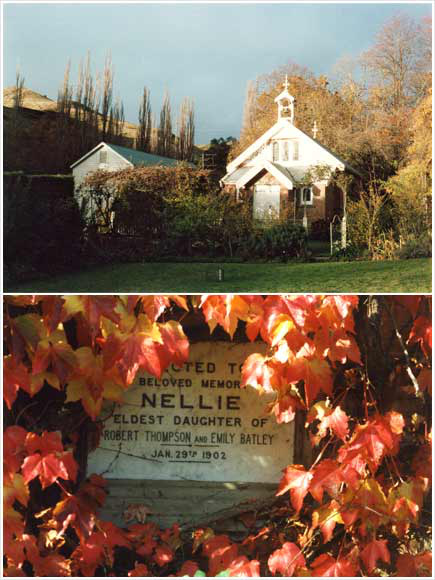
    The chapel at Oi’s home

    A life – another instalment of my autobiography before I revert to my normal blogs

    My friend Oi (pronounced O-ee) had ideas so advanced that even Quaker Meeting – that most liberal and open- minded Christian group – threw her out.

    With no family around us, friends of all ages were always important and she mattered to us as much as Philippa. Edith Oiroa was born in 1900- called Edith by conventional people but Oi by kindred spirits. She was the youngest of ten, born to a father who was sixty years old, and she died when she was a hundred and two – so the two life-times covered a hundred and sixty- two years, and went back to 1840. Her father had been a cabin boy on a ship that was wrecked on the NZ coast in 1856.

    Local Maoris formed a human chain to rescue him, and he stayed with them for some time, becoming very close to the chief. After returning to England, he came back with a seventeen-year-old bride, and the Maori chief gave him land with which to start his life here.

    Robert Batley, Oi’s father, established a huge sheep farm, built a big beautiful house, cottages for his shepherds, barns, wool- sheds and an exquisite little chapel, where Oi and her nine brothers and sisters played the organ and helped hand out prayer books to the shepherds and their families as they entered. As each child was born, the generous chief had given them some Maori land.

    He ceremonially adopted Oi, and gave her the Maori name Oiroa, which roughly translated, means: ‘compassion for those in need’. Though it was shortened to Oi, she lived up to her name always, and when I met her was beloved by many people for very good reasons.

    She married a distinguished Auckland architect – William Gummer – who worked with the famous Edwin Lutyens in England, and is sometimes known as NZ’s Frank Lloyd Wright. He created many of Auckland’s great buildings, and beautiful private homes including some famous ones in the Hawkes Bay. Oi herself was very musical, and played the piano, and was so deeply involved in the musical life of her adopted city, that in the early thirties she and another musical aficionado, started the first orchestra in the city, whose descendant is still thriving.

    She was beautiful – and open-hearted and sweet-natured. She was also unhappily married to a much older controlling, jealous and angry man. Other men loved her, and I picked up hints over the years of tempestuous scenes and dramatic confrontations, one in which her loyal cleaning lady divested a desperate suitor of his shotgun at the front door. Oi received and declined her last proposal in her eighties.

    Her zest for life never diminished, in spite of a son’s suicide, a difficult life, and much loneliness. Neither did her kindness fail, or her energy, for that matter. I was sure her inner life kept her young. She was often busy driving “old ladies” shopping until well into her nineties. She obviously didn’t feel she qualified for that label – yet! Her spontaneity and authenticity, happiness and serenity, endeared her to all ages.

    I met her at Quaker meeting, where we were both what is called attenders, as opposed to members. On occasion when the beautiful and mystical silence was gently broken by a deeply felt message, if it was Oi, as she was known for short, it would be a profoundly mystical and eminently practical thought.

    Throughout her life she was drawn to mysticism, a branch of the spiritual life which has always been mistrusted by organised religion, as its devotees seek union with the Source, whatever it is called, thus bypassing the need for priests, mullahs, rabbis, gurus or whatever. Whether these mystics were Muslim, as in the case of Rumi and the Sufis, or Christians like Master Eckhart, Mother Julian or St John of the Cross, they often came to a sticky end at the hands of their respective religions.

    Luckily in the twentieth century, this fate is not so common, and Oi escaped lightly by just being blackballed by Quakers! She explored most branches of both Western and Eastern mysticism, and in her thirties, became a lover of Ramakrishna’s teachings, keeping a photo of him by her bed-side always. He practised several religions, including Hindu, Islam and Christianity, and taught that in spite of the differences, all religions are valid and true, and they lead to the same ultimate goal- God.

    After Oi introduced herself to me, and invited me to her beautiful house (I had not been long in NZ then), we became close, and she became my mentor. My two small children looked on her as a grandparent and we loved going to her serene and peaceful home.

    Though it was in the city, it sat among mature trees and a rambling, flowery garden with a stream. Her architect son had designed it for her. Music, in her mid-seventies, was still her passion. Sometimes I would arrive at the garden entrance, and hear the glorious sounds of a trio or a quartet streaming out of the windows, and I’d stand silently outside under the persimmon tree, listening to Mozart or Mahler.

    When the children and I were there, we‘d often end up singing round the piano with the student who boarded with her, and was a brilliant pianist and lovely tenor. We’d all sing favourites as diverse as Handel’s, ‘Where e’er you walk”, to: “Feed the birds,” from Mary Poppins. My other musical friend, Phillipa, whose unbearable life was slightly improved by taking clarinet lessons, and who longed to play in an orchestra, needed practice playing with others.

    Hearing about her, typically, Oi offered to play with her, and through music-making, they learned to love each other too. I was spending the day with Oi when I learned that the ship Phillipa was sailing on had caught fire, and she and the children, plus her six-month-old baby, were adrift in a lifeboat in a violent storm. I spent all day praying and imagining her anguish and exhaustion trying to keep the children warm in an open boat, never realising that they were already dead.

    Oi’s unorthodox thinking, which of course, was not confined to spiritual practises, but spread into all areas of her life, alienated her family who were very religious and ultra- conservative. She rarely saw them, so she began spending Christmas with us until one son who disapproved of us too, was shamed into inviting her for Christmas after many years.

    Their loss was our gain, and in some ways Oi became a part of our family. She gave me many of the books which had sustained her and influenced her thinking, and which had helped her find her path to expanded consciousness and freedom. One of the joys of reading them was that she’d underlined or marked the passages which sang to her.

    Not only did I find this a wonderful aid to a deeper understanding, both of the texts and of Oi, but it also taught me the pleasure of marking and making my books my own, which I had never dared to do before.

    I’d grown up learning that books should be treated as sacred, and never marked, turned down, or in any way treated as familiar friends. I do it all the time now, knowing that others who eventually find their way to them will – or might – enjoy the same pleasures of insight and intimacy as I have done.

    Oi’s words still remain in my mind, and often come back to me. When there was a problem she would close her eyes, and focus for a minute, then open them and say firmly: “You cannot know the solution. You can only pray that the situation evolves for the highest good of you, and everyone else involved. And know that this will happen, and let it go.”

    She’d quote T.S. Eliot: “It is not our business what others may think of us,” or: “God wastes nothing”. She’d say: “Let go and let God.” – and, “Happiness is like water in the palm of your hand. If you gently hold your palm open, it will stay. But if you clutch it and try to hang onto it, you lose it.” She died at over a hundred, fourteen years ago, but her loving wisdom sustains me still.

    When my life began taking some strange turns, becoming involved with an innocent man accused of a double murder, our phone being tapped, death threats, drug lords, and other frightening developments, Oi was always there encouraging us and supporting us.

    To be continued

    Food for Threadbare Gourmets

    I love puddings – hot, cold, chocolate, lemon, fruit, baked, steamed, chilled – you name it. I haven’t made clafoutis for ages, but decided, it being winter, we could do with a hot pudding, and dug out this old recipe from my clippings. It has more eggs in it than some clafoutis recipes, but when I was worried about the children getting enough protein when we were vegetarian, this was one of the dishes that stilled my anxieties.

    Preheat the oven to 325°F. Butter a pie dish or oven proof dish. In a large bowl, whisk together six eggs, eight tablespoons of sugar, a teasp of vanilla, until the sugar is dissolved. Add twelve tablespoons of flour and whisk until smooth. Pour the batter into the pie dish.

    Now add two and a half cups of pitted cherries, fresh or frozen if you have them – or any other berries. If using frozen don’t melt them, but toss them in frozen. You can also use plums, or tinned peaches. Sprinkle some sugar over the top and bake until the clafoutis is beautifully puffed and golden, 35–40 minutes. Serve immediately – with cream or even good ice-cream.

    Food for Thought

    Lovers of God do not belong to any caste.

    Sri Ramakrishna Paramahamsa

  • Angels and the third man

    About twenty years ago a veranda on a house in Wellington collapsed under the weight of a Christmas party and all the revellers were hurled to the ground some way below.

    I kept the newspaper clipping of this accident for some years to show my grandchildren. Not for any ghoulish reason, but for the story a pregnant partygoer told. She landed upright, unharmed, unlike the others, many of whom were injured. She said she felt absolutely no fear, because at the split second the veranda began to fall, a great white being held her, and deposited her safely. I wanted my grandchildren to hear from another source than their Grannie, about the reality of angels.

    My lovely cleaning lady Rebecca also told me about her encounter with an angel. She was a tiny little thing, and at the time she was working on a fishing boat. It was hard physical labour for a woman trying to keep her end up in tough male society and on this voyage, she developed excruciating toothache, as well as a really bad back. Sitting on her bunk on her six- hour sleep shift, she began to weep from pain and exhaustion. Suddenly a column of light appeared beside her, and she felt enveloped in love and peace. She drifted off into a deep sleep, and when she awoke her toothache and bad back had gone, and she felt strong, happy and revived.

    There are many stories of angels, and they always fill me with joy. I find the mysterious story of the extra presence on Shackleton’s expedition, when they were in dire straits very moving. As he and two other exhausted starving team members struggled over glaciers and mountains in South Georgia to get help for everyone else stranded on Elephant Island, having just endured an eight-hundred- mile voyage in an open boat through mountainous seas and hurricanes, they reported that there was always this extra person, and yet when they came to count it, it was never there.

    Yet the presence was continually there, sustaining them throughout their dreadful journey, on which the lives of everyone else depended. Shackleton wrote: “during that long and racking march of thirty-six hours over the unnamed mountains and glaciers of South Georgia, it seemed to me often that we were four, not three.”

    TS Eliot alludes to this in ‘The Waste Land.’

    ‘Who is the third who walks always beside you? When I count, there are only you and I together But when I look ahead up the white road There is always another one walking beside you Gliding wrapt in a brown mantle, hooded I do not know whether a man or a woman — But who is that on the other side of you.

    This is sometimes called the Third Man Factor, and many survivors of shipwrecks, avalanches, fires, polar expeditions etc, describe it. Scientists and researchers rationalise that this is some sort of projection of the mind to protect us when we are in danger, or at the last gasp of our strength, which is why it happens for so many explorers, mountaineers, and in the case of the last man out alive from the World Trade Centre. That man, Ron Di Francesco described a Being who led him out of the inferno just before it collapsed on 9/11.

    But what happened in what I am about to describe was different to the Third Man phenomenon, for I was in no danger, and was being cared for.

    I have never seen an angel, but I felt their magic Presence on this occasion. It happened a few years ago, when I came home from a dinner party, deeply upset by the way a group of old friends had ganged up on one very vulnerable person. It was totally unlike them all, but puzzlngly, it had happened. Too churned up to go to bed, I decided to make a cup of tea, but didn’t bother to switch on the kitchen light, since the hall light dimly illuminated the space.

    This was my downfall, because in the half light, I poured the boiling water from the kettle over my hand. I stepped back away from the scalding water now running over the bench, and my high heels slipped in the water spilling onto the floor. I fell backwards, pulling the kettle on top of me, thus scalding my stomach as well as both hands.

    Almost insane with the pain, with the skin hanging off my fingers, I somehow rang a help-line for advice on what to do, and they sent an ambulance. Morphine and more blessed morphine got me to hospital, and once there, the doctor treating me warned me about the seriousness of the burns, and the likelihood of long-term nerve damage. My arm would be in a sling for three months and I would need long-term treatment and physiotherapy. Then I was wheeled into a side room until someone had time in Emergency to transfer me to a ward.

    I lay there for three hours, during which I experienced the most blissful moments of my life. As I felt the company of heaven enveloping me in an un-earthly love, peace, joy, glory, I thanked them ecstatically over and over again for the accident, which had brought me to this place.

    When I was wheeled into a ward, I felt quite wild with bliss. Back home the next day, when the nurse called to change the bandages, I knew when she took them off, there would be no wounds, and I was right. The burns were completely healed apart from some sore red patches on my stomach, on which the nurse smeared honey every day for a week, which completed the healing.

    The few people I shared this experience with were divided into those who believed it, and those who said it was the effect of the morphine… except that I never needed even an aspirin for pain afterwards, since I had no pain or scars. And when I shattered my leg last year and was in hospital and on morphine for months, I never felt how I had felt that night. The Company of Heaven cannot be explained away.

    So now, Christmas is here again, and probably Christmas angels are with us as usual, even though we may not see them, or feel them, or believe in them, and I remember the lovely lines of Francis Thompson:

    ‘The angels keep their ancient places;

    Turn but a stone and start a wing!

    ‘Tis ye, ’tis your estranged faces,

    That miss the many-splendoured thing.’

    And though we may not see the many-splendoured thing, we can take comfort if we wish, in knowing that the angels do still keep their ancient places… that ’angels and archangels and all the company of heaven’ in the words of the Anglican prayer book, are not just a fancy, but a truth.

    A Happy and a Merry Christmas to all my friends who read this blog.

    The picture is by Guercino. An angel in flight, c.1648. Red chalk, Ashmolean Museum, University of Oxford

    Food for threadbare gourmets

    We had a little party to celebrate arriving in our forest two years ago… I cooked these little cheese biscuits to nibble, these amounts make about twenty. You need four ounces of butter, eight ounces of finely grated cheese, 3 ounces of plain flour, half teasp English mustard powder, quarter teasp cayenne pepper, and salt.

    Cream butter and cheese with a fork, and add flour a tablespoon at a time, then the other ingredients. On a piece of baking parchment roll the mixture into a sausage about one and a half inches in diameter, and chill in the fridge. This can be made in advance and frozen if need be. Before baking, cut the roll into thin pieces the size of a coin, and cook on a baking tray for eight to ten minutes at 190C or 375 F… cool on cake rack. They’re best baked the day you need them.

    Food for thought

    Loveliness does more than destroy ugliness. A mere touch of it in a room, in a street, even on a door knocker, is a spiritual force. Ask the working-man’s wife, and she will tell you there is a moral effect even in a clean table cloth.

    Henry Drummond, Scottish inspirational writer.

  • There are more things in heaven and earth…

    Image result for wisteria

    We had moved to a little house up a valley, where we overlooked the glittering Firth up which Captain James Cook had sailed as he explored the new land he’d discovered, and where we also looked back and up into the misty mountains where clouds formed and dissolved in hot sunshine. A tumbling stream hurtled through the valley below the house, and the sound of the rushing water mingled with the sweet song of tuis and bellbirds, and later, a thrush warbling to the clear blue evening. The house had a rambling garden, with beehives in one corner, and lemon, orange and grapefruit trees in the other; and everywhere flowers and shrubs… camellias and azaleas, and one glorious purple wisteria which had spread into the trees around the garden and which engulfed us in fragrant scent and a purple curtain in spring.

    My husband worked in the city and came home at weekends, which I loved as it gave me time to write as much as I wanted, eat when I remembered, and dream and wander the valley with the little dogs. Then I became conscious that we had a ghost in the house.

    In fact, I heard it every night, but just pushed the knowledge into the back of my mind. After several weeks, I suddenly realised that I’d been hearing these sounds every night after I’d gone to bed, and it was always the same – someone walking across the sitting room which was the original part of the house.

    We knew the house had been built for an old lady called Amy, who lived alone in this valley then, though Ben and Flo, the Maori couple living at the gate to the private road up the valley remembered her. She had planted the camellias and apple trees and wisteria which made the garden so appealing, but finally, her health and her mind gave out. Her son took her away, and she died some time later in a mental home.

    I knew the ghost would have to be Amy, who hadn’t wanted to leave, and still didn’t. I waited till the next night, and then as soon as I heard the footsteps, I sat up in bed, and called through to Amy. ” Amy, you’re alright now, you know. You feel better now, but there are all the people you love waiting for you. They’re all waiting for you in your new home.

    “You could stay here, but they’d miss you, and you’d miss them. They’re waiting for you in your wonderful new home. So go to the light now, Amy, go towards the light, and you’ll find your loved ones and your new home. May you be happy in your new home Amy, may you be happy with all your loved ones. Turn to the light, and walk to the light and the love.” And then I settled down for the night and went to sleep. As I suspected, we never heard another sound.

    Some people see ghosts, some people sense them, in this case I heard the unmistakable sounds of a person/ghost. But I don’t have that sixth sense that some do.

    A few years later, having moved back to the city to be near our new grandchildren, I popped into my daughter’s house, to slip a tiny chocolate bar on each child’s pillow for them to find when they went to bed. (bad for their teeth I know, but good for their souls). The youngest was still at home at two and a half, with his nanny. She was quite upset when I walked in.

    The playroom was upstairs at the other end of the big house and my little grandson loved playing up there. His nanny told me he’d just been down and told her he’d been playing with the black man again, and she’d rushed upstairs thinking she’d left the front door open, and an intruder had slipped in. My grandson followed her. There was no-one in the room, and she heaved a sigh of relief. And then was transfixed.

    My grandson, pointed to a corner, and said, “there he is”. He picked up a book and walked over to the corner, and held the book open, showing the invisible figure the pages, and talking to him.

    “What’s he like?” gasped his nanny. My grandson described a tall dark- skinned man, with patterns (tattoos) on his face, and said he was wearing a grass skirt. Persuading the little boy to come downstairs and have a snack, they left the room, and this was when I arrived. We agreed we had always felt some sort of presence up there.

    I told her it was okay, and went upstairs. I walked up to the corner, and spoke to the invisible energy as I had talked to Amy, tailoring my words to a Maori warrior. When I felt complete, I went back downstairs, and the nanny and I agreed we wouldn’t discuss it with anyone else, and unsettle them. And that was the end of the story. Occasionally I’ve felt the presence of dead Maori warriors – several around our house by the sea, which was a perfect look-out point for warring tribes. I always say the same thing, and I always have a sense of peace when I’ve finished… imagination? Who knows.

    What matters to me is that if there are puzzled, anxious trapped energies, they should be released. There are so many instances of haunted battle fields all over the world, that we can’t all be deluded. My father used to worry about soldiers killed with no time to prepare, fearing they would be stuck in the moment of death, unable to move on.

    When I lived in Malaya, there was a notorious field in Ipoh, where apparently British soldiers had been chained and starved and tortured by the Japanese. Malayans who lived nearby, claimed they could hear voices praying in a foreign language, reciting poetry, singing … later the sounds were identified as being the Lord’s Prayer, Shakespeare, and hymns. Hauntings were quite a common phenomenon when I lived in Malaya… unquiet spirits, stuck in time it so often seemed.

    It always bothers me every time I hear the report of teenage Catherine Howard, Henry VIII’s fifth wife, who was suspected of having affairs, and inevitably would be sentenced by her psychopathic husband to be beheaded, running along a corridor at Hampton Court shrieking in terror when she was arrested. She wrongly thought the King was in the Chapel, and wanted to beg for mercy. Her ghost is said to still be seen or heard in this corridor, shrieking in terror. Why don’t those who do rescue work, or Deliverance as I’m told the phrase is, go and rescue her, I wonder?

    Shakespeare was right when he wrote in Hamlet: “There are more things in heaven and earth, Horatio, than are dreamt of in your philosophy“. I haven’t used the word para-normal talking of these things, because who knows what is normal in our mysterious world? When we are open to possibilities, different layers of time, shadowy levels of existence, and other planes of being, we can admit that there really are more things in heaven and earth than most of us can even dream of.

    Food for threadbare gourmets

    Short cuts. As a lazy cook I’ve evolved a number of ways of producing food with as little effort as possible. Some people might find these short cuts useful.

    1. I love hot scones with strawberry jam, apple and other fruit crumbles, mince tarts, made from my own pastry. But what always puts me off, is the labour of crumbling the butter, and making breadcrumbs of the flour and butter, and getting the stuff under my nails. Hey presto – bring the butter out of the fridge – and grate it on a grater. It then mixes perfectly well with the flour and other ingredients without having to do any more… 2. Chopping parsley with it jumping away from the knife bores me. I used to use Mrs Beeton’s tip – plunging the stalks into boiling water for a minute, and then chopping them. This turns the parsley a brilliant emerald green and looks spectacular. Nowadays I go for an easier way, I simply put a bunch of parsley in the deep freeze, and bring out whatever I need, still frozen. I crumble it with my fingers, as it breaks easily, and then end up chopping it finely – quick and easy. 3. Now that I’ve mastered – or am mastering – using a micro-wave, I’m evolving short cuts here. Instead of frying onions for ages until soft, I simply put them in the micro-wave dotted with butter and covered, for four or five minutes… easy… and instead of laboriously re-heating minced beef in the oven for shepherd’s pie – in the micro-wave it goes, and then I spread the hot mashed potato on the hot minced beef, and brown it under the grill for a few mins.

    Food for thought

    Until he extends his circle of compassion to include all living things, man will not himself find peace. Albert Schweitzer.

    He also said :

    There are two means of refuge from the miseries of life: music and cats.

  • The meaning of the world?

    Illustration from the post “The meaning of the world?”

    I’ve been having some time out with leisure to read and re-read some of my old favourites. A sentence from one of my favourite thinkers, Ken Wilbur, jumped out at me on a day when I was trying to avoid knowing what news of disaster, human misery and insensitive ineptitude were filling the airwaves and media. Ken Wilbur wrote that: “Every single thing you perceive is the radiance of Spirit itself, so much so that Spirit is not seen apart from that thing: the robin sings, and just that is it, nothing else…”

    And yet when I wrestle with the harsh prospect around the world, terrorism in the name of ‘God/Allah’, threats of war, lack of love, and try to accept that this is Spirit, that everything is perfect, I also see that man has created so many seeming imperfections that these beautiful words are hard to swallow. Violence has spread from strife between people and nations to the destruction of our planet and robins singing are harder and harder to find.

    This violence and lack of reverence for all forms of life has meant tampering with our world’s ecology; from re-shaping the climate by destroying forests and draining lakes and rivers; spraying with chemicals which interfere with wild-life as well as food, to over-stocking, whether it’s Mongolian tribesmen whose herds die from starvation in a terrible winter there, or New Zealand farmers cramming fields and hills with livestock- all these actions and many others in order to make as much profit from the land as possible.

    All this is not the radiance of Spirit, is it? And yet all is perfect the mystics tell us… that paradox that sometimes seems resolvable, and sometimes isn’t. In fact, to resolve it, one has to rise above it, and accept that there is a bigger picture. If one could understand the Mind of God, all the human circuits of the mind would probably blow.

    As I mulled over these negative ideas an unlikely gentleman cheered me up and led me into another train of thought on how to live in, and on our tiny world… I’ve been reading an interpretation of Crito’s and Phaedo’s Dialogues about the death of Socrates.

    After Socrates’ trial when he was found guilty and sentenced to death for corrupting the young, and the impiety of inventing new gods – neither of which charges he was guilty of – Crito, a friend, urges Socrates to escape and go into exile. But Socrates refuses, and discusses his philosophy.

    He says that the important thing is not just to live, but to live well, which means doing no wrong. He explains that by evading the sentence of the court, he would be breaking the laws of Athens, which he has agreed to live his life by. To run away would break the contract that he has with the state, and would be dishonourable.

    Phaedo then describes Socrates’ last hours in prison before taking hemlock. (It’s always seemed to me the most humane form of death sentence I’ve heard of. Just a herbal drink, and slow coldness and paralysis until it reaches the head, and death. I hope they invent a hemlock pill quite soon for those us who have no ambition to dwindle into helpless old age)

    Socrates, while he waited for the hemlock to be delivered, had a bath, said goodbye to his wife and children, and then discussed with his friends, his acceptance of death. He felt that our souls are immortal, and that a good man had no need to fear death.

    The prison guard came in apologising for what he had to do, but Socrates told him not to delay. As the poison worked, Socrates’ last words were to Crito, telling him to sacrifice a cock to Aesculapius. Aesculapius was the god of healing, and sacrifices of gratitude were made to him by those who had been healed.

    What a way to go, with gratitude! After a life of integrity, a death with serenity. What a man! I’ve read this account many times, but it has never struck into my heart before. Socrates joins the short list of heroes I love, which includes the Venerable Bede, William Penn, William Wilberforce, Abraham Lincoln, Ulysses Grant, and Nelson Mandela. Gandhi, I admire, but do not find lovable.

    I look at this list, and wonder if there’s a common denominator… Bede I love for his trust in God, goodness and erudition, Penn for his trust in God, idealism, determination and courage, Wilberforce for his trust in God, goodness, courage, and compassion for animals and all people, as well as slaves. Lincoln, I loved for his goodness and courage, and compassion, and Sam Grant for his integrity and simplicity, love of animals and commitment to civil rights for black Americans and American Indians. Mandela also, for his courage, and for living his beliefs. They all had integrity. What is interesting is how many of them were involved in the struggle to make a better world for black people, from Wilberforce through to Mandela.

    When I look for women who inspire me, the list of specific women is shorter, for historical reasons, since we know less about women, and their achievements. Also, because women’s heroism is often the hidden sort, caring for the young, the handicapped, the old, the sick, quietly at home for no reward or recognition … nurturing the talents and gifts of husbands, and sons, who so often had better opportunities for public deeds, heroism or philanthropy.

    My short list of heroines includes Elizabeth Fry, the Quaker who revolutionised the treatment of people, especially women, in prison, worked to abolish the death penalty, and among numerous other philanthropic deeds, opened a school for training nurses. She is said to have inspired Florence Nightingale, who I admire for her fierce intelligence, compassion, and persistence, but don’t find lovable. Then there’s Edith Cavell, the English nurse shot by the Germans for helping British soldiers to escape from Belgium into neutral Holland in the First World War.

    Knowing how dangerous this was, she persisted, saying: “I can’t stop while there are lives to be saved.” Before she was executed, having also helped wounded German soldiers, she spoke the famous words: “Patriotism is not enough”, words of insight and spiritual understanding which were probably not appreciated or understood in those days of jingoism and chauvinism, and maybe, not even today. Another woman I love and admire is Helen Suzman for her courage, persistence and compassion in a life- time of resisting Apartheid, and then there is the utterly lovable Kwan Yin, the Chinese Goddess of Compassion. So the thread which binds these women is courage and compassion, not so different from the men I admire.

    The courage and compassion of my heroes and heroines are the inspiration for me to try to live Christopher Fry’s words: ‘We must each find our separate meaning in the persuasion of our days until we meet in the meaning of the world’. To understand those words and the meaning of the world is also the path to understanding that radiance of Spirit which Ken Wilbur describes. Like all great truths, it’s very simple and yet very puzzling, until it’s felt and seen. So I’m still working on it…

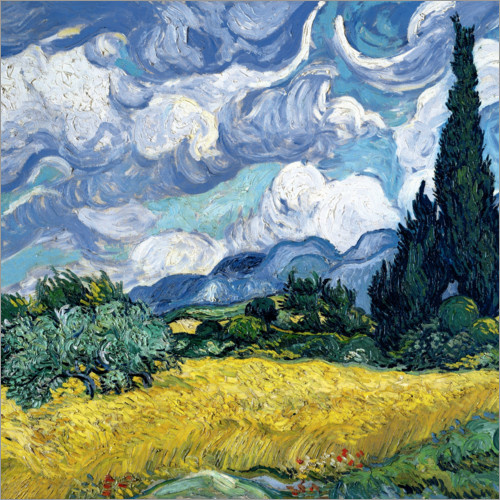
    PS So many pictures by Van Gogh are shining with radiance of Spirit, and it’s so hard to choose just one….

    Food for threadbare gourmets

    One of our winter favourites is macaroni cheese – a nice cheesy thick sauce stirred into macaroni, and the top grilled to a golden brown. I try to make it more interesting as the weeks go by… adding chopped hard boiled eggs, or stirring through onion and tomato fried until soft. Or I sprinkle the top with grated parmesan which makes a lovely crisp topping. And then there’s the trick with leftover bolognaise sauce. The macaroni and the cheese sauce transform it into a sort of poor man’s lasagne – just three layers, meat, macaroni and the cheese sauce poured over and stirred through the pasta. Quick and easy and comforting! I’ve also tried this with a tin of salmon as the bottom layer, and the macaroni cheese on top…

    Food for thought

    Thank God our time is now when wrong

    Comes up to face us everywhere.

    Never to leave us till we take

    The longest stride of soul men ever took.

    Affairs are now soul size…

    It takes so many thousand years to wake,

    But will you wake for pity’s sake? Christopher Fry

  • Observing light and love

    Image result for st francis

    It must be over forty years since I rummaged in that wastepaper basket in the office. I salvaged a photo I’d seen the photographer toss into it disgustedly – saying it was double exposed, and there was no way his camera should have produced such a useless image.

    It’s guaranteed not to, he had exclaimed. So I looked at it, and recognised what I was seeing. The little old woman sitting in the chair with piercing brown eyes and a deeply wrinkled face was Mother Teresa, who had visited this country back in the early seventies.

    I was working on a woman’s magazine. I had given up any belief in God, or the Supernatural a few years before, when my life seemed so awful that I blamed the Deity, and decided to get on without It. And I didn’t like Mother Teresa.

    But the picture I was looking at was one of authentic holiness. The light around this woman ringed her body, and was not obliterated by the arms of the chair, but carried on around her form. I still have this photo, feeling that it is an historic one.

    In the early pictures of saints, in western Renaissance pictures, Byzantine ikons, middle Eastern paintings, to Indian Jain and Hindu representations of holiness, artists have usually painted a halo around the head of a person. But this was a light which completely ringed Mother Teresa. Maybe it was her aura – which was filled with light.

    I’ve never been very impressed by the efforts of the Catholic church to establish sainthood based on the person having performed at least two miracles of healing. Healing is not that rare, even among healers the Catholic church would not recognise as saints.

    Healers to me are of rather a different order, and maybe some can see the light in their souls that is not obvious to us lesser mortals. Nelson Mandela, a great man, whose great work of healing is now being undone in South Africa, would be one of those healers… maybe Princess Diana, who brought comfort and hope and re-introduced the word ‘love’ into the vocabularies of some who never used it, was a healer. Albert Schweitzer, the great musician and theologian, turned doctor, who brought healing to the sick or dying Africans who came to him at Lambarene in Africa, was a great healer and a great man, but has never been called a saint.

    The face of Major Keeble, who fought in the Falklands War is marked with that same spirituality which makes a difference in our world. He was second in command of his regiment, when Col H. Jones, a VC hero, was killed during the Battle of Goose Green. A devout Catholic, Keeble took command at a stage when one in six of his men were killed or wounded, they were largely out of ammunition, had been without sleep for 40 hours, surrounded by burning gorse bushes, and were vulnerable to a counter-attack. A hopeless situation in fact.

    After kneeling alone in prayer amongst the burning gorse, he returned to his men, ordered them to ceasefire, and released several Argentine prisoners of war with a message to their commander to surrender or risk more casualties. The offer was accepted, no more killing and a peaceful surrender of the opposing Argentine forces was the result of his action/Guidance. Now retired and still making a difference, Keeble has established a consultancy and lectures on the: “ethic of business transformation with the ethic of peoples’ flourishing”.

    I have seen two halos. One was during a personal growth course when the forty-five of us there were being really challenged, and floundering. Then someone spoke up, joyful words of inspiration, courage and wisdom. I looked across at him with amazement, and saw a ring of light around his head, just as depicted in those ancient paintings.

    The man with a halo was a gay who worked with Aids sufferers. He came to this course because two friends had persuaded him. His two friends were as ‘holy’ as he was – whole in the real sense of the word. I loved them both for their goodness and simplicity. Both were selfless teachers who loved their boys in the purest sense of the word. The last time I saw one of them, he was sitting on the pavement, his feet in the gutter in the pouring rain, with his arm around the shoulders of a desperate drunk.

    The other time I saw a halo was when I looked across at a ten- year- old child, lost in playing an old church organ. Another photographer from the same magazine couldn’t resist taking a photo of her, and when it was developed, there was that ring of light emanating from the crown of her head. I can’t explain it. Neither could the photographer with his state of the art camera.

    Years later, I was talking to a grandchild, the same age as the girl. He was surprised to discover from me, that not everyone saw the light that he saw, shining from people’s hands and sometimes all around them. Later that night, as I tucked him into bed, he sat up and said to me earnestly, “Grannie, everything that God creates comes from the light”.

    Malcolm Muggeridge, the initially sceptical English journalist who went to India to see what Mother Teresa was up to, went to the tatty, ill-equipped hospital where the dying, lying destitute on the streets, were brought to her and her gentle loving nuns. He wrote that the hospital was filled with a light, which also felt like joy.

    I can’t explain any of this. I’m just recording and revelling in the little that I have observed about light and love.

    PS Since leaving my other internet provider at the beginning of the year, I have struggled with my new one, discovering after some months, a second e-mail account where all the blogs I follow have been accumulating for months. So I have hundreds of e- mails to sort through, as well as thousands of others that this new email provider dug up from somewhere in the past, and generously deposited in my files. So I’m taking a break from writing my blog for a few weeks while I wade through this mystifying and mountainous back-log… be bak sun, as they say!!!

    Food for threadbare gourmets

    Deciding to sip our spicy pumpkin soup from cups made me re-think croutons, which I love. So instead of frying cubes of sour dough bread in olive oil, I fried squares and fingers of the bread instead, put them on a plate, and let people help themselves. They were so delicious and so successful that I will probably never bother with fiddly croutons ever again. Guests waxed nostalgic about fried bread from their childhood… don’t we do fried bread anymore?.

    Food for thought

    This made me laugh, another version of a famous prayer, but still – to some extent – true!

    Lord, give me coffee to find the courage to do the things that I can change, and give me whisky to help me accept the things I cannot change…

  • A friend and The Golden Key

    My friend Oi ( pronounced O-ee) had ideas so advanced that even Quaker Meeting – that most liberal and open- minded Christian group – threw her out.

    She was born in 1900, the youngest of ten, to a father who was sixty years old, and she died when she was a hundred and four – so the two life-times covered a hundred and sixty four years, and went back to 1840. Her father was a cabin boy on a ship that was wrecked on the NZ coast in 1856. Local Maoris formed a human chain to rescue him, and he stayed with them for some time, becoming very close to the chief. After returning to England, he came back with a seventeen-year-old bride, and the Maori chief gave him land to start his life here.

    Robin, Oi’s father, established a huge sheep farm, built a big beautiful house, cottages for his shepherds, barns, wool-sheds and an exquisite little chapel, where Oi and her nine brothers and sisters played the organ and helped hand out prayer books to the shepherds and their families as they entered.. As each child arrived, the generous chief had given them Maori land. He ceremonially adopted Oi, and gave her the Maori name Oiroa, which roughly translated, means: ‘compassion for those in need’. Though it was shortened to Oi, she lived up to her name always, and when I met her was beloved by many people for very good reasons.

    She married a distinguished Auckland architect – sometimes known as NZ’s Frank Lloyd Wright – who created many of Auckland’s great buildings, like the Railway Station, and beautiful private homes including some famous ones in the Hawkes Bay. Oi herself was very musical, and played the piano, and was so deeply involved in the musical life of her adopted city, that in the early thirties she and another musical aficionado, started the first orchestra in the city, whose descendant is still thriving.

    She was beautiful – and open-hearted and sweet-natured. She was also unhappily married to a much older controlling, jealous and angry man. Other men loved her, and I picked up hints over the years of tempestuous scenes and dramatic confrontations, one in which her loyal cleaning lady divested a desperate suitor of his shotgun at the front door. Oi received and declined her last proposal in her eighties.

    Her zest for life never diminished, in spite of a son’s suicide, a difficult life, and much loneliness. Neither did her kindness fail, or her energy, for that matter. I was sure her inner life kept her young. She was often busy driving “old ladies” shopping until well into her nineties. She obviously didn’t feel she qualified for that label – yet! Her spontaneity and authenticity, happiness and serenity, endeared her to all ages.

    I met her at Quaker meeting, where we were both what is called attenders, as opposed to members. On occasion when the beautiful and mystical silence was gently broken by a deeply felt message, if it was Oi, as she was known for short, it would be a profoundly mystical and eminently practical thought.

    Throughout her life she was drawn to mysticism, a branch of the spiritual life which has always been mistrusted by organised religion, as its devotees seek union with the Source, whatever it is called, thus bypassing the need for priests, mullahs, rabbis, gurus or whatever. Whether these mystics were Muslim, as in the case of Rumi and the Sufis, or Christians like Master Eckhart, or St John of the Cross, they often came to a sticky end at the hands of their respective religions.

    Luckily in the twentieth century, this fate is not so common, and Oi escaped lightly by just being blackballed by Quakers! She explored most branches of both Western and Eastern mysticism, and in her thirties, became a lover of Ramakrishna’s teachings, keeping a photo of him by her bed-side always. He practised several religions, including Hindu, Islam and Christianity, and taught that in spite of the differences, all religions are valid and true, and they lead to the same ultimate goal- God.

    After Oi introduced herself to me, and invited me to her beautiful house (I had not been long in NZ then), we became close, and she became my mentor. My two small children looked on her as a grandparent and we loved going to her serene and peaceful home.

    Though it was in the city, it sat among mature trees and a rambling, flowery garden with a stream. Her architect son had designed it for her. Music, in her mid-seventies, was still her passion. Sometimes I would arrive at the garden entrance, and hear the glorious sounds of a trio or a quartet streaming out of the windows, and I’d stand silently outside under the persimmon tree, listening to Mozart or Mahler.

    When the children and I were there, we‘d often end up singing round the piano with the student who boarded with her, and was a brilliant pianist and lovely tenor. We’d all sing favourites as diverse as Handel’s, ‘Where e’er you walk”, to: “Feed the birds,” from Mary Poppins. I had another musical friend, Phillipa, whose unbearable life (a romance I ‘ll tell another time) was slightly improved by taking clarinet lessons, and since her ambition was to play in an orchestra, she needed practice playing with others.

    Hearing about her, typically, Oi offered to play with her, and through music-making, they learned to love each other too. I was spending the day with Oi when I learned that the ship Phillipa was sailing on had caught fire, and she and her two small children, one handicapped, plus her six-month-old baby, were adrift in a lifeboat in a violent storm. I never saw them again.

    Oi’s unorthodox thinking, which of course, was not confined to spiritual practises, but spread into all areas of her life, alienated her family who were very religious and ultra- conservative. She rarely saw them, so she began spending Christmas with us until one son who disapproved of us too, was shamed into inviting her for Christmas after many years.

    So it was that her funeral – which was attended by all those people from all walks of life, whose lives she had touched with love and compassion – was a very traditional one… which slightly puzzled me, as I was sure Oi would have wanted something different.

    At the end her family left, and only five of us gathered round Oi’s coffin as it was lowered into the void – the student – now a judge, her cleaning lady for the last twenty years, my two now grownup children, and I.

    The judge said to us, “That wasn’t the sort of funeral I expected Oi to have”. “No,” piped up the cleaning lady, “I still have a copy of what she wanted!”

    I suddenly remembered how Oi, when she was too old to cope with driving in inner-city traffic, had asked her lawyer to call in and take possession of her will for her funeral. She had showed it to me – an exquisite collection of sayings on love, from mystics of all faiths. To my horror, the lawyer had charged this beautiful old lady in her mid-nineties, an exorbitant fee.

    Standing by her coffin now, the judge wept over this betrayal of Oi’s wishes. “One more thing for her to forgive her sons for,” he sobbed. We all wept with him.

    Before she died, Oi gave me the books which had sustained her, and influenced her thinking, and which had helped her find her path to expanded consciousness and freedom. One of the joys of reading them was that she’d underlined or marked the passages which sang to her. Not only did I find this a wonderful aid to a deeper understanding, both of the texts and of Oi, but it also taught me the pleasure of marking and making my books my own, which I had never dared to do before.

    I’d grown up learning that books should be treated as sacred, and never marked, turned down, or in any way treated as familiar friends. I do it all the time now, knowing that others who eventually find their way to them will – or might – enjoy the same pleasures of insight and intimacy as I have done.

    Oi’s words still remain in my mind, and often come back to me. When there was a problem she would close her eyes, and focus for a minute, then open them and say firmly: “You cannot know the solution. You can only pray that the situation evolves for the highest good of you, and everyone else involved. And know that this will happen, and let it go.”

    She’d quote T.S. Eliot: “It is not our business what others may think of us,”… or: “God wastes nothing”. She’d say : “Let go and let God.”… and, “Happiness is like water in the palm of your hand. If you gently hold your palm open, it will stay. But if you clutch it and try to hang onto it, you lose it.” She died thirteen years ago, but her loving wisdom sustains me still.

    The gift she gave me, which I treasure the most, and use constantly, is ‘The Golden Key’, a tiny spiritual masterpiece of only a few words. I give it now with love, as Oi did, to anyone who thinks it may be useful to them…

    Food for threadbare gourmets – those of us who qualify for this description will go hungry today, as I feel this post is so long, I can’t expect you all to go on reading, while Food for thought is contained in Oi’s sayings and in her life…

  • The kindness of strangers

    Illustration from the post “The kindness of strangers”

    On a dark rainy night passing through East St Louis last week, heart surgeon Bill Daily had a puncture. He was on his way to perform an urgent operation. At a gas station, with the tyre not holding air, he was trying to get a staff member to come and pick him up, when a black bystander overheard his distress, and drove him to the hospital. When he’d completed the operation, the surgeon faced the same problem in order to get back home.

    Back at the gas station, the proprietor fetched a proper jack, and repaired the tyre for him, and then invited him in for food and drink. “God created the world and us to help one another”, he said. Neither good Samaritan would accept any payment from Dr Daily. Later Nasser, a Muslim immigrant from Palestine said: “We need to teach the younger generations how to learn from each other, love each other and respect each other.”

    At a time when prominent people can label half the population “deplorables”, and in UK, other prominent people name a majority as not fit to vote for their future – too stupid, ignorant and prejudiced to take seriously – such kindness is worth more than gold. Those who voice these labels too often live in comfortable middle class or rich enclaves, blind to the poverty and misery, caused by the policies of those same so-called ‘elites.’

    And so, in many places all over the world, our countries are divided. Yet the spontaneous kindness of a black American, and a Muslim immigrant, remind us all of what really matters in our societies – caring for each other.

    I remembered Mildred Norman,(I’ve talked about her before ) the Peace Pilgrim, that amazing woman, who for twenty-eight years, walked the length and breadth of the States seven times with her message of peace. She carried nothing but a few items in the pockets of her jerkin, which was emblazoned with the words: Peace Pilgrim. From 1953 until her death in 1981, she walked to remind people of peace.

    She walked through the Korean War, Vietnam War, and all the other conflicts, until the day she died. She had no means of sustenance, eating when she was given food, and sleeping wherever she was. Usually people recognised her goodness and gave her a bed… ” walking until given shelter, fasting until given food”. When she reached 25,000 miles in 1964, she gave up counting.

    Ironically, she was killed in a car crash while being taken to speak to a meeting. She was seventy-one, a gentle, silver-haired, blue-eyed woman with a tanned complexion. Wherever she went all over the States, she met with kindness.

    Then there was Australian Don Ritchie, ‘The Angel of the Gap’. I can’t read about this beautiful man without tears blurring my eyes. He retired as a salesman, and bought a house with a marvellous view of the ocean just outside Sydney, which overlooked a dangerous drop, famous for the number of suicides there. He spent the rest of his life looking out of the window at that famous view. Not to enjoy the view, but – “for a far greater purpose,” as one obituary put it – to rescue those who came to end their lives.

    As soon as he saw someone lingering there, he walked across to them smiling, with his hands out, palms up – what a beautiful, instinctive gesture of peace and non-violence. “Is there something I can do to help you?” he would ask. He talked to them until they were ready to pick up their shoes, and their wallet, and their note, and to come back to his house where his wife had a cup of tea waiting for them.

    Sometimes he risked his life struggling with those who were determined to jump. The official count of the lives he saved is a hundred and sixty- four, but those who knew him believe the figure to be nearer five hundred. Bottles of champagne and cards arrived for him for years after from those whose lives he’d saved.

    He used to say: “never under-estimate the power of a kind word and a smile”. He died a few years ago at eighty-six, proof that no- one needs special training to serve their world, that love makes a difference, that great goodness is to be found in ‘ordinary’ people ( if indeed they are ordinary) as well as in spiritual mentors…

    This goodness is also what I’ve found in so many blogs I read. Some I never miss… not witty or intellectual or spiritual, but filled with a sweetness and a simple goodness that lights up my day… they make me think of that haunting little Shaker hymn ‘Simple Gifts’… their goodness is a gift, a simple uncomplicated sort of goodness, spontaneous and undemanding. Reading these gentle blogs about ordinary events and everyday lives, filled with the enjoyment of weather and animals and growing things is like smelling a flower.

    As the years have gone by, I’ve come to a deeper appreciation of the world of blogging. I’ve come to see that there are those who are sick, but never reveal it, who use blogging as their way of meeting and communicating with others. Some are coping with family illness, death, dementia, and other domestic challenges.

    They receive kindness and understanding and a listening ear from the blogging world, and in our turn, our eyes are opened to the depths of life, and truths about the human condition. We gain from the perceptions and understandings and resolutions they reach. Some use blogging as a comfort and a support as they search for a job, or a purpose, or tackle a new challenge, and receive friendship and support for their journey – and some write for fun about their passions.

    Blogging can be an education and can link us all as we learn about the lives and countries of other bloggers. More importantly, we share their feelings and gain greater understanding of our global village. My general knowledge has expanded as I’ve read farming blogs, scientific blogs, climate blogs, artistic blogs, literary blogs, mystical blogs – and above all – I’ve made beautiful friends I love and care about.

    And the kindness of bloggers is the heart of it all. That’s why I think blogging has a part to play in raising the consciousness of the world. Even the self-imposed conventions of conduct that we observe – to never criticise, judge or write anything hurtful … to be supportive and respectful – are habits that can make the world a kinder place.

    Kindness stimulates the flow of peace and goodwill which is what will, in the end, transform the world into a village, where we know and care about each other, and where, in Thich Nhat Hahn’s words: ‘peace is every step.’ The heart of bloggers is a part of the beating pulse of the world… so may their love and kindness prevail – so Namaste, my friends.

    Google says, ‘Roughly translated, ‘namaste’ means “I bow to the God within you”, or “The Spirit within me salutes the Spirit in you” – a knowing that we are all made from the same One Divine Consciousness.’

    (Doctor Daily’s story of what he called ‘grace’ can be found here)

    PS ‘here’ looks perfectly normal on the formatting page… can’t understand the change in caps )

    Food for Threadbare Gourmets

    A few days ago, I felt that dreaded moment when something hard suddenly materialised as I chewed something soft. So, now waiting for an appointment with the dentist, I needed something that wouldn’t need much chewing. I de-frosted 500gm of minced chicken and sauted some chopped onion and some celery in a little oil and some butter.

    When they were soft, I added a cup of grated carrot, my latest favourite – a grated courgette, several chopped garlic cloves, chopped thyme and a couple of bay-leaves, a squeeze of Worcestershire sauce (you can leave this out). Add the chicken to the pan to quickly brown, and then tip it all into a casserole with some chicken stock to cook slowly in the oven – less than 150 degrees.

    Eaten with creamed potatoes, and pureed spinach this was just what was the dentist ordered!

    Food for thought Our spiritual path and spiritual destiny – to be in the right place at the right time. Anonymous

  • Following your bliss

    Illustration from the post “Following your bliss”

    Follow your bliss, urged the great Joseph Campbell – this used to sound like heaven. Just doing everything you wanted!

    Later – just slightly wiser- I supposed this heaven was probably self-actualization – which always sounded like one step below enlightenment, both impossible goals for the likes of me. But then I discovered that self-actualisation was not quite the Everest I had thought.

    It was the need to be good, to be fully alive and to find meaning in life – according to Abraham Maslow, one of the grandfathers of personal growth. And yet according to him, all other needs like food, love etc had to be fulfilled before achieving the nirvana of being a free person – another ringing phrase of personal growth.

    Research suggests that when people live lives which are different from their true nature and capabilities, they are less likely to be happy than those whose goals and lives match. So pursuing the elusive goal of this self-realisation means we feel more creative and happier, more ‘fully alive’, and ‘find meaning in life’.

    And yet it seems to me that happiness isn’t the whole story, and fulfilling our needs isn’t either. Great souls like Nelson Mandela and Victor Frankl have been called self-actualising, and yet their needs can hardly be said to have been met in prison or concentration camp. But their capacity for living, love and forgiveness, wisdom and insight seem more saintly and more profound than the stories of many saints.

    They both, like other so- called self-actualisers, had accepted who they were and where they were, and made the best of it, in giant, heroic terms. But self- actualising isn’t just for the heroic and the saintly, I discover, but can be for all of us. Maslow described the fulfilment of following such a path and as I understand it, his description of life as a fully- realised person would be something like this: We would experience life like a child, with full absorption and concentration and joy and we’d try new things instead of sticking to safe paths; we’d listen to our feelings and inner voice instead being victim to habit and the voice of tradition, authority or the majority.

    We’d dare to be ourselves – authentic, in Maslow’s word- and avoid pretence (‘game playing’). And we’d have the courage be unpopular if we didn’t agree with the views of the majority.

    We’d take responsibility and work hard; and try to identify our ego defences and be brave enough to give them up, meaning to be honest with ourselves. This also means being vulnerable, which I don’t think Maslow mentions, but this to me, means having the courage to be tender and open hearted and to develop the capacity to feel deeply.

    Apart from knowing that we are following our spiritual destiny in becoming the whole person we can be, the rewards seem to be a deeper enjoyment and engagement in life, a profound appreciation of the goodness of life, and therefore less stress and anxiety, and a genuine trust, in Mother Julian’s words, that all will be well.

    It sounds like something we could all do, though when we have commitments to children, those duties have to be honoured first … otherwise becoming self – realised can seem more like self-centredness! Hindus recognise this stage of life as ‘householder’, before seeking their own ‘liberation’.

    Those making this pilgrimage towards wholeness and authenticity often find that the path to freedom is not an easy one. That road less travelled may be pitted with puddles and pain-filled treks. And the person who’s throwing off the shackles of duty and listening to their inner voice may often be misunderstood or misinterpreted.

    The stars that kept me on track as I have tried to walk this way were actually words from the sages and poets – and I have clung to them. From Ibsen’s belief in our ‘sacred duty’ to ourselves, to T.S. Eliot’s dictum that it is not our business what other people think of us, the words of literature – the logbook of the human race as one writer put it – pointed the way.

    Trying to become a free person, letting go old self-defeating patterns of doubt and distrust, old fears – those critical inner voices that don’t serve us – means changing many things in our lives and in ourselves … and it’s not always obvious where this is taking us. Werner Erhard once said confusion led to a higher state of consciousness, a belief I have clung to, hoping it to be true!

    These transitions take trust and courage and a belief in the goodness of Life. And I am learning that we have to listen to the voice of life and not be tempted by the easy way out – and never settle for less. To reach the end of our days and to realise that we had settled for less, for the sake of pleasing others or making life easier for ourselves, would be the ultimate betrayal of the gift of life.

    Loyal, loving friends support us – where would we be without our friends? But in those dark moments which we all have to endure alone when we try to walk this path, the words of Oriah Mountain Dreamer can sustain us.

    She wrote: “I want to know if you can disappoint another to be true to yourself. If you can bear the accusation of betrayal and not betray your own soul. If you can be faithless and therefore trustworthy.” (Warning : this hurts !) One friend said to me: “I feel stripped”, as she picked her painful way along the path. And it’s only by staying fully conscious and hanging on to all our reserves of courage that we can reach the end of this road victoriously.

    When we strike out, off the beaten track, it can push the buttons of others, living safe conventional lives, sticking to conservative values, and maybe not wanting to tread any but the known way – and maybe feeling uncomfortable when confronted with uncertainty or risk.

    But to be free is to stride fearlessly into and through a cloud of unknowing – as the beautiful, extraordinary and self – actualised Helen Keller amazingly said: ‘If life is not an adventure then it is nothing at all’. So like so many others, I have had to step out of my constricted and uncomfortable comfort zone in order to be free. And just as Eliot said it’s not our business what others think of us, so he might also have said that we cannot expect to be understood either.

    The words of another poet, Montrose, encourage travellers to find the courage to take what seem like huge steps into the unknown with his words: He either fears his fate too much, Or his deserts are small, That puts it not unto the touch To win or lose it all…

    And so though while we are in process, we may think we have lost all to win all – or maybe in the words of the Spanish proverb – have taken what we wanted and paid for it – freedom is worth the price. It’s freedom from self-limiting beliefs and doubts and from compromising with our own truth and inner knowing. It’s daring to open our hearts, do the unthinkable, find new ways of being, connect with the beating heart of the world and know that when we take these terrible risks, somehow the universe supports us.

    So yes, such a life is an adventure, and also laughter and love and truth and beauty, friends and fun. And now I think this is what Joseph Campbell may have meant when he said follow your bliss.

    Food for threadbare gourmets

    I’ve sometimes thought I could/should write a cookery book called a million ways with chicken – an exaggeration perhaps – but not far off! I love chicken recipes, and this one I acquired over forty years ago from Clement Freud (yes, Sigmund’s grandson) when he was in his heyday. It’s a cold mousse, and you need eight ounces of cooked, chopped chicken, two ounces of butter, three eggs, three ounces of fresh white breadcrumbs, three table spoons of dry sherry, quarter of a pint of single cream, salt and nutmeg.

    Melt the butter in a large basin over a pan of boiling water. Pour in the cream and breadcrumbs, salt and a good pinch of nutmeg and stir for about five minutes until the mixture thickens. Beat the eggs and sherry together, and add to the basin, followed by the chopped chicken. Pour this mixture into a buttered soufflé dish, cover with foil and bake in a moderate oven until firm – about half an hour. Let it cool before serving. Freud recommends serving it with a slightly garlicky mayonnaise with mashed avocado added, and for a really creamy texture stirring in a stiffly beaten egg-white. It’s all rather delicate and delicious.

    Food for thought

    “Nobody can give you the meaning of your life. It is your life, the meaning has also to be yours. Nobody except you can come upon it. It is your life and it is only accessible to you. Only in living will the mystery be revealed to you.” -Rajneesh