Author: Valerie Davies NZ

  • The necessity of beauty

    Illustration from the post “The necessity of beauty”

    Pamela was my lodger. She was living in the third bedroom in my flat for the same reasons that Mr Micawber pronounced the immortal words:”Annual income twenty pounds, annual expenditure nineteen pounds nineteen and six, result happiness. Annual income twenty pounds, annual expenditure twenty pounds nought and six, result misery.”

    I’d tried to fill the gap between my meagre salary (women were paid far less than men in the Hongkong I lived in ) and my expenditure, by doing TV quiz shows, radio programmes, using the children as photographic models and even doing PR for the Anglican church until I could stand being hypocritical no longer. So Pamela was my next attempt at solvency. While she lived with me my life was filled with her dramas, love affairs, crises and disasters.

    She arrived with one fiancée, dressed demurely in twinset and pearls, tweed skirt and silk head –scarf. Soon she found a more exciting prospect, and changed her style to newly fashionable jeans, her hair swung up into dashing styles and lots of makeup. The new fiancée lent her his new VW while he went back to England to sort out his divorce, and hereby hangs the tale. Pamela rolled the car her first night in possession of it, and I was awakened in the middle of the night by a Chinese policeman who couldn’t speak English.

    I pieced together that Pamela had had an accident, and was in a Chinese hospital since she had no insurance to cover her for a European one. The next morning the children, four and five years old, and I, packed up a few things for Pamela and made an expedition to the enormous building which housed some thousands of sick and penniless Chinese.

    We found our way through a maze of corridors to Pamela’s ward, and by the time I reached her bed I was deeply shocked. The ward held eighty women. They were all dressed in faded brown cotton shifts including Pamela. The noise was horrendous. Cantonese is the noisiest language on earth. To hear our amah chatting to another outside the kitchen was deafening. To hear seventy- nine women chatting in a confined space was probably higher than the safe decibel level.

    Pamela was bruised and shocked but not injured. After doing our duty, and promising to return that afternoon with more things she wanted, the children and I went home, leaving her with a little bunch of camellias I’d picked. Only six blossoms because that was all that were flowering.

    When we returned in the afternoon, something had changed. There was a hush in the ward and a sense of peace, and all eyes were on the gwailo (long- nose) and her children. Being watched was something one accepted as part of life then, but this felt different. And the hush was a sort of reverence. Pamela whispered to me what had happened after I left.

    When we walked out of the ward, the women came crowding round her to see the flowers and smell the fragrance. They were ecstatic at this exquisite beauty in their harsh unfriendly environment. Deprived as the women were, of all colour and texture and smell and beauty, the flowers brought something like heaven into their lives.

    They didn’t speak English, and Pamela didn’t speak Cantonese, but with the aid of the ward sister’s few words of English, they worked out a roster for the flowers. Each woman would have one camellia by her bed-side in a glass for three hours in every twenty-four. Pamela had one all the time, and the sixth flower which had fallen off its stem, the ward sisters had in their office, floating in a saucer.

    Back at the office the next day I rang the dean of the cathedral and several hotels and they agreed to send their flowers to the hospital whenever they changed them. I wonder if they still do.

    The great Catholic thinker Monsignor Hildebrand wrote that: ‘the poor need not only bread. The poor also need beauty’. But it’s not just the poor. We all need beauty.

    It’s strange to me that Abraham Maslow in his hierarchy of needs didn’t include beauty. Sometimes beauty is the the only thing that keeps us going. As Resistance fighter Odette Churchill was being locked back in her cell after a bout of torture by the Gestapo, she snatched up the skeleton of a leaf being blown in the door with her. The beauty of that leaf sustained her and gave her hope and courage and a belief in goodness that carried her through her dreadful ordeal.

    Quaker writer, Caroline Graveson wrote that: ‘ there is a daily round for beauty as well as for goodness, a world of flowers and books and cinemas and clothes and manners as well as mountains and masterpieces.’ She talked of beauty: ‘not only in the natural beauty of the earth and sky, but in all fitness of language and rhythm, whether it describe a heavenly vision or a street fight, a Hamlet or a Falstaff, a philosophy or a joke: in all fitness of line and colour and shade, whether seen in the Sistine Madonna or a child’s knitted frock…’

    The sad thing is that those deprived Chinese women in that joyless hospital ward, came from a culture, which before the blight of industrialisation and the tyranny of plastic, was incapable of producing anything that wasn’t beautiful – from their baskets to their bowls, to their porcelain and their poetry. And there was something very beautiful about buying a kati of vegetables in the markets and watching them being skilfully wrapped in a beautifully folded sheet of re-cycled Chinese newspaper, or a large leaf, and tied with a knotted reed.

    Perhaps their own sage should have the last word, Confucius said that everything is beautiful, to those who can see it….

    Food for Threadbare Gourmets

    Salady food feels right in the Antipodean Christmas season.This is one of my favourites. Boil new potatoes for the number of people you have, plus hardboiled eggs. Chop them and mix them with sliced artichoke hearts fresh from the delicatessen or from a jar. Gently toss in a good vinaigrette dressing, and sprinkle with capers if desired. Delicious on its own with crusty rolls, or with cold chicken or cold salmon.

  • Midsummer Christmas, dawn to dusk

    Illustration from the post “Midsummer Christmas, dawn to dusk”
    Illustration from the post “Midsummer Christmas, dawn to dusk”
    Illustration from the post “Midsummer Christmas, dawn to dusk”
    Illustration from the post “Midsummer Christmas, dawn to dusk”
    Illustration from the post “Midsummer Christmas, dawn to dusk”
    Illustration from the post “Midsummer Christmas, dawn to dusk”
    Illustration from the post “Midsummer Christmas, dawn to dusk”

    It would be good to find some quiet inlet where the waters were still enough for reflection. where one might sense the joy of the moment, rather than plan breathlessly for a few dozen mingled treats in the future… Kathleen Norris

    Illustration from the post “Midsummer Christmas, dawn to dusk”
  • A peculiar Christmas feast and the 4th Wise Man

    Illustration from the post “A peculiar Christmas feast and the 4th Wise Man”

    Polar explorer Captain Scott and his team celebrated Christmas on their way to the South Pole in 1911. As a foodie, I find their feast a little lacking in… je ne sais quoi …

    After his historic Christmas dinner with Wilson and Oates, Bowers and Evans, Scott recorded in his diary what he grandly termed four courses: ” The first, pemmican, full whack, with slices of horse meat flavoured with onion and curry powder and thickened with biscuit; then an arrowroot, cocoa and biscuit hoosh sweetened; then a plum pudding; then cocoa with raisins, and finally a dessert of caramels and ginger.”

    Pemmican was the classic polar food, preserved, dried meat and fat… not my idea of gourmet nosh, but Birdie Bowers, and Taff Evans both felt so filled with warmth and human kindness after this extraordinary collection of unpalatable rubbish, that they decided when they got back to England they would: “get hold of all the poor children we can and just stuff them full of nice things,” in bachelor Bowers’ words.

    I just feel the polar feast could have been warmed up with a wee dram of whisky perhaps, or even a swig of medicinal brandy. But then, I feel the cold.

    Bowers was responsible for this jolly Christmas celebration, having smuggled the food over and above the allowed weights for the journey. Once the recalcitrant and desperate Mongolian ponies – who had suffered so terribly on the sea journey to the Antarctic, and who had then struggled endlessly in appalling weather and conditions with food they couldn’t eat- had been killed, every man carried his own food and equipment on the heavy sleds.

    Bowers had always sneaked his night-time biscuit to his pony. On the night before they were all killed, Wilson, St Francis’s man, gave his whole biscuit ration to the poor creatures, like the condemned man’s last meal. This was the only time I cried during the film: ‘Scott of the Antartic’ with John Mills. I was twelve, and blow the men, it was the ponies I wept for.

    Thankfully my Christmases have never been as cold as theirs, though it felt like it in the hall in which we rehearsed for the Nativity Play when I was five. I had no idea what a rehearsal was, or why we had been marched – or straggled would be a better word – to the hall just down the road. Neither did I really understand the story we were acting in. We seemed to stand around for hours in the unheated hall while teachers talked animatedly to each other, and shifted bodies and chairs around the stage.

    I just knew that the white nightie thing I was wearing like all the other little girls, was freezing. To cap it all – like the other angels in their nighties – I had a boring triangle to keep chinging on. This was a watershed in my understanding of the world. I understood then for the first time, that boys had all the fun. Not only were they all dressed up as kings and shepherds, but they got to play drums and tambourines, trumpets and recorders.

    I felt as aggrieved as I did when I first saw huge Persil ads, in which the dark haired woman had the grubby grey sheets, and a bright blonde had the sparkling Persil washed sheets. Apparently blondes were better than brunettes.

    But that’s another story… a year later my grandmother took me to a midnight carol service. I was riveted. A boy sang the first verse to: ‘Once in Royal David’s City’ in an un-earthly soaring treble, and then read the lesson. At one point his clear voice rang out with the words “And Mary pondered these things in her heart”. My heart leapt. I had no idea what the beautiful words meant, but for many years I treasured them and pondered them in my heart too.

    The next memorable nativity play was when my daughter was five, and she was playing Mary. I thought she was utterly precious as she gazed at the world with her big brown eyes, her little face framed by a blue head covering, her solemn gaze taking in far more than I ever did. I sat and watched her with tears running down my face and my heart nearly burst with love. And the same when my small son sang the solo so sweetly at his Christmas concert.

    Much the same too at all my grandsons’ nativity plays, only not tears, laughter. My heart nearly burst with love then too, and lots of giggles, as the head mistress darted down from her pulpit to drag a little finger from some-one’s little nose, and then he simply used the other finger on the other hand and the other nostril as soon as she was safely back in the pulpit.

    None of them were magnificently garbed magi, just lowly shepherds … but we all sang the sombre, beautiful carol, ‘We three kings of Orient are…’ My favourite wise man is the fourth one, and that old Christmas legend telling his story is one of the most beautiful Christmas stories, to my mind…

    He had set out with the other three Magi, but on the way, they came upon a traveller who’d had an accident, and the fourth wise man stopped to help him. Seeing he would be a while, he told the other three to carry on with their journey, and he would catch them up. But he never did, for he kept meeting some creature or traveller who needed his help to get them to safety, and by the time he got to Bethlehem the kings had been and gone, and so had the Child he was seeking.

    He spent many years following the trail which had always gone cold when he got there, to Egypt and Nazareth and elsewhere. He was constantly delayed by yet another needy person who asked for his help. The gifts he brought and the stock of gold he had carried with him for the journey, dwindled until he had hardly enough left to buy himself food.

    And then he heard that Jesus was in Jerusalem. He hurried there, and arrived in time to stand and watch Jesus carry his cross through the streets. He had one final treasure that he was keeping to give to the One he had been seeking, a beautiful sapphire jewel. But just before Jesus passed, a Roman soldier began to assault a young woman. The fourth wise man intervened, and by now, old and frail, was unable to stop the soldier. Finally he offered him his last possession, the precious sapphire, his gift for the Messiah, and the soldier took it and left.

    At that moment Jesus reached the fourth wise man, and he knelt and asked Jesus’ forgiveness for having nothing for him because he’d stopped so often on the way to help the hungry or lost or needy. And Jesus looked at him and said: ‘For as much as you have done it unto these, you have done it unto me.’

    In other words… we are all one… so a happy Christmas-tide to us all, dear friends around the world of blogging.

    Food for threadbare gourmets

    When Christmas is here, our little purply-red plums are ripe, and though I gave this recipe last year, I think it’s worth repeating The plums which are only so-so for eating raw, are delicious when cooked. Every-one who receives a basket of these fruits also gets the recipe I use – borrowed from Nigella Lawson.

    To a kilo of plums – more or less, use 300 ml of red wine – more rather than less! Nigella says stone them – I don’t bother, the stones come out quite easily when cooked.

    Put the plums in an oven proof dish. In a saucepan boil the wine with two bay leaves, half a teasp of ground cinnamon, two cloves, one star anise, and 200g of honey. Pour over the plums, seal with foil or a lid, and bake for an hour or longer at 160 degrees, until they’re tender. You can keep them in the fridge for three days, and you can freeze them.

    Serve with crème fraiche, ice-cream, or custard. I also think they’d be good with rice pudding on a cold day. The aromatic scent while they are cooking is so delectable that I’d love to catch it in a bottle and spray it regularly around the kitchen.

    Food for thought

    “My idea of Christmas, whether old-fashioned or modern, is very simple: loving others. Come to think of it, why do we have to wait for Christmas to do that?”

    Comedian extraordinaire, Bob Hope 1903 – 2003 His grandson said that when asked on his deathbed where he wanted to be buried, he characteristically quipped: “ Surprise me .”

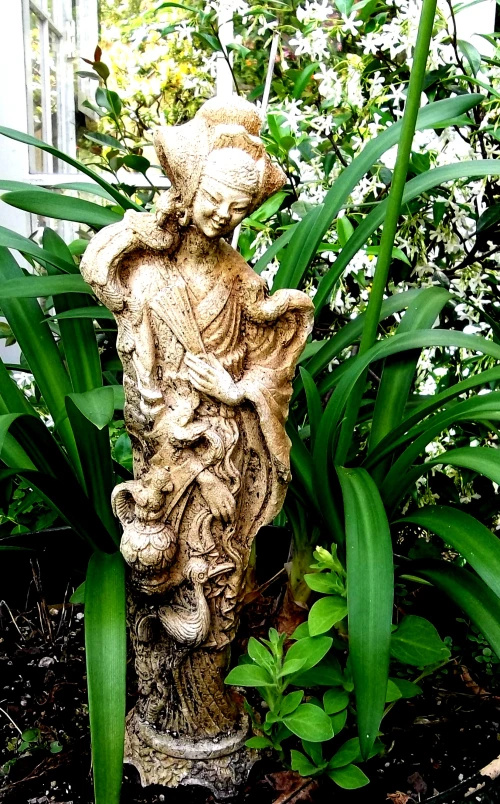
  • The feminine face of God

    Illustration from the post “The feminine face of God”

    In the last hundred materialistic years I was fascinated to discover that there are 386 recorded instances of Mary appearing to people all over the world from Belgium to Japan, Venezuela to Burundi and Rwanda. I had always supposed that the visions of Our Lady of Fatima, and at Medjugorje in Yugoslavia were unique one-off events. They are not.

    Our Lady of Zeitoun appeared regularly over a church at Zeitoun, a suburb of Cairo for several years between 1968 to 1971, where she blessed the people. Photos of the figure of light with a halo, hovering above the Coptic church of St Demiano appeared in all the Cairo newspapers. Hundreds of thousands flocked to see her, Christians, Jews, and Muslims, even the President Nasser. And there have been more reports of her appearing in Cairo just recently.

    But mostly Mary seems to appear privately to women, and children. The most famous, of course, in the 20 century was Our Lady of Fatima, who appeared on the same day for six months in 1916 to three Portuguese children, aged ten, nine and eight,

    th while they were tending goats. After the third month of their visions, when crowds began to follow them the local mayor arrested the children, as he thought the events were so disruptive.

    He put them in jail among other prisoners, and threatened to boil the children in oil ( charming! ) if they didn’t tell him the secrets Mary had imparted to them. ( the secrets seem to have been coloured by the children’s perceptions of hell and Catholic teachings) They refused, though the eldest offered to ask Mary if she could tell him. The other prisoners testified that the children consoled them and recited the rosary with them. Back home, the youngest brother and sister told their parents that Mary had told them they would die soon and meet her in heaven, but their cousin Lucia, the eldest, would live long.

    They did die, within a couple of years, of Spanish flu, and Lucia continued to have visions until she died as a very old lady in a convent. The six children who saw Mary at Medjugorje in 1981 have also continued to see her for over thirty years, on the same day of the month. This was her latest message to Mirjana Soldo on 25 November this year:

    “Dear children! Today I call all of you to prayer. Open the doors of your heart profoundly to prayer, little children, to prayer with the heart; and then the Most High will be able to act upon your freedom and conversion will begin. Your faith will become firm so that you will be able to say with all your heart: ‘My God, my all.’ You will comprehend, little children, that here on earth everything is passing. Thank you for having responded to my call.”

    The internet being what it is, there are films of Mirjana Soldo receiving her visions, not just in Yugoslavia, but in Austria, Italy and elsewhere. Like the children of Fatima, these children – now adults – were also considered to be ‘disruptive influences’ by the civil authorities

    Many phenomena were reported at Medjugorje during the appearances of the Queen of Peace as she is known, such as the sun spinning, dancing in the sky, turning colours, or being surrounded by objects such as hearts or crosses. Onlookers have reported that they have been able to look at the sun during those times without any damage to their eyes; these events are all similar to phenomena seen during the visions at Fatima in 1916. There too, newspaper reports described the sun dancing and spinning in the sky and changing colours. Reputable witnesses saw the solar phenomena forty miles away, while others, including believers, saw nothing.

    Among Mary’s many names are Queen of Heaven, Star of the Sea, The Blessed Virgin. In other places and other times the feminine principle or Divine Mother has been known by many other names… She’s been called Ameratsu and Cannon in Japan, Kuan Yin in China, Tara in Tibet, Shakti in India, Akua’ba in Africa, Isis in Egypt, Ishtar and Astarte in the Middle East, Hera and Juno in Greece and Rome, Freya in Scandinavia, Spider Woman and Ixchel the Weaver in North America.

    The Divine Mother has a long history in the planet’s consciousness. Archaeology suggests that from approximately 40,000 BC to approximately 5,000 BC the Goddess was worshipped above all, and nearly all the figurines found from this period seem to be female goddesses.

    There are other accounts of the feminine principle appearing when called upon. John Blofeld, mystic, scholar, and expert on Asian religions tells the story of a friend in China during the Second World War. He was half Chinese, and had been brought up a Christian. In danger, hungry, lost on a mountain in terrible weather, wondering if he’d survive the night, he called on his patron saint, St Bernadette, “begging that sweet child to appear and lead me to a place of safety”

    And then he saw her standing on a flat rock, her blue robe hardly moving in the fierce wind. She was smiling and around her was a nimbus of light. He felt something unfamiliar in her appearance, and then he realised she was a Chinese Bernadette. ‘Her high- swept hair, the jewelled ornaments clasped about her throat, the white silk trousers peeping through a blue robe slit to the thigh, were those of a noble Chinese maiden many centuries ago.’

    She spoke to him in Mandarin and surprised him with her childish voice, much younger than Bernadette. “ Come, Elder Brother”, and she led him to a shallow cave, where he lay down and fell deeply asleep in the bitter cold and on hard rocks, unconscious of any discomfort. For more than a year he thought it was Bernadette who’d rescued him, until he saw by chance a portrait of Kuan Yin with her two attendants. In Ling Nu, the youngest, he recognised the lady who had saved his life. After deep thought, he decided that Kuan Yin had too much delicacy to appear to someone calling on a foreign goddess, so she sent Lung Nu who could be taken for a child saint.

    Often in her appearances to children, the lady doesn’t give her name. …” beautiful lady, beautiful lady”, the three small Italian children murmured on their knees at Tre Fontane in April 1947. St Bernadette, the fourteen year-old un-educated daughter of a miller, only ever referred to her as ‘ That’, or ‘the small young lady” . The children at Medjugorje called her ‘Lady.’

    She seems to favour quiet spots far from towns and villages, by streams and grottos and woods, and her visitations come unbidden. The Catholic church is never very happy about Mary’s appearances – or you could say is suspicious – since it considers the last word to have been spoken on the faith after the death of the last apostle. So they don’t want her interfering! Reports of visions of the Lady are rarely greeted with any enthusiasm by church authorities and they have very strict criteria about who they believe.

    Out of the 386 visions/ appearances/ apparitions – depending on who is describing the visitations – only eight have been officially approved by the Catholic church. I wonder how many private and unrecorded visions – not just of Mary, but of other figures of spiritual significance – there are among people who have never spoken of them. I’ve heard of several.

    Graham Green, the novelist, writing of her, said: ‘There is a common feature in all her appearances, the appeal for prayer and yet more prayer. Her message is as simple as that, and it may seem unimportant unless we have some realisation of the terrible force of prayer, the mysterious untapped power able to move mountains’.

    Food for threadbare gourmets

    Soup is the answer when I can think of nothing else, and this quick warming tomato soup is a favourite. Gently fry an onion, five cloves of garlic, a small piece of chopped ginger, and a good pinch of coriander in a saucepan until soft. Add a teasp of smoked paprika, two tins of chopped tomatoes in puree and one tin of whole tomatoes. While it simmers, leave a small bunch of herbs like thyme and marjoram tied together in the mix.

    Simmer for ten minutes, remove the herbs and blend until smooth. Re-heat, season with salt, freshly ground black pepper, and stir in some cream… this amount serves six. Sprinkle chopped parsley on top, and freshly cooked croutons made from sour dough bread and fried in olive oil are good too.

    Food for thought

    My daughter sent me this prose poem… it’s by that talented poet Anon. We’ve had seventeen dogs – three at a time, mostly rescued…

    It came to me that every time I lose a dog they take a piece of my heart with them, and every new dog who comes into my life gifts me with a piece of their heart. If I live long enough all the components of my heart will be dog, and I will become as generous and loving as they are.

  • Days of wine and roses

    Illustration from the post “Days of wine and roses”

    It’s been the one of those glorious days when ‘cherubim and seraphim are casting down their golden crowns around the glassy sea.’ Silence… a small white yacht gliding over the still shining water, scarcely leaving a wake, using the engine because there’s no wind for the sails… the islands we never normally see, floating on the horizon, palest purple against a lavender blue sky… an enchanted stillness, the only sound the cooing of the doves in the trees.

    When I awoke this morning the sky was just turning pink, so early though it was, I jumped out of bed, dressed, and headed out to watch the rising sun across the sea. The dawn chorus was just beginning, so I turned around and walked by houses with curtains drawn and solitary gardens, thrush and blackbird seeming to pass me on from one song to the next.

    Theirs was the longest and sweetest serenade, while the soft incessant cheeping of the sparrows filled the spaces, and the slow crescendo of the doves cooing began. As I retraced my footsteps back along a grassy track, I saw with pleasure that mine were the only footprints in the dewy grass. I never met another soul as I meandered around the sleeping village.

    Back home I crossed into the cemetery and disturbed a couple of speckled hens who scurried fussily back into their own garden next door, clucking agitatedly. I walked across to the end of the peninsula to get my daily fix looking out to sea through the grey gnarled branches of the ancient pohutakawas.

    Later, I sat on the veranda feasting my eyes on the glittering water, with breakfast of toast and a boiled egg from the errant chickens. When I had visited their owner Kate the day before, she had given me a handful of newly laid eggs, and the one I ate now was so beautiful I could hardly bear to break the shell. It came from her oldest hen, she said, a black Arakan, a breed which presumably comes from Arakan in Burma, and this little black hen lays eggs of the same pale blue as the sky today.

    During the morning I went to the next village to buy a birthday card for a man. No flowers then, and since most men’s cards are covered with the inevitable cars or golf clubs, I did some lateral thinking and came away with a card with a message: “ If you resolve to give up drinking, smoking and loving, you don’t actually live longer: it just seems longer.” My son-in-law will be delighted with this encouragement to enjoy these permitted pleasures.

    Stopping off at the garden cafe down a long avenue of poplars, the vivacious young Indonesian proprietor greeted me as usual with: ‘Ah Miss Valerie, are you ready for your coffee today?” Since she always jumps the queue for me, and makes piping hot coffee I can forgive her the spinsterly ‘Miss’. I sat in an ivy- covered alcove framed with late wisteria blossom and white jasmine, their scents wafting over the smell of coffee.

    Before getting home, I called in on Friend, to collect various things from yesterday’s rollicking party for 45 oldies who came from far and wide. Others were there too to collect their vases, or napkins or fish slices. “The sun’s over the yard arm”, announced the man of the house, which though it was only lunch-time, gave us the excuse to finish off the champagne from the previous day.

    Then, we had sat on the terrace in the sun, looking out over the turquoise sea, the lawn fringed with white iceberg roses in full bloom, and red roses lining the long white table cloths.

    We’d enjoyed a four course lunch, starting with a terrine followed by freshly baked ham, salmon and asparagus, the cheese course – big rounds of fresh Brie, fresh strawberries and blueberry tarts – each course accompanied by different wines and champagne –French of course! And finally the birthday cake, a pyramid of moist chocolate brownies and truffles. In other words a feast! And all made by friends.

    At the end of the afternoon someone brought out a guitar. We sang ‘Blowing in the wind,’ ‘Michael row the boat,’ ‘Kumbiya, ‘He‘s got the whole world in his hands’… all the old favourites. I sang my heart out, and had to restrain myself from dancing.

    But as a somewhat acid -tongued acquaintance observed to me, all the men were glued to their seats – and they all look alike, she said. “They all have white hair, and are wearing the same sort of blue and white checked shirts, most of them have walking sticks and a lot of them have paunches!” The women on the other hand, were younger, sprightlier, beautifully dressed and immaculately groomed.

    That evening several of the guests came to dinner, though we couldn’t eat much. We sat on the veranda in the dusk, by the loquat tree covered in golden fruit, with a fat green and white wood pigeon rustling around swallowing them whole. We had wine and laughter and fun, discussed everything irreverently, and enjoyed the party all over again.

    Days of wine and roses and golden laughter …when I returned flushed with champagne from Friend today, I found another generous neighbour had called while I was out, and left a bag full of freshly picked broad beans hanging on the door handle.

    They were so delicious that for supper, I simply ate a dish of the tender little green jewels glistening with hot butter, though the old chap had steak with his. And I’ve just returned from the field above the harbour where the two little white goats live. They feasted on the broad bean pods, and seemed to feel the way I do about them.

    ‘Gather ye rosebuds while ye may’, wrote the poet, ‘Old time is still a-flying’, and I’m dedicated to this advice…. my rosebuds may be different to other people’s ideas of rosebuds, but I’m picking them as fast as I may.

    So I sit here on the veranda writing, watching the evening sky turn pink and lilac and pale turquoise over the still, silver water, the scent of sweet peas, a gift from a friend’s garden drifting through the house, and savour my blessings. I began with the words of a hymn, so I’ll end with some. These shining days are filled with rosebuds – moments of pleasure and goodness – friends and fun and flowers, chickens and birdsong and beans, ‘all things bright and beautiful, all creatures great and small’.

    Food for threadbare gourmets

    The strawberry season means Eton Mess for me! The first time I tasted it was just outside Eton, at a place called Datchett, at a rather grand dinner to entertain some visiting Argentinian polo players who’d been playing on Smith’s Lawn at Windsor. My best friend and I knew we were only there simply because they needed some girls to balance out the chaps. But we gave the food a lot of attention too.

    The version I ate then was a variation, because the crushed strawberries and broken meringue were pressed into a big dish of ice- cream, and then re-frozen. Whipped cream was piled on when it was served, on a huge carving dish. I like doing it this way too, using freshly made local artisan ice-cream. Really, the amounts are up to you… you can’t go wrong. As an added touch I sometimes whizz up a punnet of the fresh strawberries with some sugar, and hand that round in a sauce bowl, to drench the already sumptuous mixture in it! Food for the gods….

    Food for Thought

    He had picked it up, he said, on a beach; it was a piece of sea-washed wood in the shape of a human head. It was made of hard wood, shaped by the waters of the sea, cleansed by many seasons. He had brought it home and put it on the mantelpiece; he looked at it from time to time and admired what he had done.

    One day he put some flowers round it and then it happened every day; he felt uncomfortable if there were not fresh flowers every day and gradually that piece of shaped wood became very important to his life. He would allow no one to touch it except himself; they might desecrate it; he washed his hands before he touched it. It had become holy, sacred, and he alone was the high priest of it; he represented it; it told him of things he could never know by himself. His life was filled with it and he was, he said, unspeakably happy.

    From Krishnamurti’s Journal

  • The magic of a letter

    Illustration from the post “The magic of a letter”

    You cannot tie up an e-mail in blue ribbon and place it tenderly in a casket containing others like it, to leave for a grateful posterity to find and marvel over its touching sentiments, and even write a blog about their great-grannie and the beautiful or scandalous love letters she received!

    I miss letters which aren’t bills and rates demands. There was so much more to decipher in a real letter than just words. First of all there was the paper it was written on. Cheap, thin, lined paper or coloured paper was a no-no, and spoke volumes about the taste of the unfortunate writer. Discriminating letter writers used a thick writing paper like Basildon Bond in white or pale blue. Even fussier ones tried to afford thicker, expensive, crisp, cream deckle- edged paper, bought from specialist stationers. Yes, there were shops in those days that sold nothing but high quality stationery, often beautifully boxed, and of course, fountain pens.

    Fountain pens had the same competitive edge then, that an Apple or an I-Pad has now (or am I out-of date?)… sporting a gold nib, a gold hook to clip it into your suit pocket if you were a man, and a gold clip to pull back for the ink to be sucked up into the pen. You had to remember to empty it if you were flying, or the pressure caused the ink to flood out and stain the suit. I particularly loved the mottled versions, a bit like the marbled end papers on old books.

    The ink had to be black or blue…green was vulgar, red was for money matters! The hand –writing was usually based back then on a form of copper-plate. From the age of six onwards, we used horrible crossed nibs from over-use, and dip pens to copy rows and rows of letters in long-hand. It was actually good hand- to- eye co-ordination in retrospect, and there was all sorts of etiquette round that too.

    A capable girl named the ink monitor (never me) filled the inkwells and handed them out. The pens were shared out, and our copy books sorted. Woe be-tied the careless child (usually a tiresome boy!) who spilled his inkwell over the desk. And unless you learned to hold the pen correctly, it was impossible to actually form the letters – so you had to learn – unlike the way children hold pencils nowadays, in all sorts of strange postures.

    There was a lot of un-official lore around hand-writing. We gathered that a hand that sloped backwards, showed the person was deceitful – oh dear – that when the dots to ‘I’s’ were flung wildly far from the ‘I,’ that showed the person was wildly imaginative. My dots remained firmly in place over the ‘I’s’ in my tightly controlled handwriting, which disguised the anxious persona underneath my vivacity.

    I read that if a person used the word ‘ I’ more than every seven words in a sentence, this showed how egotistical they were… I wonder if that’s why it was so popular to say, “one thinks”, instead “I think.” I even had a friend who referred to herself in the third person.

    Graphology, the art of reading character from hand-writing, turns out to be rather accurate in the hands of a skilled practitioner. When my brother worked for a London recruitment agency, a potential employer asked for a graphologist’s report on a possible employee. Sceptical, my brother had his hand-writing analysed first, and was amazed when the report came back even detailing the problems he had had at birth!

    But even an unskilled interpreter could enjoy the impressions that hand-writing displayed… scrawling, well-formed, exuberant – to un-readable – lots of that! Old people’s handwriting often became indecipherable, and what was always called ‘crabbed’, which seemed to mean it looked a bit spidery and wavery, thanks to arthritis.

    Then there was the envelope – which had to match the writing paper, and here we come to one of writer Nancy Mitford’s famous jokes, or teases as she called them! She decreed that non-U (Non-Upper class) people called it ‘notepaper’, while the others opted for ‘writing paper’. Envelopes which displayed their owner’s regimental crest on the back were particularly prized when we were young – a symbol of the boy-friend’s status. But the fat envelopes stuffed with a thick wodge of pages of scrawl, sharing, gossip, and fun written by girl-friends were even better. They came through the letter-box, until I came to NZ, where we have boxes by the gate and I used to enjoy a stroll out to the letter-box to find these treasures.

    Inside, the greeting obviously varied from dear, dearest and darling, to the more formal,’ dear sir or madam’, while the endings – here etiquette ruled with an iron hand. ‘Yours faithfully,’ and a full signature if a business letter… I think ‘yours truly’ was next in line, before getting to ‘yours sincerely’, which could be signed with full name or just Christian name depending on the level of intimacy.

    No-one ever signs off: ‘I am, sir, your obedient servant’, these days or: ‘yours respectfully’, or even: ‘yours affectionately’, which rather appeals to me. And how I loved in those old romances the signing off by rejected suitors: “I beg of you to believe that now and always I am your very obedient servant to command” …those were indeed the days. Such chivalry seems dead when most of our e-mail communications seem to end either with Kind Regards – or Regards – so formal, so cold, so colourless.

    Some of my favourite books are collections of letters. Will there ever be such collections again? Who keeps e-mails? Maybe some print them off or transfer them into a Keep File. But too often, it’s too easy just to hit ‘delete’ when the in-box gets too full. The one good thing about e-mails is that they’re easy to write so maybe we are in touch more often.

    I had one friend whose hand-written letters were delightful puzzles. She was dyslexic and there were great and crucial gaps on every page where she’d left a space in order to go and check the spelling in the dictionary, and had then forgotten and sealed it and sent it. Dear Jackie would have loved the spell-checker… maybe she’s found a heavenly spell-checker in the land of her fathers, where she now rests in peace!

    Food for threadbare gourmets

    Home after another day gadding about with friends, and feeling guilty about leaving my husband with a scratch lunch, and I hadn’t planned a decent supper either. In the freezer I found some cooked pork sausages which he loves, and thought I’d better dress them up to make a decent meal. Lots of leeks gave me inspiration, and I adapted a recipe of Elizabeth Luard’s.

    I sauted several large chopped leeks in butter till almost soft. I added some stock, and let it boil to finish cooking the leeks. At this stage I put the sausages into the leek mixture, then added a teasp of Dijon mustard, and a good sprinkling of nutmeg, salt and black pepper, plus plenty of cream to bubble up and thicken. Delicious, eaten with new potatoes, and green vegetables. I was having a little cold salmon, so I used some of the leeks as a sauce with it, and that worked well too.

    Food for thought

    There is no greater sin than desire, no greater curse than discontent, No greater misfortune than wanting something for oneself. Therefore he who knows that enough is enough will always have enough.

    Lao tsu

  • Am I not a man and a brother?

    Illustration from the post “Am I not a man and a brother?”

    My husband took one look at my ravaged face, and retreated to his study. I had just returned from seeing the film ‘The Butler.’ Instead of the gracious meander through history at the White House that I’d expected from the trailer, I had watched another episode of the American Civil War which I thought had ended in 1856.

    Too appalled even for tears, at the end of the film was I shell – shocked to hear that many of the freedoms fought for in that bitter sixties campaign I’d just watched, had later been repealed, replaced or blocked by President Reagan. ( I’d like to think that information was wrong )

    It’s hard to get my head round this long-running disaster for humanity. Having grown up in a country where people joyously belt out: “Britons never, never, never shall be slaves”, in their annual singing orgy at the Albert Hall on the Last Night of the Proms, slavery under its many names had been something I grew up thinking had disappeared from the civilised world,

    It ended in England before the founding of the US, when in 1772 the Chief Justice, Lord Mansfield, decreed that anyone who set foot in England was automatically a free man. By this act he initiated the beginning of the abolition movement, led by William Wilberforce, and his supporters who included Quakers and Evangelicals. (Quakers on both sides of the Atlantic had been agitating for emancipation in the ‘Citty upon a Hill’ since George Fox, founder of Quakerism, visited the States, and preached against it in 1672)

    Though a sick man, who took opium for most of his life to alleviate his pain, the heroic and persistent Wilberforce brought his anti – slavery bills before Parliament for over twenty years, until finally, Parliament voted against the slave trade in 1807. In 1808 the US also voted to end it, but not slavery itself, and so slaves were still bought and sold in the States. As a result of the British vote, the British Navy created the West Africa Squadron to patrol the African shores to prevent slave trading. The navy patrolled for sixty years, and at times, one sixth of the navy’s ships were at sea on this mission. Freed slaves were taken to Freetown in British Sierra Leone where they were safe from being re-captured. Over 150,000 Africans were freed in this way.

    By 1834, England- as personified by Parliament – had come round to the idea of emancipation, and slaves were freed in most of the British colonies, including Canada and South Africa, and slave owners compensated at huge expense to the government. It meant that 800,000 slaves were gradually freed, and it also meant that many imports into England now cost a lot more. In the sometimes unhappy history of the British Empire this is one brownie point.

    When Harriet Beecher Stowe wrote Uncle Tom’s Cabin, it had bigger sales in England than America, and as one of her readers, as well as being an afficionado of the American Civil War, I had thought all had ended well for the slaves when the South was defeated. ‘Gone With The Wind’ did incalculable damage to the thinking of ignorant people like me.

    The picture it painted of a noble, benevolent society with happy, contented slaves living in harmony with masters they loved, was a travesty of truth, I discovered – no hint of anyone being bought and sold, families destroyed, and later, lynch mobs, Klu Klux Klan or Billie Holiday’s song ‘ Bitter Fruit’- which came out in the same year as the film. The rude way black people were spoken to and humiliated, even in benign films like ‘Driving Miss Daisy’, shocked me. As did the true story of Hadley Hemingway losing all Hemingway’s manuscripts, and when she was too shattered to tell him, he finally confronted her with the thing he dreaded most: “You’ve been sleeping with a Negro.”

    Twenty years ago when Ken Burns’ moving films introduced me to the Civil War, I also read a fascinating and horrifying series of reports which jobless students were commissioned to write during the Depression. They interviewed and recorded the memories of the slaves who were still alive in the thirties, and those memories were harrowing, whether before or after Emancipation. Singer and actress, Hattie McDaniels, who played Mammy in ‘Gone With The Wind’ was the daughter of slaves, and her lot was not much better.

    She was asked not to attend the opening night of the film in Atlanta in 1939, and when she won Best Supporting Actress at the Oscars, had to sit alone in specially segregated seating. She was also not allowed to be buried in the Hollywood Cemetery which even practised segregation in death! When I learned this, I was still not aware of how the South had been gradually winning the Civil War with Jim Crow laws, and especially in the twenties and thirties, suppressing black civil rights, expanding segregation, and passing laws like the ‘one drop of negro blood’ in 1924, which condemned innocent people to a ‘shadow’ existence.

    ‘Shadow’ families were those like Thomas Jefferson’s children, born to a slave, Sally Hemings. She was herself more than half white, and thanks to the exploitation of slave women then, was also an aunt of Jefferson’s legitimate daughter through Jefferson’s wife. Jefferson’s and Sally’s children were seven- eighths white. If they hadn’t already disappeared into white society back before the Civil War, they would have been trapped by these creeping race rulings.

    A friend whose ancestor was General Pettigrew, the other general who led Pickett’s Charge at Gettysburg, gave me a biography of the general which had been published recently. As I read it I became increasingly puzzled, for the general was such a heroic paragon , who apparently embodied all the chivalric qualities of a noble cavalier, that even his predilection for quarrelling and the resultant duels were held to be virtues, and typical of his aristocratic society.

    The barbarians of the North, inhospitable, dour, materialistic Protestants, had destroyed both this magnificent young man and the civilisation of the ‘old South’ that he represented, according to the writer. In the end, I Googled him, and light dawned. He was still fighting the Civil War! Not only was this writer a man of great reputation in the South, but he had founded a league of Southern gentlemen, which some people – like me – would feel that in the light of Southern men’s record, was an oxymoron.

    There’s another film due to come out about slavery, the true story of a free black American living in the North who was kidnapped, and sold into slavery in the South. His horrendous ordeal lasted for twelve years, and when he escaped he wrote his story, which has gradually been forgotten.

    Two black Englishmen have produced this film, and I won’t be watching it. I know enough. I already believe in the cause of freedom, and I’m too much of a coward to watch the cruelties and inhumanities that I saw in the trailer. The title to this blog comes from a medallion struck in 1787 by Josiah Wedgewood, the great potter, and supporter of Wilberforce’s abolition campaign. The words go straight into my heart.

    Food for Threadbare Gourmets

    I had a big bunch of watercress, and decided to make soup with it. Mrs Beeton, who I consulted, had three recipes for it, and this was the one I fancied. The fiddliest bit was taking the leaves off the stalks, as I have a feeling the stalks taste bitter. Gently sauté the leaves in butter for a couple of minutes, then remove from heat. Mix about a dessertspoonful of cornflour with some milk, whisk it into chicken stock, and add the cress. I leave a few leaves aside, and then whisk everything with my stick whizzer. Quickly re-heat and add cream to taste, and a pinch of cayenne. The rest of the cress leaves float greenly on the top. The amount of stock depends on how much cress you have, and it’s easy to gauge.

    Food for Thought

    “The opposite of love is not hate, it’s indifference. The opposite of art is not ugliness, it’s indifference. The opposite of faith is not heresy, it’s indifference. And the opposite of life is not death, it’s indifference” Elie Wiesel- born1928. Writer and survivor of Auschwitz and Buchenwald. When he was awarded the Nobel Peace Prize in 1986, the Norwegian Nobel Committee called him a “messenger of peace”.

  • Talking about silence

    Illustration from the post “Talking about silence”

    A friend went for a happy break away with distant family, and returned home to find the bliss of silence awaiting her. She shared it with her readers, the deep need for solitude and silence, and how simply being with her plants, communing with her creatures, savouring the long views, the huge skies, and never speaking a word, she felt restored and at ease with herself.

    Her readers, a band of like minds, responded that silence and solitude were necessities in their lives too. We discovered that we were not strange, we were not eccentric recluses, but that we were all strangely normal !

    I thought about this, and realised that this group of women who had responded had probably reached that point in life when we want to experience our Hestia natures. Hestia was the Greek Goddess of the hearth and in her wonderful book, ‘The Goddesses in Everywoman’, Jean Bolen explores Hestia’s nature, and describes the Hestia archetype as being centred on home and family. She suggests that if Hestia wrote a book about her inner process she would call it Zen and the Art of Housekeeping.

    Attention to the household, which includes the plants and animals in our care, is almost a spiritual process for a Hestia person. Women with this archetype find a sense of inner harmony as they cherish their surroundings and they know that this nurturing of their corner of the planet, is a form of mindfulness. Jean Bolen called this time in which the Hestia archetype is totally absorbed in her activities: ‘kairos’ time, a lovely Greek word describing that sense of being outside time, and feeling completely fulfilled. It’s also time-Less, we emerge from the ‘Zone’ as some call it, to find that time has flown while we were unconscious of the very word.

    It feels like a creative activity, which it is, when we are so immersed in our tasks that time is meaningless. This is psychologically nourishing, and we feel deeply satisfied and energised, powerful and peaceful when we come out of the ‘Zone’; like a writer feels on completing a piece, a poet when her poem has emerged, or an artist after an inspired day at the easel.

    Hestia women need and seek solitude, and as children they often felt out of kilter with their families, finding refuge in books and withdrawing emotionally. As adults, they need ‘A Room of Their Own’. The late Ardis Whitman, free-lance writer quoted in ‘The Feminine Face of God’, said that: “…when we are surrounded by people, some of the passion and insight natural to us leaks away through the sieve of small talk. At your most daring moments you believe that what is going on is the ultimate human work – the shaping of a soul. The power of life comes from within: go there. Pray, meditate. Reach for those luminous places in yourself”

    The obstacle to taking this time for self is women’s guilt. Too often they feel guilty at making time for themselves, fear they are being selfish, and so give away their vital self-nourishment by trying to please others. With maturity and the confidence of age, they can reclaim the time and space they need, knowing the truth of Rabbi Hillel’s ancient imperative: ‘ If not me –who? If not now – when?’

    I have a friend whose stepmother is part Native- American. She was brought up by her Native -American grand-parents, and she told me: “there was no idle chatter in our house. It was silent. My grandparents believed silence was sacred and should not be broken unless we had something of worth to say” … Whenever I feel the need for silence at home, I say to my husband (politically incorrectly – sorry chaps!): Red Indians! He gets the message.

    Living in an intimate relationship with one person is so demanding when they no longer go to the office every day, in order to regain the silence and solitude that I need, we have a silent Tuesday, when no words are spoken. The house fills with something more than silence, a full, flowery, beautiful essence, which is only present in that magic space. Sometimes we have a Tuesday on a Thursday or a Sunday… whenever we feel we need it.

    It isn’t just women who need solitude… I suspect there are many men too, who need the refreshment of peace and quiet… Thoreau famously wrote that he found it “wholesome to be alone the greater part of the time… I love to be alone”, while one of the early Desert Fathers, Abbas Isias said : ‘Love to be silent rather than to speak. For silence heaps up treasure, while speaking always scatters.’

    We’re not talking of the harsh, ascetic, masculine discipline of a Trappist silence, but respite from continual communication. This respite is more like immersing the self in a deep well of nourishment, from which we emerge refreshed and invigorated. In his book ‘A Time to Keep Silence’, famous travel writer Patrick Leigh Fermor described his stay at a Benedictine monastery in France. The Benedictine order with its gracious silences and routines was a revelation to him, and he went through three stages – depression and despair for a few days, then days of deep exhausted sleep, from which he emerged feeling purified, energised, joyful and peaceful. When he remarked one day to the Abbott what a blessed relief it was to refrain from talking all day long, the Abbott replied, ‘Yes, in the outside world, speech is gravely abused.” And even sixty years ago, C.S. Lewis said: “We live… in a world starved for solitude, silence, and privacy.”

    I haven’t mentioned the word introverted, as I feel that Jung has no place in this discussion since he felt that spirituality was a masculine quality. Yet the thoughtful, mindful qualities that both men and women develop when they seek silence, which he would define as introversion, does lead to a greater awareness of the spiritual side of life. This inward turning of focus is a path that both men and women are taking more and more in these turbulent times, and if anything women are more likely to take it than men.

    I’ve always loved Hestia, the home-loving, feminine personality who is her own woman. Not all women have this side to their personality, but when we deeply focus on our inner life, or give ourselves time to calmly enjoy our household chores – sorting a cupboard or baking a loaf, we are getting in touch with that aspect of ourselves. We all have other archetypes in our natures, from Aphrodite to Athene, Demeter to Hera, the goddesses of love and careers, motherhood and marriage, but as we grow older and wiser it seems that Hestia is more present in our consciousness.

    When I was a child we used to buy Vesta matches in red and yellow oblong boxes. I didn’t know then that Vesta was the Roman name for Hestia, the goddess of the hearth, believed to be present in the living flame. Her sacred fire was supposed to provide light, warmth, and heat for food, and her presence to inspire peace, meaning, and sanctuary for family. These things seem very precious in our tempestuous times… they are what can sustain us, and make our homes a serene and happy refuge – and not just for ourselves – but for those we love.

    Celi’s post ‘The lack of chatter in the box’ at her beautiful blog http://www.thekitchensgarden.com inspired this post.

    Food for Threadbare Gourmets

    The French call them ‘bonne-bouche’, and I needed a little something to start an impromptu supper with friends. To make it fun, I collected together the big pink and maroon shells I’d collected from the beach, lined them with slices of cucumber, arranged on the cucumber four fat prawns lightly sauted in garlicky butter, and dabbed freshly made aoli over them. Sprinkled with finely chopped parsley, they were a hit, eaten with fingers, but served with a paper napkin that matched the rest of the table.

    Food for Thought

    To everything there is a season and a time to every purpose under heaven… a time to keep silence and a time to speak. Ecclesiastes: chapter 3, verses 1 and 7

  • So what is gumption?

    Illustration from the post “So what is gumption?”

    “Use your elbow–grease,” my grandmother would chide me good humouredly… or ask: “where’s your gumption?” Where indeed? I searched my somewhat limited seven year old soul but could find no trace of these desirable qualities – whatever they were – for I had no idea. I was completely puzzled, and sad to disappoint her.

    However the lack of these mystifying gifts ceased to matter when at a fortnight’s notice, I left my grandmother forever, to join my father just returned from Egypt with his new wife. After a month he disappeared to Germany, and my stepmother and I waited for his summons until a house had been found for us. During those months, instead of going to school, my stepmother gave me lessons in the afternoon. Looking back, though a fully trained physiotherapist, she may not have been quite so well qualified to teach small children, but those were more carefree times, when anything went, and often did.

    In my case, we didn’t do much maths, thankfully, but I learnt lots of poetry, mainly, I think, the poets my stepmother had ‘done’ at school in the thirties. These included Sir Walter Scott, Elizabeth Browning, Wordsworth and chunks of Longfellow’s Hiawatha. She was hot on spelling – and as a nine year old, lists of words like phlegm, diaphragm, diphthong, delphinium, rhododendron, asthma, psychology, diarrhoea had to be memorised every day. If I’d ended up in the medical profession this vocabulary might have stood me in good stead, but since then I’ve often wished that I had instead mastered how to spell ‘receive’ and all the exceptions of’ ie’, as well as ‘commitment’, both my constant stumbling blocks.

    When it came to composition – as it was called – I was a disappointment to her, the way I’d felt with my grandmother, when I lacked elbow grease and gumption. But what I was lacking now, was imagination. “Use your imagination,” she’d say, and once again, I had no idea what imagination was, though I thought it might have something to do with writing about fairies, which I felt was childish.

    I felt mysteriously depressed, as at school I’d always been quite good at composition. But the problem of imagination didn’t seem so important once we got to war-torn Europe. We travelled through apocalyptic scenes – cities of mountains of bricks, with half buildings with crooked pictures still on the wall, a door open and chairs still at a table, and skeletons of ruined churches – before finally reaching the infamous place called Belsen, where our new home was the Beast of Belsen’s old digs.

    Those were bleak times in Europe and I often felt bleak too. Now my father, almost unknown after years away at war, expected me to have common sense. This seemed more important than gumption, elbow grease, or imagination all put together, and just as un-attainable. I think they thought I was sensible when my best friend was murdered. I had gone to fetch her for our early morning riding lesson, but she didn’t answer the door. When I got home after riding, Mary had been found shot in the kitchen, and her younger brother was shot at the door as he had tried to escape. Her father had then shot himself because his wife had left him.

    I never spoke to my new parents about this, my chief worry being Mary’s brother’s feelings as he dashed for the door, and also that Mary mightn’t have made it into heaven, which I knew my parents didn’t believe in. I cried every night in bed, and begged God to let her in. But though I was apparently phlegmatic, the magic of common sense still eluded me – as in: “do use your common sense, child,” or the unanswerable question: “haven’t you got any common sense?” When I joined the army as a teenager at my father’s behest, I knew he hoped I might now discover some hidden well of this commodity which he seemed to think I really needed for a successful life.

    But here was another pitfall. An officer was supposed to have initiative and to use it! This, as a very young officer, I quickly realised, was dangerous. Initiative was a two-edged sword, with unknown consequences, which not everyone appreciated. So it was with relief that I looked forward to marriage, when, I supposed with blind optimism, none of these things would be required of me.

    But on the third day into married life, I discovered that things were not as I had thought they were, had to write a big cheque which cleaned me out, and then faced an unpredictable, precarious, and impoverished life on shifting sands. The upside was that I discovered I did have gumption after all! And I needed it.

    Elbow grease, on the other hand, was something quite prosaic I came to realise, and was only needed for wax-polishing antique furniture, the idea being that the intense pressure of the elbow grease created friction, and the resultant heat melted the invisible wax crystals, causing them to meld together and create those shining surfaces. Frankly, it was easier just to put the dusters in the oven, and polish with hot dusters instead of elbow grease. The only other use for elbow grease seemed to be for scrubbing burnt saucepans, an activity I have always strenuously avoided.

    Common sense? Well I’ve discovered that common sense is merely a matter of opinion, and that one man’s common sense is another man’s madness… so to take a somewhat extreme example, Hitler’s idea of common sense would not be mine – so I’ve flagged common sense. And initiative doesn’t bother me any more – I’m in sole command, and don’t have to answer to any superior officers!

    Which leaves me with that lack of imagination. Well, it’s something I’ve got used to, and have had to realise that I never could produce an interesting imaginative novel! I recognise imagination in great works of art, both literary and artistic, in fine blogs, in glorious architecture and opera, in gardening and interior decoration, even in solving problems… but I’m still digging for it in myself…

    Jane Austen has sometimes been un-imaginatively accused of lacking imagination, and I used to cling to her definition of her art in a letter to her brother Edward, in which she refers to her: ‘little bit (two inches wide) of Ivory on which I work with so fine a Brush’, but to be brutally realistic, this is not really much comfort, since she painted masterpieces on her little bit of ivory with her fine brush. For me, lacking the flights of fancy that come with a soaring imagination, all I can do is to notice and to describe, and I did find some consolation in these words by the enigmatic writer Fernando Pessoa.

    He wrote: “What moves lives. What is said endures. There’s nothing in life that’s less real for having been described. Small- minded critics point out that such and such a poem, with its protracted cadences, in the end says merely that it’s a nice day. But to say it’s a nice day is difficult, and the nice day itself passes on. It’s up to us to conserve the nice day in a wordy, florid memory, sprinkling new flowers and new stars over the fields and skies of the empty, fleeting outer world.”

    These words hearten me for I too, can at least conserve the day in wordy, florid memories, try to sprinkle new flowers over the fields and skies of the fleeting outer world, and thoroughly enjoy myself while I’m sprinkling! So here’s to florid memories and new flowers!

    Food for threadbare gourmets

    This is the strawberry season, so it’s crazy to serve anything else for pudding besides these luscious fruits. Friends for dinner meant a quick foray to the nearest strawberry fields. The ones I wanted, where the strawberries are grown by a Vietnamese genius, whose berries are the biggest, sweetest and cheapest, hadn’t opened, so I had to fall back on the other strawberry fields. I usually find theirs a bit tough and tart, but solved the problem by hulling them, and putting them in a dish out in the sun. As the day went by, the delectable scent of soft, sweet, ripe strawberries warm from the sun tempted my taste-buds every time I passed them.

    With them I usually do Chantilly cream. One of my grandsons will eat this neat, and has learned how to make it for himself, a useful skill when he goes flatting at University! Take one cup of thick cream, two table spoons of icing sugar and a few drops of vanilla and whip them together. I usually make three times this amount, just tripling all the ingredients.

    Food for thought

    So long as a bee is outside the petals of the lotus and has not tasted its honey, it hovers around the flower buzzing. But when it is inside the flower it drinks the nectar silently. So long as a man quarrels about doctrines and dogmas, he has not tasted the nectar of the true faith; once he has tasted it he becomes still.

    Sri Ramakrishna 1883- 1886 Famous Hindu teacher and mystic, who believed that all religions led to the same God, and who practised both Christianity and Islam

  • Paradise is not lost

    Illustration from the post “Paradise is not lost”

    In this country the sun is reputed to shine twice as often as it does in England, and it shines with especial clarity on Coromandel, so called when a ship of that name anchored where the township is now. The Coromandel peninsula is a rugged line of purple ranges and deep ravines where clear bright streams and rivers rush over rocks to the sea. Once the peaks of Coromandel were clothed in primeval kauri forests, and once too, those peaks hid seams of ancient gold. But now these two sources of gold have long been mined, the hills are covered in secondary growth, and the mine shafts are empty.

    It’s always been a place of passion and politics, where potters and painters, poets and philosophers have fought to defend their way of life in these empty, unpolluted and un-peopled places. Ringing this neck of land, pohutakawa trees flaunt their red flowers along the rocky coast-line, and distant blue horizons beckon to unexplored peaks and impenetrable bush.

    Our house on the side of a narrow valley leading down to the water’s edge, looked up to the steep foot hills of the Coromandel ranges behind us. And we faced the Firth of Thames, where the light on the water had a mystic quality in the winter sunshine; where the line of Miranda beach on the opposite shore could just be glimpsed; and where flights of godwits gathering for their heroic autumn journey to Siberia, could be imagined.

    Further down the coast was the place where Captain Cook first came ashore in this country. Young Nick, the cabin boy who sighted land, gave his name to Young Nick’s Head, and where Captain Cook observed the transit of Mercury, he called the bay where they anchored, Mercury Bay.

    When the Endeavour came sailing into Mercury Bay it was watched by a nine year old boy. Eighty-three years later the magnificent old man told his story. As he watched the great canoe with huge white sails skimming towards them, he was amazed when the ship’s crew then rowed ashore in the time-honoured fashion with their backs in the direction in which they were going.

    “Yes, it is so,” said the old people watching with him, “these people are goblins, their eyes are in the back of their heads.” Eventually Horeta Te Taniwha, as he was called, gathered the courage to climb on board the ship with the older people.

    “I and my two companions did not walk about on board the ship – we were afraid lest we be bewitched by the goblins; and we sat still and looked at everything at the home of these goblins… the chief goblin… came up on deck again to where I and my boy- companions were, and patted our head with his hand, and he put out his hand towards me and spoke to us at the same time, holding the nail out to us.

    “My companions were afraid and sat in silence; but I laughed, and he gave the nail to me. I took it in my hand and said “Ka-pai” (very good), and he repeated my words, and again patted our heads with his hand, and went away.

    “My companions said: “This is the leader of the ship, which is proved by his kindness to us; and also he is very fond of children. A noble man – one of noble birth – cannot be lost in a crowd”

    “I took my nail and kept it with great care, and carried it wherever I went, and made it fit to the point of my spear, and also used it to makes holes in the side-boards of the canoe, to bind them onto the canoe. I kept this nail until one day I was in a canoe and she capsized in the sea and my god (the nail) was lost to me…”

    The descriptions of the pristine land that Cook discovered in 1769, sound as fragrant and unspoiled as the descriptions of Roanoke in 1584. I ache to have seen Auckland harbour as it was then–the first accounts tell of the silence and the sunshine, the flaming pohutakawa trees bending over the still, clear water as the first white men glided spell-bound up the harbour in their sailing ships – it was a magical, mysterious country which seemed like the most exquisite place on earth to those early explorers. On the other side of the coast, where the other great harbour of Manukau lies, they found forests teeming with strange birds, great trees of more than ten metres in girth towering to the skies, cloudy waterfalls, black sand beaches and steep jagged cliffs facing the turbulent Tasman..

    Songbirds fluted in the dense forests. Sir Joseph Banks, the great naturalist on board the Endeavour with Cook, wrote at Queen Charlotte Sound: “ the ship lay at a distance of somewhat less than a quarter of a mile from the shore, and in the morning we were awakened by the singing of the birds: the number was incredible. And they seemed to strain their throats in emulation of each other. This wild melody was infinitely superior to any that we had ever heard of the same kind: it seemed to be like small bells most exquisitely tuned.”

    Civilisation has made life easier and more comfortable at one level, dentists, drains, and all the rest, and destroyed the planet in the process. And we all know it and yearn for the original untouched Garden of Eden. To have been alive then, and to have savoured this untouched land… it makes me feel homesick just to think of it. So-called civilisation of course, has changed so much of this. From 1840 onwards, the settlers did their best to destroy the forests, using the giant kauris for ships masts, and building wooden homes, wood being the quickest material to use to build a home in a new country. On the newly barren hills they planted grass for the millions of sheep which have brought prosperity to this country, and now erosion means that in some places, the rivers are no longer clear, but sluggish muddy currents.

    They took the gold, and now they want the oil. Yet so many of us still want keep this country as unpolluted and unspoiled as possible; so we try to save the native birds, we enclose huge national parks, we preserve the swathes of native bush and forest still here, and we oppose the multi-national oil companies. And nothing can change or spoil the silent, snow-capped mountains and wild waterfalls, the great lakes and endless miles of solitary beaches in an empty land the size of England, which is home to only four million people.

    I now live an hour’s drive north of Auckland, looking out on green fields one side, and blue sea the other; and I walk the long deserted stretches of yellow sands, and can only hear larks singing high above the dunes, and the waves breaking on the shore. In a crowded world, where solitude and silence are hard to find, this place still seems like paradise – last, loneliest, loveliest – as Rudyard Kipling once described Auckland.

    Food for threadbare gourmets

    I love vegetable dishes. This fennel dish I can eat as a meal, and my husband can have it with his steak, though it also goes well with lamb and pork. Allow a fennel bulb for each person, though if I’m having it as a meal, I usually have two. Cut the fennel in half from root to stalk and blanch in boiling salted water and drain well. Cut the fennel again, into quarters, and lay them in a well- buttered baking dish… it doesn’t matter if they break up. Scatter pieces of fried and chopped bacon over the fennel along with a finely chopped garlic clove. Whisk a teasp of flour into 250 ml of cream and pour over the fennel. Bake for about 25 minutes in an oven set at 190 degrees. Check it’s soft with a sharp knife. Eaten with a crusty roll or wholemeal bread, it’s very satisfying.

    Food for thought

    It may be hard for an egg to turn into a bird: it would be a jolly sight harder for it to learn to fly while remaining an egg. We are like eggs at present. And you cannot go on indefinitely being just an ordinary, decent egg. We must be hatched or go bad.

    CS Lewis, 1898 – 1963 English novelist, poet, medievalist and literary critic. Best known for his books ‘The Screwtape Letters’ and ‘Chronicles of Narnia’.