Category: Books & Writing

  • Millions of years of secret lives

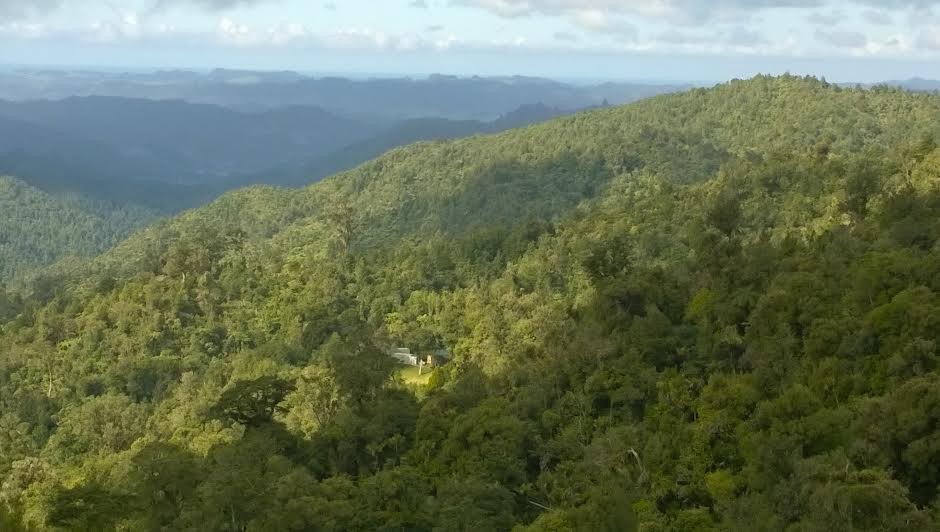
    In the forest which surrounds our little house amid the rolling ranges, are reminders that time truly is an ever rolling stream. 

    The plants and creatures here are older by millions of years than those in Europe which had to recover from the Ice Age 10 million years ago.

    Here in this remote country, New Zealand split off from the ancient continent of Gondwana between 80 and 85 million years ago, and some flora and fauna here date back 250 million years.

    So when I walk in our forest, I’m conscious I’m in touch with life forms that have survived since primeval times in this isolated place, and what recent arrivals on this planet my species and I are..

    Mankind didn’t  arrive on these islands until around 1000 years ago. They found it inhabited by peculiar flightless birds, giant invertebrates, and plants – some having survived more or less unchanged since Gondwanan times. These unique trusting creatures which had never seen human beings before were easily hunted to extinction.

    Roughly 64 endemic species—including at least 51 birds, 3 frogs, 3 lizards, a freshwater fish, and a bat—died out thanks to hunting, and introduced animals like pigs and goats, possums and rabbits..

    The amazing giant bird, the moa, disappeared in two hundred years, and then the Haast’s eagle, known as ‘the biggest, baddest, most magnificent eagle ever to have existed in the world’ died out as it had fed on the moa.

    So sadly, these once isolated islands are now part of the 6th Mass Extinction, in which scientists warn that by 2050, up to 30% to 50% of all Earth’s plant and animal species could face extinction due to climate change, habitat loss, and human activity.

    The forest appears empty, apart from the birds, compared with European woods and forest alive with squirrels and rabbits, foxes and deer, and so many other fascinating creatures, there are no indigenous mammals here except bats, but we host other primeval treasures.

     And we wage a constant battle against the animals introduced by man in the last thousand years, as they eat these native creatures and destroy their habitats.

    So we treasure rare species like our frogs, the Archey’s frogs whose ancient evolutionary lineage stretches back roughly 150 to 200 million years, making them living fossils that coexisted with dinosaurs.. They are only found these days in our forest and two other places in New Zealand. 

    These tiny delicious creatures, only an inch and a half, live on land and their minute tadpoles hatch on their father’s back, and live there until they are old enough to cope on their own. The froglets often stay with their dad for several years, and they can live up to forty years. One night I saw one the size of a fingernail.

    Their cousins the Hochstetter’s frogs, also ancient and endangered, live here too, and they both are our pride and joy, as is the butterfly extinct in the rest of the world, and only found in our forest – Helm’s butterfly, the forest ringlet, so rare and special that scientists come here to study it, even some of David Attrenborough’s researchers.

    And then there are our lizards, known as striped geckos. They are described as ‘rare and stealthy reptiles’. They were first discovered in the 1990s when one turned up in a home nearby.. Now we have teams of scientists turning up here to discover and map these beautiful little creatures hiding in the ferns and trees..

    But besides these rare species, I’m conscious as I walk in the forest that there are others, just as precious, but so plentiful that we take them for granted. There are 170 different sorts of worms in this country, including the beautiful glow worms…  I’ve learned that they, like all other living beings, have their own secret life, communicating with each other through touch and taste and ground vibrations. Being hermaphrodites, after they have mated they can both produce offspring.

    We all know now how vital their lives are to the health of the soil, and that modern farming methods, fertilisers etc, are death to these invaluable forms of life – which are also food for many birds and reptiles.  As long ago as 1881 Charles Darwin wrote: “It may be doubted whether there are many other animals which have played so important a part in the history of the world, as have these lowly organized creatures.”

    I used to think that spiders were just a nuisance, but have now discovered that they have a massive and vital use in nature. They act as Earth’s natural pest control by eating billions of insects like flies, mosquitoes, and crop-destroying bugs, keeping the balance of the ecosystem. Their exquisite webs are their form of communication, which they can read, knowing what fly or other insect is invading their web, and spinning and retracting and   playing its strands like a guitar.

    The amazing NZ snails are cherished too, there are over a thousand different species in this country, and after learning how intelligent and maternal they are from Elizabeth Tova Bailey’s wonderful book, ‘The Sound of a Wild Snail Eating,’ and reading about dozens of French snails lifting the lid of a basket taking them to market in a concerted effort and scattering, I have a great fondness for them. I’ve watched two snails crawl up the water bowl in my garden, and drink together, and then crawl back  out and away, and I’ve read of a snail making his way over a garden wall and finding more food in that  garden, and coming back to bring his wilting companion to a better place. Snails are more than petunia devouring pests !

    We also have a very long centipede with a painful bite – not my favourite life form, but I was fascinated to discover that their  pairs of legs are a different length so they don’t trip themselves up!

    Birds, butterflies, moths and bees, so many forms of life which we so often take for granted, but when their lives are decoded, turn out to have intelligent, intricate rituals and systems which support not only them, but the planet.

    Insects, which are fast disappearing, are the tiny workers that keep nature alive. They pollinate three-quarters of our food crops, feed countless birds and fish, and clean up dead waste to enrich the soil. It’s estimated that without them, our global food and natural systems would completely break down.  Yet the total extinction rates for insects are happening up to eight times faster than for mammals, birds, or reptiles.

    It turns out that our world could not exist without them, and since they lived for aeons before we latecomers trampled across the planet, they could probably manage without us for many aeons, world without end.

    So I try to tread softly in this forest among its ancient creatures, and marvel at the silent secret lives of the senior partners in our life here. While I grapple with technology and use electricity, gas, oil and other resources of the earth,  invisible primeval lives continue to support the planet as they have done for more millions of years than I can imagine. 

    Food for Threadbare Gourmets

    When I’m really up against it for time or energy, there’s nothing like that packet of pasta and tin of tomatoes always lined up in the pantry. My favourite pasta is angel hair and my husband loves macaroni, so I do both, it’s so easy.

    Thanks to Nigella Lawson, I no longer bother with boiling water, but just use cold water, and cook until the pasta is done.

    With long pasta like angel hair ( capellini) I use a big frying pan and plonk the strands in the cold water with some salt.

    The tin of tomatoes is embellished with garlic and chopped onion ( cooked for five minutes in the microwave) and a big dollop of butter, maybe a slurp of soy sauce for the umami flavour. Gently simmer for ten minutes or so, and tip over the drained pasta. Freshly grated parmesan is a must…I sometimes stir some cream into the tomatoes too.

    Food for Thought

    We say ‘I have done nothing today.’ What! have you not lived? That is not only the fundamental, but the most noble of your occupations.” 

    French philosopher Michel Montaigne
  • Triggered by Jemima Puddle Duck

    I bought a pristine copy of ‘The Tale of Jemima Puddle Duck’ in a junk shop for fifty cents the other day. No great grandchildren in the offing to receive it, but rather on account of the nostalgia I felt at the very words Jemima Puddle Duck. I was given a copy of this classic on my eighth birthday, and mightily disappointed I was too, by the waste of a birthday present.

    Having read ‘Robinson Crusoe’ in my grandmother’s original edition, published in 1719, having given up on ‘Pilgrim’s Progress’ in another original edition, when I got to the unbearably depressing engraving of the Slough of Despond, and having wept over ‘Uncle Tom’s Cabin’, and become an abolitionist on the spot, Jemima Puddle Duck was small beer.

    But I do remember when I rather contemptuously read it, my feelings of alarm when Jemima encountered the polite gentleman with a bushy tail and sandy whiskers. In today’s parlance I was ‘triggered’, and quite anxious until I reached the happy ending and violent demise of said sandy whiskered gentleman. Oh dear, violence too… Beatrix Potter is obviously on the slippery downward slope to becoming cancelled -violence and cruelty to animals being very good reasons for Beatrix to go on the Index ( the list of banned books by the Vatican, but in this case, banned by the guardians of our thoughts and minds – the virtue signalling woke brigade.)

    I was not much surprised after the continual fanatical research by the Thought Police, to read that the Declaration of Independence being displayed at the National Archives in Washington has now attracted a ‘trigger warning’ on one of the original copies. How could we even hope that those resounding words: ‘ We hold these truths to be self-evident, that all men are created equal, that they are endowed by their Creator with certain unalienable Rights, that among these are Life, Liberty and the pursuit of Happiness’ would be acceptable in these days of endless virtuous Thought Correction.

    But I Am surprised that ‘Uncle Tom’s Cabin’ hasn’t received a trigger notice yet – however virtuous the subject- as it contains a great deal of violence which might upset snowflakes.

    If Browning and Wordsworth – the latest culprits – can be cancelled, I’m just waiting for Shakespeare to go on the index too, as he qualifies for it over and over again – sexism or violence in just about every comedy or tragedy I can think of…

    I read that Hollywood is not prepared to film any plot line that doesn’t cover diversity and inclusion, and any other popular buzz word at at the moment… (sigh)… so no more corny re-makes of ‘War and Peace’, or ‘The Dambusters’, all populated by macho white men, and not a coloured person in sight, just macho men and violence the backbone of ‘The Dambusters, … and class, snobbery, materialism, and conspicuous consumption as well as violence, the themes of Tolstoy’s masterpiece. Trips down memory lane to ‘The Red Shoes’, the story of art versus true love, a giggle over ‘Some Like it Hot’ .feeling guilty about laughing at cross dressing, and no more fun with Georgette Heyer, and her regency frolics, no diversity, no poverty, but lots of gorgeous men with money and poor girls who marry them…..are these all verboten in this new age of compulsory virtue and righteousness?

    ‘Zulu’ comes up to scratch on the diversity scale, but the violence, and defeat of the natives/ tribes/ noble indigenous fighters – not sure what description is acceptable these days – might not go down well with BLM, and the on- the- edge- of -your seat- violence, would probably cause snowflakes to have a conniption.

    ‘Cry, the Beloved Country,’ one of the most powerful novels about apartheid ever published, triggered such buckets of tears from me, that it must be a candidate for being plastered with trigger warnings, while I fear for that magnificent novel ‘Middlemarch’, by George Eliot and indeed, for all her books, for they contain no diversity at all – nineteenth English society being a fairly mono- cultural one, and therefore diversity an unknown concept.

    Liberal thinking, modern concepts of liberty, equality, and diversity, whether in terms of race or gender, were not common in previous ages, so most of the great classics, though they often helped to push the boundaries of thought in all these things, are doomed, I fear.

    Literature, described by one writer, as the ‘logbook of the human race,’ will struggle to exist if the woke mobs have their say – and history and theories that enlighten and educate and shift our thought processes, and initiate new paradigms. The creativity of uncensored minds is what leads civilisation and lifts it to greater heights..

    Power corrupts, and the power of virtue signallers of all colours seems to have brought about the disgrace and cancelling of numerous forward looking thinkers, of established and reputable writers like JK Rowling, and even of ordinary people who posses the common sense to see things in perspective and the courage to speak out, and who lose their jobs and reputations as a result of this persecution.

    For every righteous campaigner against Western racism and slavery, there are few who dare to point out the horrors of the slavery as practiced by the Barbary Pirates of the North African coast for three or more centuries, when they rampaged along the shores of nearly every country in Europe from Iceland and Cornwall, to Italy and Greece. These merciless pirates captured white men and women from sea-side villages far beyond the Mediterranean.

    Spanish writer Cervantes was the most famous of all, only being ransomed after five years when his family was finally able to raise the money. At least million and a quarter were enslaved to work as galley slaves or in other brutal activities. Ethiopia only closed down the slave trade in the mid nineteen thirties, and a huge slave trade of Nubians and Abyssinans from the Upper Nile had sustained the Egyptian economy for centuries until the nineteenth century.

    Yet no-one seems to have been cancelled in any of these places, or had their memorial destroyed – maybe, because those slave traders hadn’t also been benefactors of their societies by endowing schools, hospitals, universities, libraries and orphanages, along with the other benefits, that so many cancelled historical figures in Britain’s history did. ( And those who so righteously condemn Britain for the slave trade, forget that she was one among many at that time, and was also the first nation to abolish it, spending large sums of money and several thousand British sailors lives, maintaining a naval squadron to patrol the seas for sixty years, intercepting slave ships, and freeing the slaves.)

    Will the Thought Police cancel our favourite classical composer, the mainstay of British musical life – the magnificent Handel, who even the wonderful Beethoven acknowledged as the greatest composer who ever lived. Handel, who had no family, put his money into the shares of the infamous Royal African Company, the main British trading organisation which was formed as early as 1660.

    So I fear for Handel , as I do for Jane Austen – no diversity, but worse still, in Mansfield Park the whole plot hinges on the paterfamilias being absent looking after his estates /plantations in Antigua, a sugar producing slave working island. Jane Austen’s novels of course, were bereft of diversity, gender re-assessments, abolitionist sentiments, or of any redeeming woke features.

    Perhaps the most dangerous aspect of this sort of censorship is the way employees of publishers now seem to hold the upper hand, and refuse to work if they don’t like the content of a book, so that publishers and writers are intimidated. They have become fearful of publishing or writing any book which doesn’t conform to the guidelines of the new groups who demand that we all think like they do. An example of this was the boycotting by staff of every publisher of a book by an American expert who had reservations about the exploding numbers of teenagers having re-assignment surgery in the States. She couldn’t get her book published.

    Not only does this sort of policing of our minds and thoughts have terrible similarities both with the Nazi era, and the unforgivable brain washing of the Russian population during this latest unspeakable war, but it also limits the creativity and diversity of thought by which a society itself expands its perceptions, and explores the further reaches of thought and creativity, and the possibilities of the human spirit.

    It’s called gaslighting when a person undermines the feelings of another person, making them feel that their feelings have no validity and don’t matter. What is happening to our history, to our literature, to our culture, is another form of gaslighting, which can also be described as bullying.

    Therapists say it’s important to call out the attacker if we feel we’re being gaslighted. It’s just as important to do the same to those who would undermine our inheritance of books and poetry, our literature, and history, our precious customs, and even our favourite books. If Black Beauty gets a trigger warning, which for a number of woke reasons, I think is due, I shall despair. It’s books such as these, which educate us and civilize us, and in this case has taught generations that other species matter, which are irreplaceable.

    These are the sort of books which teach us to be better humans, as did Beatrix Potter’s legacy of sympathy for animals, and her legacy of love which so many share, for delicious little Mrs Tiggywinkle and Peter Rabbit, and slightly simple Jemima Puddleduck who longed to hatch her eggs before they were taken away for eating.

    Food for Threadbare Gourmets

    I wanted a quick meal for one, but I ached for something delicious. This was it. Pour a cup of cream into a frying pan, and grate a good handful of parmesan cheese into it. Chop smoked salmon finely, add to the cream, and boil them all up together.At the same time pour boiling water onto two minute noodles. When noodles are cooked and drained, pour the salmon and bubbling cream over the noodles, grate more parmesan and some black pepper over and eat !

    Food for Thought “One man with courage is a majority.” —Thomas Jefferson Founding Father, philosopher and lawyer, diplomat and architect. A superb portrait of both he and his fellow Founding Fathers is the TV series called ‘John Adams’, a magnificent account of the American Revolution and creation of the US.

  • Other Men’s Flowers

    On my birthday a few weeks ago, a friend sent me an elegant doorstop with a note saying she hoped this would not prevent her coming through my door again. When I wrote back I included the words of an invocation my nine year old son had learned, and used to recite when we sometimes had family prayers. Since we were attending the silent Quaker meeting at the time, I worried that the children would have no words of comfort, poetry and beauty to fall back on when they needed it, like the store of beauty and strength I had inherited from the Anglican prayer book, so we learned some poetry and prayers together. This was my son’s favourite prayer:

    Oh God, Make the door of this house wide enough receive all who need human love and fellowship, and narrow enough to shut out all envy, pride and strife. Make its threshold smooth enough to be no stumbling-block, but rugged enough to turn back the tempter’s power: make it a gateway to thine eternal kingdom.

    It was written by Bishop Ken, described as a ‘man of unstained purity and invincible fidelity to conscience’. He became a bishop after refusing to allow Nell Gwynne, Charles 11’s mistress to stay in his house when the King was visiting Winchester.When the next bishopric came up, Charles directed that ‘The good little man who refused poor Nell his lodgings’ should be appointed. He became the King’s chaplain, and ministered to him during the long week the King lay on his deathbed … two of my favourite people – one for his gentleness and goodness, the other for his warm and generous open heartedness, his kindness, and his love of Cavalier King Charles spaniels – I’ve had six of these adorable little dogs. Bishop Ken’s later career was a chequered one, including imprisonment in the Tower, all his vicissitudes being caused by his refusal to compromise his conscience, no matter what it cost. There aren’t many people like that around – either then or now.. In my early teens when like many another teen, I experienced deep despair, these words by someone called Frederick Langridge kept me going:’Two men look out through the same bars; One sees the mud, and one the stars’ , and later, twice as old now, in my late twenties, stranded in a foreign country, with no money, two children and no family, I turned to William the Silent, who fought the Spanish to gain independence for his country, the Netherlands, during the time of Elizabeth 1. He didn’t succeed, and was assassinated by a Spanish supporter. But at the start of every day at the newspaper where I was so poorly paid, I turned to his words written in my pocket diary: ‘One need not hope in order to undertake, nor succeed in order to persevere’. These grim stoical words gave me the backbone I needed to keep on keeping on.

    A few years later, in happier times, life still demanded courage and tenacity and I used a Taoist verse to keep me going. During this time, many people wrote to me or contacted me, as a result of the columns I wrote every week. One particular woman rang with what seemed like a convoluted problem to ask my help, so I referred her to a helping agency. A week or so later she came back, saying she was still up against it, unable to get help. So I sent her in another direction. Again some weeks later she was back, sounding even more desperate, so I suggested her MP as a last resort. But no… no go.

    She always rang in the early evening when I was preparing our evening meal, and when I was at my most exhausted coping with CFS, and beginning to feel as desperate as she was by the time she rang again. I also began to feel that perhaps she was the problem, rather than the circumstances as she told them. So finally I said, I could give you some words which I find helpful when I don’t know what to do, and she leapt at the idea. I gave her these words from the Chinese Tao: Close your eyes and you will see the truth, Be still and you will move forward on the tide of the spirit, Be gentle and you will need no strength, Be patient and you will achieve all things, Be humble and you will remain entire,

    I never heard from her again, so I hoped they did help her as they helped me.

    Some of my favourite words have lasted me all my life, like the Sanskrit poem : ‘Look to this day, For it is life, The very life of life. In its brief course lies all The realities and verities of existence……

    .For yesterday is but a dream And tomorrow is only a vision, But today, well lived, Makes every yesterday a dream of happiness, And every tomorrow a vision of hope, Look well, therefore, to this day.

    Life being what it is, there are always challenges to be met and overcome, and this was my fate yet again, a few years ago, when I had to decide whether to take a great leap into the unknown, or settle for safety, comfort, and an easy conventional life. I fell back on James Graham, Marquis of Montrose, another of my favourite people and his lines:

    He either fears his fate too much, Or his deserts are small, That puts it not unto the touch To win or lose it all

    Having put my fate unto the touch, I find I’ve won it all, and learned yet again, that when one trusts to life, and steps into the unknown, the Unknown supports the adventure… And now, seven years later, living in the bubble of joy, peace and happiness which resulted from taking that momentous step, ( reckless, some called it ) I don’t really need words of steel or beauty or comfort any more, but nevertheless love to savour them when they come my way.

    Kahlil Gibran is famous for his book ‘The Prophet’, one of the most widely read books in the world, but these words of the Lebanese poet come from his other writings. They came to me the other night as I read a book on Lebanon – that tragic place where descendants of ancient Phoenicians still live amongst the descendants of so many other later civilisations. Gibran wrote: Remember, my brother, That the coin which you drop into The withered hand stretching towards You is the only golden chain that Binds your heart to the Loving heart of God.

    Words like these, that connect me to the beating heart of the world, are precious, and as I look back at these verses and poems and prayers that have sustained me, they remind me of a quotation from Montaigne. One of my favorite anthologies of poetry is WW2 hero, Field Marshal Lord Wavell’s book, called ‘Other Men’s Flowers’. It’s a thick book, and contains every poem he had loved, and could recite… a humbling thought that he knew every word of this thick book by heart. He begins by quoting Montaigne, the very loveable French philosopher:’I have gathered a posie of other men’s flowers and nothing but the thread that binds them is my own’, said Montaigne. And that is true of this entry of mine into the logbook of humankind’s experiences.

    Montaigne’s work is ‘noted for its merging of casual anecdote and autobiography with intellectual insight’, and as in the case of so many great men and great writers, as well as others as obscure as myself. has influenced and encouraged writers to be true to themselves. That his influence is still so potent, even today, nearly five hundred years later, is proof of the power of words to strengthen, inspire, comfort, and educate, to open the heart, broaden the mind and inspire the spirit.

    The words that I hope will accompany on my next journey were written by a Roman who no-one is quite sure whether he was Christian or pagan, but his words can work for anyone who believes in a First Cause, or Divine Source, be they Pagan, Hindu, Christian or Muslim: The last three lines of Boethius’s invocation are:

    ” To see Thee is the End and the Beginning. Thou carriest me and Thou didst go before. Thou art the Journey and the Journey’s end.

    I don’t plan to rest in peace, I shall be journeying and adventuring into new realms of light and love and beauty…’ Light and more light,’ Goethe is reputed to have said as he died – more poetic words to take me with me into the next worlds….

    PS Though the poetry was written as poetry on the original copy, WordPress, in spite of all my efforts has destroyed the lines and spacing… alas… and with their changed format, I can find no way of adding an illustration… I’m too technically challenged to adjust to their constant tweaking of the format…

    Food for Threadbare Gourmets

    I had to take an offering to the AGM of our community on this remote forest estate where I live, and didn’t have the energy to bake a cake. Along with the kedgeree that I’ve posted before, I took an old favourite of my children’s, simple, easy and didn’t need baking. I slowly melted 200 grams of dark chocolate with 75 grams of butter, and three good tablespoons of golden syrup. When this is all melted, stir in as many cornflakes as will absorb the mixture. Pile into individual paper cake cases, and chill in the fridge for a few hours. Even adults devour these chocolate indulgences.

    Food for Thought

    Nelson Mandela said ” Our world is not divided by Race, Colour, Gender or Religion. Our world is divided into WISE People and FOOLS.. and Fools DIVIDE themselves by Race, Colour, Gender and Religion”

  • Bloggers addictions

    Illustration from the post “Bloggers addictions”

    I’ve been blogging for eight years now, a small stretch of time for some bloggers, I know, but for me, those years seem to have covered life-times, and indeed I have actually crossed over into another life-time in those years, thanks to blogging.

    Back then I wrote that a friend had queried how truthful my blogs were. Do you have a Bloggers License, she asked?

    No, that was exactly how it happened, I answered. I thought about this. I wrote then that after three months of blogging I could see some patterns, and I still feel the same now. Back then I said that as far as I could see, Bloggers write the truth, and nothing but the truth, but not necessarily the whole truth, in the interests of good taste, and other people’s feelings.

    So for me, Bloggers License is still being able to choose to write what we want and when we want- unlike the grindstone of journalism.

    Bloggers Temptation is to write too much and too often for followers to keep up.

    Bloggers Fatigue is to get behind with reading other people’s Blogs, and failing therefore to keep the other half of the Bloggers Contract – ‘I engage to encourage you in the same way that you never fail to encourage me’.

    Bloggers Heaven is to open the computer and find Likes and Comments and Followings sprinkled like confetti all over the Inbox, and winking through all those other Blogs waiting to be read and enjoyed. Bloggers Heaven is also looking at Stats and seeing not just a high spike, but a lofty plateau of readers every day. If only.

    Bloggers Hell is to open the computer and find nothing but other Blogs, and then open Stats and find only a dribble of readers. Hell, indeed.

    Bloggers Hell leads to Bloggers Despair. Feeling that I am a failure. Feeling that I have nothing of value to say to the world. The world does not want to hear what I have to say. The world is passing me by. I write because I love it, but this is like starving in a garret with no-one to appreciate my literary gems…

    Blogger’s World is a place where most people write grammatical, entertaining, interesting, inspiring prose or poetry. Subjects may cover personal highs and lows, current affairs, beauty, politics, history, spirituality or any other topics which intrigue, amuse, or engage the Blogger. Many Bloggers have a passion which they communicate, or a long running project, like the Camino Trail, getting a book or a play published, running a farm, or reading the Complete Works of Shakespeare. Most people (except me) have a theme which people know to expect when they visit a Blogger’s web-site. And there are also Bloggers who share their wonderful photography, the sort of artistry that I drag into the To Keep box.

    Bloggers seem to have common characteristics. They seem to be intelligent, often committed to preserving the environment, devoted to animals and concerned with social justice. They are sincere and witty and have a sense of fun. Bloggers notice and enjoy the small things in life. Many enjoy the good things in life, like food, beauty, flowers, music, gardens, architecture and antiques. They are uniformly courteous, kind, committed to high ideals, and often to spiritual growth. If anyone asks for help, they are swamped with responses from Bloggers who really care. Bloggers are good people.

    I wonder if Bloggers are the cutting edge of the wave of the new consciousness that the world needs to move to another level of thought and awareness. It’s awareness and commitment that the world needs in order to move to the next stage of our civilisation and growth. It’s only by thought and respect that we’ll solve the problems that challenge us to take the next step, and it seems to me that Bloggers are the sort of people who each take individual responsibility for their corner of the world – themselves. So the Bloggers World is a sort of alternative new world that we inhabit.

    This is an addendum, because the first comment which arrived today was from a friend. I had forgotten to mention Bloggers Friendships. I have never met this friend, just as I have never met so many other beautiful friends I’ve met through blogging, one in Canada, another in Cornwall, Arizona and Colorado, Washington and Melbourne, France and Germany, Australia and India, Scotland and Wales, Singapore and South Africa … we’ve shared our lives and our pasts, our children and our memories, our recipes, and deep respect. These connections are one of the most treasured aspects of blogging.

    Bloggers End: this is a situation that few of us know anything about – much the same as we know little about our passing into the next world. There is little research into the demise of the Blogger. Does she just fade out, obliterate the Blog (how?), just stop clicking on Like, or stop writing the Blog? These are all huge questions that every Blogger will one day face. But until this great Unknown state of consciousness overtakes us, we don’t know the answers. And will we ever? If Bloggers stop communicating how will we ever know? Will some brave soul send back messages from the other world, that cruel world where people scoff at Bloggers? There are still unsolved riddles even in the great World of Blogging.

    Bloggers Nightmare is the horror of opening the in-box and finding it overflowing with dozens of blogs to read when you’ve neglected Blogging Housekeeping, and have neither read the blogs you follow, answered all the precious comments, acknowledged new followers or likes, and failed to delete the various spam items that creep in.

    On the other hand, Bloggers Delight are those wonderful comments, especially those written with such encouragement and appreciation and expression of spirit, that you feel privileged to live in the same world as the writers. This is the bliss of blogging, to know that you’ve been understood, that like minds are on the same journey, and to feel and know the truth of that ancient cliche that birds of a feather flock together, even among five hundred and twelve million bloggers around the world.

    In my case, this is a literal truth. An intelligent, sensitive, exquisite soul became a follower, his comments became letters, his letters, skype conversations, and finally, he left his life and country and friends and family and profession, and came to join me in a new life we began in a remote forest. That was nearly five years ago. We are both still blogging, and both living in what could be called Bloggers Bliss!

    Food for Gourmets

    The painkillers for a bad back have sabotaged any hope of eating, and no-one wants to share a recipe for the thin bland watery soup which is all I am consuming at the moment! (But good for my figure, I hope)

    Food for Thought

    The world is a like a huge city reflected in a mirror. So too, the universe is a huge reflection of yourself in your own consciousness. Yoga Vasishta, ancient Vedic text, quoted by Dipak Chopra in Synchro Destiny

  • Castaway Books

    Illustration from the post “Castaway Books”

    I sometimes torture myself by imagining I’m on a desert island and can only take ten books with me. I look around at the walls of book-shelves in the sitting room and bedroom and spare room, and wonder how to whittle them down to the ten most treasured books I wouldn’t want to be without.

    As in the BBC radio programme, no Shakespeare or the Bible allowed, though I’d be sad to let the Bible go – not for religious reasons – but for the sheer poetry of the prose and the beauty of so much of the writing, for some of the stories embedded in the teachings… like the story of Ruth for example, or the Song of Solomon… and the Beatitudes, and ringing phrases like: ‘I am as sounding brass or a tinkling cymbal if I have not charity’ .. or the exquisite words of Psalms like 139, which ends with: ‘…’if I take the wings of the morning and dwell in the uttermost parts of the sea, even there shall thy hand find me, and thy right hand shall hold me’.

    But having surrendered the Bible what would I take? Bernadine Evaristo, this year’s Booker prize-winner, says she hates Jane Austen and Virginia Wolfe… but while l’d agree about Virginia, as an afficionado who used to read Jane Austen’s six novels once a year, I’d have to disagree with her findings on Jane. (Real Austen fans are called Janeites. I once wrote a piece for an anthology of raves about Jane Austen, and attending the book launch party was somewhat bemused to find myself among some fans wearing long Regency dresses, and sporting shawls and fans)

    Which of the six would I take? No contest. In my younger days, I’d have plumped for ‘Pride and Prejudice’… or ‘Persuasion.’ But now I’d go for ‘Mansfield Park’ which I used to think was the dullest of her books. Now it’s my favourite. I love the picture of Georgian country life, the amateur theatricals with all the tensions and emotional turmoil, and the irritating, contradictory and sparkling array of people, especially the two villains, who’re the most attractive characters in the book. But most of all, I love that picture of elegant English country life in my favourite period of history before the Industrial Revolution, when squalor and hardship and smoking factory chimneys had not altered forever a peaceful pastoral society. (Even if they didn’t have good dentists).

    To balance that picture of aristocratic country life I’d take Thomas Hardy’s ‘Far from the Madding Crowd’, my favourite of all his books, crammed with authentic country lore and farming custom, just slightly later in time that Austen’s novel.

    And to round off this wallowing in homesickness for another time and place while on that desert island, I’d take George Eliot’s tome, ‘Middlemarch’, a great book described by the despised Virginia as ‘the magnificent book which with all its imperfections is one of the few English novels for grown-up people.’

    It’s a huge canvas describing with acute psychological insight many typical characters of both town and country in early Victorian England. For me, it’s a picture not just about English town life of that period, but a profound study of character, both shallow and profound, of good and evil in the shape of materialism, and of the compromises demanded by society. So, nostalgia and homesickness sorted – there’s several more choices to go.

    Top of the list would be Barbara Tuchman’s splendid history, ‘The Guns of August’, an account of the first ten days of WW1, but fleshed out with vivid and witty accounts of how Europe got to that point, and an analysis of the main protagonists… fascinating history, accurate psychology, and telling insights, all delivered with wit and humour, so that often I find myself chuckling as we traverse the terrible terrain of one of the great turning points in the history of Europe.

    I would have to take ‘The Snow Leopard’ with me, by Peter Matthiesson. It’s the story of his journey into the remotest regions of the Himalayas on his search for the then almost never seen and legendary snow leopard. It’s a many layered tale with deep spiritual undertones, and read like all these other books, many, many times.

    Getting a bit panicky now, with only three more choices to go. I think I’ll reach for Truman Capote’s story of love and war, ‘The Grass Harp’. It’s told with deceptive simplicity, the characters utterly loveable, and gloriously eccentric as despair drives them to desperate measures. They are the odd ones out, who finally step outside the norms of society to assert their individuality, and when they say what they feel, they slice through the hypocrisies and cruelty of narrow-minded small-town officialdom.

    I love diaries and have a huge collection of them, ranging across time, from seventeenth century Samuel Pepys and John Evelyn in Charles 11 reign, to Georgian Parson Woodford and Parson Gilbert White, Victorian Francis Kilvert, through to the two world wars, to the randy diaries of Alan Clark, the notorious womaniser and politician, and the delicious, hilariously funny fictional diaries of Adrian Mole, my favourite being ‘Adrian Mole and the Weapons of Mass- Destruction.

    I toyed with the last of the Bloomsberry’s, Frances Partridge’s ‘A Pacifist’s War’, her diary filled with details of an idyllic life in the beautiful country house where the painter Carrington lived with writer Lytton Strachey before his death and her suicide. Her war years are peopled with a stream of intriguing/incestuous Bloomsberry illuminati who came and feasted with Ralph Partridge and Frances while dwelling on their moral high-ground as conscientious objectors.

    I decided on something more uplifting. Inspiring integrity was what I was looking for. Should I take Alanbrooke’s war-time diaries, or Cadogan’s account of appeasement and diplomacy before and during the war, or Klemperer’s diary chronicling the terror of the Nazis, and his worry about the fate of his beloved cat? It finally had to be put down when Jews were no longer allowed to keep pets. Klemperer, a distinguished university professor, ended up in the bombing of Dresden which allowed his wife and he to disappear in the chaos, the only positive thing I’ve heard about that raid.

    No… I finally settled on the two volumes of John Colville’s diaries. He was Churchill’s private secretary during the war, and the parade of kings, queens, statesmen and generals, society ladies and foreign diplomates makes absorbing reading, quite apart from the affectionate and admiring portrait of the great man himself.

    Throughout the cliff-edge years of war, Churchill is revealed as an irascible but brilliant, kind, intelligent and chivalrous aristocrat in the best sense of those words, without a trace of snobbery or small mindedness. Perhaps too original and spontaneous to be described in conventional terms as a gentleman, he emerges as a magnificent human being who poured his huge stores of energy, humanity and vision into his country and the struggle against one of the greatest tyrannies in history.

    The last and tenth book is a tantalising choice, trying to choose between two of my favourite diaries. ‘Mrs Milburn’s Diary’ is written by a woman with no literary talent, but an abiding love for her only son, who was captured before Dunkirk and endured POW camp for the rest of the war. Her letters sent via the Red Cross, and his to her were usually months old by the time they reached their destination, so she began writing a diary chronicling life in his home and family and community.

    It’s a prosaic day to day telling about the price of woollen vests going up, the annoying man at Matins every week who coughs all the way through and ruins the service, the evacuees who stay briefly, the long cold nights sitting in their primitive underground air raid shelter in the garden – doubly important to them- as they lived in the country outside Coventry, and lost many friends in the catastrophic bombing raid which destroyed that city. It’s an insight into a way of life now gone… when, even during the war, she picked primroses every spring in the woods, packing them up in damp cotton wool and sending them to friends in the city.

    She records the routines of church going, weekly shopping, Mother’s Union meetings, working for the WVS (Women’s Voluntary Service) dealing with the erratic gardener, the feckless land girls, a chaste glass of sherry shared with old friends. The annual rhythms of the seasons’ rituals celebrate a slice of civilisation which had its own small satisfactions, sorrows and minor victories.

    Or, do I go for ‘Burning,’ a diary of a year living in the Blue Mountains in Australia? Kate Llewellyn is a poet, and her book is crammed with exquisite metaphors and similes, quirky people, precious moments of beauty, meditations on history, recipes, travels and gardening. I read it often, not just for the drama of human tragedy and pain which also takes place during that year, but for the sheer beauty of the writing.

    As CS Lewis observed, ‘we do not enjoy a story fully at the first reading. Not till the curiosity, the sheer narrative lust, has been given its sop and laid asleep, are we at leisure to savour the real beauties’. He also suggested that someone who only reads a book once is ‘unliterary’, whatever that means! But I certainly agree with him on both counts when he says “You can never get a cup of tea large enough or a book long enough to suit me.”

    So I can’t decide between these two life stories – regularly ‘savoured’, and will beg my invisible and sadistic inner voice to let me have them both… to have whittled down my choices to eleven from hundreds of books is no mean feat, which meant leaving out precious favourites like Leigh-Fermor’s ‘A Time of Gifts’, his vivid description of European civilisation before the Nazis destroyed it

    As I mulled over this imaginary exercise, and visualised myself roaming a tropical paradise, alone like Robinson Crusoe, I realised that by choosing a handful of books to be my companions in this solitary life, I wasn’t using any carbon footprint, and many of the books were recycled – bought from second-hand bookshops around the world via the internet, or acquired from op- shops and the like.

    Many of them of them too, like Capote’s ‘The Grass Harp’, I’ve owned since the sixties, and are worn from regular loving re- readings when I savoured every aspect of the writing and the human condition. In a book on educating children read in the seventies, I found a wonderful thought, that literature is the logbook of human experience, and that’s how it seems to me too.

    For this solitary island existence, Christopher Morley, an American writer, gave me words that seem particularly apt: ‘when you get a new book, you get a new life –love and friendship and humour and ships at sea at night -… all heaven and earth in a book.’

    The written word survives e-books, the internet, texting and all the other apparent advantages of technology. It has been with us from the earliest times, when the Sumerian civilisation evolved writing around 3,000 BC, and the first literature was created by a Sumerian author a thousand years later. Books and words may be the one blessing and means of communication that survive in the aeons to come.

    Books will always be the ‘log-book of human experience’, and can hand on the riches of our civilisation to generations still unborn. And for the present, they can be a comfort, a companion and a treasure. They inform and educate, amuse, console, entertain and inspire. They are indispensable and irreplaceable. They make life on a desert island bearable!

    Food for Threadbare gourmets

    We’re living dairy free at the moment for various reasons, and I discovered to my delight that it’s perfectly possible to make a decent white sauce using olive oil instead of butter.

    So using the juices from a roasted chicken from the night before, I made a rechauffe… fried some chopped bacon and mushrooms, made the sauce, and stirred a bouillon cube and the chopped cooked chicken, bacon and mushrooms into it. Flavoured the mix with salt, pepper and nutmeg, and served it on rice.

    To cheer up the plain boiled rice, I fried a grated courgette in olive oil and garlic, plenty of salt and pepper and stirred it into the rice. We ate it all with green beans and didn’t miss the cream or milk at all!

  • Closing Circles

    Image result for valerie davies nz The penultimate instalment of my autobiography before I revert to my normal blogs

    A year after Arthur Thomas’s pardon, a Royal Commission condemned the policeman who’d planted the cartridge, and said Arthur should never have been charged. I sat through the weeks of testimony, crocheting a colourful rug from all the scraps of wool I had, and I think driving the male chauvinists around me quite mad!

    I was back home towards the end when Patrick took time off from his office to hear the last stages of the inquiry which was all based on his findings. He rang and said they were being asked to put in a claim for what the investigation had cost them, and Jim Sprott was claiming $150,000. Patrick said it didn’t feel right climbing on this bandwagon of claims… so I told him about the painter Whistler’s damages of a farthing in England when he sued Ruskin for defamation in 1870, and suggested Patrick likewise claim a dollar – otherwise you’ll be written out of the court’s findings, I said.

    So he did claim a dollar. Arthur was given a million dollars in compensation, and Patrick was rewarded with an OBE. The following year the Queen presented it to him, at the same time that my daughter received her Gold Medal from the Duke of Edinburgh

    While all these dramas were playing out, I resigned as Woman’s Editor of the Star, feeling that the increased attacks and hostility from feminists would lose their sting if I wasn’t there, and the women’s pages might become unmolested!

    I took the children to England for a holiday, and when we returned took up writing my columns again, and was commissioned to write several books. I once calculated that fifteen years of writing two columns of a thousand words a week, probably added up to about 780,000 words, and that didn’t include all the articles and interviews I wrote in that time as well. At least half as much again, I suspect.

    A column which covered vivisection and the experiments and horrible operations that people like South African heart surgeon Dr Christian Barnard performed on animals, caused huge repercussions. It revived the moribund anti-vivisection society known as SAFE, (Save Animals from Experimentation) and Patrick and I became president and vice-president.

    This column also triggered a big meeting of angry doctors at the Medical School at Auckland University where they reportedly discussed: ‘What to do about Valerie Davies’. At the time I had also castigated the practise of every medical student having their own rat to kill – they bashed it on the table by holding its tail, before dissecting it.

    They sent my article to Christian Barnard in South Africa, who’d become a high-living celebrity by then, and he responded by sue-ing me and the Star. The Star cravenly paid up the money he demanded, but I refused, telling my solicitor I’d rather go to jail. The children were devastated, and my son even had tears rolling down his cheeks when I explained what I was doing.

    In the event my clever lawyer wrote told Barnard’s solicitor that my defence would be that I’d found all the hideous boasts about making a two headed dog, and the screams of a baboon wrenched from his mate to take his heart for an experiment, in Dr Barnard’s own autobiography, and a TV interview. We heard no more!

    I continued writing columns that enraged people, writing of the barbaric treatment of calves in modern farming, to the use of 245T (a dioxin based pesticide) the indiscriminate felling of trees, and other environmental concerns. After a column on climate change and the ozone layer, a university professor wrote a scathing letter to the paper calling me a ‘knee-jerk environmentalist’, while a professor of paediatrics, rang me at home he was so furious when I wrote that babies should never be left to cry as it broke their trust in their parents.

    Now all the research into brain function has proved me right. Child psychology preaches the benefits of cuddling and of feel- good pheromones connecting in the brain, and the dangers of cortisone building up in the brain if babies are left to cry, which leaves them prone to depression and a host of problems as they grow older…

    Sometimes, in the rain and misery of the Springbok winter, traipsing in and out to the Royal Commission in the city- an hour’s drive each way- struggling with Chronic Fatigue Syndrome, living on willpower, not energy, seeing the miseries of modern farming as I drove past fields with bleak herds of cows deprived of their new calves, stopping the car to untangle desperate goats tied up and used as lawn-mowers on the road-side, I used to wonder what was wrong with me.

    Why was I so out of step with everyone and everything? And then I discovered a group in England called Women for Life on Earth, and I knew I wasn’t mad after all, and that my concerns were those of many others too. Knowing this restored my confidence and gave me heart. (This group morphed into the Greenham Common Women’s Peace Camp, and their historic resistance to nuclear weapons.)

    My illness had got worse. I couldn’t bear light, and had tortoise shell rattan blinds on every window as well as curtains, I had difficulty understanding speech and used to exhort the children and my husband to speak clearly. I couldn’t bear any music except formal baroque tunes, and was in constant pain.

    Somehow, I kept up with driving the children around, having friends and Patrick’s family to stay, his other four children and their friends for meals, walking the dogs twice a day, cooking decent nutritious food on time, fulfilling numerous speaking engagements – teachers conferences, school prize-givings, parents groups, schools, Rotary and other clubs, even the annual lunch of accountants – to mention a few – writing the columns which generated so much controversy and so many letters to answer, not to mention the dreaded housework. I paid the teenage children to help… my daughter to do the washing, my son to clean the bathrooms.

    And at the end of this hard, sad winter we left our dream home in the country, where no-one had waved or spoken to us in over a year, and moved back to town, where friends welcomed us, strangers called in with fruit and flowers and cakes, and we felt we had come home.

    A young, unprejudiced and open-minded woman doctor friend dropped in to see me, while I was having an episode of CFS. Mimi introduced me to Re-birthing, a system of connected breathing which was all the rage at that time, and this was a turning point for me. The breathing got me on my feet, and I was now strong enough to become involved with a personal growth group, Self- Transformation, which I helped to establish in this country.

    It grew exponentially. This was the early eighties, when groups like EST were breaking down so many barriers, and people all over the world were ready to start their journey towards self-actualisation. Jung was often the starting point, his book and his theme ‘Modern Man in Search of his Soul’ in tune with the new age.

    Abraham Maslow, Ken Wilbur, then Dipak Chopra, Jean Houston, Caroline Myss, one after another, names and techniques came crowding into our consciousness, and people like me couldn’t get enough…meditation, yoga, Reiki, shiatsu, rolfing, holotropic breathing, aromatherapy, sweat lodges and other methods of bodywork we explored put us in touch with our emotional blocks and old traumas, and kept us busy for years.

    Buddhism, the Essenes, Hawaian Kahunas, Shamanism, gurus from Ram Dass to Sai Baba, Raj Neesh, and the Dalai Lama held many in thrall – though gurus were not for me – and this is only to touch on a few of the influences, techniques and people who influenced my friends and I as we journeyed on. I sold most of my precious things to pay for all this… silver from my first marriage, oriental rugs I’d collected over the years, a precious French provincial table… it was worth it.

    It was all a mystery to my husband, who called me a New Age Nutter, which didn’t bother me at all. I tried often to explain what I was doing, and it didn’t matter how often I did, he never understood or remembered.

    He had a different journey. He had ten jobs in twenty years, travelling from radio back to newspapers, then magazines to public relations, radio again, magazines, to teaching journalism and back to newspapers, finally becoming editor- in- chief of a group of suburban newspapers when he was in his early seventies. They were years of financial insecurity, when he was badly paid, and I was glad to still have some money from my writing and then the counselling practise that I managed to operate for all those years until I was in my mid-seventies.

    In every job he found, pressure would build-up, and he would be unable to see eye- to-eye with his boss, just as he had been so often at the Star. It’s only as I look back that I realise that this was his modus operandi.

    He’d come home and I’d sympathise and take on the angst and the anxiety. We moved house often, buying old wrecks which I restored and beautified, each time hoping that by reducing the mortgage or making life easier at home, with less travelling, or some other excuse, it would reduce his stress. It never did.

    He had also become obsessed with Japan, and apart from writing books about it, studying its history and customs, and collecting anything Japanese, he became an expert on samurais, Japanese sword-play – kendo and eido- and antique Japanese swords, which were hugely expensive. He was always buying more and more precious ones, as he learned more and more about them, and went to Japan half a dozen times.

    As my car fell to pieces, because we couldn’t afford to replace it, he was ‘investing’ he assured me, in his swords, which would pay for our old age, so we didn’t need to save or pay off the mortgage. I believed him.

    And so we came to the end of our roads. As Paul Coelho wrote: “It is always important to know when something has reached its end. Closing circles, shutting doors, finishing chapters, it doesn’t matter what we call it; what matters is to leave in the past those moments in life that are over.”

    Next week is the last instalment of this series. The Who-dun-it of the Thomas case will be told in an Appendix the week after that.

    Food for Threadbare Gourmets

    As we talked about our go-to puddings over a nice drop of affogato in our favourite restaurant, one of my closest friends asked me for the recipe for my hot chocolate sauce for ice-cream I was boasting about. This is for her.

    It comes from good old Mrs Beeton, and my children loved it over ice-cream, while I serve it for guests now with pears baked in wine plus ice-cream.

    Blend together a rounded dessert spoon of cornflour, two rounded dessertspoons of cocoa powder, and three rounded dessertspoons of sugar with a little cold water measured from half a pint. Boil the rest of the half pint of water and pour on the mixture. Pour into a saucepan and boil for two minutes, stirring all the time. Add three drops of vanilla and half an ounce of butter. Simple and delicious.

  • Halcyon days and finding my voice

    Illustration from the post “Halcyon days and finding my voice”

    A Life- another instalment of my autobiography before I revert to my normal blogs

    The first months were tough… Auckland was one of the world’s largest cities in area back then, and map-reading a strange city is challenging. More challenging was map-reading the events and psychology of a new society when instructed to write a story about the effects of a trade union decision or writing about a fight after a fight at a boxing match.

    I wasn’t cut out for this sort of reporting… even when I managed to ferret out the salient details of a story, I found it hard to write without a personal slant, a humorous aside, a detail about character or clothing… none of it suited to the newsroom’s style!

    The last straw was an interview with ninety- year- old Dame Flora Macleod, visiting her scattered clan this side of the world. Full of detail, enthusiasm and warmth, to my chagrin, this effusion never made it to the news pages, but was banished to the women’s page- to the regret of many other reporters I heard later.

    So it was wonderful when I was transferred to the women’s page which some might have seen as a demotion, but which was for me, a welcome respite from the masculine challenges of the newsroom.

    My boss Val, was a friendly six-foot blonde amazon who’d been a champion swimmer, her assistants a fiercely feminist single mother, and a happy pregnant Auckland socialite. They all provided different aspects of life for the page, and I unconsciously began carving out my own niche, when I observed that if Maoris were supposed to be equal members of New Zealand society, it was strange that we never had any stories about them and their doings and achievements. “You can be the Maori news-person”, said my boss.

    So began a series of really interesting stories about wonderful Maori women achievers, professors at the university, charity workers, community idealists, political activists, nearly all of them working for a better deal for poor Maoris, women and children.

    One rainy morning when we were all fruitlessly racking our brains for ideas for stories to fill the empty page for that afternoon’s edition, I wrote the first of what Val called my ‘think pieces’ which developed into regular columns.

    And then I began to realise how tough this pioneering society was on children, especially after an encounter with one of the country’s most distinguished women paediatricians, who also pioneered family planning clinics around the country. Alice Bush, who became a friend, told me that she felt in her forty years of practise that parents were less tolerant now, and more inclined to punish their children physically.

    I dropped all my feminist crusading at this and began to campaign in every way that presented itself for a better deal for children. I felt too, that the immense and enthusiastic wave of feminist activity and the drive for equality for women meant that too often children’s needs were being overlooked.

    This led to a surprising development. The feminist in the office was closely involved with the very militant students at Auckland University, and I suddenly found I was persona non grata with them and every other feminist in the country, both in the trade unions, the universities, and several influential magazines. I was blacklisted from all women’s conventions and conferences, and even cut dead in the streets by hostile women.

    The very real hostility continued for years, and during the concerted campaign to undermine me, a stream of hostile letters were published in the newspaper castigating me and my writing and opinions. The editor was so intimidated by these strong women, both on the newspaper staff and elsewhere, that he caved in and published these attacks on a member of his staff.

    One of the aggravating features of this unhappy situation for my adversaries was that I became very successful, the general public loved my columns, and when I became women’s editor and introduced an entirely new concept – a weekly pull-out newspaper for women – it became the talk of the country. I covered every subject that I thought women would be interested in, from breast- feeding, to treatment for cystitis, to bringing up children, to the struggle of women in other countries, from the mothers and grandmothers in Argentina, to Winnie Mandela and Helen Suzman.

    The readership reached not just women in the towns and in the country, in rich suburbs and new cheap housing estates, but men, too – judges, surgeons, lawyers – people of all ages and walks of life. In a small country, one size fitted all, there were no niche newspapers or other publications. This was also a challenge – to find a way to appeal to everyone at the same time.

    At the same time, I was writing a column for single mothers in the NZ Woman’s Weekly, a wonderful little magazine, which was bought by a quarter of the people in the country, and according sales lore, and the ‘hand-on’ theory, meant it was read by at least two more people, so that at least three -quarters of the population of the country read this publication.

    It sat in every waiting room- hairdressers, doctors, dentists, lawyers and so on, and there was hardly a home which it didn’t penetrate. Surveys showed that it was the favourite reading of all females from the age of eight or nine upwards, and the favourite reading of most boys up to the age of fifteen.

    It reached a huge readership. One day the editor asked me to do something about a letter which had reached her, from a single or solo mother as they were called. I researched the whole subject and wrote an article for the magazine and I was then deluged with dozens of letters from solo mothers. From then on, every week I wrote a column for them. Thirty years later I was still meeting people or receiving letters from widows or divorced or single women saying that my column had been their life-line – just knowing that someone understood their problems and cared, had helped them through their lonely hard times.

    After one letter from a woman whose husband had walked out leaving her with three children under five, including a year old, and how she had to work digging potatoes; how she had to leave the children locked in alone in the house, with no heating which she couldn’t afford, and just bread and milk to eat all day, I realised that there had to be some sort of assistance for women abandoned by their husbands.

    Women who became pregnant – out of wedlock- as it was called back then, had no benefit either, apart from a tiny payment which lasted four months, as long as they were breast-feeding. This meant that no-one could afford to keep their baby, and there was a very high rate of adoption in NZ.

    So campaigning for assistance for women and children also became one of my priorities, and the following year, the new Labour government which had also reached this conclusion, introduced a benefit for women and children who had been desperate and destitute up till then.

    And there were still the plums – the fascination of meeting such luminaries as Doctor Spock, the man whose books were a bible to most mothers back then. He was a big genial man, who cared about more than just bringing up children kindly. He’d been an Olympic rower in his youth, and by the time I met him was deeply involved in political activities which included opposition to the Vietnam War.

    His wife Jane listened to our interview, and at the end said to me that she’d like me to interview her as I was not like the aggressive journalists she’d come up against in the States. I did, but the interview was unpublishable. She was a hurt, angry woman, who felt her part in bringing up their sons and providing much of the material and experience that informed her husband’s books, had never been acknowledged… “He just sat behind his big desk, while I brought up the boys and told him what I was doing…”. I wasn’t surprised to hear that they divorced a few years later.

    Life was not all work either… John continued to call either at the office or at home, bringing his dogs with him… taking my son for fishing weekends, arriving and gathering us up for a trip to a distant beach with his friends and sitting round a camp fire chatting and singing in the dusk.

    There was the fair-haired, blue -eyed Italian aristocrat who would ask me which car I wanted to go to dinner in, his Lancia or his Alfa Romeo, the laughter in the office at another would- be suitor, a bearded be-spectacled man with shorts, hairy legs and sandals who was always bringing my copy to discuss with me; and the perfectly happily married man who stood in front of my desk as I looked up over my typewriter, and declared that he’d crawl across broken glass to have a cup of coffee with me. Words which brought more gales of laughter from my colleagues in the office! They weren’t days of wine and roses, but were definitely days of goodness, fun and freedom, and a respite before the next chapter of our lives.

    To be continued

    Food for threadbare gourmets

    Since I shattered my leg two years ago, and prefer not to stand for long, I’ve evolved all sorts of short cuts to get me by when I’m slaving over a hot stove!

    First and foremost… I use chopped garlic and ginger from a jar – something I always swore I’d never do, though I still grate fresh Parmesan. When making pommes anna – potatoes in cream and garlic, a fairly common occurrence in this house, I no longer peel the potatoes, but scrub them clean with a pot scourer, and slice them thinly, and it makes no difference to the taste. When making apple crumble or scones, I never rub the butter into the flour any more, but grate cold butter from the fridge, stir it into the flour and it works just as well. I never bother to roll out scones, but simply place the dough on a floured board, nudge it into a shape about an inch thick, and simply cut it into squares, not bothering with pastry cutters.

    I cook onions in the micro-wave for six minutes, and then fry them for a few more minutes to brown nicely, thus eliminating the time spent formerly standing turning them in the frying pan.

    When I cook mashed potato, I do plenty extra to use in leek and potato soup, or to fry with bacon and sausage. And I cook double amounts of spaghetti bolognaise – half for the freezer, half for himself, while the leftover extra cheese sauce from lasagne or macaroni cheese is perfect over broccoli for a small lunch dish for me. Risotto is always a double amount – either re-heated in the micro-wave, or gently fried in a little olive oil to make the crust crisp and delicious. So many other small things which make life easier …

    Food for thought

    It is as necessary for man to live in beauty rather than ugliness as it is necessary for him to have food for an aching belly or rest for a weary body.

    Abraham Maslow, ground-breaking thinker, therapist and writer

  • Words, words words…

    Illustration from the post “Words, words words…”

    William Shakespeare was ‘the onlie begetter’ of those words, which have been in my mind in this month of poetry.

    I’ve discovered that in the United States, very few children learn poetry by heart any more, and I suspect that the same is true of education in most Anglo- Saxon cultures. I think it’s a shame… my mind still teams with the phrases and rhymes, and the glorious words of poets and prayers learned throughout my distant childhood. They sustain me in good times and in bad… and though there’s so much beautiful poetry written today, does anyone recite them anymore?

    I go back to my childhood, learning my first poem when I was four… Charles Kingsley’s, ‘I once had a dear little doll, dears’ – it came from a fat book of children’s poems – with no pictures. By eight I had decided to become a poet, by nine I was learning the poems of Water Scott and Elizabeth Barret Browning, at eleven we were learning ‘Quinquireme of Nineveh’, ‘doing’ ‘A Midsummer Night’s Dream’, at school, and learning the exquisite poetry of Shakespeare …’ I know a bank whereon the wild thyme grows’… the next year it was ‘The Tempest’… ‘Come unto these yellow sands,’… ‘Julius Caesar’… ‘I come to bury Caesar, not to praise him’, and ‘Henry V’… ‘Now all the youth of England are on fire, and silken dalliance in the wardrobe lies,’… ‘Once more into the breach, dear friends,’… ‘we few, we happy few, we happy band of brothers,’… ‘Richard II’… ‘This royal throne of kings, this scept’red isle,’… ‘The Merchant of Venice’… ‘The quality of mercy is not strained, it blesseth him that gives and him that takes,’… ‘Hamlet’, ‘words, words, words’, indeed, and not least that amazing speech, ‘To be or not to be, that is the question’, and so many phrases we still use today…including: ‘the slings and arrows of outrageous fortune’… ‘to shuffle off our mortal coil’… ‘’tis a consummation devoutly to be wished’…

    And finally, in the Upper Sixth, Anthony and Cleopatra… ‘Age shall not wither her, nor the years condemn’, words I have hugged to myself as a hope and example, as I near four score years. Our acquaintance with Shakespeare was cursory but better than the nothing that seems to rule in schools today.

    It was a matter of pride among my friends to be able to recite poetry – in the third form we all learned Walter de la Mare’s long poem ‘The Listeners’…. ‘Is there anybody there? asked the Traveller, Knocking on the moonlit door,’… and some of us even tackled ‘The Ancient Mariner’, and though no-one got to the end, we never forgot phrases like ‘A painted ship upon a painted ocean’. No difficulty remembering the exquisite rhythms and quatrains of Omar Khayyam… ‘Awake ! for morning in the bowl of night has flung the stone which put the stars to flight’….

    ‘Lo! some we loved, the loveliest and best That Time and Fate of all their Vintage prest, Have drunk their Cup a Round or two before, And one by one crept silently to Rest’…

    ‘They say the lion and the lizard keep the courts where Jamshyd gloried and drank deep’… But poetry was more than beautiful words and pictures and ideas. It opened up our hearts and minds to deeper meanings, ideas and symbols, and to the beauty of rhyme and rhythm. When my father died unexpectedly when I was in my twenties, and far from home, I turned to John Davies of Hereford’s dirge for his friend Thomas Morley:

    ‘Death hath deprived me of my dearest friend,

    My dearest friend is dead and laid in grave.

    In grave he rests until the world shall end.

    The world shall end, as end all things must have.

    All things must have an end that Nature wrought…

    Death hath deprived me of my dearest friend…

    I rocked to and fro to the rhythm of the words, and found a bleak comfort to tide me over into the next stage of grief. The insistent beat of that poem was a distant memory of the comfort of the rhythmic rocking which all babies receive, whether floating in the womb, rocked in their mother’s arms or pushed in a rocking cradle. Rhythm is one of the deepest and oldest memories for human beings. And rhyme is a joy that even toddlers discover as they chant simple verses, before stumbling onto the deliciousness of alliteration as words become their treasure.

    For my generation the glory of words, poetry, rhyme and rhythm didn’t stop in the classroom. Every day in assembly we sang hymns with words that still linger in my memory, and swim to mind appropriately… like the glorious day looking from my cliff- top cottage and the lines, ‘cherubim and seraphim , casting down their golden crowns beside the glassy sea’ made land. We sang ‘Morning has broken’ long before Cat Stevens made it famous.

    We listened to daily readings from the King James Bible and the poetry embedded itself in our consciousness… ‘to everything there is a season and a time to every purpose under the heaven’…. ‘If I ascend up into heaven, thou art there; if I make my bed in hell, behold thou art there. If I take the wings of the morning, and dwell in the uttermost parts of the sea; Even there shall thy hand lead me, and thy right hand shall hold me’…’And the peace of God, which passes all understanding, will guard your hearts and your minds’…

    When we weren’t listening to our daily dose of the Bible, we were using the exquisite words of Archbishop Cranmer’s 1553 Prayerbook,… ‘now lettest thou thy servant depart in peace according to thy word’… ‘come unto me all ye that are heavy laden, and I will give you rest’… ‘Oh God, give unto thy people that peace which the world cannot give…’Lighten our darkness, we beseech thee oh Lord, and by thy great mercy defend us from all the dangers and perils of the night’… words and phrases that lifted the spirit and gave comfort when needed, in times to come.

    The vocabulary of roughly eight thousand words of the King James Version of the Bible, printed in 1611 had a ‘majesty of style’… and has had more influence on the English language that any other book, apart, perhaps, from Shakespeare’s works, with a vocabulary of sixty thousand or so words. In the past, the words, the rhythms and cadences of these two influences shaped the speech and the writing, and seeped into the consciousness of people all over the world, who grew up speaking English.

    They thought and wrote and spoke without even thinking, in the beautiful, simple rhythmic prose they heard every week at church, and throughout their schooldays. Sullivan Ballou’s famous and profound letter written to his wife before his death at the First Battle of Bull Run in the American Civil War, is as much a product of that heritage as the wonderful last lines of John Masefield’s ‘The Everlasting Mercy’.

    It saddens me that this common heritage of prose and poetry and prayer, those wonderful words of beauty and meaning, has dribbled away under neglect, lack of appreciation and understanding. Modern education seems to treasure instead new and shallower ideas.

    Alan Bennett’s brilliant play and film, ‘The History Boys’ encapsulates my point of view perfectly! It made me feel I was not alone in my regrets at the passing of our rich poetic literature, and so much that has added to the sum of civilisation. I love much that is new – too much to list – and there’s so much to explore… but the learning by heart, the exploration of the genius of Shakespeare, the absorption of great prose and poetry often seems less important in today’s education system, than technological expertise and business knowhow, women’s studies and sporting prowess.

    This is called progress I know, and I know too, I am old fashioned, but in these matters, I am a believer in not throwing out the baby with the bath-water. Hic transit gloria mundi… thus passes the glory of the world.

    PS I completely forgot to answer the comments on my last blog while we were cleaning up after our massive storm/cyclone.. apologies, I loved them, and will be answering them shortly

    Food for threadbare gourmets

    Saturday supper with friends, and something we could eat on our laps round the fire. So, it was salmon risotto. Just the usual recipe – onions in butter, arborio rice added and fried until white, plus garlic, then a glass of good white wine poured in. I no longer bubble it away, but add the hot stock quite quickly, plus a teaspoonful of chicken bouillon.

    For a fishy risotto, it should be fish stock but I had some good leek and potato stock saved, and I also used the liquid from poaching the salmon. All the recipes tell you to use lots of different types of fish, but I only had prawns, and salmon. I had thought I’d also use smoked salmon, but at the last minute changed my mind, and then wished I had more of the poached salmon … (which I’d eaten for lunch with freshly made mayonnaise!)

    Anyway, I added cream and some fennel when the rice was almost soft and just before serving, threw in a grated courgette to get some green colour from the skin in, plus a handful of baby spinach leaves… and after stirring around, added the fish and more cream…. forgot parsley! And then the Parmesan of course….

    Amounts? To one large onion, I used a cup of rice, several garlic cloves – medium sized – glass of dry white wine, hot stock as it needed it… a cup of prawns, and half a fillet of salmon – should have used more – plus the courgette and spinach as you fancy. Half a cup of cream, depending on how moist the risotto already is … or I might use a big knob of butter and not so much cream…This doesn’t stick to any of the recipes… I just use what I have…this was enough for four.

    Food for thought

    “I want to be as idle as I can, so that my soul may have time to grow.” Elizabeth von Arnim, author of ‘Elizabeth and her German Garden’ and other books

  • The love of three women who changed the world

    Taking a small blue hard back book down from my parent’s shelves I began reading Robert Louis Stevenson’s book: “Travels with a Donkey”. I persevered, but the relentless beating and prodding of what he described as the ‘delicate little donkey’ upset me too much to find out how their journey progressed.

    I tried it again as an adult, but the same heartless beatings had the same effect on me. Quite different to the way I felt about Black Beauty – that eminently sensible Anglican horse – as H.G. Wells referred to him. Black Beauty is one of the best sellers of all time I’m glad to say, and must have affected the attitudes of people to horses and animals in general for all time too.

    Since I read it at ten years old, I’ve always been grateful for the motor car, tractors and other machines, no matter how much they clog up streets, create pollution, or are responsible for dreadful accidents. At least no horses suffer now the way they did, as Quaker Anna Sewell so graphically describes in the one book she wrote, and which was published just before she died, always having suffered from ill health.

    It was written in Black Beauty’s voice, itself a sensation at the time, and his story showed how horses were not just the victims of the vagaries or cruelties of their owners, but that if they became scarred they were no longer valued, and then began the downward slide to become worn- out under-fed beaten cab horses, flogged and half-starved until they dropped dead from exhaustion.

    Anna, who lived from 1820 to 1871, didn’t live through a major war, so she didn’t mention the use of horses in war. But anyone who has seen the 1970 film of Waterloo, which was filmed in Russia, will have seen the horror of a war horse’s life, as they charged and were shot dead in battle, or left to die untended from their wounds. (No-one is quite sure whether the horses were as endangered as they looked in this violent film, only that fifty circus stunt riders performed with the horses in bloody battle scenes on churned- up muddy slopes. But we do know that a hundred horses died in the making of Ben-Hur)

    It wasn’t much better for horses in World War One and even in World War Two, when the Germans were still using horses and mules to pull guns and supply vehicles, and the British took their beautiful hunters and cavalry horses out to the Middle East, and then had to leave them there when their regiments became mechanized -ie supplied with tanks and armoured cars.

    In her delicious diary: ‘To War With Whittaker’, Lady Hermione Ranfurly writes a heart-breaking description of going to say goodbye to her husband’s two precious hunters and then going to each other horse in the regimental stables to farewell them.

    A decade before Hermione’s description of the Sherwood Foresters’ horses, Dorothy Brooke, another Englishwoman who loved horses, and whose husband commanded the cavalry in Cairo, discovered the old war horses sold off to local Arab tradesmen and workers after the previous war. She decided to seek out and rescue the starving, broken- down old horses, who had formerly known kindness and consideration instead of blows, but had spent the years since being worked to death by owners who often didn’t know how to care for them or didn’t have the means or the will to feed them well.

    In 1934 Dorothy Brooke formed the Old War Horses Memorial Association, and with the help of many people, including senior officers and other wives and locals – and even George V after she wrote to the Telegraph – she tracked down and raised the money to buy back five thousand emaciated old horses from their owners, who she never blamed or judged. They were all that remained of the 22,000 sold off after the Allenby campaigns and other cavalry operations in the First World War. They’d already had a hard war, carrying as much as 22 stone in weight, suffering rationing, piercing cold, extreme heat, dust clouds and exhaustion as well as some wounds.

    Now she wrote : “As their ill-shod misshapen hooves felt the deep tibbin [broken barley straw] bed beneath them, there would be another doubting disbelieving halt. Then gradually they would lower their heads and sniff as though they could not believe their own eyes or noses. Memories, long forgotten, would then return when some stepped eagerly forwards towards the mangers piled high, while others, with creaking joints, lowered themselves slowly on to the bed and lay, necks and legs outstretched. There they remained, flat out, until hand fed by the syces ( grooms).”

    Dorothy Brooke never gave up, and her small animal hospital continued to grow. She died at her Heliopolis home in 1955, but her work continued and was eventually re-named the Brooke in 1961. It now operates out of London, all over Africa and employs nine hundred people who do their best to rescue and treat horses and donkeys and re-educate their owners.

    When it comes to donkeys, they too owe a debt of gratitude to another woman, Doctor Elisabeth Svendson, who died in 2011. Since setting up her Donkey Sanctuary in Devon, starting with one rescued donkey, it’s now visited by over 300,000 people a year, and her donkey rescue missions have also spread all over the world, from Belgium to Egypt, Ethiopia to India, and of course in the British Isles.

    The Donkey Sanctuary has given over 15,500 donkeys and mules in need, lifelong care in the UK, Ireland and mainland Europe. Donkeys are rescued and cared for and sometimes re-homed or given to guardians, for donkeys live till fifty, which is a long time to guarantee a pet’s welfare or well-being.

    Donkeys have always been overworked and under-valued, unlike their noble cousins the horse, who does get loved and admired. I remember the creaking of a treadmill above a well just below the bedroom window of the hotel where I was staying in Majorca, many years ago. In the blazing afternoon sun while we all took siestas, a little black donkey trudged around the treadmill with no respite. I lay there listening in agony, unable to slip into a happy afternoon nap while he laboured alone and unrelentingly.

    The gentle donkey with his big ears and delicate legs, staggering along under huge loads has been the object of derision for centuries, but as Chesterton wrote:

    The tattered outlaw of the earth, Of ancient crooked will;

    Starve, scourge, deride me: I am dumb,

    I keep my secret still.

    Fools! For I also had my hour; One far fierce hour and sweet:

    There was a shout about my ears,

    And palms before my feet.

    . ‘Mighty oaks from little acorns grow,’ and these three women, Anna, Dorothy and Elisabeth, could never have known how their small actions for the creatures they loved would have such great and noble outcomes. In her Christmas speech, Queen Elizabeth quoted Mother Teresa’s words about doing small things with great love. No-one knows how their small actions will change their own world, or the larger world around them, but these women who had so much love, are an inspiration for us all.

    Food for Threadbare gourmets

    One more day before the turkey would have been past its use-by date, so instead of freezing it, we ate it – a sort of turkey hash, eaten with noodles – I think they’re called Remen noodles in the U.S.

    It was very quick and easy. While I fried an onion in olive oil, I chopped some bacon, mushrooms, and the remains of the turkey – in this case just over a cup full. I put one packet of noodles in a basin with boiling water, and put a plate over the basin to keep the steam in.

    Cook the bacon, mushrooms with the onion and finally add the turkey when the onion is soft. When the mixture is hot pour over it two beaten eggs. Drain the noodles, and after stirring the eggs through the mix for about a minute, stir in the noodles and add soya sauce and sesame oil to taste. Serve straight away… this makes enough for two, but you could stretch it out to four with another packet of noodles and a bit more turkey…but now: P.S. I forgot to include nutmeg to taste in the recipe for turkey in the last blog. I’ve amended it now in case anyone decides they want to try it…

    Food for thought

    Looking after oneself, one looks after others. Looking after others, one looks after oneself. How does one look after others by looking after oneself? By practicing mindfulness, developing it, and making it grow. How does one look after oneself by looking after others? By patience, non-harming, lovingkindness, and caring.

    (Samyutta Nikaya 47.19) a Buddhist scripture

  • Behind every great….

    Illustration from the post “Behind every great….”

    ‘Behind every great man stands a great woman’, one of my dearest friends declared, a propos Winston Churchill and the love of his life, his wife Clementine, and of Franklin Roosevelt and Eleanor. We were lunching at the latest fashionable eatery for ladies who lunch, and I rather lowered the tone by quipping that behind every great man is a woman with nothing to wear!

    As I sort through years of accumulation in this house, ready to take my next steps forward, I thought of this conversation, and thought of a much ignored and rather valiant woman who stood behind a great man. Her influence over a hundred years later is behind the room I sit in.

    I looked around at this white room, white walls and cream curtains, white French furniture and if not white, then painted white and distressed by me, the guts of the rooms being created by the richness of books, and the colour of china. Only three pieces of furniture are the exception to the reigning white – the pine dresser in the dining area, and the antique round Dutch rosewood table laden with piles of books, and a battered old French bench painted in soft grey and cream.

    After years of blue rooms, red rooms and yellow rooms this pale restful room is how I want to live these days. Syrie Maugham, Somerset Maugham’s ex-wife, is usually credited with inventing all-white rooms in the thirties. She bleached and pickled and painted furniture and floors, had carpets specially woven in white, and white on white became all the rage.

    But the first white rooms in interior decorative history were Mrs Oscar Wilde’s drawing room and dining room in Tite Street, Chelsea.

    The poet W. B Yeats described: ” a white drawing room… with white panels, and a dining room all white, chairs, walls, mantel- pieces, carpets…” The Wildes were leaders of fashion, and the much under-rated Constance Wilde edited the Rational Dress Society’s Gazette, often detailing accidents which had befallen women owing to the restrictions or impracticality of their dress.

    Her white dining room may have been impractical, but she was an unusual Victorian parent who allowed her two sons to romp and play in its pristine whiteness – and they also scandalised some – as their unconventional mother allowed them to do this naked.

    Though not as talented as the wickedly brilliant Oscar, (arriving in America and being asked what he had to declare, he replied, ‘Nothing but my genius!’) she more than held her own, collaborating with him in many of his projects, writing books for children, as well as writing in, and editing her magazine, while creating the artistic and aesthetic environment which had such an influence on their circle and their times.

    Constance was also interested in the spiritual life, and became involved with the famous metaphysical and mystical society The Order of The Golden Dawn, where amongst others, well known personalities like WB Yeats, Maud Gonne, famous mystic Evelyn Underhill and even wicked Aleister Crowley before his fall, used to meet.

    After the difficult birth of their second son the Wilde’s sexual relationship dwindled, and it was then that Oscar became involved with the love life (what his lover famously described as ‘the love that dare not speak its name ‘) that ended his career and the happiness of them all.

    It’s only recently that it’s been understood that the mysterious and crippling illness which blighted Constance’s life, and probably their marriage in the five years before Oscar’s downfall, was the onset of multiple scelerosis. It was a condition which had only been recognised a few years before, and which Constance’s doctors were obviously not aware of.

    This too, must have made a huge difference to the quality of the Wilde’s marriage, though they both obviously loved each other. Constance continued to support Oscar’s achievements after his disgrace and was the first to praise the poignant ‘Ballad of Reading Gaol’. But his inability to keep at a distance the beautiful but destructive and heartless “Bosie” Douglas, the other half in the scandal, finally drove husband and wife apart.

    Constance took her two boys to Italy to escape the scandal, and died there a couple of years later from the dangerous quack treatment she sought for her increasingly debilitating illness.

    There’s been much sympathy and rightly so, for Oscar Wilde and his trials and tragedy, but Constance is often the forgotten one in this tribulation which affected them all. Not only does a fine woman stand behind most great men, but behind every disgraced man stands a humiliated and heartbroken wife…

    Since I learned her story many years ago, Constance Wilde has always had a place in my heart… I can never resist women who make the best of things, however bad the things … and as Eleanor Roosevelt so memorably said: “A woman is like a tea bag – you never know how strong she is until she gets in hot water.”

    Food for threadbare gourmets After my grandsons had been for lunch and I had made gallons – as it were – of chocolate sauce, I wondered what to do with all the sauce left over. Luckily I had a friend for supper a few days later, and decided to put the chocolate sauce to good use.

    I gently stewed some peeled and cored pears in hot water with maple syrup, ginger wine, a few cloves, star anise and a bay leaf added. When soft I left them to steep in this juice, and later, boiled it away until it was thick and syrupy.

    Served with whipped cream, re-heated chocolate sauce, and a little shortbread biscuit, it was wickedly delicious to one who has renounced sugar!

    Food for thought

    There is that which has always been there, Which has never left your side, Which has always been present, Whatever the feeling, the circumstance. When you turn your attention to trusting that, You surrender to yourself. Anon