Category: Nature & Garden

  • Millions of years of secret lives

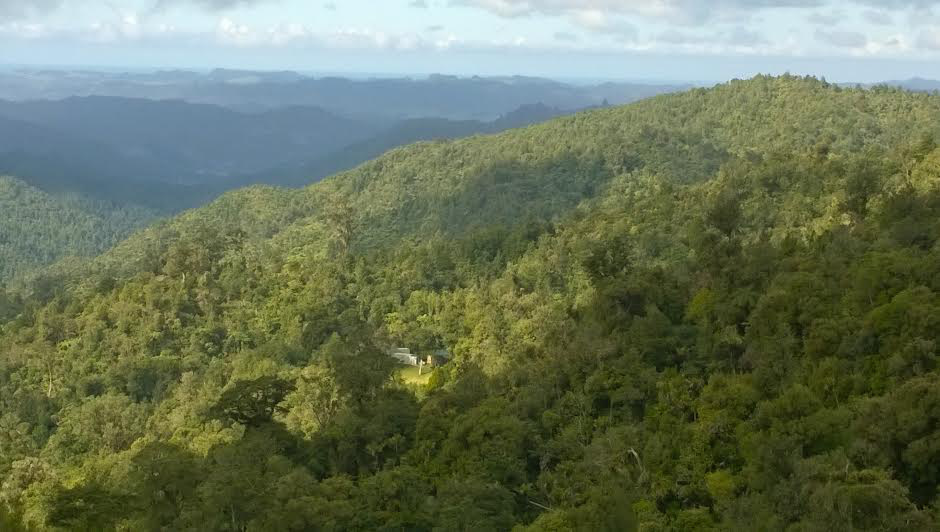
    In the forest which surrounds our little house amid the rolling ranges, are reminders that time truly is an ever rolling stream. 

    The plants and creatures here are older by millions of years than those in Europe which had to recover from the Ice Age 10 million years ago.

    Here in this remote country, New Zealand split off from the ancient continent of Gondwana between 80 and 85 million years ago, and some flora and fauna here date back 250 million years.

    So when I walk in our forest, I’m conscious I’m in touch with life forms that have survived since primeval times in this isolated place, and what recent arrivals on this planet my species and I are..

    Mankind didn’t  arrive on these islands until around 1000 years ago. They found it inhabited by peculiar flightless birds, giant invertebrates, and plants – some having survived more or less unchanged since Gondwanan times. These unique trusting creatures which had never seen human beings before were easily hunted to extinction.

    Roughly 64 endemic species—including at least 51 birds, 3 frogs, 3 lizards, a freshwater fish, and a bat—died out thanks to hunting, and introduced animals like pigs and goats, possums and rabbits..

    The amazing giant bird, the moa, disappeared in two hundred years, and then the Haast’s eagle, known as ‘the biggest, baddest, most magnificent eagle ever to have existed in the world’ died out as it had fed on the moa.

    So sadly, these once isolated islands are now part of the 6th Mass Extinction, in which scientists warn that by 2050, up to 30% to 50% of all Earth’s plant and animal species could face extinction due to climate change, habitat loss, and human activity.

    The forest appears empty, apart from the birds, compared with European woods and forest alive with squirrels and rabbits, foxes and deer, and so many other fascinating creatures, there are no indigenous mammals here except bats, but we host other primeval treasures.

     And we wage a constant battle against the animals introduced by man in the last thousand years, as they eat these native creatures and destroy their habitats.

    So we treasure rare species like our frogs, the Archey’s frogs whose ancient evolutionary lineage stretches back roughly 150 to 200 million years, making them living fossils that coexisted with dinosaurs.. They are only found these days in our forest and two other places in New Zealand. 

    These tiny delicious creatures, only an inch and a half, live on land and their minute tadpoles hatch on their father’s back, and live there until they are old enough to cope on their own. The froglets often stay with their dad for several years, and they can live up to forty years. One night I saw one the size of a fingernail.

    Their cousins the Hochstetter’s frogs, also ancient and endangered, live here too, and they both are our pride and joy, as is the butterfly extinct in the rest of the world, and only found in our forest – Helm’s butterfly, the forest ringlet, so rare and special that scientists come here to study it, even some of David Attrenborough’s researchers.

    And then there are our lizards, known as striped geckos. They are described as ‘rare and stealthy reptiles’. They were first discovered in the 1990s when one turned up in a home nearby.. Now we have teams of scientists turning up here to discover and map these beautiful little creatures hiding in the ferns and trees..

    But besides these rare species, I’m conscious as I walk in the forest that there are others, just as precious, but so plentiful that we take them for granted. There are 170 different sorts of worms in this country, including the beautiful glow worms…  I’ve learned that they, like all other living beings, have their own secret life, communicating with each other through touch and taste and ground vibrations. Being hermaphrodites, after they have mated they can both produce offspring.

    We all know now how vital their lives are to the health of the soil, and that modern farming methods, fertilisers etc, are death to these invaluable forms of life – which are also food for many birds and reptiles.  As long ago as 1881 Charles Darwin wrote: “It may be doubted whether there are many other animals which have played so important a part in the history of the world, as have these lowly organized creatures.”

    I used to think that spiders were just a nuisance, but have now discovered that they have a massive and vital use in nature. They act as Earth’s natural pest control by eating billions of insects like flies, mosquitoes, and crop-destroying bugs, keeping the balance of the ecosystem. Their exquisite webs are their form of communication, which they can read, knowing what fly or other insect is invading their web, and spinning and retracting and   playing its strands like a guitar.

    The amazing NZ snails are cherished too, there are over a thousand different species in this country, and after learning how intelligent and maternal they are from Elizabeth Tova Bailey’s wonderful book, ‘The Sound of a Wild Snail Eating,’ and reading about dozens of French snails lifting the lid of a basket taking them to market in a concerted effort and scattering, I have a great fondness for them. I’ve watched two snails crawl up the water bowl in my garden, and drink together, and then crawl back  out and away, and I’ve read of a snail making his way over a garden wall and finding more food in that  garden, and coming back to bring his wilting companion to a better place. Snails are more than petunia devouring pests !

    We also have a very long centipede with a painful bite – not my favourite life form, but I was fascinated to discover that their  pairs of legs are a different length so they don’t trip themselves up!

    Birds, butterflies, moths and bees, so many forms of life which we so often take for granted, but when their lives are decoded, turn out to have intelligent, intricate rituals and systems which support not only them, but the planet.

    Insects, which are fast disappearing, are the tiny workers that keep nature alive. They pollinate three-quarters of our food crops, feed countless birds and fish, and clean up dead waste to enrich the soil. It’s estimated that without them, our global food and natural systems would completely break down.  Yet the total extinction rates for insects are happening up to eight times faster than for mammals, birds, or reptiles.

    It turns out that our world could not exist without them, and since they lived for aeons before we latecomers trampled across the planet, they could probably manage without us for many aeons, world without end.

    So I try to tread softly in this forest among its ancient creatures, and marvel at the silent secret lives of the senior partners in our life here. While I grapple with technology and use electricity, gas, oil and other resources of the earth,  invisible primeval lives continue to support the planet as they have done for more millions of years than I can imagine. 

    Food for Threadbare Gourmets

    When I’m really up against it for time or energy, there’s nothing like that packet of pasta and tin of tomatoes always lined up in the pantry. My favourite pasta is angel hair and my husband loves macaroni, so I do both, it’s so easy.

    Thanks to Nigella Lawson, I no longer bother with boiling water, but just use cold water, and cook until the pasta is done.

    With long pasta like angel hair ( capellini) I use a big frying pan and plonk the strands in the cold water with some salt.

    The tin of tomatoes is embellished with garlic and chopped onion ( cooked for five minutes in the microwave) and a big dollop of butter, maybe a slurp of soy sauce for the umami flavour. Gently simmer for ten minutes or so, and tip over the drained pasta. Freshly grated parmesan is a must…I sometimes stir some cream into the tomatoes too.

    Food for Thought

    We say ‘I have done nothing today.’ What! have you not lived? That is not only the fundamental, but the most noble of your occupations.” 

    French philosopher Michel Montaigne
  • The House in the Forest

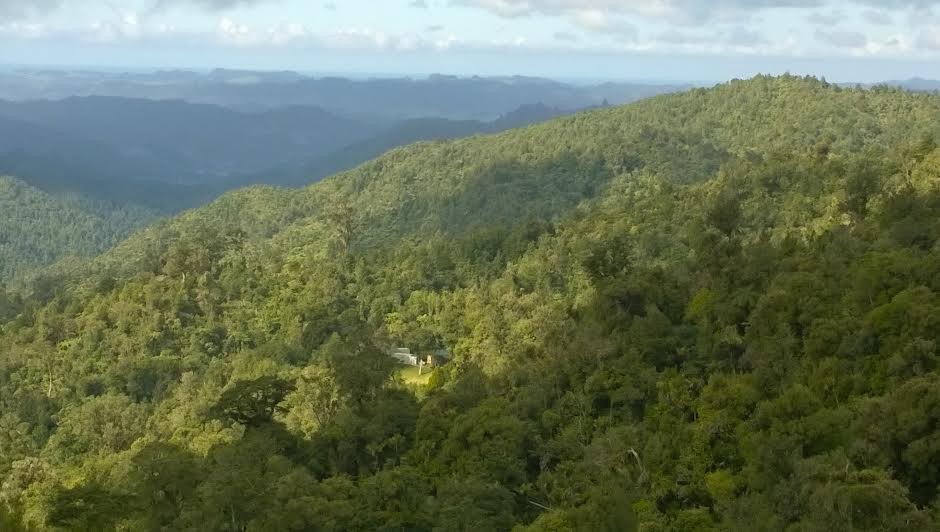
    The house in the middle of the forest, among the endless ranges stretching as far as the eye can see in the picture above, is ours.

    There are a few neighbours hidden around us in the thick canopy.

    We’ve lived here for almost eleven years now, since my husband left his far off home to join me in this remote little country of just over five million people. I was in my late seventies, he in his sixties.

    It was a leap of faith for us both, and since we had no money between us after leaving our previous lives, a tough start.

    He had left his ranch, and I left my beautiful clifftop cottage in a little fishing village.

    He found this place on the internet – a tiny wooden cabin surrounded by trees, gazing across to an amphitheatre of hills and forest.

    We joke that we own a quarter of a mountain.

    We used to gaze at the ad on the website every night for a year before he arrived on these shores, causing the estate agent to believe that there was massive interest in this remote cabin with no running water, no electricity, and no amenities.

    The forest is hidden from the winding dirt road with 298 hairpin bends by huge wrought iron gates, and is a protected area, so that it cannot be spoiled, developed or changed in any way..

    The dirt road, we discovered, was notorious for its difficulty, danger and beauty. The river which runs alongside it far below has its source on our forty acres of land.

    When my husband- to- be landed in this country, we packed up my beautiful possessions, walls of books, French antiques, china, lamps, pictures and rugs, in two 20foot containers, and arrived here on a sunny day just before Christmas. One loving friend had given us a Christmas wreath to hang on the door, and a tree one foot high equipped with tiny Christmas lights. I brought a stock of beeswax candles to light the cabin at night.

    We’d packed the bed last in the crammed container, along with candle sticks, a French mirror, a small table and lace tablecloth, and when I’d scrubbed and cleaned the inside of the cabin, we installed the bed, made it up with beautiful linen sheets and French counterpane, hung the mirror above the bed, arranged the tall candlesticks on the table under the window, and felt we had a home !

     Also to hand was a tiny gas camp stove, a frying pan and some plates and cutlery, and I cooked all our meals on a picnic table at the side of the house. It didn’t rain at all for the first few weeks, and we were able to unpack one container into a hastily erected garden pavilion so we could turn the now empty container into a minuscule kitchen and sitting room. We had bought a ranch slider from a demolition yard in a town an hour and a half away, carried home on top of the car, and installed at the end.

    Undeterred by our primitive conditions I persuaded my helpful new partner to hang up a big gilt Victorian mirror and several very large pictures in antique gold frames, we unpacked several bookcases and books to line the rest of the walls with books,

     furnished it with a sofa and two antique French armchairs, an oriental rug, and screened it from the kitchen with a weathered old grey French shutter.

    When our neighbours came to call, they were enchanted – one called it ‘petit Versailles’, another brought her mahjong group for afternoon tea to view it, and another, his daughter and then his sister out from England to view this extraordinary ‘room’ in the

     middle of the forest.

    Our neighbours were a fascinating group of people drawn here by the environment and the opportunity to help preserve both the trees, as well as some of the rare and endangered species which dwell here.

    Among the twenty so, are a well known architect, and a professor of aeronautics, who when he retired, went back to University to obtain a degree in zoology, and is now one of the foremost authorities on lepidoptera ( moths and butterflies ) in the country. He has discovered over three hundred new species of moth on the estate in the last ten years. 

    Our nearest neighbour is a Dutch cello player, and further away lives one of the country’s most renowned landscape architects and botanist wife, while further up the road, is a Dutch restaurateur and his artist wife. Nearby are a couple, one of whom is Swiss, who run a bungee jumping company in various parts of the world, an engineer, who’d retired from running African gold mines, and his Russian wife, and other fascinating characters.

    My husband is one of these fascinating characters, having started life in the US Navy as a highly trained nuclear specialist in a nuclear submarine, and when he left Hawaii to join me, was working at a famous observatory on top of one of the highest mountains in the world. He’s not only creative, designing and building our house, using a skateboard to create a sliding door and other ingenious devices, making concrete spheres and series of waterfalls for the garden and creating a thirty foot tree of lights at Christmas,  but he’s also the best informed person I’ve ever met, whether we’re talking about space and the stars, or how the body works, or the waves behave, or the theory of magnetism, gravity or Hadley Cells, or Leonardo da Vinci.

    We don’t have a television – instead every night after supper, we read to each other, a ritual we wouldn’t miss. 

    So we live in a world within a world, making expeditions down the long winding road to the nearest town for supplies, which include all the wood, doors and windows, which have been transported up the mountain to build our house on the sturdy roof rack of our loyal station wagon.

    My husband has built the house around us and as the years have gone by we have lived in warmth and comfort and beauty.

     I’ve planted a garden, and learned what flowers and plants the roaming bands of quail will spare when foraging for their salad course. 

    So this is the story of our adventure – the story of the forest and fauna and its rare and precious creatures is yet to be told.

    Food for Threadbare Gourmets

    Apple tart was a staple of our diet, growing up, nearly always eaten after Sunday lunch of roast beef and Yorkshire pudding.

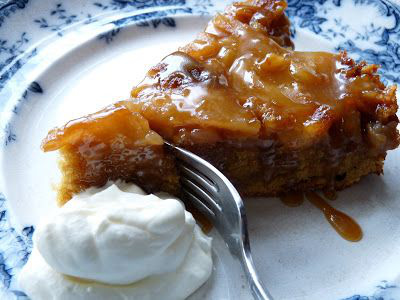
    But these days I can’t be doing with all the faffing of pie-making and instead make a quick, easy French galette.

    While the oven is heating to 200 degrees, I grease a flat oven proof dish, and place in it a sheet of frozen sweet shortcrust pastry to melt.

    Three or four eating apples, peeled and thinly sliced, are fried in butter. By the time they’re ready, the pastry has sunk into the dish and the apples are then piled in the middle. Then sprinkle with sugar and cinnamon, fold the corners of the pastry over the apple, making a square… sprinkle with more sugar and cook for roughly thirty minutes.

    Leaves apple tart for dead !

    Food for Thought

    We will be held accountable for all the permitted pleasures we failed to enjoy .

    Hebrew Haggada

  • That’s Life

    I lost my blog, and had no idea how to get it back until dear Linda at coloradofarmlife.com told me how to find it, after I told her how frustrated and helpless I was. However, I was still writing, and this is the result of my labours:

    Illustration from the post “That’s Life”

    Dearest Alice, I know what you mean about time getting away from you… it’s got away from me… What an interesting letter, thank you… loved the stuff about the trees drinking the water…. have been fascinated by the life in them ever since I read how they communicate with each other through their roots, and there is a mother tree who is leader of the pack !!! Like all animals… It broke my heart to read that when a grandmother elephant was returned to a zoo recently where her daughter and granddaughter were, after a twelve year parting, she immediately entwined trunks and showed how she remembered them… we break up animal families without a second thought… years ago I read about a sheep farmer who milked her sheep for feta cheese, and she told how when she banged on the bucket to milk them, they all came to her in their family groups of three or four generations, great grandmothers and all their offspring…

    Wild swimming, we did it without thinking when we were young didn’t we – swam in rivers and lakes without ever thinking it was wild swimming! – lovely for you to find a place where you can… do you feel you’re settling into your new home?

    Huntington’s chorea – ugh – a terrible illness… we also knew a family with it, and all the children in this generation decided not to have children…

    We’ve been having strange times here… got back from the dentist in Thames the other day to find a snowstorm up here, and drifts of it lying around for ages it was so cold. We’ve never had snow in this temperate region with a podocarp – almost tropical forest… The night before last we were awakened by a stiff earthquake, the rattling of everything in the house woke us, and then we felt the tremors… we went back to sleep and slept through the after-shocks… then last night another earthquake… Strange times … first snow, then earthquakes, maybe a plague of frogs next – I hope they’re the environmentally threatened Archey’s that we protect here !!!

    D- is busy putting an elegant coved ceiling in the sitting room, it feels so snug and light and airy… plus a lovely wrought iron chandelier a friend gave us when she didn’t want it… I painted it cream and it looks great… And now a small gang of quail have arrived for a snack of bird seed… they’re eating us out of house and home, but D- adores them…

    I was thinking about spring coming soon, and an old memory came back… when we were at Guildford you gave me a book of funny rhymes, and I still remember : In the springtime come the breezes. With the breezes come the squeezes, With the squeezes come the maybe’s With the maybe’s come the babies !!!

    It was my twenty first birthday, and you also gave me a beautiful silk scarf of pink and white squares which I loved. Very useful when you had the hood down in your MGA.

    Just off to make a fudge icing for an apple cake I’ve made to take to some very old friends. There isn’t a swish restaurant in Thames where they live and we wanted to take them out to lunch. So I’m taking everything to their lovely house, oyster bisque and rolls, cheeses and pates, and the cake and champagne… I’ve known them since we were neighbours back in 1975….

    Andrew was lovely, and I’m so glad you have such happy memories to comfort you… Much love, dear friend,

    To a grandson Darling, when you rang yesterday, you explained / apologised for not ringing me last week. I Really want you to know that there is no onus on you to ring me regularly. I always simply love it, and feel smiling and happy when we ring off, because it is a gift… But I do not expect it, and know too that you Are busy so I always appreciate it when you think of me, but would never start wondering why you hadn’t – if you didn’t! D- always says it’s a ‘bloody miracle’ when you ring me, (meaning that so few young people remember oldies ) he thinks you’re so wonderful to think of me, and usually makes me a tray of tea when you ring, so I can sit and enjoy talking to you and sip my lapsang souchong at the same time… I think you’re wonderful too, to include me in your busy days, so thank you, thank you for making the time, and know that it’s a bonus for me, not something expected. You have always been so special to me from the moment you were born and I held you while V- had a shower – and that too I felt was such an unexpected joy and a gift…. and when you were fretful in the days after you were born because your head had been so squished out of shape and it must have been so painful, I used to hold you to my chest and sing Tallis’s Canon over and over so that the sound would reverberate and throb and beat against your heart to try to comfort you. In e.e.cumming’s words, I have always held you in my heart. So much love from your Grannie XXXXXXX

    To my son,

    Hi darling, thought you’d be interested in this comment about Sophia’s video from Jilly, I had sent it to her. She wrote:

    I must comment on your amazing step-grand daughter’s video. Thank you for sending it, and what a great story it is. She readily admits her family had to make huge adjustments, and I do know just what that means. It is a lovely uplifting story and I felt she is a very strong and gracious young woman. https://www.youtube.com/watch?v=0ahGz2nhOps

    I’ve watched it again, and it’s amazing just what a person with tetraplegia can do and what she is making of her life.

    Such courage and persistence.

    From Daughter:

    Got these lovely beeswax candles in Wanaka at lavendar garden and put in Great Grannie’s candlesticks today…

    Me: Oh, how gorgeous… they always smell divine…. you can get more at the church shop on the corner of the Ellerlie off ramp. I hate the ordinary candles, which burn paraffin, and I discovered, because we burn candles quite a lot, that they actually leave grime on the windows… funnily enough D- bought me a pack of beeswax candles while I was at the dentist on Thursday, to cheer me up…. we’ve even explored the internet to buy beeswax, and make our own, but it’s just as expensive as buying them….

    I’ve often thought I’d like to tell the family that I don’t need any birthday or Christmas presents – just beeswax candles !!!

    Daughter:

    Found these on Trademe. $12 for the pair which is cheaper than church shop. It’s a shop in Hawkes Bay that makes their own…

    Me: Thank you darling.

    To another grandchild….

    Lovely to see you darling… to continue our conversation – I knew how you felt about BLM when it started… I really hadn’t realised how subtle much racism is (and simply bad-mannered) until you explained, and I could really sympathise with the movement in its beginnings. But I now feel differently. It was the last straw for me when the German director of the treasured British Museum said ‘we’ (obviously forgetting Germany’s painful past) had to face up to the painful facts of British colonial history and ‘cancelled’ Sir Hans Sloane.

    He was the person born in 1660 who funded the British Museum, the British Library, the Natural History Museum, Chelsea Physic Garden, gave medical attention to the poor every morning for free, and gave his salary to the Foundling Hospital, as well as being a scientist and naturalist who was a benefactor to these fields of English endeavour as well.

    His wife owned slaves in the colonies, so Sir Hans, a kind, good man and generous philanthropist, has been symbolically tarred and feathered, and his statue moved out of sight. I wonder what these fanatics thought people living in those times should have done. If Sir Hans had freed his wife’s slaves, how would they have survived in the society in which they had been enslaved. No- one would have employed them when they had their own free labour – their slaves… so these freed slaves would have faced a life of starvation or deprivation and outlawry, having no place in society.

    I read this comment below, in a newspaper story dealing with all the destruction of treasured heroes of the American past from Washington, to Lincoln and U.S. Grant, whose crime was to be given a slave by his father in law and to free him within a year, at some cost to himself since he was on the bare bones of existence at the time.

    “This describes a lot of us. Tread lightly! My tolerance is running out. I never cared what colour you were until you started blaming me for your problems. I never cared about your political affiliation until you started to condemn me for mine. I never cared where you were from in this great Republic until you began condemning people based on where they were born and the history that makes them who they are. I have never cared if you were well off or poor because I’ve been both.

    “Until you started calling me names for working hard and bettering myself, I’ve never cared if your beliefs are different than mine. Until you said I am not entitled to my beliefs, now I care. I’ve given all the tolerance I have to give. This is no longer my problem. It’s your problem. You can still fix it. It’s not too late, but it soon will be. I’m a very patient person at times. But I’m about out of patience. There are literally millions of people just like me. We have had enough.”

    I know where he’s coming from! We’re never going to make a better world for all those who feel deprived or victims, until we stop shaming and blaming everyone for the colour of their skin. Many white people don’t feel privileged at all! Many of them are descended from ancestors who lived lives very nearly as hard as slaves, working crippling hours in mines, being impressed into the navy, making lace in badly lit attics and going blind to mention only a few instances… history is full of injustices.

    So is the present, with slavery still being practised /endured all over the Middle East and Africa… and China too, in all but name. Those are the people who are suffering today. BLM being victims of the past doesn’t solve the present. Patience, tolerance, kindness and generosity are the things that may. And until we all try them we will never know.

    I’m still learning all the new terms to keep myself up to date! – have mastered woke, and now there’s cis-gender, transgender, AFAB – that’s a funny one – Assigned Female At Birth – don’t think anyone bothered to do that with me – they just supposed that on the evidence I was a girl!

    Looking forward to seeing you when lockdown is over again…

    Dearest Dick and Bella, What a lovely, lovely occasion…. it was lovely to see you both, and so sweet of you both to make it such a beautiful occasion, flowers, champagne and fun and good conversation… Douglas and I loved every minute, thank you so much XXX And I loved hearing about Lily, what a precious person she sounds … you brought up special people…Lily’s beauty is something really rare… It was such a celebratory event…you are so good at them, thank you !! And then, to get home and savour more generosity, all your beautiful gifts… The beautiful posy is sitting in a big pink paisley patterned mug, with the word love on it… not quite as unique as your mother’s gorgeous green vase, but it works! Oh Bella, what a collection of treats in your beautiful hamper – so spoily and undeserved – you are amazing… I slowly unwrapped each treat, feeling more and more amazed at your imagination as well as your generosity… the eggs – what a precious way of presenting them… it made me realise just how exquisite eggs are… the ginger puddings – echoes of childhood when we Always had a pudding – steamed ginger, apple pie, treacle tart, or just stewed apple or plums or rhubarb with rice pudding or custard… I shall savour them, as well as all the other beautiful handmade goodies… the extra special chocolate, and the lovely scented soap…and that darling delicious little bell… so delicate and beautiful… thank you so much for all those thoughtful imaginative treats… The lemons look lovely in an antique French provincial pottery bowl I recognised in the op shop, and which they sold disdainfully ( ‘tatty old pottery thing’ ) for five dollars… and I can’t wait for the house to be back in order after all D-‘s efforts when we had already planned to celebrate with lighting some beeswax candles, and now we have them, thanks to you ! I feel really moved and quite overwhelmed with your generosity dear friend… thank you thank you… I do hope you’ll feel like the journey here when the weather improves, so we can try to spoil you XXX

    Now, the apple fudge cake – I still have the 1987 cutting from the Herald in my scrapbook… Elizabeth Pedersen, a nice Dutchwoman I think she was… The recipe calls for three fresh Grannie Smith type apples, but as I mentioned I do it the lazy way now with a tin of apple, chopped small…she says vegetable oil, so I tend to use grape oil… and I usually use slightly less milk in the fudge topping so it’s a bit dryer and more manageable as a cake…and I use SR flour instead of plain plus baking soda ( a lazy cook !) 12 oz SR flour tsp salt (I just use a generous pinch) 10 ozs vegetable oil 13 oz caster sugar 3 eggs 3 medium sliced apples ( or one tin ) few drops of vanilla essence – (I use nearer a teaspoon) Oven gas 4 or 175 C Cream oil with sugar till light and smooth. Beat in the eggs one by one, vanilla, then the flour in three batches, and then stir in apples. Bake for one to one and a half hours. When it’s cool, spread the topping…six generous ozs brown sugar 60 ml milk 125 ml unsalted butter vanilla (I use half a teaspoon)

    Melt, and stir until smooth, boil for two minutes, then cool, stirring occasionally. Stir the topping over ice until it begins to stiffen, then spread over the cake, letting it drip down the sides… As you can see – so easy.

    So that’s some writing in the life of… letters…and now to catch up on all my blog housekeeping, and with all the other old friends around the world linked by our network of golden threads called WordPress.

  • May only love prevail!

    I try not to hate. But I do hate experiments on animals. Reading a dying girl’s account of her last months, and the things which sustained her, I came across this story. It was an experiment on animals, and horrible though it was, it gave me food for thought, and some real joy, as it did her.

    Illustration from the post “May only love prevail!”

    Healthy laboratory rats were being injected/ infected with cancer, in order to test a cure, but the researchers were puzzled that one batch of rats remained healthy. Investigating the rat’s life cycle to discover why they were immune to cancer, they asked the laboratory technician looking after them what their routines were. He told that them before he fed each rat, he couldn’t resist cuddling and stroking them.

    So, these intelligent, lovely creatures, experiencing love, were able to resist deadly infection. I’ve thought a lot about love since, and what it means and how it manifests itself in all creatures and all forms of life.

    It’s that time of year here, when the calves have been born, and their mothers demonstrate the same sort of mother love that our supposedly superior species do too. When the calves are born, the mother cow washes them and nuzzles them, and the washing and nuzzling and warm contact – love – is vital to keep them alive and anchor them in this world. The mothers feed them, and they nurture them. And when the calf is taken from them after a few days, depending on the farmer’s routines or whims, they grieve terribly, their bellows of pain echoing across the fields.

    Thanks to this annual ordeal we are able to enjoy milk and butter and cheese, and thereby keep up our calcium levels and build strong bones. Being human is a terrible dilemma, where compassion is at war with what we perceive to be our needs or our enjoyment.

    The intelligence and life force in everything around us is a constant miracle to me. I read today that plants, which all have their own individual scents, emit a warning smell to all plants around them when they’ve been attacked by a snail or an insect nibbling a morsel out of a leaf. And though all plant species have their unique scent, this warning scent they send out is the same for all different species… an amazing, intelligent and altruistic response to danger… Could Kant argue against altruism in plants as he did in human beings? I think not, there’s no advantage to a plant to warn fellow plants of all kinds, that they should beware… it must be pure love…

    Loving plants! I think of trees, how scientist have discovered that the biggest, mother tree, apparently communicates with other younger trees around her, via fungi spores, and how dying trees send their energy along the spores to other healthy trees, a legacy of love from a dying tree.

    And getting back to snails, the enemy of gardeners, and delicious delight to gourmets – we under-rate their feelings and intelligence as we do every other living thing except ourselves. I’ve been re-reading Elizabeth Luard’s book about bringing up her family in Spain and Provence, a medley of recipes and rich experiences.

    A carnivore as well as afficionado of the bull fight, she unashamedly ate what the local people eat, with no scruples. So in the Languedoc, she and her children gathered snails by the bucket full, and then starved them for a few days on just a few herbs like thyme and rosemary, to clear their digestive system. But snails ain’t stoopid!

    She described countless mornings coming downstairs into the kitchen, to find the snails had banded together in a concerted effort, lifted the bucket lid and escaped. ‘Snail break-out!’ she’d call and the household would tumble downstairs to search for the clever little gastropods.

    Snails are altruistic too. I once read of two snails being observed in a garden with very poor pickings for a snail. One of them was sick, and the other seemed to abandon it by climbing the garden wall and finding a healthier environment down below. But he came back and accompanied the sick snail to greener healthier pastures. Which leads me to believe that snails can communicate with each other, and feel kindness and responsibility to a fellow snail! Maternal mother snails lay their eggs in little clumps, and visit them regularly until they hatch.

    Though it seems amazing to read of solving the riddles of outer space, I find the incredible miracle of life on earth even more amazing, and I know that at this moment, our understanding of it is only scratching the surface of all that is underfoot and all around.

    For so long homo sapiens has claimed superiority over all the earth’s creatures, and not just those who read Genesis which tells us we have dominion over all creatures… Buddhism seems to be one of the few creeds which honours other forms of life. While so-called philosophers like Descartes have encouraged mankind to ignore the feelings of animals and given us carte blanche to treat them as though they are mindless unfeeling machines.

    Yet the beauty, the intelligence, the goodness, the love and the life in the whole of creation, is, it seems to me, reason for admitting that all creatures are equal in the sight of the Creator, the Source, or whatever we want to call the First Cause. (Reading of the way women are treated in some countries and some cultures, I feel the same about them too.)

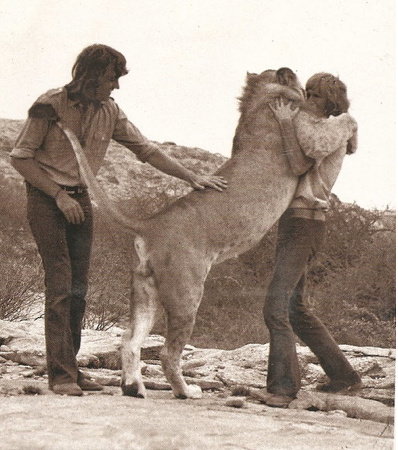
    One of the most powerful images of love is that of Christian the lion, racing down the African hill-side to leap into the arms of the two men who had brought him up, to hug them and lick them. The men had bought him from Harrods, and he lived with them in London until they were able to re-wild him as a teenager, with the help of George Adamson. It was a dreadful wrench to leave him in Africa and return to London, and they went back to visit him a year later. Christian saw and recognised them from afar, and crying and making heartfelt noises, tore down the hill to be re-united with the people he loved.

    Sometime later, when they returned again, Christian had a wife and cubs, and led his two former guardians into the wild to meet them. The two men sat there quietly all day in the hot sun among the rocks with Christian and his wife and children, the very picture of Edward Hicks’ painting of ’The Peacable Kingdom. ‘

    Over the years our family lived with fifteen rescued dogs, three at a time. They were all breeds, two afghans, boxer, cavalier King Charles spaniels (six), borzoi, labrador, bull mastiff, salukis. We also had several dogs who were ‘chosen’, not rescued, and much as I loved them, there was a particular quality about the love our rescued dogs gave us… it was as though they never forgot their past, and were utterly devoted to us who were their new owners. It always seemed wrong to say we owned them – we cared for them.

    The gifts of love they gave us meant that the house seemed always to be brimming with love and fun, the same sort of love and fun which fills a house with toddlers in it. And when I read of experiments when different bowls of rice are treated to indifference, or interest – one ignored, the others greeted – and the subsequent decay of the ignored rice, and flourishing health of the others, it sends a powerful message.

    It tells me that love is behind all life. Indifference is the opposite of love and is a killer. But love gives life, and health and hope. Scientific experiments have shown us that the observer can change the behaviour of what is observed, so maybe loving thoughts are as powerful as loving deeds. Maybe the rats would have survived the experiments supposed to make them ill, if they had just sensed and felt that the lab technician loved them.

    This thought encourages me to use that lovely mantra: ‘may only love prevail’, in all circumstances, even when someone has stolen my parking place or overtaken me dangerously! Love your enemies said a great Teacher… I think I begin to understand what He was talking about.

    I also love food… and for many of us cooking is a tangible way of loving our loved ones. I’m always looking for new ways to cook for my loved ones, and the other day hit the jackpot with a super-easy way of cooking organic chicken thighs…saute in butter and set aside. Pour a glass of wine into the pan, a generous teaspoon each of Dijon mustard and whole grain mustard. Boil them up, add a cup or more of cream, heat it, and pour over the chicken with salt and pepper. Cook in a moderate oven for half an hour or until tender.

    We ate it with plain boiled rice and spinach – it was good. With the one piece left and some of the leftover cream, I made quick cream of chicken soup for a light lunch the next day, while Himself enjoyed something more substantial.

    I added a chopped leek sauted in butter, some garlic, and half a tin of condensed chicken soup. With a chicken stock cube, boiled and whizzed smooth, a dollop of cream and some nutmeg, it was a treat. As Orson Welles advised “Ask not what you can do for your country. Ask what’s for lunch.”

  • A merrier world and a beautiful one

    Tropical islands poised to benefit from ocean power

    The story of a sixteen-year old fighting climate change always moves and excites and inspires me.

    Jadav Payeng has been planting a forest single-handedly since 1979 when he saw a pile of dead snakes and realised they had died for lack of both water and shade. Jadav Payeng, the son of a poor buffalo trader from a marginalized tribal community in the region of Assam, India, is now a poor farmer; but he has let nothing stand in the way of the task he set himself. He’s planted a tree a day in the forty years ever since. Elephants and tigers and all the indigenous wild life of the area have returned and are inhabitants of the forest he’s planted, which is now bigger than Central Park in New York.

    I can’t help contrasting his story with the story of another sixteen-year old, an angry frightened Swedish teenager.

    As I watched her speaking at the UN, I wondered, not for the first time, where her parents were to protect her, and also to help her to get some balance… yes, climate change is real, but no-one has stolen her childhood, living in a privileged western society like Sweden. While on the other hand, millions of children elsewhere are starving, enslaved and truly hopeless, and the millions of us in WW2 and other times, as well as children growing up in fear of nuclear annihilation during the Cold War, could claim to have had our childhoods stolen… except that self- pity and blame gets us nowhere!!!

    And it isn’t just climate change which is a problem for the future… we face polluted oceans, destruction of the world’s forests, over-population, the extinction of other living species, and many other pressing issues. Yet the future is not actually all doom and gloom, and I wish someone would help Greta see the other side of the story.

    After watching a video called 13 Misconceptions about Climate Change, I began to feel a lot better about the future, while there are other signs of progress which make me feel truly hopeful.

    For starters, there’s the so-called destruction of Pacific Islands by the rising ocean, which the UN Secretary General described when he spoke after Greta at the UN. Actually, the story of the Pacific Islands is fascinating. A research team, which included a professor from Auckland University, have been studying the problem, and their findings show the gloomy forecast of flooding and inundation is unjustified.

    Previous research by the team, which used aerial photos going back as far as 1943 to track changes to the 101 islands that make up the Tuvalu archipelago, found that overall there was a net gain in land area of 2.9 percent or 73.5ha over the past 40 years.

    They found that the height of the atolls increased at the same time as the rising water, that sand and sediment shifted as the atolls responded to the environmental changes: that the elevation of the atoll crest – the highest ground – mirrored the rise in sea levels, which suggests sea level may be an important controlling factor on island elevation.

    Co-researcher Dr Murray Ford, also from the University of Auckland, says the study shows islands are more resilient than previously thought, able to change shape or physically adjust to higher sea levels and more severe storms.

    Then there’s the Great Green Wall of China where they are planting an area of forest bigger than Ireland every year, and have drafted in 60,000 soldiers to help with the planting. While they have had their problems and are still working on them, the project is heartening, while all the re-wilding and regeneration going on in England, Scotland, Denmark, Spain and other European countries is setting a new paradigm.

    Great tracts of land are being returned to their ancient state – at Knepp Farm in Kent for instance, they’ve pulled up all the fences, sold all the farm machinery, and introduced as many original species onto the land as possible. No aurochs now, which used to roam the land in Neolithic times, so they introduced the nearest thing – long horn cattle, Exmoor ponies instead of wild horses to keep too many trees from spreading, three species of deer and pigs. Nature designed each animal to have its own function, they all graze differently, while the pigs rootling in the hard clay soil open up spaces for seeds to germinate. The results of this system include improving soil quality, flood control, water purification and pollination.

    Rare bats, birds, butterflies, insects, flowers, fish, which haven’t been seen for centuries, are returning to this paradise, only a short way from London. The cattle are gently led – no violence being chased by dogs or motorbikes to round them up – and culled and sold as the highest quality meat, so there is no over-grazing in what is still an enclosed space, with other traditional farms around, hemming them in. This was the mistake made in the celebrated Netherlands project, where the animals flourished so well that in a hard winter many died from starvation, so now some animals have to be culled to maintain the health of the others.

    As the years have gone by at Knepp Farm, swamps and wetland have returned, trees and scrub and rare wild flowers have spread, birds sing, butterflies dance over blossoms, and the whole area exudes a sense of calm and beauty. Glamping has become an off- shoot of this wonderful experiment.

    The famous return of wolves to Yellowstone Park has shown that by introducing the top predator, the whole ecosystem can heal and regenerate. Rumania has one of the last and biggest swathes of forest, where vast areas are flourishing with all the wild creatures roaming, , which have disappeared elsewhere in Europe, and though during the Communist rule the forests began to be logged, they are now protected.

    In Scotland where a number of philanthropists and trusts have bought up huge areas of land, they are re-wilding or regenerating the land in other ways…John Muir, of the John Muir Trust, one of the largest landowners, said that: ‘thousands of tired, nerve- shaken, over-civilized people are beginning to find out that going to the mountains is going home; that wildness is a necessity’. This is why of course, that eco-tourism is on the rise which may or may not be a good thing, with concern over carbon footprints.

    Modern factory farming, with all the attendant soil erosion, animal cruelty, chemical poisoning through the use of herbicides, pesticides, and anti-biotics, and water degradation, is also being addressed by dedicated experts. In the wonderful half hour documentary called ‘Unbroken Ground’ we learn of efforts to breed strains of grain which don’t require annual re-planting with the resultant ploughing and soil loss. Another farmer has transformed the over-grazed barren waste of his land caused by cattle grazing, by introducing bison, the original inhabitants, and their presence has restored the eco-system, while their meat is organic and unsullied by anti-biotics or other modern methods of increasing yield.

    In fact, farming like this turns out to be more productive than modern farming methods, while respecting the land and the animals. All over the world farmers are taking up ‘re-generative farming’, letting the land dictate the results, allowing trees to grow for shade for animals and to prevent soil erosion, increase the world’s stock of trees, and as a by-product make the land both beautiful and productive.

    This method of farming aims for topsoil regeneration, increasing biodiversity, improving the water cycle, enhancing eco-system services, increasing resilience to climate change, and strengthening the health and vitality of farm soil.

    And even fishing is being tackled by one co-operative fishing company on Lummi Island in the States. They’ve perfected a way of catching salmon without stress, returning the unwanted catch to the sea unharmed, and treating the salmon with gentleness and respect. Now that scientists have proved what many of us have always believed, that fish can feel pain, it’s a great step forward to see that fishing can be humane; and perhaps in our brave new world, we will see this respect and care for all living things, including our planet, penetrate the consciousness of us all.

    This revolution in our thinking towards the world can start at home. In small town gardens and plots, where gardeners grow native species, or plants that attract bees, or birds, they create tiny oases in urban deserts. A balcony or a window box, a bird feeder or a bowl of fresh water can attract insect and bird life, and even leaving dandelions to flower, the bees favourite food, is a small gift to the planet. We don’t need a farm or acres of land to do what we can to nurture nature. Some people plant road-sides, railway embankments and waste land in cities… sometimes they’re called guerrilla gardeners, and they are among the unsung saviours of the planet.

    So if I could speak to sad and anxious sixteen year old Greta, I would give her the words of Max Ehrman in Desiderata:

    “Go placidly amid the noise and the haste … Speak your truth quietly and clearly… And whether or not it is clear to you, no doubt the universe is unfolding as it should. Therefore, be at peace with God, whatever you conceive Him to be. And whatever your labours and aspirations, in the noisy confusion of life, keep peace in your soul. With all its sham, drudgery and broken dreams, it is still a beautiful world. Be cheerful. Strive to be happy.”

    The beauty is a gift, but happiness is a decision I sometimes think… remembering the words of the anarchic Monty Python gang in The Life of Brian – always look on the bright side of things! And much happiness for me is to be found chopping and stirring and beating and eating in the kitchen… hence our Tuscan binge after reading Frances Mayes…’Giusi’s hen, hunter style’ was our first go at peasant cooking, and not having the guinea fowl required in the recipe I used eight boneless chicken breasts. We started with ‘odori’, which is a base made of two carrots, two stalks of celery, one onion, 2 cloves of garlic, and parsley. Chop them finely, saute in olive oil and put aside.

    Saute the chicken for ten minutes, add salt and pepper and the odori. When the mix looks golden, pour in a glass of white wine. When it’s almost evaporated add two cups of tomato sauce and cook slowly for another twenty minutes. I took the advice and let it sit until the next day.

    There was enough for two meals, the first we ate with creamy mashed potatoes, and the next day with pasta, accompanied by green beans – and of course a glass of good wine.

    Being inclined to short cuts these days I used grated garlic in a jar, and a tin of tomatoes. It still seemed pretty delicious even with these non-Tuscan deviations! And as that wise old man Tolkien once said:” If more of us valued food and cheer and song above hoarded gold, it would be a merrier world.”

  • Light footfalls in the Forest

    Illustration from the post “Light footfalls in the Forest”

    I’m back… after a lull and a few health issues, can’t resist coming back to blogging. I’ve kept up with reading all my old friends, under the radar, and am up with the play on the health and antics of various cats and dogs and pigs, and people! And thanks to the magic of technology, the internet has kept me up to date on the strange happenings around the world. I hesitate to put a name to the events which fill today’s headlines.

    Here in our remote rainforest, politics and pollution, carbon footprints and climate change feel a long way away. Though I did calculate our carbon footprint today, and since we make one trip into town a week, amounting to fifty kilometres, catch our own water from the roof, and purify it, don’t waste water since we have a compost toilet, build our house with re-cycled windows, doors, kitchen bench, neighbour’s cast-off extractor hood and other donations, and only use electricity for heating, our footprint is fairly light.

    D, my love, has used skateboard wheels to create a sliding door which purrs every time it’s opened, while a steel knitting needle and some big beads from a necklace have been used to fashion a light fitting that can be adjusted and moved above the dining table depending how many guests we have. He’s made exquisite sounding bells from divers cast off tanks which function as warning bells for us, and become presents for the people who are enchanted with the sound of the bells, and want one too.

    A friend gave us an unwanted Italian stone plinth which, with a great, perfectly round concrete ball cast by D for me for Christmas, has become the focal point of my new garden; another friend delivered a ten foot pallet he wanted to dispose of, which has, with a few extra pieces of wood nailed on, become an elegant trellis barrier painted black and swathed in white wisteria, honeysuckle and star jasmine, dividing drive from garden.

    Along the top of the trellis are ranged a row of perfect round black balls. They were once the feet of an armoire, and so ugly that I had them cut off, and have carted them around for the last nineteen years, hoping to find a use for them someday. That day has arrived. Painted black, and augmented with a big central one made by D, they have come into their own. The honeysuckle was grown from cuttings taken from the side of the road. The stubs of used candles are melted down and blended together to make candles for the storm lanterns down the drive when friends visit.

    Arum lilies, dug up from a field at a friend’s farm, and roses grown from cuttings, fill the urns and pots, and on finding half a dozen miniature pink buckets in an op shop, I filled with them with pink cyclamens and lined them up on the steps to the house. I fill any gaps in the garden with big white marguerite daisies grown from cuttings – the original plant I bought back in 2003, and have kept supplies of these generous sized daisies ever since. At this moment in the porch are twenty- four flourishing little green rootlets waiting to be transferred to wherever they are needed. Ivy cuttings are also rooting quietly after a walk past an overgrown wall.

    A raised vegetable garden is the next step… to be tackled when D has finished inserting two beautiful coloured lead light windows into the bathroom wall which looks out into the forest. They came from a dresser we bought for a song at the local rubbish tip shop. The hinges on the doors and handles would have cost more than we paid for the whole dresser if he had bought them new, D says.

    And as well as the hardware, we have the lead light doors to the cupboard now transformed into windows, and the bottom shelves, divested of doors, painted white and flossied up with a bit of moulding, matching another sturdy bookshelf the other side of the room.

    The satisfaction of this way of life is immense. Though we are surrounded in the forest by splendid architect designed dwellings furnished with architect-speak fashionable furniture, black leather Mies van der Rohe-like loungers, cow-hide rugs, low backed sofas, I am unmoved by this elegance. I still love my ancient seven-foot sofa, bought from an acquaintance twenty- five years ago when it was already twenty- five years old. New feet gave it a new lease of life, and loose covers made from hemp twenty years ago are still as good as new.

    My antique French Provincial arm chairs are still comfortable, even though the cat appropriated them all the years of her life, and the old painted peasant looking chest of drawers gives me as much pleasure as our walnut and rosewood antiques of yesteryear. Pretty china, rugs and cushions, lamps and books have been the same companions for the last four decades.

    And books continue to find their way in. Last week it was a book on Tuscany found for a dollar at the local rubbish tip shop. It’s a big illustrated hymn to Tuscany by Frances Mayes, whose other books on finding her Italian house have always enchanted me. This one is filled with exquisite pictures, disquisitions on art and architecture, wine, and food and recipes. She tells us that when children are born in Italy, they say they have entered the light. The poetry and beauty of this idea of emerging from the darkness of the womb into the light of the world I find very moving.

    Mayes says that Italians have the lowest rate of suicide in the world. She puts it down to the contentment of living amid so much deeply satisfying beauty. She also says that Italians are very low on obesity scales compared with other countries, and she puts this down to the fact that they eat such nourishing delicious food, that they feel satisfied and don’t need to fill up with junk food and sugar treats.

    So needless to say, I bustled into my kitchen, and began experimenting with her take on Tuscan food, which doesn’t rely on fancy ingredients, and at a quick glance just seems to require good olive oil, good bread, fresh vegetables, including garlic, fennel and mushrooms and devotion to good food! That devotion I have in spades.

    Watch this space!

  • Frogs and Tigers and Us

    Image result for pics of archey’s frogs A full moon shone through the tree-tops, and apart from the hooting of a distant morepork, and the autumn cricket symphony, not even the careful movements of the four silent searchers disturbed the peace of the forest.

    Then a hushed excited exclamation came from Charlotte: “I’ve found one – it’s a baby!” The other seekers carefully stepped across the lines of coloured string which separated them, and gazed at a perfect, tiny jewel-like creature, smaller than the size of a thumb nail, half hidden beneath a frond of fern, the first find of the night.

    A baby Archey!

    This is how the two researchers from Auckland Zoo, on their annual visit to monitor our resident Archey’s, began their silent night of seeking for these precious creatures – living fossils – which are among the world’s oldest frogs, and almost unchanged since their 150 million- year- old relatives flourished here.

    There are now only two populations left in the world, and one of them survives here in the protected forest where I live. Two zoologists, specialists in frogs, have just been here for four nights monitoring both frogs and our rare striped and forest geckoes. Sara, a resident and our own indefatigable discoverer of so many frogs and rare geckoes, and an expert at both detecting and recording them, organised the searches.

    Using coloured string Sara has measured out into four sections a ten-metre square grid on her property. She and the experts from the zoo re-visit this site just once a year to check on the frog population, as to do so more often would be too invasive. (Our friends from the zoo also return four times a year to count and measure and monitor the rare geckos which live here).

    By searching the same area each time, they are able to assess the size of the Archey’s population and hope eventually to discover whether it is thriving or declining, as sadly 43 per cent of all such creatures are declining in this country.

    Finding these tiny and elusive creatures is challenging. They are usually hidden by fern fronds or leaves, and as in the case of the first find of the night, are often so tiny they are almost invisible. Their camouflaged colours vary from mottled greens to rich browns and pale sandy markings. However, the eagle-eyed team are now experienced enough to spot them.

    When they do, they use a surgical glove when holding the frogs so as not to contaminate them, and a separate glove for each frog. They mark and number where they found the frog, and gently slip the tiny creature into a see-through plastic bag, giving it the same identifying name. The bag is then pinned to a nearby tree, until the search is ended, when they are all gathered up. The time, temperature, weather conditions and GPS co-ordinates of each frog’s whereabouts are also recorded.

    Back at base, each frog is carefully placed within a protective canvas square, and photographed using mirrors, so as not to disturb the frog, yet capturing all angles in a single shot. It’s then moved to be weighed on very sensitive scales, and then measured. When this careful record has been completed, the frog is taken back to where he was found.

    Archey’s frogs don’t need water like most frogs, and produce their tadpoles in a gelatinous sac. When they’re hatched, the male frog carries the froglets around on his back until they have full metamorphosed. The minute exquisite froglets we saw were complete.

    To watch the dedicated researchers carry out their painstaking task – first finding their quarry using their torches in the dark forest, then carrying out the incredibly detailed and meticulous procedures laid down by the Department of Conservation (DOC) was so impressive. Anyone handling these precious creatures must have a license from DOC to do so.

    Beginning the search at nine o clock, they ended at six in the morning. They did this for four nights, as well as searching, finding, recording, measuring and going through the whole procedure with the rare Coromandel Striped gecko which also survives on the estate.

    Geckos are slightly easier to find since they are bigger, and they are just as beautiful. Like the frogs, each one has different markings so they can be recognised from one monitoring session to the next. They have the same sort of protuberant eyes as the frogs, and like the frogs too, tiny exquisite little fingers on their feet. Geckos also have ‘sticky’ feet: their toes are covered with microscopic hairs that allow them to climb sheer surfaces and even walk upside down across a ceiling.

    As a somewhat ignorant observer, I felt so privileged to see these rare and ancient creatures who live amongst us as they have done for milleniums, and who are struggling to survive with so many enemies like rats, stoats, possums etc who feast on them. Our predator control programme is absolutely vital to their survival, and our whole community is dedicated to the government’s hopeful policy of a predator free country. Our residents also continue their commitment to our precious wild life with their constant checking and setting of predator traps all over the forest.

    To be there with the little research team – even for only one night – gave me such a profound insight into the richness of our environment, not just the Archey’s and geckos, but insect life which included spiders with beautiful markings as they spun their webs, long legged ones picking their way delicately through the fallen leaves, millipedes which curled into a tiny round ball looking like a large blue-berry, young wetas, and the background of crickets serenading us.

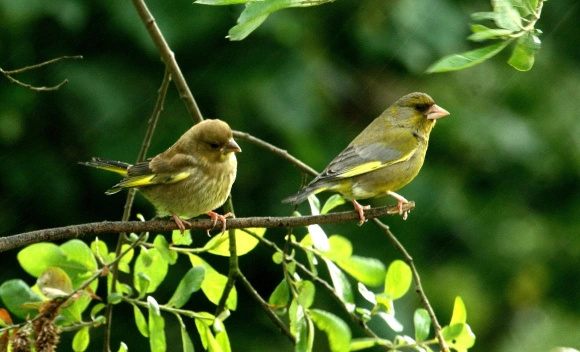
    As I write, I look out on a peaceful vista of trees stretching across to the top of our forested mountain range. I watch green silver eyes feasting on insects clinging to the bark of the karaka tree beyond the veranda, and watch the tiny grey warblers and black headed tits flitting among the foliage, looking for lunch, and green finches perching there. Bell birds sends their melodious notes floating across the green valley, and it’s hard to realise that I am in fact sitting here in the midst of the Sixth Mass Extinction, the worst such destruction of species for 65 million years, and one of the most significant extinction events in the history of the earth, according to scientists.

    They point to the disappearance of billions of plants, insects, animals, reptiles and amphibians all over the planet, saying the Sixth Mass Extinction has progressed further than we thought. It’s caused by over-population, loss of habitat, hunting, use of poisons like pesticides, climate change, pollution and in some cases, as in the case of NZ’s Archey’s frog, by disease.

    There are so few of our frogs left here that they are number one on the list of endangered species, which is why we are guarding and monitoring and cherishing them. Just as saddening is the knowledge that in the last fifty years tigers, for example, have declined from 50,000 down to three thousand – a thought that fills me with terror at the thought of losing them all soon.

    Scientists fear all big cats will be extinct in less than a hundred years, and point to lions as a symbol of what has happened to our world. They remind us that lions used to live and roam all over Africa, southern Europe, the Middle East right up to north- western India, and yet now, there are only small parts of Africa and tiny populations in a few other places.

    While hunting and habitat loss is behind the loss of so many creatures like the big cats, over-eating is the problem that most frogs face! In the US alone, three million kgs of frog meat are imported every year. This is roughly 26 million frogs – mostly from India, Indonesia and Bangladesh. Germany, France, the Netherlands and Africa are also keen on eating frogs’ legs. Luckily for them, our Archeys are too small to be a tasty morsel for homo sapiens – (if only we were truly homo sapiens).

    It’s easy to feel discouraged when facing a global event of such momentous proportions, and one which in the end could mean our mass extinction too. And when it is such an enormous and profound happening, we can only fall back on the only thing we know – love. By loving and reverencing every creature, plant and sentient being we can feel at least that we are doing something positive. Giving in to despair or hopelessness is not the answer. Nor is burying our heads in the sand.

    The words of a children’s hymn printed in 1864 which my grandmother taught me, come into my mind.

    We are bidden:”… to shine with a clear, pure light, Like a little candle burning in the night; In this world of darkness, we must shine, You in your small corner, and I in mine.

    ……….. all around Many kinds of darkness in this world abound: Sin, and want, and sorrow—we must shine, You in your small corner, and I in mine.”

    So yes, I will light my candle in my small corner.

    Food for Threadbare Gourmets

    I’ve always been keen on cakes that require very little effort, and I’ve used this one several times recently, and it’s never let me down. All you have to do is stir all the ingredients together and bake – no beating, creaming, or separating! The ladies from the Zoo loved it when they came for afternoon tea!

    Grease a cake tin and line the base with grease-proof paper. Set the oven to 180 degrees. In a large bowl, tip 100gm of melted butter, a generous 100 gm of brown sugar, three eggs, a 100 gm of self- raising flour, a 100gms of ground almonds, a tsp baking powder, four tablespoons of milk, and a table spoon of honey. Mix them all together thoroughly, tip into the cake tin, and bake for just over 35 minutes or until a skewer comes out clear.

    I made lemon butter icing using the juice and grated peel of a lemon. The cake did n’t last long!

    Food for Thought

    ‘I wish it need not have happened in my time,’ said Frodo. ‘So do I,’ said Gandalf, ‘and so do all who live to see such times. But that is not for them to decide. All we have to decide is what to do with the time that is given us.’”

    JRR Tolkien This favourite quote seemed like the most appropriate one for this blog.

  • Fifty Shades of Green

    Illustration from the post “Fifty Shades of Green”

    It was a term of derision thirty years ago when someone referred to me mockingly as a ‘brown- rice greenie’. These days however, eating brown rice is respectable and being green is mainstream. But I’ve just discovered there are different degrees of greenery!

    Feeding the birds has always been a pleasure of mine, but now I find I’m feeding the wrong birds! This can be construed as non- environmentally friendly since it encourages non- native birds in a place where only native birds are valued… meaning places where others are trying to return the area to its pre-European pristine purity.

    Ironically, the increase of non-native species where I live is a result of an ongoing and increasingly successful predator control programme which has meant many more fledglings survive since there are now fewer rats to prey upon the bird populations. But my feeding of the wrong birds – green finches, quails and chaffinches around our little potted garden – is sometimes perceived as a problem!

    So though I thought our environmental footprint was a reasonably small one, in that we have a compost loo, which means using at least thirty per cent less water than if we had a normal loo, we only run one car, we don’t use up jet-fuel by travelling overseas, so don’t participate in producing the prodigious gas emissions of jet exhaust, we ‘re not really very green in other people’s eyes.

    We eat very little meat, tending to the organic chicken spectrum and free-range eggs, and I never buy fish since we over -fish the oceans so dreadfully, but in the scales of green virtue these private attempts to preserve the planet don’t seem to balance out the detrimental practise of feeding introduced species of birds.

    I was staggered to read that during a recent typhoon China recalled its fleet of more than 18,000 fishing boats in the interests of safety. My mind boggled! Eighteen thousand boats going out every day to strip the seas! Then there are the fishing fleets of all the other seven countries surrounding the South China Sea, not to mention the vast fishing fleets that range across all the other oceans of the world.

    When David Rothschild replicated the voyage of the Kon-Toki across the Pacific a few years ago, they couldn’t live off the ocean like Thor Heyerdahl’s crew seventy years back … there were no fish left to catch. In the waters surrounding this remote country, Japanese, Taiwanese, South Korean and Soviet fishing vessels trawl perpetually … the Japanese still indulging in whale hunting to the despair of many who live here.

    The fishing fleets of Europe have so denuded the waters in the north Atlantic, that cod, once the cheapest and most plentiful of fishes when I was a child is now a delicacy… so yes, in this household, fish is off the menu.

    Much of our house is built of re-cycled materials, even the foundations are concrete set in the big plastic water bottles in which we had to buy water when we first came here, and were waiting for a water tank to arrive. Whenever neighbours undertake renovations, we’re the often recipients of their unwanted or extra insulation, wood, kitchen fittings, etc.

    My partner uses an environmentally friendly manual earth re-structuring implement for all his earth-moving work on site, which requires no fuel to operate, makes no noise- polluting sound and cost very little compared to a digger. This spade is one of our most useful possessions, and has slowly changed the contours of this building site with no impact on the environment.

    But degrees of green-ness mean that in some doctrinaire eyes we probably aren’t green at all. I grow flowers instead of vegetables, and try not to feel guilty about it, telling myself that it’s good for the bees anyway. But this brings me to another degree of green-ness.

    Being a vegan is not an option for me, attractive though the idea is, of being able to exist without exploiting any form of life. (I can’t digest soya beans, which provide much needed nutrients in a non- meat, non- egg non-dairy diet.) But now I read that even vegans can be up against it in this strange interlocking world, where so many natural processes now seem under threat from our various polluting or destructive modern practices.

    The vegan – vegetarian options of eating avocadoes which provide so much badly needed protein in a vegan diet, drinking almond milk in preference to exploiting cows for dairy food, and eating almond meal for those needing gluten free options are now suspect apparently.

    Because both avocadoes and almonds for western markets tend to be grown in California, where bees are now rare forms of life, bee-hives are carted around from different growing areas to pollinate the avocado and almond trees. No-one is sure at the moment if this is detrimental to the well-being of bees, but it’s a good guess that they may be conscious and dislike these upheavals. So if you’re a vegan because you don’t want to exploit or cause distress to other forms of life, suddenly there’s a new dilemma.

    Up till now I have withstood the muted dis-approval of supermarket check-out staff when I opt for plastic bags instead of using my collection of hessian shopping bags and old baskets. This is because I use those despised plastic bags to line wastepaper baskets and for non-compostable rubbish to go into the rubbish bin, including the endless plastic wrappings which come with everything, from jars of vitamins to cucumbers and bread, packets of bacon or biscuits.

    Now plastic bags are banned from our local supermarket I ask myself what we wrapped our rubbish in when it went into the dust-bin before plastic bags exploded into our lives, and I realise we used sheets of newspaper. But newspapers are almost as environmentally unfriendly as plastic bags in that they require acres of trees to be chopped down every day. World demand for trees for paper has risen by four hundred per cent per cent in the last forty years – two and a half million trees are cut down every day.

    In the USA in one year, two billion books, three hundred and fifty million magazines, and twenty- four billion newspapers are published. To get the paper for these books requires consuming over thirty- two million trees. And those figures don’t include the huge output of books and newspapers everywhere else in the world.

    The average American uses seven trees a year in paper, wood, and other products made from trees. This amounts to about 2,000,000,000 trees per year! Apart from papermaking, unbelievably, more than two hundred thousand acres of rainforest are burned every day. That is more than one hundred and fifty acres lost every minute of every day, and seventy-eight million acres lost every year!

    The profligate destruction of trees is so awful that I rarely buy new books any more, and second hand book-shops are my go-to place for reading matter – just finished John Mortimer’s ‘Paradise Postponed’ from the St John’s Op Shop, and before that a fascinating book about Mary Magdalen found in the re-cycle shop at the local dump. Gibbons ‘Decline and fall of the Roman Empire’, from the Cancer Charity Bookshop is waiting in the wings! Can I justify writing any more books myself? Better stick to blogging.

    Trying to reconcile the conflicting claims of environmental correctness is one of the ethical challenges of our day, and we all have different points of view, depending on whether one is a western greenie, a third world farmer, a fisherman, a miner, or even a writer! Intelligent, sensitive and aware people who compost, grow vegetables and native plants, support environmental projects and live on a green moral high ground, yet can own several cars and enjoy a rich calendar of overseas travel are as inconsistent as I am.

    I feel that my environmentally incorrect pastime of feeding non-native birds can be seen as another facet of the green debate in these times of the Sixth Great Extinction. (Greenfinch populations have plunged by 59 per cent in the UK in the last ten years)

    Yet feeding the birds has also been found to be good for emotional and mental health according to an article in a bird watcher’s magazine. So that’s good enough for me… preserving my emotional and mental health is one of my top priorities. Green is a state of mind and there are myriad shades of green! Vive les differences.

    Food for Threadbare Gourmets

    I’ve discovered this tasty recipe in an old scrapbook for a sauce to eat with raw vegetables or a baked potato… all it needs is quarter of a pint of mayonnaise, half a green pepper chopped very finely, two sticks of chopped celery, a cup of finely chopped cucumber, clove of garlic, crushed with some salt, six table spoons of tomato sauce/ketchup, and a table spoon of horseradish sauce. Mix all the ingredients together, add salt and pepper if needed, and chill before serving.

    Food for Thought

    “I saw a Divine Being. I’m afraid I’m going to have to revise all my various books and opinions.”

    A.J.Ayer, British philosopher and atheist

  • Sacred space

    Illustration from the post “Sacred space”

    Rambling house down by the River Thames where my in-laws lived and I spent much time.

    A life – another instalment of my autobiography before I revert to my normal blogs

    I loved the ordinariness of the countryside. It wasn’t spectacular country, but it contained all the elements of the things which are now becoming rarer. There were thick hedgerows, and wild flowers and long grass in the orchard where the fox sometimes slipped through, on his way to the field where the donkey grazed: little copses, with their bare, spare branches etched against the pale winter sky, or billowing with green foliage against a blue sky in summer: woodpigeons cooed, cuckoos called, thrushes sang, and the smells of cut grass and manure, of wet leaves and sweet lilacs scented the clean air.

    There was no hum of traffic from a distant motorway and few sounds apart from the occasional drone from a tractor, the creaking braying of the donkey, and contented cows mooing on their way to milking.

    There were other things which showed me the dark side of modem farming. Henry the farmer, who gently patted his thirty prize cows on their rumps as they slowly filed past to the milking shed, where they stood and gave up their warm, creamy milk to the strains of Viennese waltzes, showed me with pride, his solitary calves. Each one was alone and imprisoned in iron cradles where they stood unable to move, turn or lie down, trapped in compartments in pitch-dark sheds, preparing to become white veal. I’ve never eaten veal since.

    The house had no mod cons – everything was as it had been since the Victorian aunt’s childhoods. We had never been able to afford a washing machine for the babies’ nappies, so the lack of one was no drawback for me. So, while each baby luxuriated in smocked viyella nighties from the White House in Bond Street and was aired daily in the expensive pram bought by doting paternal grandparents, their nappies were washed the old-fashioned way. In a boiler.

    This was filled with a hose from the kitchen tap. I then switched on the heater in the boiler and let the water boil, bubbling and swirling the soap-sudded nappies. They always had the same smell, those boiled soap suds. At the end of the boiling operation which filled the kitchen with steam, I wheeled the pulsating monster to the kitchen sink, and gingerly prised the lid off. Then, with a pair of wooden tongs in theory, but in practise with a wooden spoon, I poked around the scalding nappies until one became hooked on the spoon. With a quick swing it was transferred from boiler to sink, and then the endless rinsing process began.

    Nappy by nappy was hooked and swung from boiler to sink, steam misting up the windows, and billowing out through the kitchen door to the rest of the house. My fingers became so swollen that I couldn’t wear my rings any more. Some days I was only one dry nappy ahead of the babies. Now Newney Hall didn’t even have a boiler, but at least Napisan, (hurray,) had arrived on the market, and banished my boiling days forever, however un-hygienic the nappies may have been.

    The amenities of the house began and ended with the calor gas stove, while the bathroom and loo were directly above the kitchen, presumably to economise on plumbing. Since the staircase was the other end of the house, this meant walking or running the whole length of the house twice to get upstairs to the bathroom, but at twenty- seven years old the inconveniences didn’t seem to matter.

    Living so far away from the shops didn’t matter either. The village grocer delivered our food for the week on Friday afternoons. The butcher called in his van three times a week, as did the baker. The greengrocer called twice a week, and the milkman called every day to supply not just milk to use up the baby coupons, but also yogurt and butter.

    My husband left first thing in the morning for the London train, taking the old Morris Traveller with him to the station. I found expensive purchases hidden in the back of that car – a hat from Lock’s, the oldest hat makers in the world, who’d been in business since 1676 – Nelson was wearing one of their tricornes at Trafalgar). There was a shirt from Gieves (Nelson was wearing a suit made by the original Mr Gieves at Trafalgar too). I worried my extravagant husband was getting into debt again while I couldn’t afford a new lipstick). When we’d waved him away, toddler peeping over the stable door of the kitchen, the baby perched on my hip, we returned to the kitchen table to finish our breakfast.

    After hastily scrubbing the high chair before the spat- out cereal set like concrete, polishing the chrome on the pram so my mother- in- law would not silently notice spots or rust marks, I handwashed cobweb-like shawls and lacy matinee jackets in cold water so that my mother-in-law could not suggest I’d turned them yellow by washing them in hot water.

    And then more vacuuming, (why did I think it all had to be done every day? – ready for inspection, ma’am – my mother-in-law lived miles away ) sweeping, dusting, regular stoking of the fire, the acres of red and white tiled kitchen floor to be washed free of mud, all kept me busy till the baby woke and lunch loomed, and then the sieving and straining and mashing began, before more face-washing and bib-tying and strapping baby into his high chair and hoisting the toddler onto a cushion on a kitchen chair.

    The slow routine of spooning and cooing to the baby and answering the toddler’s continuous eighteen- month- old chatter ended, with more face-washing and changes of nappies, before putting both children down for an afternoon sleep. This was the one hour in the day to myself. I ate my lunch standing at the draining board – cheese and biscuits – reading the newspapers – Guardian and Telegraph from front to back – I’ve never been better informed. I didn’t dare read a book as I would have forgotten the time and my duties.

    I was so tired I didn’t dare sit down either, or I would never have got up again. I hadn’t had an unbroken night’s sleep since the first child was born, and now, with the baby’s night feeds and the other’s broken nights ever since her father had returned from Cyprus, I was so ground down that I couldn’t imagine what it felt like to be normal. Staying for Christmas with the in -laws, my mother- in- law told her son, who told me – how plain I had become. She was right!

    The newspapers only lasted till the first child woke, and then their faithful slave would bound up the stairs or rush outside to the pram, checking the nappies, and freshening up their faces before we got dressed for our walk.

    Living in a northern climate one becomes accustomed to the hours spent preparing to go outside into the cold or the rain. It must have taken twenty minutes or more to swathe each child in coats, hoods and zip-up jackets, ease tiny, bunched feet into warm boots, and wriggle fat, plasticine-like fingers into gloves or mittens. Then the strapping into the pram, buckling the harness, propping baby up on the pillows, tucking in the rugs to keep out the draughts, and finally, flinging on my sheepskin and gloves, wandering out at snail’s pace or toddler-pace, to gasp fresh air in lanes where the pram would go.

    We never met another soul, looking across the frosty, bare, ploughed fields. We were five miles from the village and buried in primeval privacy. Back home, we watched the cows go past for milking, which was the signal for our tea-time. This meal, composed of much the same ingredients as lunch, but including any cakes I might have found time to make during my lunch break, began around four- thirty. This I know, because I switched on the radio when we started, to catch the five ‘o clock news, and so as not to disturb the children’s concentration by leaping up to switch on during their meal.

    So I became a captive listener to ‘Mrs Dales’ Diary’, as I waited for the news to come on, and spooned food and baby talk into thrush-like, open mouths around the fireside. I listened with stilled breath to the Congo disasters, the Rhodesian Declaration of Independence, the bombing in Vietnam, the mistakes and injustices of authority all over the world, it seemed, yet these were almost incidental. The pressing reason for listening to the news was for the sheer pleasure of hearing another adult voice, to break the boredom and monotony of the endlessly repeated trivial tasks.

    In summer, at twenty- past five every day, we watched the goose spoon water with her beak over her two goslings at the duck pond, before climbing the stairs for our baby bath-time and bed- time. It was always early – because they were ready for it, I said, and needed their sleep. So by six o’clock every night silence reigned. Perhaps they did need it – they certainly never argued and fell asleep straight away – but the real reason was that I needed it. People used to comment on how beautifully behaved they were – because they were always attended to – instantly!

    Before the words ‘suburban neurosis’ had been coined, I’d have been ashamed to admit the boredom to anyone, but a wave of relief swept over me, unacknowledged every night, as I walked downstairs and poured a drink into a civilised, crystal sherry glass, for my one leisurely tot before beginning the cookhouse stint for my husband’s dinner.

    My marriage was breaking down already though my husband refused to go for counselling with marriage guidance. But before we left for Hong Kong, I had made a life for myself and found a circle of friends, Margery, the farmer’s wife who wrote poetry and read her poems aloud with a group called Poetry in Pubs. My nearest neighbour, was the Hon Jean, who had children the same age, which was the only thing we had in common, but she seemed to need me. Lady Selina, who divided her time equally between her painting, the stables and her children, and was both a Quaker, and a sort of enfant terrible was stimulating, while sweet Jennifer, whose children always fought with mine, shared a passion with me for interior decoration and gardening.

    Eventually we left that enchanted house to go to Hong Kong, where the hectic life and chaos of those times almost obliterated the memories of that year in the country. But for years I have dreamt of that beloved house. In my dreams it’s bigger, and there are many more rooms. The furniture is more elegant and the rooms more beautiful.

    There’s one room which is filled with such treasures that I only go into it sometimes… it feels sacred. I have no idea why I dream so often of this house I lived in for a short year so long ago. I don’t know what it symbolizes. I’ve lived in other houses and places just as magical… no doubt a psychologist would mine some profound Jungian theory from these dreams, delving into the unconscious and maybe coming up with an archetype!

    We spent the last few weeks in England with the in-laws at their rambling red brick Georgian house down by the river Thames. Built by Thomas Twining of the tea family in 1722, a big sun dial told the hours on the front of the house above the front door. Inside it was decorated with glorious colours and filled with treasures and exquisite antiques and china collected by my deaf, difficult, demanding mother- in- law, whose creativity and taste taught me so much.

    The night we left, as we sat in a big car lent by friends of the in-laws to accommodate all our luggage, we four and the in-laws who were seeing us off on our plane, I looked up at the old house, illuminated by the street lights and wondered when I would see it again. No presentiment warned me it would be twelve years before I saw that sun dial again, after what had seemed like a life- time of heart-break, adventure, life in a far country, second marriage and extraordinary experiences.

    To be continued

    Food for threadbare gourmets

    A friend who has her mahjong foursome to stay here in the forest for a weekend once a year, usually brings them to my place for afternoon tea and we have a great girls natter. They always love my scones and want the recipe. This is it, so quick and easy: eight to ten ounces of SR flour, pinch salt and two to two and a half ounces of butter – I simply grate it cold from the fridge. Mix this altogether with an egg beaten in a cup of milk until it all comes together. Use more milk if you need, to make a soft dough.

    I don’t bother to roll it or use a pastry cutter. Just gently knead it into a square, about an inch thick, cut it into small squares, and place with a space between them on a greased baking tin. Some say leave it in the fridge to cool… sometimes I do – if I don’t have time – que sera sera. Bake in hottish oven for fifteen minutes or until risen and done. Serve hot with butter, strawberry jam and whipped cream if you have it. If there are any left over (not often) I fry them with bacon and fried egg… nice…

    Food for thought

    You can never get a cup of tea large enough or a book long enough to satisfy me… CS Lewis – a man after my own heart.

  • Earth’s greatest treasure

    In this place, I look up to the stars at night and there is nothing apart from the clouds to hide them from my gaze… the Milky Way seems an infinite cloud of light, the Southern Cross pointing as it has guided centuries of sailors, Orion’s Belt clear and bright. I watch the moon from a fingernail of light right through to the fullness of it, and the delicious phase we call a gibbous moon. I see the sun move across the horizon with the months and then at the farthest point of winter, see it begin its journey back to the sunlit mountain behind which it sets in summer. We are halfway across as I write this and the sun sets behind ‘our mountain’.

    Illustration from the post “Earth’s greatest treasure”

    Though we live here and bought the acres of forest we technically own, we have no sense of ownership… we are simply the fortunate tenants of this beautiful podocarp forest, teeming with species of tree and plant life.

    Here are hidden species of frogs and lizards and fungi, almost extinct in the rest of the world, and rare butterflies are still seen here. Fungi in colours that are psychedelic, brilliant blue and purple and orange, green and red grow in the dense green canopy which shelters them from the brilliant New Zealand sun-shine.

    Because it is spring, on distant vistas there are patches of white to be seen scrambling up to the tops of tall trees and the sun-light – the fragrant white clematis. It grows too, on some of the ancient trees surrounding our little home in the woods. The birds we feed are gathering as spring advances, and we hear the sound of the tuis bell-like call, the heavy flapping of the wood pigeon’s wings as they circle our valley, the harsh call of the quails who visit us to enjoy the bird seed we dispense, and the soft hooting of the moreporks – the New Zealand owl – connecting with each other across the dark forest through the night. We watch the kingfisher perching on the branch where the moreporks also sit, and see him dive like lightning into the grass to grab a morsel of food – be it grasshopper or beetle.

    Those tend to be the only sounds we hear, just occasionally the drone of a distant aircraft and the rushing water of our stream after heavy rain. We feel the wind on our faces, and hear it in the trees, we savour the soft spring rain filling our water tank, and keeping the forest moist and green. We feel the springy ground beneath our feet, centuries of humus which have accumulated undisturbed.

    We feel the mysterious life around us, knowing that beneath the surface the trees are connected and communicate with each other through their root systems; that the abundant life of bees and beetles, moths and grasshoppers, birds and tiny ancient species of reptile are part of a vital chain of life which has existed millennia before homo sapiens conquered the planet. We sit in the sun, and feel the warmth on our faces, and hold smooth sun-warmed stones, and feel a connectedness with the earth and with the natural life that many people who live amid concrete, steel and glass cities, can lose.

    Technology has tamed the cold and the heat with air conditioning and central heating; we have tamed the seasons, with imported food bringing us fruit and vegetables from all over the globe, regardless of whether it’s summer or autumn or winter. We may even have become unconscious of the rhythm of our own bodies, of the way we once responded to the passing of the seasons and of the years, as our culture devotes itself to prolonging youthful bodies and a belief that we can conquer the ravages of age and the vagaries of climate – until a hurricane or earthquake shatter some of these illusions.

    It seems to me that when we lose this sense of connection with the life which throbs around us, with the rhythms of the sun and the moon and the movements of the starry sky, and the dance of joy in a greater whole, we may lose something very precious… and that in the end, we may in Cardinal Newman’s words: ‘choke up all the avenues of the soul through which the light and breath of heaven may come to us.’

    We know that we do not own these acres that we live on and look out across. We call it our mountain but we know that that is just our figure of speech. We are simply the present guardians of this patch of our precious planet. We’ve signed a covenant that we will not disturb the forest, cut down any trees, or despoil any part of it. We cherish its silent solitude, and share the seasons with it. Does this place know or feel how sacred, cherished and unpolluted it is, I wonder?

    Robert Macfarlane writes in his wonderful book ‘The Wild Places’, that even on the beaches of the Isle of Skye in the remote north of Scotland, the beaches were littered with: “milk bottle crates, pitted cubical chunks of furniture foam cigarette butts, bottle caps, aerosol canisters…”

    Here in this empty place we have escaped that blight of the so- called civilised world. Even the beaches on this remote peninsula are unsullied and unspoiled. We are the fortunate ones, I know, and my heart aches at the knowledge of the poisoned polluted oceans devoid of the teeming fish and life Thor Heyerdahl wrote of during the Kon Tiki Expedition, seventy years ago this year.

    John Aspinall was a successful gambler, who, while stripping rich men of their money in London during the sixties and seventies, used his ill-gotten gains to establish two zoos, which are now famous for being animal refuges where he successfully bred species and returned them to the wild, a policy his son Damian is still pursuing (you can follow his work on Youtube)

    Before he died, John Aspinall wrote his creed: “I believe in Jus Animalium, the Rights of Beasts, and Jus Herbarum, the Rights of Plants. The right to exist as they have always existed, to live and let live. I believe in the Buddhist concept of Ahimsa – justice for all animate things. I believe in the greatest happiness for the greatest number of species of fauna and flora that the Earth can sustain without resultant deterioration of habitat and depletion of natural resources.

    “I believe in the sanctity of the life systems, not in the sanctity of human life alone. The concept of sanctity of human life is the most damaging sophism that philosophy has ever propagated – it has rooted well. Its corollary – a belief in the insanctity of species other than man – is the cause of that damage. The destruction of this idea is a prerequisite for survival.

    “I believe that wilderness is Earth’s greatest treasure. Wilderness is the bank on which all cheques are drawn. I believe our debt to nature is total, our willingness to pay anything back on account, barely discernible. I believe that unless we recognise this debt and renegotiate it, we write our own epitaph.

    “I believe that there is an outside chance to save the earth and most of its tenants. This outside chance must be grasped with gambler’s hands.

    “I believe that terrible risks must be taken and terrible passions aroused before these ends can hope to be accomplished. If a system is facing extreme pressures, only extreme counter-pressures are relevant, let alone likely to prove effective.

    “I believe that all who subscribe to these testaments must act now; stand up and be counted. What friends Nature has, Nature needs.”

    In the twenty-first century, in the face of overpopulation, pollution and climate change, his words remind us of the urgency of the task. It still isn’t too late to stand up and be counted. And I feel that Lao Tzu’s words written two and a half thousand years ago, can still point the way for us all:

    If there is to be peace in the world, There must be peace in the nations.

    If there is to be peace in the nations, There must be peace in the cities.

    If there is to be peace in the cities, There must be peace between neighbours.

    If there is to be peace between neighbours, There must be peace in the home.

    If there is to be peace in the home, There must be peace in the heart.

    The picture is our house in the forest

    Food for threadbare gourmets

    The cupboard was bare so imagination was needed. Pasta did the trick… with a couple of rashers of bacon chopped and fried with sliced mushrooms while the pasta was cooking. I added cream to the bacon mix, boiled it up to thicken it, added a grated courgette, chopped parsley, a small dollop of mustard, and a sprinkling of nutmeg, salt and pepper. This mixture was poured over the cooked pasta, and then sprinkled with grated parmesan. It went down well !