Category: Nature & Garden

  • Little happinesses and big happiness

    Image result for rowland hilder paintings

    I love Autumn… I loved it in England, those early morning mists burnt off by the morning sun… the scents of bonfires and blackberries, picking hazel-nuts from the hedgerows, finding silky, shining conkers and kicking up the rustling leaves, crackling them under my shoes… freshly ploughed fields, and that sense of gentle melancholy, a poetic nostalgia for the last pale days of sunshine before winter crept in…

    Later in Hongkong, the end of summer came quite suddenly overnight, when the light changed, and for a month or six weeks a light pervaded the harsh hectic city, and turned the island into a place of surpassing beauty. I waited for those weeks every year. The gleaming days and shining waters of the harbour seemed rapturous for no particular reason, and those who noticed this magical transformation said the light was like the light of the Greek isles.

    And now in the antipodes, autumn is the best season of the year – soft, golden days and crisp, starry nights. We live in a covenanted podocarp forest of evergreen trees which stretches across high peaks and shadowed gorges. Some days we wake to find the sun shining on our mountain, and then see the gold light move down the slopes until the whole forest shines. Other mornings mist shrouds the peaks, and hovers in the valleys… last night the high wind blasted the last leaves of autumn from the trees along the roads, leaving just the fretted gold leaves of the gingko trees.

    So today it feels as though autumn has passed, and winter is setting in. With deep pleasure, I get out the warm winter clothes, and start to think about winter food, hot and comforting, snug evenings with the curtains pulled, and warm sheets on the bed. These are ‘small happinesses’, a phrase my daughter introduced me to a few months ago.

    This morning when I put the kettle on for my early morning cup of tea, the sun was on the mountain, a small happiness. Taking the tray back to bed, I checked my e-mails, gloating over the beauty of the latest photos sent from France by my daughter… yesterday Chartres, today Monet’s garden at Givernay, tomorrow Mont St Michel… Then I found a poem by Mark Nepo, sent by a dear friend, with phrases that gave me more small happinesses…

    Each person is born with an unencumbered spot…

    … an umbilical spot of grace… the last lines were: the incorruptible spot of grace resting at our core.

    Holding these words in my mind, my love and I went shopping to a small town an hour and a quarter away. Every mile we travelled past weathered crags, misty mountains and green fields was beautiful. Finally, we reached the narrow coast road, where pohutakawa trees arched overhead, their roots clinging to the side of the cliff.

    The wide silver stretch of still water, shimmering with light, lay alongside, and I watched birds dive for food in a small feeding frenzy, marvelled at the shag colony, where up in the pohutakawa trees, the big white breasted birds sat erect on their great nests concocted from twigs, while a gull flew overhead at 35 miles an hour. We passed the curving sandy bay black with hosts of black oyster catchers standing patiently on the shores of the estuary, white breasts and sharp, orange beaks facing the high tide, waiting for the water to recede and their food to return.

    We did our shopping – small, kind, cheery encounters that are the building blocks of the goodness of life. A visit to the re-cycle centre yielded a satisfying bargain and a small happiness … two pretty pressed glass Victorian dishes for a dollar each, and then the building re-cycling yard had more treasures, including the perfect windows for our building project.

    Feeling contented we relaxed in our favourite café, with hot chocolate and a blueberry muffin. We sat in the courtyard under the pollarded plane trees and watched a small flock of sparrows fall on each table as it emptied, diving into cake crumbs and pulling at a rasher of left-over bacon. A speckle- breasted thrush sat in an olive tree growing in a large pot, and pecked at the clusters of pale green olives. The sage green leaves were silhouetted against a rosy brick wall and the sinuous curves of branches and leaves looked like William Morris’s famous willow pattern.

    I must keep a diary again, I exclaimed, I want to remember these moments of beauty. But writing this blog is the closest I get to it at the moment. This day was like all our days living in this remote place where we are the guardians of the forest, where species of plants and creatures that are almost extinct elsewhere, still live their tranquil lives hidden deep beneath the green canopy. I once said to my love that I knew people who were living quiet, mystical lives of love and beauty, and we agreed that we would make it happen for us.

    Occasionally a note of discord strikes when a person who has other agendas intrudes into our peace, but since I take Don Miguel Ruiz’s Third Agreement seriously, and try never to take anything personally, our peace of mind is rarely perturbed. I also remember a meme which says: ‘negativity can only affect you if you’re on the same frequency – vibrate higher.’ So we try.

    We forget to play music because the silence is so full of sound, the wind in the trees, the birdsong, the stream rushing down below. Living in this place, it’s easy to believe in that “incorruptible spot of grace” resting at our core. It’s easy to believe too, that the mystery of love and truth and beauty do still exist, in spite of what often seems like suffering and chaos in the outer world, but which, hidden from our limited understanding, may have a larger purpose. We only have to believe in love and truth and beauty, to see them – in people, in nature, in the universe, and in the deep silent mystery of the life unfolding around us.

    So the roots of the trees in this forest grow deep in the earth, sustained by creatures of the dark, the snails, slugs, earthworms, flatworms and nematodes that degrade organic matter. The rain and the sun sustain them. Tiny frogs and rare lizards hide deep in their secret habitats, bees push into the flowers of the manukau trees, butterflies hover above the flowers, birds sing, the kingfisher plunges down into the grass for a morsel, morepork owls hoot across our valley in the moonlight, and nature continues to sustain them all, and the planet, and us too… what a big happiness!!!

    PS The picture is by Rowland Hilder who specialised in painting nostalgic autumn and winter scenes.

    Food for threadbare gourmets

    I needed a pudding for a gluten- intolerant friend, so fell back on our tried and true chocolate mousse… just eggs, butter and good dark chocolate… though I can never resist tweaking the simple recipe.

    So after separating the eggs, melt a knob of butter in a saucepan, and I add a table spoon of brandy or strong black coffee or even sherry, and break the chocolate in. For every egg, use six squares of plain chocolate, and a little bit more butter.

    Stirring the mix until the chocolate melts, take it off the heat before it goes grainy. Whip the whites of eggs until peaks form, and at this stage I often add one or two tablespoons of icing sugar and whip again until stiff. Stir the yolks into the chocolate mixture, and then gently fold this into the egg whites. Pour the mix into small individual bowls, chill in the fridge for at least six hours, and serve with cream.

    I gave this to my children often when we were vegetarian, as it was an easy way to make sure they had enough protein.

    Food for thought

    “The best and most beautiful things in this world cannot be seen or even heard, but must be felt with the heart.”

    Helen Keller, who overcame the handicaps of being deaf, blind and dumb to gain a degree and live a life of service to others.
  • The magic and mystery of cats

    Illustration from the post “The magic and mystery of cats”

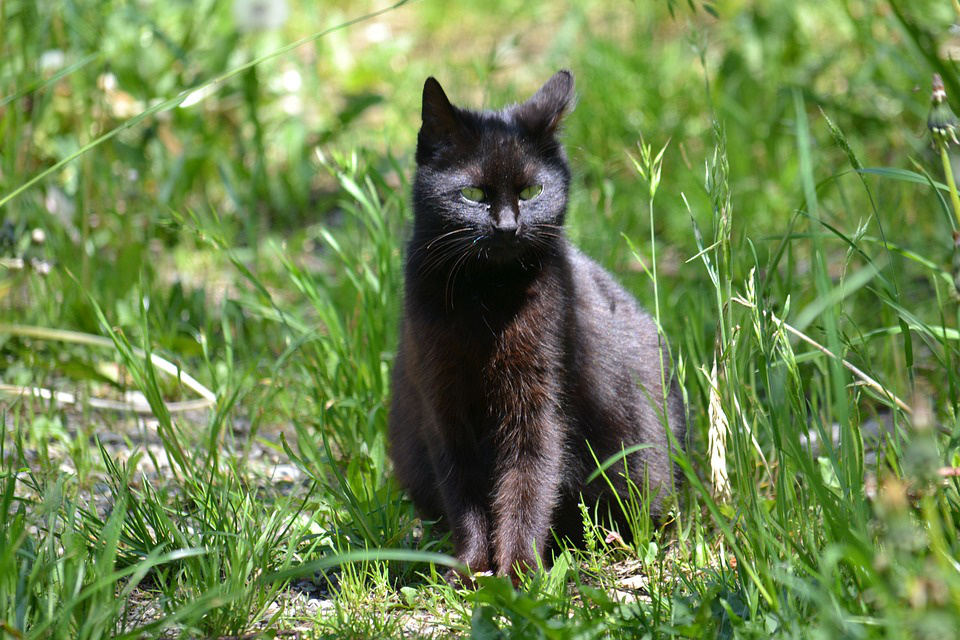
    “I have lived with several Zen masters”, wrote master and mystic Eckhart Tolle, and went on to say they were all cats. Well, I have lived with one zen master, a small black witchy cat who entered my life with purpose. Black cats are notoriously hard to adopt from rescue centres because so many people associate them with the myths of witches, having absorbed the ancient male propaganda about women and healers (but that’s another story).

    I’ve always thought I was a dog person, having nurtured seventeen rescued dogs (three at a time, but that’s also another story), yet when I look back on my chequered past, I see there are just as many cats as dogs who have entered my life – some at a distance.

    All those cats who did, had those mysterious feline qualities of dignity and free spiritedness. Two strays were the first, Black Kitty and Wild Kitty – a beautifully marked tabby – both unnamed, a subtle way of not alarming my parents into thinking I wanted to keep them, and also I couldn’t bear to give them names and then have to relinquish them. But after a few weeks my parents softened, and expertly using the thin end of the wedge, I managed a balancing act between the kittens and the puppy I had also acquired over my parents’ dead bodies.

    I was eighteen and I wonder now how I could never have looked into the future and realised that I wouldn’t be around to care for these fragile little creatures. We moved house a couple of months after acquiring them, and I was immensely relieved to find that my parents were including my animals among items to come with us. The journey in the back seat of the car with an excitable puppy, two terrified kittens on the loose with long claws, and my loudly protesting eight-year-old brother was an ordeal never to be repeated.

    At the new house, Black Kitty was run over, but Wild Kitty established a comfortable possie behind the warm boiler in the kitchen. I left to join the army a few months later. When I returned months later for a weekend leave, the parents had moved to another house the other side of the town, and Wild Kitty was missing – apparently she had left home when I did. The family moved back to an army quarter a year later, half a mile away from the house I’d left, and miraculously Wild Kitty turned up when I came home for the weekend.

    From then on Wild Kitty appeared when I came home on leave and then pushed off when I left. The last time she was seen was when she walked across the grass to show us her line of tiny kittens straggling behind her.

    Decades later in this country, I received the usual Christmas presents from irresponsible townies who dumped two tiny tortoiseshell kittens at our gate. Tins of cat-food for a year until they were caught. Another pair again another year, and then a cat and her kitten when we moved to a new house, a gentle stray in Norfolk Island who nestled on our bed, and waited for us every day while we were on holiday, more tins of cat food, followed by starving kittens in Fiji outside a restaurant…only scraps for them…

    Some years later, back in town to be near new grand- children, we lived in a house on the side of Mt Eden, an extinct volcano. Our garden stretched steeply up the slope and ended in overgrown shrubs and trees and wilderness. One day I noticed a stray cat in the garden. Feeling sorry for it, I put out some food the next day. In a few days there were five cats, so carefully keeping the doors shut so no cat-chasing King Charles spaniels could do their worst, I put another dish or two out.

    By the end of three weeks I had fifteen stray/ wild/dumped cats waiting neatly and patiently on the steps leading up the hillside. I put out five bowls night and morning, and they shared with perfect good manners, and then quietly left with dignity. They always knew the time I would put the food out, and would be lined up expectantly and hungrily for about twenty minutes before, and there was never any squabbling or pushing in when the food arrived .

    When we downsized to a little town house, and I had to leave them, I used a possum trap to catch them one by one, and take them to the vet, as I couldn’t bear to think of them starving on the hillside. I caught them all except three tom cats who were too clever to get themselves trapped.

    Then, not enjoying living in town, we moved back to the country. We’d only been there a week when we went out into the garden, and there on a log in the sun was a tiny black cat. She got up, stretched, and came over and nuzzled us endlessly, followed us inside the house, and all but said: ‘I’ve been waiting for you’.

    She refused to go back home, which was on the next-door acre of land. For weeks I resisted, refraining from feeding her, and yet every time I opened the door, there she was on the front door mat. Eventually I put a deep linen basket with a soft cushion in the bottom for her by the front door, and finally, when I heard a fight in the middle of the night, with the big marmalade tom cat who had come- it seemed- to fetch her back home, I opened the door to her. She ran straight in and settled down on the bed, and for the next ten years ran my life. She was a small oasis of calm and character, whose endless antics amused and entertained; while her wilfulness and intelligent curiosity and mysterious inner life fascinated me.

    Whenever her previous owner saw us out walking the dogs with Cara, the cat, skipping along with us, he’d wind down his car window and shout “traitor! “at her. The end of Cara’s story is in the first blog I ever wrote, called ‘Goodbye Cat.’

    My last encounter with a cat was more like sitting in that boat with a tiger in ‘The Life of Pi.’ A panther-like black cat had terrorised both cats and owners in our small village for many years, and my friend who had a small gentle cat who was being monstered, decided something had to be done to save her cat. I arrived at my friend’s house just as her Altzheimers husband was putting a blanket over the possum trap and cat, which they had arranged according to my instructions!!!

    Feeling responsible, I volunteered to drive friend and captured cat to the vet. We carefully put the trap on the back seat, which was covered in a rug to protect the seat. Chatting happily, I suddenly felt sharp claws dig viciously into my back and shoulders, and a black body hurtled past my ear to land on the dash board. A panting black creature with blood literally dripping from its fangs from where it had forced the door of the cage up, using the crack from the seat rug to lever it, and with fierce yellow eyes glaring at me, crouched there – ready to spring.

    It did, back into the back seat, shaving my ear the other side as it hurtled past. Driving was impossible … I pulled unsteadily into a farm drive, not having the faintest idea what to do, and my friend, who was bulky enough for the angry desperate creature not to tackle her side of the car, cringed in horror. The cat continued to leap back and forward past my ears in a frenzy, raking my shoulders and back with its claws each time. Luckily a car was coming down the drive… I flashed the hazard lights, tooted and did everything to show I needed help.

    We dared not lower the windows to talk in case the frantic, mangy, bleeding animal escaped to terrorise a fresh territory. The farmer shouted through the glass, telling us to go to the vet – impossible – which he soon realised as the cat continued to launch itself to and fro past my head. The end of the dreadful story came when we quickly eased ourselves out of the car doors, and while we cowered in a farm shed, the helpful farmer opened the car, and shot the poor creature as it made a dash for freedom.

    I took my expensive blood-stained cream cardigan straight to the dry cleaners, and had a stiff cup of coffee- I really needed a stiff glass of something stronger. Back home, I washed the blood off all the windows and the dashboard and rubbed antiseptic cream into all my weals and wounds. The next morning, I went out to go shopping, and found to my dismay that there was still blood everywhere. As I washed them off, I counted twenty-eight blood-stains on the inside roof of the car alone. Alas, the blood never came off my cardigan.

    Cats – here? No, no danger of strays or bullies here. We live in a covenanted forest with an agreement that we have neither cats nor dogs in order to preserve the native birds, most of whom don’t fly. So no more temptation, no more catching or herding cats, or even black panthers. Sadly, all these encounters with cats have mostly been the result of man’s inhumanity, or irresponsibility.

    Unlike the dogs we rescued, I was usually unable to do anything to better their lot, and also unlike the wonderful people all over our city who visit colonies of strays every night to feed them. Sometimes these cat-lovers manage to catch them and get them de- sexed or healed of their illnesses, but I still feel sad that they don’t have homes, which once-domesticated animals long for.

    Robert Heinlein, science fiction writer who some feel was also a seer, once wrote that: “How we behave toward cats here below determines our status in heaven.” He may well be right – if there is a heaven – so maybe I’ll see you there! And maybe those dignified, elegant creatures we have encountered in this life will be there too in all their mysterious beauty to love us still, in their own idiosyncratic way.

    Food for threadbare gourmets

    I had some chicken nibbles in the fridge bought to use for a chicken risotto, but when it came to it, boiling them up for stock etc didn’t appeal, so instead I marinaded them in half a cup of honey, nearly the same of soy sauce, a good glug of sesame oil, lemon juice from a juicy lemon, a generous teaspoonful of minced ginger and the same of garlic. After a couple of hours resting in this mixture, thirty-five minutes in a hot oven, and eaten with sour dough bread, they made a quick tasty lunch. Food for thought

    I don’t believe there was ever anybody who loved being happy as much as I did. What I mean is that I was so acutely conscious of being happy, so appreciative of it; that I wasn’t ever bored, and was always and continuously grateful for the whole delicious loveliness of the world.”

    Elizabeth von Arnim. Author of Elizabeth and her German Garden

  • Man and animals caught in the net of life and time

    Wenka was born on the 21 May 1954, which makes her sixty- three years old this year. She has been in prisons and endured forms of torture, as well as abandonment, much grief and loneliness, throughout her whole life.

    She was born in a laboratory in Florida and taken from her mother the day she was born, to be used in a vision experiment which lasted seventeen months. Wenka was ‘only’ a chimp and thus could be used and has been used for the cruel purposes of men all her life.

    After the experiment she was sold to a family in North Carolina. Four years later, instead of finding an animal refuge for their pet, they returned her to the Yerkes National Primate Research Centre, as she was supposed to be too big to handle.

    Since losing her family – because undoubtedly she would have felt they were – she has been used for experiments ever since – alcohol use, oral contraceptives, aging, and cognitive studies. She has also given birth six times, and I have no information about her babies. Researchers obviously didn’t take these opportunities to study chimp maternal behaviours, feeding techniques etc. And they obviously didn’t study grief in Non- Human Primates when deprived of their babies either.

    Chimpanzees tend to be used repeatedly over decades, rather than used and killed as with most laboratory animals. But researchers lament that one of the disadvantages of using non- human primates is that they can be difficult to handle, and various methods of physical restraint have to be used. (Researchers also shorten the term to NHP, which makes these intelligent, feeling creatures sound like a tool or non- human object)

    Yes, I would resist researchers /torturers, since I have 98.8 per cent the same DNA as these almost human creatures, which is why they are used for research and called non human primates. A ‘gentle-man’ (I use the word sarcastically) from the Wisconsin Regional Primate Research Centre writes that scientists may be unaware of the way their research animals are treated, and this could have an effect on their results. He doesn’t say that it would be fear or despair skewing the results.

    This scientist, called Reinhardt, writes instead, of ‘uncontrollable methodological variables’, and goes on: ‘Numerous reports have been published demonstrating that non-human primates can readily be trained to cooperate rather than resist during common handling procedures such as capture, venipuncture, injection and veterinary examination.’

    Reinhardt then lists common restraint methods as: squeeze-back cages, manual restraint, restraint boards, restraint chairs, restraint chutes, tethering, and nets. He also suggests using the drug ketamine, which I know from recent personal experience in the helicopter on the way to hospital (see a previous blog) paralyses you and causes terrifying hallucinations. When you’ve survived those, you come to, and find you can think clearly, and therefore know you’re paralysed and can do nothing to defend yourself or even turn your head, which is also a terrifying experience.

    In the US 65,000 non- human primates were used for experiments in 2012 – a figure which has remained the same since 1973. The latest figures for the UK are 2,202 non- human primates used for experiments. But no licences have been issued there for experiments on great apes since 1998. Many countries are now working towards protection for these creatures so near to us in intelligence and all emotions – which is why they are used for experiments of course.

    The Great Ape Project (GAP), argues that great apes (gorillas, orangutans, chimpanzees, bonobos) be given limited legal status and the protection of three basic interests: the right to live, the protection of individual liberty, and the prohibition of torture.

    In 2008 Spain became the first country to extend these rights to great apes, ‘torture’ which includes medical experiments will be outlawed, while imprisonment – as in circuses, or for films – is also banned. Hurray! Austria, New Zealand, the Netherlands, Sweden and the UK are all now working to ban experimenting on primates, which includes great apes, chimps, gibbons and all the other varieties used in what some scientists believe is unreliable testing. The EU has also had strict guidelines on animal testing since 2013.

    At the moment great apes are the most protected, with too many other species of non- human primates still fair game for people/researchers who will never say their work is ended, that their experiments have now proved/discovered all that they wanted to know, and thus talk themselves out of a job. I used to love reading in the newspaper the results of experiments which reveal different characteristics in people, until I suddenly realised that to find out these results, animals had to have been used.

    That’s when I began to research the use of animals in experimentation, and the facts are hideous. Millions of animals other than non- human primates are used for cruel and useless experiments every year in the US, by drug or chemical companies and others who have no interest in the well- being of the tragic creatures born in captivity, tortured with cruel experiments, and then killed.

    We have become the Non-Humane Primates.

    Charles Darwin held that animals had the same emotions as human beings. Years ago I read an article in Time magazine which quoted instances of animal intelligence, and their capacity for emotion. At the end, it dismissed the whole idea, in spite of the last conclusive example, a talking parrot.

    The pet parrot was being left at the vet for treatment and it cried out as his owner left, ‘please don’t leave me – I’ll be good’. The article did not explore the various strands of this cry – the parrot’s immediate understanding that he was being left, as well as his promise to be good – which is the response of many small children when left in hospital or when their parents die, or leave. They believe it is their fault.

    Many will have seen the Youtube videos of Christian, the huge lion, rushing a year later, to put his arms around his owners who had brought him from London and freed him to live in Africa; or the lion behind bars in a zoo, trying to cuddle the woman who had saved him five years before.

    Most people who have lived with animals know the depth of their love, loyalty, kindness. Animals nurture their offspring, and do not neglect or abuse them. They do not lie or betray (unless they’ve been badly treated) and therefore can be said to live lives of integrity that many human beings fail to do. And we feel free to treat them in the unspeakable way that we do.

    Nature writer Henry Beston says it best: ‘We need another and a wiser and perhaps more mystical concept of animals. Remote from universal nature, and living by complicated artifice, man in civilisation surveys the creature through the glass of his knowledge and sees thereby…. the whole image in distortion,

    ‘We patronise them for their incompleteness, for their tragic fate in having taken form so far below ourselves. And therein we err, and greatly err. For the animal shall not be measured by man. In a world older and more complete than ours they move finished and complete, gifted with extensions of the senses we have lost or never attained, living by voices we shall never hear.

    ‘They are not brethren, they are not underlings; they are other nations, caught with ourselves in the net of life and time, fellow travellers of the splendour and the travail of the earth.’

    When will we begin to honour and respect our fellow travellers, who too often never get to savour the splendour of the earth?

    Food for threadbare gourmets

    Nothing much in the cupboard, except bacon, spinach, mushrooms and opened noodle packets with the chicken stock packet used for other purposes. So, lots of noodles to use up.

    Chopped the bacon and fried it in a little olive oil and some butter for the taste, added the mushrooms, grated a courgette in for thickening, and then added cream, garlic, pepper, and nutmeg plus a chicken stock cube. When the cream had bubbled and thickened, I added torn leaves of spinach – subtle way of getting vegetables into those who don’t like them.

    Towards the end, I cooked the instant noodles, and then served them with the cream mixture over and some grated parmesan. A good lunch.

    Food for thought

    I believe deeply that children are more powerful than oil, more beautiful than rivers, more precious than any other natural resource a country can have.

    Danny Kaye Comedian

    He also said: Life is a great big canvas; throw all the paint you can at it.

  • Our beautiful world

    The wind is blowing in the trees. It sounds like the sea. The sun is on the mountain. And outside the house, a pair of nesting quails are foraging among the bird seed that has spilled from the bird table.

    When I step outside, I hear the sound of many wings… I have disturbed the green finches feeding, and their flight is like the sound of many muffled hands clapping.

    This place is my new home, forty acres of forest, where our little wood cabin looks down a valley and up to a forest covered mountain. Where we hear the sound of our two streams meeting down below long before they join others to make the river. It flows beside the long winding road of blind u-shaped bends and gravel and often mud, which is the only way to reach us. When intrepid travellers finally reach the top of the forested mountain range, on this road famous for its degree of difficulty, and which only the brave or the ignorant attempt, they come to our big iron gates, and the elusive gate code, only available to those who are welcome.

    We live several miles further on inside the gate, down a well-tended paved road, over-hung at this moment by the manukau trees frosted with scented white blossom providing food for bees who make the healing manukau honey. We pass the steep hidden drives of the other occupants of this magic place, a forest which is covenanted and preserved for whatever the future holds for the planet.

    There are about twenty-five of us, like-minded people who, on settling here, have agreed not to have dogs or cats or introduce plants or trees which are not native to this place. So because this podocarp forest is covenanted, and these agreements are in place, the silence is never disturbed by the sound of a barking dog, and the only man-made sound is the distant hum of a car snaking slowly along the road.

    And yet it is never silent. Tuis flute their glorious song during the day, the shining cuckoo sings its melody, while green finches cheep, and sometimes flights of red, blue, green and yellow rosellas come chattering by. A kingfisher, making his sharp repetitive call, sits on a dead branch a few yards away from the cabin, and dives into the long grass to snatch up in his sharp beak a grasshopper or other insect which his beady eyes have detected.

    At night, a morepork – the New Zealand owl, so named because his call sounds like those words – perches on the same branch and hoots softly across the valley from where answering calls return. When birds are silent in the heat of the day, the all- pervasive buzzing of bees and flies and other insects fill the space, and then there is the glory of cricket and cicada each in their appointed time sending out their nostalgic rasping, warning us that summer does not last forever.

    I listen to try to hear the moment when cricket takes over from cicada, but am never mindful enough. We have now watched the sun move across the horizon opposite for one whole year, and know that when it reaches the point of the ridge on midsummer’s day, it will begin once again to move inexorably back to the dip in the ridge halfway across the other side, towards the shortest darkest day. And we have watched the moon now for a whole year, as it rises in the sky to the side of the cabin, and then shines over the mountain and the trees, shedding gold light and mystery over the silent forest.

    When it rains we gaze across the misty view which echoes a Chinese painting, and the beauty catches our breath. A myriad of different species of trees inhabit this unspoiled place, the different greens and shapes sprawling like a huge tapestry over the hills. When I gaze at them in the sunshine they shine, almost as though they were lit up with the lights that stopped Xerxes, King of Kings in his tracks, when his great army rolled across the dusty plains of Asia. Transfixed by a mystical, shining sycamore tree he remained there for two days to the puzzlement of his soldiers.

    And here, as the sun moves across the sky, shadows deepen the colours of towering trees, and reveal deep folds of green hills and gorges, and one mountain crowding another. Hidden deep beneath the canopy are rare and cherished species of trees and ferns and also exquisitely camouflaged frogs and lizards, moths and insects, one lizard so rare that only twelve others have been sighted in the rest of the world.

    We had the privilege of seeing such a lizard when a neighbour found her with her tail gone and a blood-shot eye. She was rushed to the zoo several hours drive away, and there nurtured back to health. When healed a few weeks later, she was returned to her home grounds, and a group of residents gathered to inspect the precious creature – about four inches long – to witness her return to the wild. This shared concern makes a warm community hard to find anywhere else, particularly when that concern is cemented with good wine and cheese to fortify us before returning to our own native habitats!

    We achieved brief fame on the estate when we discovered an Archey’s frog, another endangered species, down our drive. These finds are logged and we have to provide the time of day, the weather, the habitat and many other tiny details to enlarge the knowledge of environmentalists. Since then others have been found, and we realise that this place has become a haven for endangered species.

    Are we an endangered species? Sometimes it feels like it. Knowing as we do that the world is changing, that climate change is a fact, whatever climate-deniers, big business and flat-earthers think, that ice caps are melting, our oceans depleted and polluted, that bees are dying from strange viruses and pesticides, and trying to get our heads around the fact that people are still killing the great animals which ensure our survival on the planet – the future of mankind seems as misty as our cloud covered hills.

    There is something deeply awe-full and dread-full about the words ‘the Sixth Great Extinction’ which we are now living through according to scientists. So grasping at small straws of comfort can help us to come to terms with this extraordinary time in the history of the world. Living here in this precious piece of preserved forest and rare species has made us much more aware of other safe places and of so many other people dedicated to nurturing the planet.

    So wonderful Bill Gates and the other billionaire philanthropists who are devoting huge sums of their money to work on long term alternative green energy sources make me feel hopeful. And I read today that Catholic priests have been instructed by the Vatican to preach about the environment, climate change and preserving the world. It’s what used to be called ‘spreading the word’.

    It’s about each of us doing what we can, where we are. I have a friend who never goes anywhere without a plastic bag folded in her pocket. Whether on a walk on the beach with her, or on an overseas trip, staying in a rubbish strewn camp ground, she fills her bag. Single handed she can’t clear all the rubbish, but she does her bit.

    Yes, on our own we cannot save our world, but like my friend we can all find ways, however small, of mitigating the damage. I know everyone who reads this blog is already committed to preserving life on earth, so I’m merely sharing one aspect of my new life, which is all about the environment. Tell you more next time!!!!

    Food for Threadbare Gourmets

    Having broken my leg badly six months ago and due to side effects still having difficulty walking, I’m actually listening to my doctor for once. She gave me a leaflet full of calcium – rich recipes, and one of them has transformed my idea of breakfast. It’s delicious as well as nutritious.

    Leave quarter of a cup of oats soaking in quarter of a cup of hot water overnight if possible, but for at least four hours. Peel and grate an apple and mix into the oats with a tablespoon of lemon juice. Stir in two tablespoons of cream, quarter of a cup of natural sweetened yogurt and a tablespoon of honey – I use the healing manukau honey.

    Fruit if desired… it’s a filling and satisfying breakfast, especially when topped off with a freshly brewed cup of lapsang souchong, the favourite drop of the cup that cheers but doth not in-ebriate !

    And a PS… many months ago my computer collapsed, taking blog, addresses, etc, etc. Before I had a chance to rehabilitate myself and come to terms with a new computer and the dreaded Windows 10, disaster struck, and I disappeared into hospital for two and a half months. Still rusty trying to climb back on the computer deck, and still clambering clumsily around trying to master the new technology . So please excuse any infelicities you detect!

    Food for Thought

    I don’t know who wrote this, but I like it:

    dawdling, not doubting, intrepid all the way, walk toward clarity with keen eye, With sharpened sword clear cut the path to the lucent surprise of enlightenment.

    At every crossroad be prepared to bump into wonder

  • Snakes alive !

    Illustration from the post “Snakes alive !”

    Mrs Tiggywinkle, her rounded figure enveloped in her apron, sweet face framed by a ruff of prickles and a frilly white bonnet, quizzical grey eyes gazing kindly out on the world, catching up with her ironing and piles of laundry is one of those childhood images that remain with most children who have encountered her. Thanks to the genius of Beatrix Potter this little creature who has snuffled around the planet for thirty million years or so, is one of the most beloved of small animals. Fluffy little red Squirrel Nutkin isn’t far behind in the beloved stakes either, another creature with a pedigree going back fifty to thirty million years. Their images, once impregnated in the memory in early childhood ensured their imperishable hold on the imagination and affection of anyone who encountered them.

    But there’s another even older species, a hundred million years old, which enjoys none of this fondness and protection. Instead, in the western world, it is reviled and seen as an object of evil. Thanks to the Old Testament – a late Bronze Age work of literature as some see it, or the words of God according to others – and the legend of Adam and Eve and the Temptation, snakes have had a bad time through the ages… through no fault of their own. The sin of the original apocryphal snake has been visited upon them for millennia.

    Even as a child I felt sorry for the snake… that he got the blame, as well as Eve, for wanting to know… since I always wanted to know I couldn’t see what the problem was…

    Many who’ve never touched a snake assume that it’s slimy… but it isn’t…its skin is dry and supple, and when it loses its skin this has become a metaphor for spiritual transformation for those who can accept the snake as an innocent creature who only bites when attacked, and for the most part lies curled up in beautiful sinuous folds and curves. Different species have exquisite markings and colours which is not surprising since they are a part of the glorious beauty of creation, and it’s not logical to exclude them on the strength of the ancient and apocryphal story.

    Other cultures untouched by Judaic snake prejudices have seen the snake as a healing symbol both in ancient Egypt and in Greece, where it was used as a symbol of healing, twined around the staff of Aesculapius, the god of medicine. Even the unprejudiced talk about our reptilian brain -the earliest part of our evolutionary growth – describes a rather unlovable set of qualities – and the very word reptilian evokes thoughts of coldness, calculation, and lack of emotion…

    My dearest friend had a garter snake as a pet as a child. It lived in a terrarium, with stones and branches to give the snake a feeling of home from home. The lid was perforated with holes. My friend hadn’t realised that the snake was pregnant and it quickly gave birth to lots of small four inch long baby snakes. The mother snake then did the most extraordinary thing.

    She coiled herself around the branch, so that the top of her body and head reached the roof, making a bridge across the gap from the branch to the roof. Her babies then slithered up the branch and then up their mother’s body out into freedom and fresh air.

    There was nothing reptilian about this amazing behaviour, it was pure unconditional mother love, combined with incredible intelligence and imagination. She knew that freedom for her children lay beyond the roof of her prison, and she worked out the way for them all to escape. They all disappeared before my friend had time to prevent their exodus from the snake pit or catch any.

    I used to think that eels were a branch of snake species, but they are actually fish. When my grandsons were seven and eight, a river ran past the bottom of our garden, and one day they announced they wanted to go fishing. I found some bamboo poles, and string, and we tied some scraps of bacon on the end of the string, and off they went.

    They came back shortly after, bursting with excitement … a couple of eels had come and eaten the bacon. So they wanted more of course. We tied a chicken carcase to the string, thinking it would last them forever. But to their delight, not one, not two, but thirteen eels appeared from beneath stones and rocks and the over- hanging river bank.

    Every time the children went down to the river with their fish food supplies (my bacon bill soared during their stay) the eels appeared as if from no-where. They were all sizes from eighteen inches to more than four feet. How did they know… how did the message pass downstream or upstream that the goodies were on offer again.

    Eels are still one of nature’s unsolved mysteries… after fourteen or more years, depending on whether they are male or female, the full- grown New Zealand eels return to their breeding grounds, there to spawn and die. No-one knows where these breeding grounds are, though they think it may be near New Caledonia. Having spawned, the eels die, and their progeny, armed with their inherited memory or instinct, set off on the long journey back to where their parents came from. They begin life as larvae, then grow into tiny glass eels, which finally mature into elvers – young eels. These young eels are capable of making their way up waterfalls to reach their ancestral homes. And there they stay until they hear the call to go back to their spawning ground and pass on new life.

    My grandsons were so entranced by our eels, that when I found an extraordinary story about a German eel, I made one of those grandmotherly illustrated letters telling them the tale. A German father caught an eel, and brought it home alive, intending to kill it and serve it up as fresh eel. But his children raised such a clamour, that he put off the evil day and popped it in the bath over- night. And there it stayed, for 25 years until someone dobbed them in with the local animal protection society. He was called Elie.

    When anyone wanted a bath, they simply put a bucket in the water and Elie would swim into it and lie coiled up until he was lowered back into the bath and could swim out again. By the time he was discovered, the children had long gone, but there can be no doubt that he must have felt loved, by that peculiar osmosis that other creatures have and we can only guess at.( You’d have to love him to live with an eel in your bath for twenty five years !) I never heard the end of the story – whether he had been separated from the people he knew and loved, and sent off to swim in strange cold waters or not….

    The most unbelievable and beautiful story about an eel and love is contained in this one minute video below:

    If this isn’t love, then as Shakespeare wrote: If this be error and upon me proved, I never writ, nor no man ever loved.

    Food for threadbare gourmets One of my closest friends and neighbours is a Frenchwoman, and we spend long satisfying hours talking about food. We both love making soups out of nothing, having kept in the fridge all the stock our vegetables were boiled in.

    I made such a soup last night. I had a big dollop of cauliflower cheese left over, not enough for another meal, so I thought it would be a good start for one of these soups… I gently fried in butter some chopped onions, a stick of chopped celery, the heads of the green leaves from two leeks, a grated carrot and a couple of garlic cloves.

    When they were soft, I added the cauliflower cheese, the stock, a chicken bouillon cube, salt and pepper, and gently brought it to the boil. When it was soft I whizzed it with the whizz stick, but still left plenty of texture. With some good bread I made croutons in olive oil and with a sprinkling of parmesan, and a dash of cream it was a light satisfying supper. Food for thought Your best is going to change from moment to moment; it will be different when you are healthy as opposed to sick. Under any circumstance simply do your best, and you will avoid self-judgement, self-abuse and regret. Miguel Ruiz

  • The wrong lion?

    The man who killed Cecil the lion, seems to be contrite about killing the wrong lion. He is reported as saying that he hadn’t realised he was hunting a protected one. But killing any lion (and all the other precious endangered species he’s slaughtered) in a world where we are now beginning to realise that animals have a different consciousness to ours, and have gifts that are a closed book to our different intelligences, seems not just wrong, but cruel and crass.

    Yet I discover that in this country too, as in South Africa, and presumably other places, gangs of rich white men fly in to shoot animals penned up in enclosures … all for the fun of killing a captive lion or deer, or whatever. I read that an Englishman, also run to earth for his killing of these great creatures on safari, refuses to comment, saying it’s a private matter. But it isn’t of course.

    These creatures are dying out because these men are killing them, and our planet and our children and grand-children will be deprived of a vital source of life as well as beauty. Scientists say that our survival depends on the survival of the large animals. So we ARE all involved in this killing by rich white men, as well as poor poachers, even if we think we aren’t.

    Let’s hope Cecil’s death helps to change humankind’s thinking about our place on this planet… for we are not so much homo sapiens as homo murderous.

    Avaaz has a petition we can sign in an effort to stop the hunting of lions. Perhaps it would be a start to stop calling these magnificent creatures ‘big-game’, and to stop calling the killing ‘trophy hunting’. There are other more appropriate names for this destruction of life on earth .

    Google Avaaz, RIP Cecil if you want to help.

  • Saying yes to beauty

    Illustration from the post “Saying yes to beauty”

    Sitting on the sofa, sipping my afternoon cup of tea, I craned to watch a sooty blackbird. It was pecking with its orange beak at the apple nailed to the fence outside the window. Beyond the fence is a wild gully, where I’ve encouraged blue and white agapanthus and arum lilies, pink impatiens and orange nasturtiums to spread. I planted flax for the tuis to feed on their flowers, and encouraged thickets of swan plants or milkweed as they’re also known, to feed the monarch butterflies.

    Dominating the gully is an oak tree, grown from an acorn by my grandsons and I. It’s flourished and become a large tree in the years we’ve been here, and I love it for all that it symbolizes about those happy years of my grand-children’s childhood.

    As I watched the blackbird, two smoky black tuis arrived, the iridescent sheen of their dark turquoise tail feathers gleaming in the clear winter sun. They hovered to swoop on another apple further up the fence, the little curl of white feathers on the front of their neck quivering – the early settlers here called them the parson birds because of the likeness to the white neck frill and black clothes of a missionary.

    Then I noticed movement the other side of the gully. It was a cock pheasant, flaunting his long, gorgeous tail and his bright blue and red and russet colouring stalking through the long grass. I was ridiculously thrilled… I haven’t seen him for several years… is it the same cock pheasant I’ve gloated over before, or one of his descendants? How long do they live?

    Lonely Roman soldiers shivering in the icy Northern wastes, guarding Hadrian’s Wall back in around 200 AD brought pheasants from Georgia, near- Asia, to England as pets. They came from a place called Phasis, hence their name pheasants. When the Romans left after four centuries, pheasants were well established all over the British Isles and shooting them became a favourite pastime of the rich and heartless. They have spread all over the world in the centuries since the Romans. But here at least in this hidden gully, this one is safe from being hunted and shot.

    And as I watched, a little flock of half a dozen tiny, green silver-eyes descended on the apple halves. They’re smaller than a baby sparrow, with soft grey breasts, and rosy pink markings either side. Their velvety green feathered wings make them look like little balls of soft green moss, and they have bright eyes ringed in white. The ancestors of these tiny birds which flit rather than fly, did actually fly the thousand miles across the Tasman Sea from Australia to get to this Land of the Long White Cloud, back in 1856… why, I wonder, did a whole species set off across a huge waste of ocean, clinging exhaustedly to the masts of any ships they encountered, and finally making it ashore to these islands.

    After the attentions of all these sharp little beaks, the two apple halves are simply a rosy translucent bowl, the core a skeleton in the middle. I watched the scene without feeling any guilt at spending so much time just gazing out of the window. Savouring the beauty and the wonder of the world seems more important these days than any apparently more productive activity.

    Whenever I gaze fondly at my oak tree, I think of savage and sensitive Xerxes, King of Kings, back in the fourth century BC, halting his great armies as they rolled across the empty Asiatic plains, so that he could revel in the sight of a single sycamore tree. He stayed there for several days in a state of ecstasy, while his puzzled warriors camped around the dusty desert, and he even commanded a goldsmith to strike a gold medallion to commemorate the moment and the tree.(goldsmiths were obviously essential to the well being of conquering heroes in ancient times!)

    John Constable, the English landscape painter was another who loved trees. His friend and biographer described him admiring: ‘a fine tree with an ecstasy of delight like that with which he would catch up a beautiful child in his arms’. He particularly loved elms, the great trees which were such a distinctive feature of the English countryside for millenniums, and which all died of Dutch elm disease back in the seventies after a shipment of rock elm logs brought the elm bark beetle from the US.

    In times past, elms were planted as sentinels to mark the old ways, the drovers ‘ roads, so that they could be followed in mist… the elms were way-finders, map-markers, so majestically tall that they towered above the bands of English mist… Elms are still trying to survive in hedgerows, but as soon as they grow beyond twelve feet, they become infected… perhaps in times to come they will recover and enhance the landscape again with their once well-loved silhouettes.

    Here in New Zealand we are trying to discover why the great kauri trees – some a thousand years old or more – are mysteriously dying. At least with the elms they knew why… in New Zealand we are still puzzling over the slow death of the fabled kauris, whose trunks can grow to a diameter of forty feet or more.

    These were my thoughts as I sipped my tea, and watched the beauty of the birds clustered around the red-skinned apples on the fence. And then I remembered an unforgettable vignette in Robert Byron’s book ‘The Road to Oxiana’. He wrote: ‘There was no furniture in the room. In the middle of the floor stood a tall brass lamp, casting a cold white blaze over the red carpets and bare white walls. It stood between two pewter bowls, one filled with branches of pink fruit blossom, the other with a posy of big yellow jonquils wrapped round a bunch of violets.’ By the jonquils sat the Governor… by the blossom sat his young son, whose oval face, black eyes and curving lashes were the ideal beauty of the Persian miniaturist. They had nothing to occupy them, neither book nor pen, nor food. Father and son were lost in the sight and smell of spring.’

    Beauty on beauty on beauty, the scene, the meaning and the telling. It reminded me that no time is ever wasted when we are enjoying beauty. Caroline Graveson, a Quaker, wrote: ‘there is a daily round for beauty, as for goodness, a world of flowers and books and cinemas and clothes and manners as well as mountains and masterpieces’.

    Yes, beauty is as necessary to the well-being of the spirit as bread is to the body. Yet beauty doesn’t make us good or better people … even Hitler and Goering collected glorious art … it’s just that beauty is necessary to us all, and beauty just is. A world without beauty would be dead, so nourishing it and revelling in it is life… so – yes to beauty and to life.

    Food for threadbare gourmets

    I’m continuing my love affair with the crock pot, and made a very satisfying French onion soup the other day. Just tip plenty of finely chopped onions – a pound to two pounds – into the pot with two tablespoons of unsalted butter and two of olive oil, lots of freshly ground black pepper, and salt. Leave it in the crock pot on low for twelve hours, or over-night which is what I did.

    By then the onions will have caramelised into a thick jammy mixture, so I then added 2 tablespoons of balsamic vinegar, lots of stock – depending how much you want to make, and a nice slurp of brandy… about three tablespoons.

    Leave it on low for six hours to eight hours or more… the flavour intensifies the longer you leave it. Then if you wish, you can do the toasted slice of sour dough thing with cheese on top and grilled, to place in the bowls of piping hot soup… I just served it with hot rolls and grated cheese on top.

    Food for thought A loving person lives in a loving world. A hostile person lives in a hostile world. Everyone you meet is your mirror. Ken Keyes

  • When the cows come home

    Illustration from the post “When the cows come home”

    The cows were lined up by the fence as I drove to a halt by the stop sign and orange traffic cones. Lovely chunky brown and white ones with thick white curls on their foreheads.

    They were curious, and interested… this small hiccup on the road was a break in the monotony of their lives in a field hemmed in by fences. Back in the mists of time they would have roamed free, grazing, not just on boring green grass, but also on a variety of herbs and other grasses they were drawn to in order to maintain their good health. They reminded me of when I was staying with my best friend in the Forest of Dean in England. We were crossing a field to get to the Forest for a long walk.

    The notes of a flute floated across the meadow, and then we saw a ring of cows –in fact every cow in the vicinity – gathered around the tree from whence came the music. Black Friesians. A man was sitting in the tree playing to them… a delicious eccentric – and after an intriguing exchange – my friend was mystified by the idea of a man playing music to cows, we carried on down to the Forest. I was fascinated… the cows confirmed all I had ever wondered about them. They were so curious and fascinated themselves, they couldn’t tear themselves away from the tree and the new sounds.

    The definition of curiosity is a desire to learn and acquire knowledge… and how often do we credit cows with these qualities? When we want to describe someone disparagingly, who is slow, we call them bovine, and the dictionary definition of this word is being ‘slow and un-intelligent like cows and cattle.’

    I think of the Welsh farmer who was gored by his bull, and fell to the ground unconscious, his leg broken. When he recovered consciousness, all his cows were spaced in a ring around him, protecting him from further attacks. As he began to drag himself to the gate at the edge of the field, his cows moved with him, keeping him safe. Faced with an emergency they had never encountered before, they solved it efficiently and cooperatively. What an example of goodness, intelligence, and can I say it – humanity? We credit mankind with humanity as though it was something unique to mankind… though sometimes one wonders what has happened to humanity in today’s world.

    The dictionary defines humanity as having the qualities of compassion, brotherly love, kindness, understanding, consideration, mercy, generosity, sympathy, goodness… I find that all these words could be applied to the actions of these cows in protecting their owner… plus two more, intelligence and imagination.

    In New Zealand we have an annual country custom called calf club day. Every year a child on a farm is given a lamb or a calf to nurture and train, and on calf club day they all bring their pet lamb or calf to school, and parade them and they are judged – most obedient, prettiest etc. When I was asked to judge, I couldn’t and gave everyone a ribbon … and then the next day, life is turned on its head for these gently reared and nurtured creatures.

    The lambs go off to market in a trailer to be sold and eaten, the calves get turned out into the field with all the others. Once as we walked past a herd of jerseys grazing peacefully, admiring their long lashes and silky coats, one of them broke away from the herd, and ran towards us. As we talked to her and stroked her, we sighed – someone’s pet calf we murmured.

    And so, lonely, missing her childhood companion, she was doomed to the monotony and heartbreak of a cow’s life – doomed to breed and produce a calf every year, doomed to have it torn away from her within a few hours or days, doomed to give up her milk and live her life in boredom and sadness. The sound of a cow bellowing in anguish when her calf has been taken from her, and the pitiful cries of the calves as they get used to being parted are part of the nightmare of country life.

    Not to mention the terrified male /bobby calves lying in crates by the farm gate waiting to be gathered up in a cattle truck and after long hours of being thrown around the truck, ending up at the meatworks… I haven’t been able to eat anything with gelatine ever since I discovered how we get it… much of it derived from the skin and bones of calves… and hidden even in products like yogurt to bulk it up and make it creamier.

    This is the reality of modern farming many will say, and so it is…. and yet organic farmers show how it can be done differently, keeping calves with their mothers, and still getting milk from the cows. Remembering that cows are not milking machines, but intelligent, loving consciousnesses could make a difference perhaps to the lives of millions of creatures who share this planet with us… and who as sentient beings, need the same protection and consideration that all life deserves.

    My heart stopped at the pictures the other day of a woman matador in the South of France, holding aloft in gleeful triumph the ears of the magnificent bull she had just killed in torment, its blood running down her hands. Killed in torment to give so-called humanity some fun…

    Yes, creatures have a different consciousness to human beings, and yet also share many of the same emotions… but since we have established – in the words of the Bible – ‘dominion over all creatures’ so we also have the responsibility to make sure that life for the creatures who give us life, is not also hell on earth.

    ‘We need another and a wiser and perhaps a more mystical concept of animals’ wrote the great writer on the natural world, Henry Beston… ‘Remote from universal nature and living by complicated artifice, man in civilisation surveys the creature through his own knowledge… and the whole image in distortion. We patronise them for their incompleteness, for their tragic fate in having taken form so far below ourselves.

    ‘And therein we err, and greatly err. For the animal shall not be measured by man. In a world older and more complete than ours they move finished and complete, gifted with extensions of the senses we have lost or never attained, living by voices we shall never hear. They are not brethren, they are not underlings; they are other nations, caught with ourselves in the net of life and time, fellow travellers of the splendour and the travail of the earth.’

    Many years ago a group was formed in Wales, calling itself Women for Life on Earth… I like to think that we could all be un- official members of this wonderful sounding circle of goodness.

    Food for threadbare gourmets

    Sometimes I just need a quick and easy something to give guests at morning coffee time, or to cheer up a soup meal. These cheese muffins do the trick. I always have grated cheese ready in the deep freeze, so with a heaped cup of grated cheese, and another of self raising flour, I add a pinch of salt and cayenne pepper, and mix it all with one egg and three- quarters of a cup of warm milk. Spoon the mixture into greased muffin tins – I use tiny ones- and these take fifteen minutes in a 200 degree oven.

    Food for thought

    O servant, where dost thou seek Me? Lo! I am beside thee. I am neither in temple nor in mosque: I am neither in Kaaba nor in Kailash: Neither am I in rites and ceremonies, nor in Yoga and renunciation. If thou art a true seeker, thou shalt at once see Me: thou shalt meet Me in a moment of time.

    Sufi poet Kabir, translated by Rabindranath Tagore

  • Waving not drowning

    Illustration from the post “Waving not drowning”

    I’m slowly sinking beneath the tide – not drowning but waving – to bowdlerise Stevie Smith’s poem. And not a watery tide either. My whole garden seems to be subsiding beneath a sea of flaming leaves. Years ago I planted a row of liquid ambers, and sought out the brightest, most vivid species of autumn leaves, and it has proved true to its promise.

    The colours, orange and purple, deep red and gold never fail to thrill me. But now with the end of the golden weather, and autumn sliding into winter, these trees are revealing the bone structure hidden all summer under their luxuriant foliage.

    Today, with pouring rain and cold blasts of wind I look out of the window at these grey skeletons and savour the fag end of autumn and the idea of winter settling in – and I love it… the fire’s lit, a pile of logs sitting smugly on the hearth, soup on the menu for lunch, and the pleasure of wearing a bright red wool jumper.

    In my other life, the other side of the world, May and June in the northern hemisphere meant the opposite. I loved them then for may blossom and blackbird song, honey- suckle beginning to bloom in the hedgerows along with pale pink dog roses, and the pale translucent green leaves of beech trees with the sun shining through them… and a full moon shining over a loved wych elm on the sky-line. As the days grew warmer, the cooing of wood pigeons in the woods and the murmuring of innumerable bees in lime trees announced those hazy lazy days of summer.

    In this country these months mean returning to those well loved clothes which never wear out, the wools and coats of winter, with the rich colouring and textures that summer clothes rarely possess… the sybaritic pleasure of a piping hot electric blanket on a cold wet night, and the glowing starlit sky of a frosty one.

    So now I love these months for different things. I savour the bare hard look of ploughed fields, and stripped trees for silver trunks and shades of bark never noticed when the leaves were green. Mole said it best in ‘The Wind in the Willows’: “It was a cold still afternoon with a hard steely sky overhead…

    “The country lay bare and entirely leafless around him and he thought he had never seen so far and intimately into the insides of things …Copses , dells, quarries and all hidden places which had been mysterious mines for exploration in leafy summer, now exposed themselves… He was glad that he liked the country undecorated, hard and stripped of its finery. He had got down to the bare bones of it, and they were fine and strong and simple…”

    And in his diary for December 12, 1874, The Rev Frances Kilvert described: “… a beauty in the trees peculiar to winter, when their fair delicate slender tracery unveiled by leaves and showing clearly against the skies rises bending with a lofty arc or weeps gracefully drooping.

    “The crossing and interlacing of the limbs, the smaller boughs and tender twigs make an exquisitely fine network which has something of the severe beauty of sculpture while the tree in summer in its full pride and splendour and colour of foliage represents the loveliness of painting.

    “The deciduous trees which seem to me most graceful and elegant in winter are the birches, limes, beeches”.

    The rhythm of the seasons is felt less in the gentle micro- climate where I live, than in the colder regions of the country, but I still revel in them. When I lived in the tropics for years, I ached for the regular changing of the seasons, for cold and bleak or warm and balmy. The lack of variety of perpetual warmth, perpetual sun, perpetual foliage, flowers and fruit, unchanging as the months went by, were in the end, utterly boring to a westerner born and bred to the rhythm of the seasons.

    Subtle Screwtape, the senior Devil, writing to his nephew Wormwood puts it better in CS Lewis’s ‘The Screwtape Letters’: “He (God )has balanced the love of change in them by a love of permanence. He has contrived to gratify both tastes together in the very world He has made, by that union of change and permanence which we call Rhythm.

    “He gives them the seasons, each season different yet every year the same, so that spring is felt as a novelty yet always as an immemorial theme… men will be transported by the mixed novelty and familiarity of snowdrops this January, sunrise this morning, plum pudding this Christmas…”

    Yes. The devil is right, it’s the constantly changing seasons, the beauty we cannot grasp and keep, and at the same time the pleasure of doing what we did last year and the year before which gives life a richness and satisfaction. Children feel it as keenly as adults – who is as insistent as a child that we do the same as we did last year, especially at Christmas?

    What the elderly devil Screwtape didn’t mention to his nephew Wormwood, who he was teaching to capture souls, was an even more regular pattern of rhythm – the poetry of the waxing and waning of the moon, and also the moods and feelings which are so often influenced by those rhythms. So often in the swings between euphoria and despair it’s easy to lose the way, and forget that these highs and lows are also part of the rhythm of life and of the human soul.

    Yet ataraxia, which is an arcane word for: “ a state of freedom from emotional disturbance and anxiety “, coming from a Greek word meaning impassive, really sounds rather boring I commented to my dearest friend as we laughed over this definition. Who would want to be in a permanent state of valium-like tranquillity and never experience all the excitement of living, never to enjoy anticipation, exhilaration, or spontaneous joy. Without the rhythm of our emotional ups and downs, the waxing and waning of feelings and fun, life would lose its zest.

    That isn’t to say I actually enjoy the downers… and usually I realise I’m using the left side of my brain when I’m depressed so I can do something to rise again. The left brain is the one that presses logical solutions and sensible brakes on hope and enthusiasm and joy. The voice that says you may not be able to do this – it’s too difficult – you’re not up to it…

    Maybe that’s where Screwtape and his ilk gain their footholds on the human soul. The antidote to all this is the shift across to the right brain, the seat of intuition and inner knowing and the accepting and optimistic view of oneself and the world. And so back up into the rhythm of light and dark, warmth and cold, summer and winter, and savouring the joy of them all. The sun and the moon, the movement of the stars, the tides and the winds, the leaves budding and opening and falling, all swing us along through the seasons, and somehow, for me, as each season comes round again, it seems as safe an anchorage as home itself.

    Food for threadbare gourmets

    When I want a quick sustaining lunch, this is one of my favourites. I grate a medium sized potato, mix it with an egg, season generously with salt and freshly ground black pepper, and tip the whole lot into a frying pan with hot olive oil. I turn it like a pancake when the under- side is done. While it’s cooking I grill a couple of rashers of free range bacon, and… quick, tasty and satisfying.

    Food for thought

    Even as our few remaining wilderness areas are threatened, each day more of us venture into these beautiful landscapes to experience the energy for ourselves. And, immersed in the natural rhythms of the earth and the wind and the sky, our minds relax and we view our lives with quiet perspective. We can see our paths and can recognise the synchronicity that has guided our footsteps. James Redfield from The Tenth Insight

  • Our life-lines

    Illustration from the post “Our life-lines”

    I woke this morning to the cooing of doves and the sound of tuis warbling their bell-like song. There must be a storm somewhere out in the ocean, because the foaming white waves are pounding on the rocks with a dull roar, and all is well in this tiny corner of the world.

    One night in the big smoke, light nights, no darkness, no stars, no silence, the sound of traffic and bustle filling every crevice of the day is enough to send me helter-skelter back here. To peace, birds, and the silence that is never silence, but which is filled with the sounds of the earth – the wind in the trees, the buzzing of bees, the clicking of cicadas, birds chirping, and the contented murmurs of the neighbour’s chickens who have escaped to the grassy cemetery across the road.

    For the whole of my first year at secondary school, my class had to keep what was called a nature diary. No matter what experiments we had done in science classes with Bunsen burners, tripods and test tubes, we still had to write up our nature diaries every week for homework.

    The girls who lived on farms and in the country had it made. They prattled away about lambing and crops and used to get top marks every week of the year for their diaries.

    I used to catch a bus home from the little town through five miles of country and then walk up the road to home, where my parents were indifferent gardeners and too busy with their challenges and life in a smart cavalry regiment to have time for discussing the wonders of nature with their eldest child.

    So I used to dread Tuesday evenings, the night before we handed in our diaries for marking. My ingenuity was stretched to its limits. I discussed the lichen on the trees, and how it changed colour in the rain. I snatched up unusual cloud formations, sunsets and rainbows, worked over old ground like spring and catkins, seized on the odd bird’s egg or fallen nest, poked open pods in the hope of a nature story and searched the hedgerows for different flowers, insects and chrysalises.

    It was of course, marvellous training for a noticing eye, and to my surprise I quite missed it when I stopped doing our diaries the following year…no more stamens to marvel over, no more shiny conkers to draw or patterns of snail and butterfly.

    That training though, has never really faded away, and a life-time later I still savour the same marvels of seasons and growing things. What they mean to the spirit has only slowly seeped into my consciousness. The first time I had an inkling of it was when I read the story of Odette Churchill, the Resistance heroine. Though I read her story at the age of twelve, I have never forgotten the moment when the guard opened the door of her underground prison cell to stick her daily meal inside the door. As he did so the skeleton of a leaf blew in.

    Odette seized it and hid it till the guard had gone. Then she gazed at it, savoured it, penetrated its existence, the miracle of the lacework of the veins and the glory of its being. It existed outside the world of horror, torture and degradation which had laid hold upon her. She said it was a turning point in her struggle to retain sanity, self respect and a belief in the real world of love, truth and beauty.

    Years ago I visited a man who was in the prison wing of a mental home. From childhood he had been marked down by misfortune, and most of his life had been spent behind bars. He had no education, no training, and no hope of ever building a life outside prison walls. He had long ago stopped believing in love as an abandoned child, and we found no way of reaching his bruised hurt self beyond the wall of toughness, bravado and real mental disturbance.

    The conditions in which he and the other prisoners lived were unspeakable. Even a sane man would have gone mad in that setting, and one with no stability would find it hard to resist despair (mercifully this institution has since been closed down).

    But this tough, violent man told us that his one hobby and relaxation was to keep a biscuit back from his tea and crumble it up outside the bars of his window. Through the bars he watched the birds snatch up the crumbs. He said there was one little sparrow that had got to know him, and was tame enough to come near the window. A man who was unable to love any person, even himself, could not help loving a sparrow.

    It’s now common knowledge that people who keep pets and love them are healthier than those who don’t. Lonely people who love a pet have lower blood pressure, and the giving and taking of love from their pet keeps them happy and relaxed and gives them a purpose for living.

    Other find their deepest satisfaction and greatest relaxation in their garden, planting flowers, trees, vegetables, savouring the feel of earth, and unconsciously finding serenity by their contact with flowers and all growing things.

    It almost seems as though man can remain human only if he does retain contact with the natural world, the world of tiny creatures, flowers, trees, earth, sky, sunsets and moons. Yet though we need them for our very existence, we tend both to take them for granted, to neglect them, even to destroy them. We have had warnings of an environmental crisis since the eighties. Perhaps now more than ever, we need to remember more often that: ‘the earth brought forth grass, the herb yielding seed and the fruit tree yielding fruit after his kind’ before the earth was filled with every form of life except man, and that we came last.

    Even now, as I look out of the window at a plump blackbird drinking from the bird bath in the shade of the plum tree, I know that I need him for my sanity and sense of well-being. I need the plum tree too, for shade, its fruit, the scent of its blossom and the bliss of its very existence. But both could live without me. So when we feel the joy which the sight of a hedgehog in the city, or in the country gives us, or a tree with budding leaves in spring, we should remember that we actually need them, and we should cherish them for what they are – our lifeline not just to existence, but to serenity and well-being, to sanity, to joy.

    Food for threadbare gourmets

    I love recipes that make life easy, so this one for scones which didn’t entail any rubbing of fat into flour was meat and drink to me. Combine four cups of self raising flour with a good handful of chopped dates. Pour in one and a half cups of lemonade and one cup of cream and lightly and quickly mix everything together. Gently form into a shape two inches thick, and cut into small squares. Bake at 180 degrees for fifteen to twenty minutes. Eat hot with lots of butter and good strawberry jam!

    Food for thought

    Our oceans are endangered too. Eight million tons of plastic end up in the oceans every year. This equals five plastic bags for every foot of coastline around the globe. And in the next decade the amount of plastic is expected to increase by tenfold unless we find a better way to dispose of it. The threat to our already endangered oceans is catastrophic.

    And every plastic water bottle that ends up in the ocean? It’ll stay there for 450 years. So what are we all going to do to save our world from the plastic plague? These facts came from http://earthstonestation.com/2015/04/23/earth-day-project/