Category: World & Society

  • Millions of years of secret lives

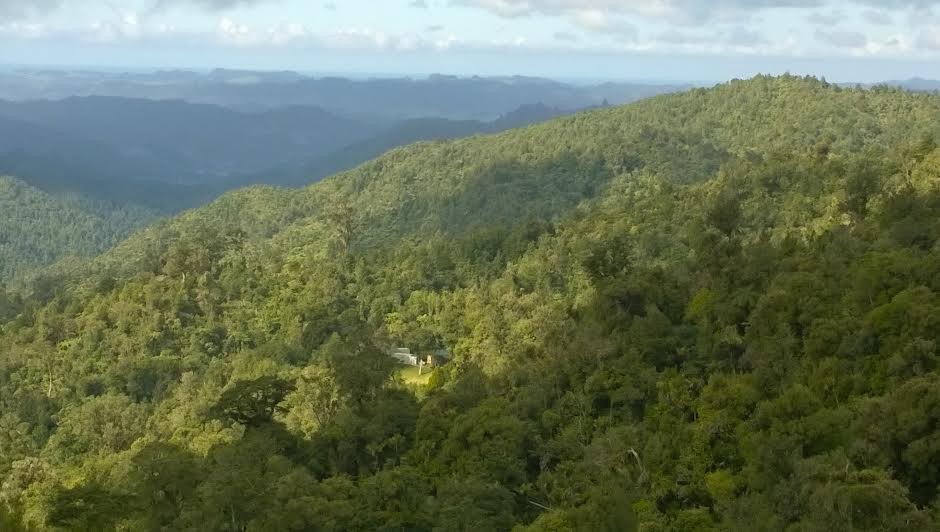
    In the forest which surrounds our little house amid the rolling ranges, are reminders that time truly is an ever rolling stream. 

    The plants and creatures here are older by millions of years than those in Europe which had to recover from the Ice Age 10 million years ago.

    Here in this remote country, New Zealand split off from the ancient continent of Gondwana between 80 and 85 million years ago, and some flora and fauna here date back 250 million years.

    So when I walk in our forest, I’m conscious I’m in touch with life forms that have survived since primeval times in this isolated place, and what recent arrivals on this planet my species and I are..

    Mankind didn’t  arrive on these islands until around 1000 years ago. They found it inhabited by peculiar flightless birds, giant invertebrates, and plants – some having survived more or less unchanged since Gondwanan times. These unique trusting creatures which had never seen human beings before were easily hunted to extinction.

    Roughly 64 endemic species—including at least 51 birds, 3 frogs, 3 lizards, a freshwater fish, and a bat—died out thanks to hunting, and introduced animals like pigs and goats, possums and rabbits..

    The amazing giant bird, the moa, disappeared in two hundred years, and then the Haast’s eagle, known as ‘the biggest, baddest, most magnificent eagle ever to have existed in the world’ died out as it had fed on the moa.

    So sadly, these once isolated islands are now part of the 6th Mass Extinction, in which scientists warn that by 2050, up to 30% to 50% of all Earth’s plant and animal species could face extinction due to climate change, habitat loss, and human activity.

    The forest appears empty, apart from the birds, compared with European woods and forest alive with squirrels and rabbits, foxes and deer, and so many other fascinating creatures, there are no indigenous mammals here except bats, but we host other primeval treasures.

     And we wage a constant battle against the animals introduced by man in the last thousand years, as they eat these native creatures and destroy their habitats.

    So we treasure rare species like our frogs, the Archey’s frogs whose ancient evolutionary lineage stretches back roughly 150 to 200 million years, making them living fossils that coexisted with dinosaurs.. They are only found these days in our forest and two other places in New Zealand. 

    These tiny delicious creatures, only an inch and a half, live on land and their minute tadpoles hatch on their father’s back, and live there until they are old enough to cope on their own. The froglets often stay with their dad for several years, and they can live up to forty years. One night I saw one the size of a fingernail.

    Their cousins the Hochstetter’s frogs, also ancient and endangered, live here too, and they both are our pride and joy, as is the butterfly extinct in the rest of the world, and only found in our forest – Helm’s butterfly, the forest ringlet, so rare and special that scientists come here to study it, even some of David Attrenborough’s researchers.

    And then there are our lizards, known as striped geckos. They are described as ‘rare and stealthy reptiles’. They were first discovered in the 1990s when one turned up in a home nearby.. Now we have teams of scientists turning up here to discover and map these beautiful little creatures hiding in the ferns and trees..

    But besides these rare species, I’m conscious as I walk in the forest that there are others, just as precious, but so plentiful that we take them for granted. There are 170 different sorts of worms in this country, including the beautiful glow worms…  I’ve learned that they, like all other living beings, have their own secret life, communicating with each other through touch and taste and ground vibrations. Being hermaphrodites, after they have mated they can both produce offspring.

    We all know now how vital their lives are to the health of the soil, and that modern farming methods, fertilisers etc, are death to these invaluable forms of life – which are also food for many birds and reptiles.  As long ago as 1881 Charles Darwin wrote: “It may be doubted whether there are many other animals which have played so important a part in the history of the world, as have these lowly organized creatures.”

    I used to think that spiders were just a nuisance, but have now discovered that they have a massive and vital use in nature. They act as Earth’s natural pest control by eating billions of insects like flies, mosquitoes, and crop-destroying bugs, keeping the balance of the ecosystem. Their exquisite webs are their form of communication, which they can read, knowing what fly or other insect is invading their web, and spinning and retracting and   playing its strands like a guitar.

    The amazing NZ snails are cherished too, there are over a thousand different species in this country, and after learning how intelligent and maternal they are from Elizabeth Tova Bailey’s wonderful book, ‘The Sound of a Wild Snail Eating,’ and reading about dozens of French snails lifting the lid of a basket taking them to market in a concerted effort and scattering, I have a great fondness for them. I’ve watched two snails crawl up the water bowl in my garden, and drink together, and then crawl back  out and away, and I’ve read of a snail making his way over a garden wall and finding more food in that  garden, and coming back to bring his wilting companion to a better place. Snails are more than petunia devouring pests !

    We also have a very long centipede with a painful bite – not my favourite life form, but I was fascinated to discover that their  pairs of legs are a different length so they don’t trip themselves up!

    Birds, butterflies, moths and bees, so many forms of life which we so often take for granted, but when their lives are decoded, turn out to have intelligent, intricate rituals and systems which support not only them, but the planet.

    Insects, which are fast disappearing, are the tiny workers that keep nature alive. They pollinate three-quarters of our food crops, feed countless birds and fish, and clean up dead waste to enrich the soil. It’s estimated that without them, our global food and natural systems would completely break down.  Yet the total extinction rates for insects are happening up to eight times faster than for mammals, birds, or reptiles.

    It turns out that our world could not exist without them, and since they lived for aeons before we latecomers trampled across the planet, they could probably manage without us for many aeons, world without end.

    So I try to tread softly in this forest among its ancient creatures, and marvel at the silent secret lives of the senior partners in our life here. While I grapple with technology and use electricity, gas, oil and other resources of the earth,  invisible primeval lives continue to support the planet as they have done for more millions of years than I can imagine. 

    Food for Threadbare Gourmets

    When I’m really up against it for time or energy, there’s nothing like that packet of pasta and tin of tomatoes always lined up in the pantry. My favourite pasta is angel hair and my husband loves macaroni, so I do both, it’s so easy.

    Thanks to Nigella Lawson, I no longer bother with boiling water, but just use cold water, and cook until the pasta is done.

    With long pasta like angel hair ( capellini) I use a big frying pan and plonk the strands in the cold water with some salt.

    The tin of tomatoes is embellished with garlic and chopped onion ( cooked for five minutes in the microwave) and a big dollop of butter, maybe a slurp of soy sauce for the umami flavour. Gently simmer for ten minutes or so, and tip over the drained pasta. Freshly grated parmesan is a must…I sometimes stir some cream into the tomatoes too.

    Food for Thought

    We say ‘I have done nothing today.’ What! have you not lived? That is not only the fundamental, but the most noble of your occupations.” 

    French philosopher Michel Montaigne
  • The Cancel Culture

    Will I be cancelled? One of my first geography – or was it history – lessons when I was about six, consisted of our teacher pulling down a map of the world and pointing to all the pink bits scattered plentifully around the globe. ‘This is the British Empire’, she said. I remember feeling very impressed.

    I write this knowing how much cancelling, triggering, no-platforming and all the other latest cliches for being sent to Coventry will rain down upon my unapologetic, white privileged, cis, Silent Generation head ( I’m a proud pre-Boomer)

    Later, I was even more impressed when I discovered that this vast network of territories around the world was administered by a tiny island whose tiny army was smaller than Serbia’s at the start of World War One. This must mean, I thought, that most people must be happy with the status quo, law and order, and the opportunity to live peaceful lives.

    But judging by the torrent of constant aggrieved and angry condemnation of Colonialism which is now the daily ration of news in most media outlets, and by so many woke and anti-racist groups, I was hopelessly wrong. Even Ethiopian Tedros Adhanom Ghebreyesus, Director General of WHO, accuses the west of racism because we’re upset about Ukraine, but we weren’t about Syria and Afghanistan. He’s right, we are concerned about Ukraine because it’s much nearer home, and could affect and is affecting the whole world. But has he also forgotten, or never knew that the British army liberated his country Ethiopia in 1941, when Mussolini’s Italians had invaded it and perpetrated terrible atrocities?

    As their Emperor Haile Selassie told the world : “Special sprayers were installed on board aircraft so that they could vaporize, over vast areas of territory, a fine, death-dealing rain. Groups of nine, fifteen, eighteen aircraft followed one another so that the fog issuing from them formed a continuous sheet. It was thus that, as from the end of January 1936, soldiers, women, children, cattle, rivers, lakes, and pastures were drenched continually with this deadly rain. In order to kill off systematically all living creatures, in order to more surely poison waters and pastures, the Italian command made its aircraft pass over and over again. That was its chief method of warfare.

    But Tidiiana N’Diaye, the Senegalese anthropologist, says that what happened in East Africa over the centuries should also be openly discussed.

    “Most of the African authors have not yet published a book on the Arab-Muslim slave trade out of religious solidarity. There are 500 million Muslims in Africa, and it is better to blame the West than talk about the past crimes of Arab Muslims. Initially, the Arab Muslims in Eastern and Central Europe took white slaves to sell them to Arabia,” Tidiane N’Diaye said in an interview. “But the growing military power of Europe put an end to Islamic expansion and now that there was a shortage of slaves, Arab Muslims were looking massively to black Africa.”

    When missionary David Livingstone was exploring central Africa, and based at Zanzibar, one of the centres of the slave trade , he estimated that 80,00 to 100,00 Africans were captured by Muslim Arab traders every year. He wrote: “The strangest disease in this country seems really to be broken heartedness, and it attacks free men who have been captured and made slaves”. And out of those huge numbers of slaves captured to be sold and transported from Zanzibar, only one in four survived the journey, most of them died from hunger and exhaustion. A stick was chained to their neck and linked to the next man in the long chain of desolate captives.

    It was not until 1873 that Sultan Seyyid Barghash of Zanzibar, under pressure from Great Britain, signed a treaty that made the slave trade in his territories illegal. But that decree was not enforced effectively. It was not until 1909 that slavery was finally abolished in East Africa. It was the mid thirties before it ended in Ethiopia.

    According to author N’Diaye, slavery still exists, albeit in a different form. It is estimated that nearly 40 million people worldwide

    “When it comes to racism, the woke- racism weapon against the past is to see only the West’s part in the terrible historical centuries old crime of slavery and the apparent miseries of colonialism. Even a search of the internet, in entries about Africa, only mention the Atlantic West coast slavery,

    still live in slavery. In Africa there are hundreds of thousands. “In Mauretania they say they have abolished slavery, but in reality the situation in North Africa has not changed much. Young people are enslaved against their will, forced to work and sexually exploited”

    Between the late 1870’s to the 1960’s, Colonialism took over from tribal warfare throughout most African kingdoms, tribes, provinces. The tales of the atrocities and tortures and massacres that were visited previously on defenceless peoples, or on the beaten armies, or revolting tribes, are horrendous. James Bruce, the British explorer who traced the source of the Blue Nile in 1770, spent two years at the Ethiopian court, and described not only the dreadful fates of the king’s constantly warring enemies, but the Ethiopian habit of enjoying fresh meat cut from a living beast, describing one horrible victory feast when a bull was tethered and steaks systematically carved from the bellowing desperate creature.

    The accounts of other explorers over the hundred years before western rule, tell of the same brutalities and cruelties by psychopathic rulers who inherited bloody tribal rites and continued them to practise them. In spite of ancient civilisations which had risen and fallen in other ages on this continent, the Africa the explorers found was primitive and bloodthirsty. In 1861, explorer Christopher Speke described King Rumanika of Karagwe’s harem, whose wives were force fed milk through pipes from a gourd, to become so horrendously fat that they couldn’t stand, but rolled around like seals, he said. Men with whips stood by to enforce the endless fattening up.

    While Speke was detained at his court for months in 1860, he described King Mutesa of Buganda killing people at his court daily, for trivial reasons such as a girl speaking too loudly, or a page neglecting to open or close a door, innocent people burned alive, tortured and murdered in all manner of ways.,

    So was the advent of colonial rule for that hundred years, really such a tyranny? In Nigeria for example, the governor, Sir Evelyn Lugard having brought peace to the warring north, ‘set out the same principles of the administrative system subsequently institutionalized as ‘indirect rule’. Essentially, local government was to be left in the hands of the traditional chiefs, subject to the guidance of European officers.

    ‘ Native institutions were utilized and interference with local customs kept to a minimum, although the British did not always understand the local customs. While this system had built-in contradictions, over the years the Nigerian system developed into a sophisticated form of local government, especially in the emirates and under the banner of “native administration,” which became the hallmark of British colonial rule in Africa. ‘

    The colonial authorities of most nationalities, French, Portuguese, German, as well as British, left behind the rule of law, plus roads, hospitals, schools, railways, drains, and most of the advantages of western civilization. Since these countries gained independence, many have ignored ‘due process’ of law, press freedom, individual liberty and human rights’, in the words of Amnesty International. Systems of democratic government established at independence, have been dismantled, and corrupt authoritarian regimes imposed, with many presidents declaring themselves in office for life.

    Since Independence there have been unspeakable massacres, tribal wars, repression of any dissent, and previously prosperous countries like Zimbabwe reduced to bankruptcy – though to read the internet, you would think it was a thriving happy prosperous society, untroubled by violence, famine, corruption, unemployment, and bulging prisons filled with people from the wrong tribe. ( I know, I have a close relative who was matron of the hospital in Harare. I have two friends who worked in Kenya for a few years, where they had to have an iron door fitted to their bedroom like everyone else so that they wouldn’t be murdered in their sleep by robbers. When they left, they left all their possessions, being allowed only enough cash to buy a coffee and bun at the airport.)

    Human rights groups have gone on record as describing ‘extensive political repression, including illegal and arbitrary detention, threats or other forms of intimidation, disappearances, politically motivated trials, and the massacre of peacefully protesting civilians ‘ in many countries.

    None of these regimes are castigated by the critics of the West. Both the crimes of the past, and the crimes of the present are ignored, overlooked or unknown to those pulling down statues and condemning European and American slave owners. Slave owners who were also philanthropists whose generosity sustains the very colleges and schools, hospitals and libraries, art galleries, orphanages, that today’s woke critics benefit from. And apart from all their other crimes, these were mostly old white dead males – an unbeatable combination if you’re inclined to find a good whipping boy… while woke culture requires that we change our minds and our beliefs about these men and about the past, and think as they do.

    The philanthropy of many traders and owners, which contributed to the great civilization of the west, their gifts to the arts, to medicine, to science, to music, to literature, to architecture, to good government and a decent society may be forgotten in this present orgy of righteous indignation and judgement, but let us hope that the pendulum swings back before all that they gave and achieved is obliterated.

    Those lovely words from the book of Ecclesiastes honour these sort of men, ‘Let us now praise famous men, and our fathers that begot us’… Some of the most famous and indispensable men in history have been slave owners – men who reflected the customs of their times and place. Like most of us they all had gifts and they all had flaws, and they were men of their time. They didn’t think like us. In time to come we may be abhorred too, by more advanced societies for the way we treat and eat other species, and exploit the natural world

    These slave-owners include men like the Prophet Muhammad, William Penn, the great Quaker who founded Pennsylvania, and influenced Thomas Jefferson, who wrote the unforgettable words of the Declaration of Independence, Demosthenes, influential ancient Greek statesman, many US presidents, including George Washington, most rich Romans and ancient Greeks, not many British, they tended to have money invested in trading, and so we come to wonderful William Wilberforce, and his supporters who battled so long to abolish the slave trade.

    Many of their descendants have been proud of the achievements of such men, others have been influenced by them, or inspired by them, while others have followed them – as in the case of Muhammad. So perhaps their critics could try to forgive them, leave their statues where grateful people erected them, and remember that it is because so many of them worked for a decent humane society, that we have the freedom to say what we think without the fear of criticism, or of being ‘cancelled – a freedom which applies to us all, white, privileged, Bame, Terf or transgender. “I have no desire to make windows into men’s souls,” said Elizabeth I back in the 1550 ‘s, and I think she had the right idea.

    Food for Threadbare Gourmets

    I discovered this wonderful lemon tart recipe in a gardening magazine, and with a few tweaks have made it my own ! Prepare a pastry case. Place a large chopped and de-seeded lemon ( I have also added half an orange or another lemon) in the stick whizzer. Add four eggs, 100gms melted butter, a generous cup of sugar, 2 teaspoons of vanilla and blend it all together. Put into the pastry case and bake at 180 for 30 minutes or more. When cooked, dust with icing sugar and serve with whipped cream. Divine !

    Food for Thought

    ‘In a room where people unanimously maintain a conspiracy of silence, one word of truth sounds like a pistol shot.’Czeslaw Milosz, poet and writer, in his acceptance speech for the Nobel Prize for Literature.

    In its citation, the Swedish Academy called Miłosz a writer who “voices man’s exposed condition in a world of severe conflicts”. He wrote The Captive Mind, a book about Stalinism

  • The fog of war

    Another day, another search through news headlines, Youtube videos, TV news, on the spot reports, to find some hope that the war will end, that right will triumph over might. Wion, and BBC, Caspian Report and Sky News, The Guardian and Daily Mail, The Times and CNN, Fox News and the rest, are all grist to this pointless mill. . It’s called the fog of war, and the fruitless search for encouraging news is an attempt to find comfort.

    Someone said to me the other day that she didn’t watch the news as part of her ‘self-care”. I didn’t bother to watch for years, either, but to opt out of this trauma which is convulsing so much of the world now would seem like a cop-out to me. I’m part of the human race, so I have to be in. We are living through history.

    Anger, despair, sadness, are all emotions that seem to swamp my formerly peaceful world, as they are doing for most decent compassionate people throughout the world.

    Feeling the pain of Ukrainean families fleeing, of grieving relatives, seeing shattered cities, watching demoralised Russian soldiers, cheering at the courage and triumph of the men and women resisting the bullying, the bombing, the brutality, doesn’t help those suffering, but leaves me/us feeling helpless, as well as all the other emotions.

    To be forced to be a spectator, and watch all the conflicting opinions, analyses, predictions, and vacillations of pundits and politicians and retired generals feels, if not shameful, then ignoble. So for me it means facing the pain and shame, rather than trying to pretend that life is okay in my happy little world. Because it isn’t.

    My world is now part of the global village, and we are all connected, not just through pain and misery and anger and horror, but through the internet, and podcasts and news reports and cell phones, and through supply lines, and delivery chains, which mean rising prices, and inexplicable shortages from olive oil to lemons to building materials or Italian tomatoes.

    Yet life does go on for those lucky enough to live in a place like New Zealand, or Iceland, and so in the end, I have to feel gratitude. And in the light of the world’s suffering, not just in Ukraine, but in so many other places, gratitude seems a gigantic travesty.

    So having talked myself into a corner, I have to resolve to make the place where I stand the kindest, purest, most honest and most decent place possible. I can only love my corner of the world and try to share love to add to the goodness in the world, and not get bogged down in the pain of the world.

    Philosopher Martin Buber said,”You can rake the muck this way, rake the muck that way …. In the time I am brooding over it, I could be stringing pearls for the delight of Heaven”. He’s right. Yes, brooding is a waste of time, so I will try to string pearls instead of futile brooding over the tragedy of Ukraine – pearls of love and kindness and a little laughter.

  • The Light of the Sun

    The light of the sun

    Illustration from the post “The Light of the Sun”

    Item from UK Guardian :’ Pictures of a visibly injured Mariana Vishegirskaya leaving the maternity hospital were targeted by a vile Russia disinformation campaign accusing her of faking the injuries. In happier photos taken on Frid ay, Vishegirskaya holds her new baby daughter Veronika.’

    There was once a beautiful Tik -Tok person – I don’t understand Tik Tok but that apparently was what she was – blonde, de rigueur hair extensions, mile long false eyelashes, peachy pouting mouth, and offering us cosmetics to help us look like her.

    This rather sweet looking young woman became pregnant, and was awaiting the birth of her child in a Ukrainian hospital bombed by Russians, who claimed, first, it was empty, and secondly that it was occupied by terrorists. The Russian propaganda machine also informed a sceptical world that the anguished blonde, one-time glamorous Tik-Tok person was faking her injuries.

    She was wearing a black and white spotted pair of pyjamas or similar maternity wear. A few days after the contrasting pictures of the glamorous girl, and the shattered pregnant walking wounded woman, another picture emerged into the coverage of the atrocities taking place in Ukraine. This time she was lying cradling her baby girl Veronikia, her face still covered in small flecks of blood, and still wearing the same spotted clothes as before, grubby and crumpled. The look on her face, not that of joy and pride which most of us experience when we’ve just given birth, was instead, of utter despair.

    No spotless white pillows, fresh clean clothes, lovely cup of tea, joyful family, just the grunge of unwashed clothes worn before, during and after labour, still stained with the dust from the rubble of bombing, and lumpy makeshift bedding seen in the dim light of a bombed-out maternity unit hidden away from more bombs in a cellar.

    That picture and the one of dozens of dogs of every kind among five hundred, waiting in an animal shelter, where their fleeing owners had left them for safety along with their cats, which was now running short of food, because the girls delivering it had been shot and killed by Russians, reduced me to tears, like many another, I’m sure.

    My life has been book ended by war, I know what it is like to lie in bed at night paralysed with fear, as bombs fall, and this war had crept up on me unawares, as it probably did for many others. Peace is contagious, and it seemed unthinkable that war could erupt again in our lifetimes, though the warning signs have been there for years. But we didn’t want to see them.

    It is easy to not see things we don’t want to acknowledge, but as I sadly contemplate the place the world is in now, I tried to see more… more of the good things that go on happening even as the bad things seem to overwhelm us.

    I look at my community, where a neighbour goes to clear the drive of a frail old couple, of the fallen trees after a storm, and who builds quail protectors for their vegetable garden.

    Another spends days trimming and pruning the overhanging trees and shrubs along our two mile long shared private road, and another who looks after the animals of a distant neighbour who’s gone off with his children to find somewhere else to live.

    There’s a couple who live some miles away, who come regularly to make sure the home of the owners who are overseas seeing grandparents, is unscathed by the storms we’ve been having, and another devoted couple, who lend their home to those who need shelter, visit those they think are lonely, and chauffeur a neighbour to and fro from hospital morning and evening for weeks while she stays with her sick husband, among many other silent deeds of devotion.

    When I start to see these sorts of things the world seems less grim..

    I remember the US electrician who went to fix a light in an old lady’s house, and seeing that the whole house was in desperate need of maintenance rustled up a team of volunteers via Facebook who called themselves Gloria’s Gladiators. They not only repaired the house, but transformed the old lady’s life by giving her ongoing friendship and support. Other groups grew from this single act of random kindness.

    I remember the Muslim immigrant garage owner in the US who gave a doctor rushing to an emergency at the hospital, petrol for free, and then replaced his punctured tyres… saying the Koran tells them to be kind to their fellows.

    I remember the kindness of strangers to myself – the nurse in hospital who realised I only liked one kind of biscuit, and used to hide them for me, another who used to give me stocks of various dressings and equipment which she hid in my locker, so I wouldn’t run out when there was a shortage… the visitor to a patient in the bed across from me, who covered me up with a blanket when she saw me asleep without one – these are tiny acts of goodness and kindness which transform trying situations into happy memories.

    The concept of random acts of kindness merely put into words what so many do simply because they are good people… like the mayor of Auckland who went to Russia with his wife some years ago, to adopt a Russian orphan, and when they got there, the little girl asked if they would take her two brothers too. To their undying credit, the mayor and his wife brought all three orphans home to New Zealand, where they’re growing up to be happy, responsible citizens .

    I also discovered that after committee meetings late at night, this lovely man would drive to three places around the city where there were colonies of stray hungry cats, and feed them every night.

    We can all bring sweetness and goodness into our world, even small things like a smile to a passerby, feeding the birds, care for thirsty trees and drooping plants, a bowl of water by the gate for thirsty dogs and other creatures, acknowledgement of the careful pattern on top of our freshly made coffee to the barista, these tiny things can mean a quality of life, actions which can bring softness into the harsh times in which we find ourselves. Small happinesses which we can give to others, usually make us happy too. And the light of gratitude we feel when we recognise the beauty and bountifulness of nature and the world – these are the things that can uplift us – remind us of the miracle of life which can overcome fear, depression or anxiety.

    If Vladimir Zelensky can extol Life in the middle of death and darkness, as he did yesterday, we too can grasp that courage and glory of the human spirit, and be inspired to live our lives with hope and optimism.

    It was dear old Samwise in Lord of The Rings who said, “But in the end, it’s only a passing thing, this shadow. Even darkness must pass. A new day will come. And when the sun shines it will shine out the clearer”. Let us hope so. Even the shattered ruins of Leningrad have been transformed into the golden glory of St Petersburg with the passing of time. Let us hope that the devastation we see now will be healed in a real peace between nations whose people do not want to fight – that this Will pass and a new day Will come. And the light of the sun will shine on us all.

    Food for Threadbare Gourmets Who needs KFC when you can have chicken and chips in the comfort of home? So easy too. Marinade boneless chicken thighs in lemon juice, garlic and olive oil for a few hours. Meanwhile, cut the potatoes in thin slices – I don’t bother to peel them – just scrub and clean. Tip them into a saucepan of cold vegetable oil. They’ll take about half an hour, and towards the end just lightly stir them to keep them separate.Twenty minutes before the chips are cooked, douse the chicken in flour with plenty of powdered ginger, salt and pepper, and quickly fry them on both sides till golden. It doesn’t take long, and over cooking toughens them. Serve straight away, with salad or vegetables.

  • Where is the future taking us?

    Homeless in Hull! That was our fate, on my father’s return from his military duties with the Occupation Forces at the former Bergen Belsen concentration camp in 1948. In bombed and blitzed Britain, houses were in short supply, and along with many other homeless army families, we were parked in a former army camp which had housed Canadians during the war.

    We had half a Nissan hut each, un-insulated, and freezing in winter, hot and stuffy in summer. We ate in a communal dining room a hundred yards away. Husbands and fathers were stationed at their new postings, often a long train journey away, and would visit at weekends when they could. We were miles away from shops and schools, and just had to eke out an existence until the distant father could find a rented house, or be granted an army quarter. I felt so bleak in the midst of all this lack of beauty, comfort, convenience, that I jammed my tennis racquet between my bed and the wall, spread a lace handkerchief over the strings, and put a small glass paste jar on the makeshift table and arranged daisies and buttercups in it. A small sop to my ten year old sanity.

    These memories came back to me, when I read about riots and protests at the various army camps in the UK where refugees had been sent while they were processed. I thought of how they had come, often at great risk to themselves and their families, from far distant countries, from Afghanistan, and Somalia, Syria, Iran, and Africa. They had been convinced by television, film, social media and many other avenues of information that Europe, and especially Britain, was a promised land. They too wanted good housing, generous allowances, opportunities for education, and freedom from so many thing like war, violence, oppression, poverty, famine, terrorism. They wanted to feel safe.

    But many of them don’t seem to realise that all these things have been achieved in western culture by the hard work and commitment of generations of past Europeans who fought and struggled themselves for freedom of speech, freedom from poverty, for free education and health care. So many immigrants don’t seem to realise that the original inhabitants of the countries they want to settle in are still paying for the privileges won by western culture, and that westerners are heavily taxed and still work long hours, often for little pay, to achieve a decent way of life. And now they are forced to pay for all the people who arrive uninvited on their shores… I notice the first thing that immigrants receive is warm clothing and in hot climates, bottles of water. Their physical needs seem to be taken care of straight away, just as they had probably hoped.

    But someone has to pay for everything that is handed out free to immigrants, and many arrivals don’t seem to realise what a high price this has meant to the countries they arrive in. The cost to host countries has often not been counted. Sweden which was once a beacon to all countries, a haven of peace, democracy, plenty, equality, generous social services and a relaxed society, has now been ravaged by riots and rape and there are no-go places in their cities, as in many English cities, where native Swedes or Britons do not now dare to venture. A quick glance through the English tabloids, shows pictures of bearded immigrants who have molested women in their surgeries or during operations, groomed vulnerable teenagers, raped women, set up scams to defraud both charities and government agencies, have initiated gang fights and knifings, and disrupted normal activities with angry demonstrations over the politics of the countries they have come from.

    These things are not reported in the ‘good’ newspapers; they are considered racist, and drawing attention to the race or religion of criminals is considered typical of prejudice, white privilege, or right wing conservative thinking. ( which is condemned by the intolerance of the left). I could be indicted for ‘hate crime’ in some countries for writing these facts, and the law is about to be changed in my own country to enable thought police to charge anyone who doesn’t think the ‘right’ way. (George Orwell’s predictions are terrifyingly accurate )

    People can lose their jobs or find themselves cancelled when labelled as racist (whether or not they are), or prejudiced against different sexes, or religions. Yet as a Christian in a Christian country you may not wear a cross on a chain, though you may wear a hijab or a turban.

    In his fascinating book ‘Cosmos and Psyche’, Richard Tarnas suggests that western man lost his way during the Enlightenment in Europe, when reason divorced mankind from the numinous, and from his connection with the intelligent world and universe, replacing that connection with a mechanistic view of a soul-less random universe. But the Enlightenment never reached the many cultures who are now invading Europe, and they are just as cut off from the intelligent universe, and the world around us.

    These cultures from other parts of the globe often don’t have respect for animals or the ecology or with the living world. Many of them have no respect for women and children either, so that while western society is still evolving from sexist attitudes, much worse customs in the shape of ‘honour killings”, female genital mutilation, sharia law and repressive attitudes to women and their clothing are now taking hold in the once comparatively civilised societies of the west.

    I have lived long enough to be able to look back on days when riots and protests were rare, not commonplace; when noise was not part of our life, with the only outside source of noise being the wireless, which people didn’t take to the beach. or play loudly all night or in their cars as they boom down the road. I can look back on days when littering was unheard of, and a real no-no; when people may have been more narrow minded, but when they were also polite and courteous to each other. I can remember when I could walk down any street anywhere as a child or adult, and feel safe. I didn’t grow up, as my grandchildren have done, with the threat of climate change or terrorism or any of the other threats to society and to everyone’s peace of mind. Neither did I grow up to criticise my older family members and their views on life, which is the fate of many older people now, who walk on eggshells around their offspring, for fear of being ‘called out’ for outdated attitudes.

    These are strange and apocalyptic times. There is no stopping the human tide of peoples who want a piece of the peace and plenty and prosperity of Europe. But perhaps they have to make some compromises in order to preserve that way of life. It is ironic that so called liberals have castigated and condemned the past, decrying the evils of colonialism, while ignoring the hospitals and schools, railways and roads, law and order that colonialism brought to so many corners of the globe; while at the same time too, so many people in deprived places around the world, want to be part of the very culture and society that western protesters of all kinds and colours and beliefs sneer at. Yet until much maligned colonialism arrived, tribes in Africa, for example, faced the same poverty and oppression, murder and mayhem from their own people, that so many refugees are fleeing now.

    With so many challenges facing our societies, including the constant warfare, power struggles and tensions between tribes and states and governments, it would be easy to feel powerless to bring about change.. But there are still signs of hope in our world. If we didn’t have hope, it would be easy to be overwhelmed by what is happening in the outside world. But as Gandalf replied when Frodo said he wished such dreadful things hadn’t happened in his time: “So do I, and so do all who live to see such times. But that is not for them to decide. All we have to decide is what to do with the time that is given us.” He also said: ” It is the small things, everyday deeds of ordinary folk that keeps darkness at bay. Simple acts of love and kindness” .

    Such small green shoots of love and kindness are what can give us all hope, like the work of industrial engineer Shubhendu Sharma. He was working at Toyota in India when he met Japanese forest expert Akira Miyawaki, who came to plant a forest at the factory, using a methodology he’d developed to make a forest grow ten times faster than normal. Fascinated, Sharma worked with Miyawaki, and grew his first successful forest on a small plot behind his house.

    Today, his company promotes a method for seeding dense, fast-growing, native forests in barren lands, and Shubhendu is now using his car-manufacturing acumen to create a system allowing a multilayer forest of 300 trees to grow on an area as small as the parking spaces of six cars – for less than the price of a cell phone. He’s helped to grow forests at homes, schools and factories, something which we can all do on any scrap of land. Forests may save our lives and the planet.

    Another green shoot of hope that the world is changing for good, and not always for worse, are the Parliamentary bills Boris Johnson’s government is bringing in, to improve the lot of animals, banning live animal exports or the importing of that cruel delicacy pate de foie gras ( geese force-fed until their livers are diseased), a ban on keeping monkeys and all primates as pets, and a raft of other animal friendly measures. These decisions recognise that animals have feelings and emotions, a view discredited by Descartes several hundred years ago – and which thus validated cruel experimentation on, and the exploitation of animals .

    In this country there’s growing recognition of the need for humanity in farming, to the extent of experimenting with phasing out animals for meat, and creating tasty meat substitutes which don’t involve animals at all. Researchers in Denmark have created a way to replace plastic used in delivery food with grass fibres, which they say is ‘100 biodegradable.’ This project aims to reduce carbon dioxide emissions hugely, as well as the use of plastic in supermarkets, since according to a statement from Aarhus University, more than 10,000 tons of packaging for take-away food are used each year in Denmark alone.

    And when the pendulum swings back, and the excesses of the BLM movement, militant gender campaigns and woke cancelling have diminished, we will all be more tolerant and kinder, as these movements subconsciously influence our thinking to become more sensitive and more aware. The new vocabulary of wokeness, the definitions of binary and cis-gender, and all the other words with charged meanings will then no longer be used to bully the unwoke. (like me)

    Events, movements, history, patterns of thought are all in a state of fluidity and flux. Facts and situations we once thought were permanent turn out to have different meanings for different people. The future has never looked more opaque, and the choices that face mankind have never been so urgent and so life-threatening. And yet as we look around us in our own little worlds, we can see small, simple good things, the smile from a stranger, the greeting from another, the warmth of a receptionist, the concern of a health worker, the dedication of so many people in so many ways, from the cheerful capable ambulance driver, to the expertise of the woman who cooks my fish and chips, the decency of the supermarket check-out ladies, and the friendliness of road workers holding up the stop/go signs.

    These small human inter-actions are what in the end dwarf the huge problems that face our generations. We know that we are living on the cusp of huge changes in the history of the human race. We know that we are at a turning point in the long years of life on our planet. And we know we can’t roll back climate change and poverty and terrorism and all the other challenges, as we all long to.

    But we can create our own world of goodness and human connection. The human connection is what in the end sustains us, and always will, whatever lies ahead. As we all take this unavoidable evolutionary leap into the void of the future, we have each other.

    And as the poet Wordsworth said,” The best portion of a good man’s life is his little nameless, unencumbered acts of kindness and of love.”

    Food for Threadbare Gourmets

    I’m always looking for short cuts and small additions to deliciousness these days.

    One of the best tips I learned from a Russian neighbour was about my breakfast pot of coffee. In a pot for one, grind one twist of salt, and three twists of black peppercorns into the coffee. In some indefinable way this improves the depth of taste to the coffee.

    I also grind my own coffee beans these days, since I read a chef’s information that coffee manufacturers don’t bother to fish out cockroaches or other foreign bodies from the beans, and just grind everything up together. Ugh!

    Another chef has improved my omelettes out of sight. He told us that by cooking the butter until it browns before tipping the egg into the pan, gives the omelette a better taste. And he’s so right, tomato omelettes, my fall back position, have never tasted so good.

    And then there’s the hole in any dish being re-heated in the microwave. By hollowing out a little hole in the centre, the whole dish cooks through evenly and not just the edges.. this works for anything from cauliflower cheese, to cooking onions. Anyone else got some good life saving tips???

  • Letter to a Protesting Grandson in London

    Thank you for your letter darling. As a veteran of pro-peace, Anti-Vietnam marches, Anti-Apartheid protests, even walking for Save the Whales, it’s good to know that you’re following in your grandmother’s and mother’s footsteps!

    Illustration from the post “Letter to a Protesting Grandson in London”

    And thank you too…. will go and follow up your Wiki research on BLM… you have set my mind at rest somewhat. There seemed so much destruction and hate, and though I can understand how bitter and sad black people and their families are, who have suffered both in the present and in the past, it doesn’t help the cause when white people join in the vandalism and add to the hate and divisiveness on both sides of the ‘divide’. Martin Luther King said: “Let us not seek to satisfy our thirst for freedom by drinking from the cup of bitterness and hatred.”

    Of course I whole-heartedly agree with what you say about the dreadful injustices both past and present…I’ve always thought it was abominable that the film ‘Gone With The Wind’ was written, filmed, and enjoyed – when it was actually a hymn of praise to the South and slavery … But I just wish the protestors would stop tampering with British history which is not as black as they paint it!

    Lord Mansfield, the Lord Chief Justice ruled in, I think it was 1772, that any slave who set foot in Britain was automatically free – slavery had no part in English law, he said. (The case of Somersett, a slave – I wrote about it in my book ‘The Sound of Water’). This was nearly a hundred years before it was abolished in the US.

    For sixty years between 1800 and 1860 the Royal Navy maintained a permanent anti-slavery squadron, which cost not just millions of pounds, but more importantly, the lives of over two thousand sailors as they battled traders and rescued captives on slave transports all over the Atlantic. The RN rescued at least 150,000 Africans who they re-settled in Liberia. Britain was the first nation to propose a motion calling on all European nations to end slavery at the Congress of Vienna in 1815.

    During the American Civil War, in 1862-6, cotton workers at the mills in Manchester and around, refused to buy cotton from the South, thereby aiding the North, and plunging themselves into penury… just as when Britain voted to abolish slavery in all its colonies, this caused a huge rise in prices for everything for people all over Britain… Dear old William Wilberforce, who campaigned all his life against slavery (remember that film I took you to – ‘Amazing Grace’) – was also one of the founders of the RSPCA….

    The Indian writer, VS Naipul, went on record as saying that for every year since the British left India, the country has gone back ten years… as a woman, I feel that one of the best things the Brits did was to abolish suttee – the burning of widows on their husband’s funeral pyre!!!

    And when I was researching China’s slow march to world domination about eight years ago, I read of some African leader whose country has been infiltrated by China and Chinese workers, (he had of course been in prison in the last years of British rule, for sedition – most African rulers seemed to do a stint in prison as part of their careers as activists back then!) wishing the British were back, they employed us and built hospitals and schools and roads, he said….The really brutal colonists were the Dutch and Belgian….

    I suppose because I actually lived in a colony- Malaya- during the last years of colonial rule – before they achieved Merdeka – freedom, the year after I left, and seeing the intelligent, humane and decent rule of law there, and the respect for the Muslim culture and way of life, I feel sad at the distorted and one-sided view of history which so many un-informed people have.

    Ulysses Grant, the great US Civil War General, one of my heroes, and whose diaries I have, wrote that of all the colonial nations Britain seemed to have achieved the best balance, and relationship with the peoples they ruled – (He was another animal lover, an amazing horse-rider, punished his soldiers if they ill-treated their horses, and refused to attend a bull fight put on in his honour in Mexico when he was President…)

    One protestor, as he defaced the statue of Winston Churchill, was reported as saying Churchill didn’t fight for blacks – he fought for colonialism, whereas he actually fought to save Britain and the world from one of the most evil regimes in the history of the world

    Reading the English newspapers this morning, I see that another of my heroes, Captain James, Cook, a straight up and down working class Yorkshire lad, who rose to become not just a captain in the British Navy, but also one of the greatest explorers and cartographers in history, whose explorations also saw him initiate a new science of anthropology, is also on the list of statues threatened with demolition by British BLM protestors.

    Cook had nothing to do with slavery, though his discoveries did have a lot to do with the eventual expansion of the British Empire. In their sealed instructions, the Royal Navy told Cook not only to map the coastline of any new land, but also “to observe the genius, temper, disposition and number of the natives, if there be any, and endeavour by all proper means to cultivate a friendship and alliance with them… You are also with the consent of the natives to take possession of convenient situations in the country, in the name of the King of Great Britain.”

    Which is why we all now live in New Zealand. When your mother was six, I decided after living in the horrendously crowded island of Hongkong for four years, I didn’t want to go back to another crowded island, England. So we came here to a country the same size as the UK, but with only three million inhabitants. After fifty years we now have four million people, but we still have plenty of space!

    In that fifty years, the population in my beloved birthplace, has grown from fifty-five million to over sixty-six million. And maybe that’s why we’ve been able to beat Covid 19 in this country. We all banded together and observed lockdown scrupulously, with only twenty-two deaths, and have had no more cases for nearly three weeks.

    I continue to be shocked by the way both young doctors and nurses are treated by our health system… the huge rewards for different workers, – like Ceo’s and lawyers, seem so unfair compared with the under-paid, essential and self-sacrificing people like health workers and others…I admire your brother’s beautiful doctor girlfriend enormously for her persistence, dedication and intelligence, and sticking with such a demanding and difficult calling…

    Love talking to you darling, you give me fresh viewpoints and lots to think about…

    Much love Grannie

    Food for Threadbare Gourmets

    With my bad back still dogging me – in a manner of speaking – I’ve perfected a number of dishes for a hungry man without too much angst for the cook.

    Take for example, half a dozen chicken drumsticks, and brown them on both sides in the frying pan. Then arrange them on a bed of chopped onions. Pour some olive oil over the chicken, and a little water among the onions. Salt and pepper.

    Cook them in a hot oven for about an hour. When the chicken is ready, put in the microwave a packet of pre-cooked rice for the prescribed minute and a half. Pour the juices from the pan over the rice, and if you have the energy, rustle up some broccoli, peas, or salad to eat with the chicken, onions and rice…

    Food for Thought

    The soldier above all others prays for peace, for it is the soldier who must suffer and bear the deepest wounds and scars of war. …

    I don’t know who said this, but after re-watching Band of Brothers for the last few nights, it rings very true.

  • Those were the days, my friends…

    Illustration from the post “Those were the days, my friends…”

    I’ve only recently discovered that being called a baby boomer is an insult when used by young things intent on saving the planet. Heaven knows what I would be called, being even older than a baby boomer, but hey, it’s been worth the long ride!

    The tragedy of the Covid 19 seems to have gone a long way towards meeting the Extinction Rebellion’s movement’s aims. It seems even worse than their favoured methods of bringing attention to the plight of the planet. These seemed to involve bringing the maximum misery and difficulty to the world’s workers who found themselves unable to get to work, get to hospital, late home after a tiring day’s drudgery in their offices and cafes and other work spots, thanks to delayed trains and blocked motorways.

    But the other side of the coin of lost loved ones, lost jobs and lockdown in the Pandemic has been the joy it’s brought to the rest of the planet… there have been pictures of hippos surfing on empty South African beaches, and monkeys running amok in deserted Indian squares. There are majestically antlered deer grazing on English village commons, and jellyfish gliding through the newly clear waters of Venice canals. The blue unpolluted skies have restored long lost views of glorious places like the Himalayas, and there are weeds growing between the paving stones in empty Roman piazzas.

    Bird-watching societies in England report that their membership has soared by thirty per cent during lockdown, and English optimists are reckoning on a bumper crop of baby hedgehogs, as with empty roads, the populations of amorous adults are getting to the other side without being squashed by continuous traffic. The seas around busy Portsmouth and the Solent, usually a dull muddy brown, are now sparkling tropical turquoise blue; and not only are the skies clear and bright, but with no travel and no aeroplanes the continuous drone of noise in the sky has ceased.

    People are hearing the birds again, and fish in the sea, disturbed for so long by the vibrations of tankers, ferries and cruise ships, are able to roam the deep in peace. The beaches in this country, NZ, usually alive with overseas tourists, are now deserted in lockdown and the few observers doing their allowed daily stroll, say it feels as though the land is returning to its pristine beauty before man arrived here.

    How can we keep these gains, not just for the planet but for ourselves, when lockdown ends? Will we go back to the extravagant wasteful consumerism of the last decades… or will we try to limit our travel both in our cars and overseas, stop buying cheap Chinese goods ( very difficult when they even make the screws in appliances made in other countries), continue to keep cooking nutritional food at home, and consider the creatures we share the world with?

    This would not be difficult for baby boomers, and those like me who lived through an even simpler childhood than theirs. We had few clothes, and usually only one or two pairs of shoes – an indoor and outdoor pair – which when the soles wore out we took to the cobblers to be repaired. Our clothes were made of natural fibres like wool and cotton -man-made substitutes weren’t available then – and clothes were often homemade and usually too big so we could grow into them. The hems were ‘put up’, and as we grew, they were ‘let down, and I hated the crease which was ineradicable so you could see where it had been lengthened.

    We usually knitted our jumpers, and often our socks. We darned holes, repaired tears, and handed them on to smaller or younger siblings, and others. When I was twelve, I remember the glory of a luxurious reversible satin dressing gown – pink one side, blue the other – which the Colonel’s wife handed on to me when her daughter had outgrown it… and her linen flowered pyjamas…

    We scraped the butter wrapper with a knife to get the last fragments of the two ounces per person per week – a butter substitute was to mash parsnip with banana essence – not recommended – I preferred dry bread with a soupcon of rationed jam. We ate dripping from the tiny Sunday roast – our meat ration was five ounces per person per week – smeared on bread with salt and pepper, while one egg per week per person meant falling back on dried egg substitute – revolting. We never left anything on our plates and never threw food away.

    We had larders instead of fridges which didn’t use any power… they were dim and cool and usually had a stone floor, and marble slab for meat and cooked food and leftovers, and shelves on which to store bottled fruit, jams, pickles and tins – if our war-time coupons ran to buying them – and if we could find them in the shops.

    Though it was boom-time in America after the war, England and Europe were still struggling with shattered economies, bombed cities, broken bridges and wrecked or neglected infra structures. We endured food rationing for fifteen years until it ended in ‘54. There were no boom-times for boomers. The frugal life of war-time continued into peace-time for many years. Few had TV’s, telephones, fridges, mixers or electric kettles. (the Queen’s coronation in ‘53 prompted a surge in TV ownership) Neither did we use power for washing machines and dryers – we sent our sheets and linen to the laundry every week, and washed the rest ourselves.

    There were many women who eked out a living by taking in other people’s washing – boiling, rinsing, starching, mangling, ironing, and we all washed our own cloth nappies. Children felt useful as they were required to run errands and deliver messages to neighbours, since we had no phones or computers…

    We listened to the radio for selected programmes and the news, and read books, and knitted and painted and did jigsaw puzzles, played cards and chess, Ludo and Monopoly.One of the features of the news, was that at the end, a solemn voice would say: Here is an SOS message for… they would give the name and last known address and ask them to report to their nearest police station as soon as possible. With no telephone this was the quickest way to contact people in an emergency. Otherwise, the telegram boys would deliver a short cryptic message, in which every word was counted and paid for.

    We wrote letters by hand in ink, and posted parcels in re-used (re-cycled we’d say now) brown paper, tied with string which had been used many times before with knots laboriously untied. We used sealing wax to make sure our knots on the parcel didn’t come undone. Envelopes were constantly re-used, with sticky labels to cover the previous address, and a sticky label to seal it.

    We’d never heard of takeaways, or drive thru… we queued for fish and chips wrapped in newspaper on Friday evenings, and that was our one bought meal.We had real milk, sold in bottles, which were washed and put out the next morning for the milkman to replace. We didn’t go to a rubbish tip – if there were such things – but when the rag and bone man drove round the streets with his horse and cart, we brought out our inorganic rubbish.

    When things were broken, we had them repaired. All these customs and this way of life, meant that these jobs gave many people work – laundering, collecting the metal dustbins, delivering coal and milk and letters and telegrams, cobbling shoes, dress- making, mending clothes, repairing watches, lamps, and a myriad of other household items. Most of these skills and jobs have disappeared now in the disposable society in which today’s millennials, generation X and all the other categories now live.

    Boomers couldn’t afford to be wasteful. We lived frugally, and didn’t despoil the planet with travel, tourism, eating foods out of season, flown around the world, throwing away the cheap clothes which shrink or lose their shape. Actually, we had a quality to our lives – good food grown locally, leather shoes, wool or cotton clothes, and simple pleasures and pastimes.

    So though Greta Thunberg (who comes from Sweden where, not having participated in the war, their Boomers didn’t have to cope with the ruin of their country and economy) told us at the UN that we had ruined the lives of her generation; and while the Extinction campaigners rail at us for being Boomers, it isn’t such a badge of dishonour as they would try to make us think.

    This wonderful world which has re-emerged during the tragedy of the Pandemic has shown us how it used to be, and it’s up to us all to try to keep it that way. One of the ways in which the world was a kinder gentler place when we grew up, was that people didn’t insult and name-call those whose opinions were different. The spitefulnesses of social media were un-imagineable cruelties.

    So the challenge for us all, is to not only try to preserve the planet, but also to preserve the tolerance and kindness, the courtesies and decencies of those times so stigmatised by younger generations. Live and let live so that we can all share a brave new world!

    Note: we are indebted to Shakespeare for those ringing words: a brave new world.

    Food for Threadbare Gourmets Unable to stand for long with my bothersome back, the microwave has become my friend, and this little dish has become my comfort food.

    For one person, slice about a third of a leek into thin rounds, arrange in small ovenproof microwave dish, and pour hot water over half the depth of the leeks. Cover with kitchen paper, and zap in the microwave for five minutes.

    Remove and cover with cream and a thick layer of grated parmesan, and grill till golden under the grill. When I’m up to it, I shall also chop a hard- boiled egg over the leeks and then cover with Parmesan.

    It makes a small meal for a delicate digestion! Better still, for the hale and hearty, would be to enjoy a hot roll and a glass of good white wine with it ….

    Food for Thought

    Winston Churchill spoke these words during those times of our lives:

    ‘The farther backward you can look, the farther forward you are likely to see.’

    ‘All the great things are simple, and many can be expressed in a single word: freedom; justice; honour; duty; mercy; hope.’

    PS- a reader has written privately explaining why boomers are condemned, this was my reply:

    I know it’s fashionable to beat boomers with a stick over consumerism, the environment etc, but maybe some of these positive facts and thoughts may console you for being unfortunate enough to be born a boomer!!! One of the things I’ve always been glad about is the spread of the motor car, so we no longer mistreat overwork and exploit horses to carry us around ! On the other hand, the diminishment of public transport everywhere because of the spread of cheap Japanese cars after people got over their prejudices about their atrocities, has undoubtedly damaged the planet… Wiki. states that … Boomers are often associated with the counterculture of the 1960s, the civil rights movement, and the “second-wave” feminist cause of the 1970s.

    Boomers 60% lost value in investments because of the economic crisis 42% are delaying retirement 25% claim they will never retire (currently still working)

  • Comfort and Calm in the Crisis

    This is the first day of our NZ lockdown. We are in self-isolation in our forest, enjoying peace, solitude and solicitude.

    Illustration from the post “Comfort and Calm in the Crisis”

    Not just words, and offers of help from our little caring community, but the delivery of a bag of organic fruit and vegetables and a dozen big brown free-range eggs from neighbours who also have a farm-let some hour’s drive away.

    The doctor rang me, so I didn’t have to drive into town to see her, and wrote a prescription which I can collect from the chemist.

    When we ventured into town briefly yesterday before lockdown, to pick up a prescription for Douglas, both chemists had a table at their door, where drugs were handed to customers. The queues at each place stretched along the pavement in the gentle autumn sunshine because everyone was observing the six feet rule between each person. The atmosphere was calm, sensible and caring.

    At the supermarket there were far fewer people than normal and no loaded trolleys. People seemed to be picking up last minute items, as we were. No pasta or tins of tomatoes left, and intriguingly, shelves bare of chocolate. Lots of fresh fruit and vegetables and no panic.

    Douglas insisted on us washing the beautiful apples, pears and squash from our friends, after watching a video which had showed how germs travel and last on surfaces. I hard boiled one of the precious eggs for my lunch, and nestled the peeled egg into a bed of steamed leeks, poured some cream over them and topped them off with a thick layer of grated parmesan leftover from the previous night’s supper.

    A few minutes under the grill turned it into a crunchy gold topping. I had forgotten what an almost sweet taste and texture a fresh egg from a happy hen was like. This delicious little lunch ended with one of the crisp, freshly picked apples from a tree which had never come in contact with a chemical.

    Himself had tender pork sausages for his lunch… I boil them now to cook them, and then they just need a few minutes in the frying pan acquiring a crisp golden skin.

    In the soft sun-light I sat on the sofa looking out through the open French doors across the green valley. The urgent call of a covey of distant quails were the background to the sounds of swallows twittering as they circled and dived around the house, and I heard the first autumn serenade from a cicada. Though I am concerned about my beloved family, this place felt peaceful and nurturing.

    Like everyone else, my family is scattered and coping with this unprecedented crisis. One grandson is in London, another has had his business closed down for the lockdown, the end of which is uncertain and unknown. Our tetraplegic step-grand- daughter, who only has thirty percent use of her lungs and a totally compromised immune system has had her three daily carers leave… the family don’t know who they would have come in contact with, the risk too great, so the huge burden of 24 hour daily care has fallen on my son’s wife. He has to work from home so as not to bring infection into their isolated little bubble of comparative safety.

    Other family members who were going to share the load can no longer do so under ‘lockdown’ since they don’t live there. My daughter who is president of boards and clubs, and director of national organisations, is coping with total chaos across every facet of her normally hectic life. And I can only watch from the distance. I am like every other older person, watching sadly from the sidelines as our children and grand-children and other family struggle, while this tsunami engulfs their lives and their livelihoods and threatens every known certainty.

    The actual illness seems almost like a sideshow compared with the dire effects of it on the whole world. And yet when I woke this morning with the dry thyroid cough I often have, and remembered the head-ache I’d had in the night, and felt the slight soreness in my throat, I had a sudden moment of panic – these are the symptoms of the bug. Then I had a drink and the throat returned to normal, and the fear faded, and I remembered my firm intention not to join the crowd!

    I looked across to the window, where outside, the sun was shining on the mountain, and the jitters – a word that emerged in the early days of the Second World War, evaporated in the peace and beauty of this blessed place.

    Now the day is ending, night is drawing nigh, shadows of the evening, steal across the sky – the first lines of a hymn my grandmother taught me during WW11. The first day is ending of our long retreat into self-isolation, night is drawing nigh. It has been a good day for us. I just long to share that goodness with others, before the shadows steal across so many lives.

    Afterword.

    It may cheer some to know that ISIS’s Health and Safety Department – fancy a terrorist group having such a thing – have advised their enthusiastic jihadis who are all dying to create mayhem, to steer clear of western infidel countries in order to avoid infection from the virus. So there is a silver living to every cloud!

  • A Pardon, Apartheid and Plagiarism

    Image result for nelson mandela in prison Nelson Mandela in his prison cell Another instalment of my autobiography before I revert to my normal blogs

    Late one afternoon Patrick arrived home deeply disturbed. Throughout all the threatening events of the last few years with both police and gangsters, I’d never see my tough imperturbable husband shaken.

    Now he stood by me, utterly de-stabilised, while I peeled potatoes at the kitchen bench, and listened to him tell how he’d been pursued all the way down the motorway by a large black car with three men in black in it. He caught sight of them in his rear vision mirror and watched the three, wearing black suits and black sunglasses, looking vaguely oriental he said, and implacable, following him relentlessly.

    They felt utterly alien, he added. He’d managed to throw them off by failing to indicate when he turned left at speed onto the minor road home. I caught the nameless dread of the encounter and was so appalled that I buried it in my consciousness, and forgot it.

    But a few years later when I read on page 78 of his book ‘Alien Intelligence’, Stuart Holroyd’s discussion of the strange phenomena of the sinister men in black in large black cars, two or three of them, who have menaced those people all round the world who have seen and spoken of UFO’s – as we had done – it all came back…

    We’d seen UFO’s often, and I always felt a sense of benevolence and peace when we did. The last time we’d seen them I’d known all evening that this was the night, and kept watching for them. It was a still light summer night, and suddenly I saw a green flashing craft moving swiftly and silently across the sky.

    It was bouncing up and down and then I saw another silent object coming from the opposite direction, flashing red. They joined up, and suddenly shot up vertically so fast that they disappeared almost at once. And that was our last sighting.

    Another unwelcome presence now entered our lives, a writer called David Yallop. He’d been staying with a mutual friend, writer Maurice Shadbolt, and had become fascinated by the Thomas Case. He rang Patrick from the airport as he was leaving to return to the UK. He suggested that they collaborate on a book about the case, and believing that anything which added to the pressure on the government, Patrick somewhat reluctantly agreed.

    He sent all his notes, clippings, files, a copy of his book Trial by Ambush, the confidential transcripts of both trials, and the police photographs of the inside of the house where the couple had died.

    After six months of silence Yallop wrote and said he’d decided to write the book himself. He used all Patrick’s work to produce the book, with no acknowledgement, and interviewed no-one. He made a huge wave when the book was published by coming to New Zealand and claiming he knew who had fed the murdered couple’s baby, who had been found in the house unharmed.

    His book became a bestseller, while Patrick spent months retrieving all his files and material from Yallop. Yallop always claimed that he had got Arthur Thomas out of prison, but actually he was just another player in the long drawn out tragedy. Patrick and Jim Sprott then had a long session with the Prime Minister Robert Muldoon, and he decided to give all the facts to an independent QC, R.A. Adam-Smith.

    Meanwhile the Mr Asia inquiry had taken a strange twist – Mr Asia himself was found murdered in Lancashire, England. His partner in his crimes, Terry Clark, was eventually arrested by the UK police, and among the incriminating evidence was a photograph of the woman who had rung us – lying laughing on a hotel bed naked – surrounded by thousands of pound notes.

    She denied any knowledge of her lover’s criminal doings, and he was sentenced to twenty years in prison, though he died suddenly after two years. Patrick took four weeks off from The Star to write the book ‘The Mr Asia File’ about The Star’s investigation.

    For the last week of this intensive enterprise, we took a brief holiday in the Bay of Islands so he could check out Terry Clark’s palatial and notorious mansion on the waterfront. We both wanted to come home early without mentioning to each other that we feared something was happening at our house.

    We were right- this was when we found the break-in and deep freeze switched off. The next day we all drove into town to do food shopping, and for Patrick to deliver the final chapters of the book to his editor. The children and I sat in the car outside the newspaper in the hot summer afternoon of 18 December 1980. Suddenly Patrick came running out – “Arthur’s been pardoned!” I looked at him blankly. I couldn’t even take it in. Mr Adam- Smith QC had examined the evidence, and told Muldoon that Arthur was innocent.

    We drove home to pack an over-night bag for Patrick, and rendezvoused with him on his way down to meet Arthur just out of prison. Back in ’73 Patrick had promised they would spend the first night of Arthur’s freedom together. Now seven weary years later, he was fulfilling his promise. After feeding the children, I got on with the holiday washing that evening, and as I pegged up the clothes, I saw a station-wagon pull into the drive and back out to park hidden behind a high hedge.

    I walked down the drive as two men got out of the car, and one put something black under his arm. They strode purposefully towards me, and I thought: ‘they’ve’ come for Patrick. I was rooted to the spot in terror, wondering how to protect the children. I know now, how true those phrases are – rooted to the spot, frozen with terror. Then the man with the black object under his arm, introduced himself as a TV news anchor, he was holding his microphone. Since we never watched TV I hadn’t recognised him.

    He was the first of many newsmen staking out the house that night, hoping to interview Arthur. But Patrick had to keep him under wraps and hide him until his own newspaper came out the following day. So there was no trace of him or Arthur. Eventually they drove into the garage, and Arthur uncoiled himself from the floor in the back seat. The only food in the house after our holiday was eggs, so his first meal of freedom was scrambled eggs and red wine.

    Half way through he wanted to ring the prime minister, to thank him for the pardon. We heard the operator ask who was calling, and Arthur replying Arthur Thomas for Mr Muldoon, and the operator slammed down the receiver thinking it was a hoax! With some fast talking Patrick managed to get Muldoon on the line to talk to Arthur.

    Both men then drove off to Arthur’s sister’s house where he stayed the night untroubled by newsmen. He came out of the bedroom, carrying the flowered sheet from his bed, asking if this was a joke. So many things had changed during his eight years in jail, and flowered sheets were one of them.

    When a film was made of Yallop’s book, in which Patrick was written out of all that had transpired, the last scene is of Arthur’s eight brothers and sisters running hand- in- hand across a field to meet him. But it wasn’t like that.

    In the morning, Patrick took him to his parents who had been running Arthur’s farm for him. As they drove up to the house, the door opened, and Ivy, his old mother, flung her arms around him, crying,” My boy, my boy.” His father, kindly, patient, Job-like, stood in the door, and said to his son: “Where the hell have you been?” a question which had many meanings. It was a deeply moving moment of quiet joy.

    A few months later the Prime Minister did something that split the country and communities, families and friendships. In a rugby mad country, he refused to honour the anti-apartheid agreements of the Commonwealth, and allowed the all- powerful Rugby Union to invite the South African rugby team, the Springboks, to tour this country for a series of test matches.

    It sounds innocent enough, but it was betrayal of the anti-apartheid movement, and was an encouragement to racism in this country. The liberal, educated middle classes and town people who had marched years before in the fifties under the banner ‘No Maoris, no Tour’ when Maoris were refused their places in the visiting NZ team by South African authorities, now opposed this tour with all their might. The country folk and rugby die-hards passionately supported it. (Maoris were eventually allowed into South Africa as ‘honorary whites’)

    There were protest marches all over the country for months beforehand to ‘Stop the Tour”. Thousands of people who had never marched or protested before in their lives, old and young, fit or hobbling along on sticks, tried to make their voice against apartheid heard and ‘Stop the Tour”. The police countered with violent measures.

    Friends – poets, painters, writers, psychiatrists, potters, architects, took to wearing crash helmets to protect their heads from the blows of police batons. One match in Hamilton had to be abandoned when protestors surged against the fence around the rugby field, and spilled onto the ground.

    The match was cancelled, and enraged rugby fans sought out protestors and beat them up unmercifully. It was the most extraordinary episode in the history of a peaceful, law-abiding country. Like so many others, Patrick and I both marched and wrote against the tour. In our country community we were so completely ostracised that I took a book with me to read while everyone else was sociaising, when I had to attend school concerts in the village hall.

    And Nelson Mandela, enduring his dark night of the soul in his prison cell on Robben Island, hearing of the protest marches half a world away, and that the match in Hamilton had been cancelled when protestors invaded the ground, felt as ‘if the sun had come out’.

    Next week -what really happened to the murdered couple…

    Food for Threadbare Gourmets

    Because our forest is hidden away behind high heavy iron gates, with no fear of being caught by a breathalyser, we are able to indulge in an easy and old fashioned form of entertaining – drinks before dinner.

    This recipe for red tinned salmon is a quick and easy dip, and good to eat with chilled white wine or rose. Use 50 gms of softened butter to 100gms of red salmon. Whip the butter together with half the salmon, and then stir in a clove of chopped garlic, a chopped spring onion, a teasp of finely chopped fresh dill, and the grated zest and juice of half a lemon. Add the juice from the tin of salmon, and then flake the remaining salon and lightly stir into the mixture. Spread on rice crackers for gluten free guests or any other small cracker for guests to help themselves.

    Food for Thought

    Nothing is more satisfying than to write a good sentence. It is no fun to write lumpishly, dully, in prose the reader must plod through like wet sand. But it is a pleasure to achieve, if one can, a clear running prose that is simple yet full of surprises. This does not just happen. It requires skill, hard work, a good ear, and continued practice. Barbara Tuchman, historian

  • Drugs, Death threats, Alfred Dreyfus and Pastor Niemoller

    Illustration from the post “Drugs, Death threats, Alfred Dreyfus and Pastor Niemoller”

    Another instalment of my autobiography before I revert to my normal blogs

    Alfred Dreyfus, the Frenchman wrongly accused of spying, and the victim of twelve years of imprisonment, trials and injustice, ending in his pardon in 1904, seemed an odd person to enter our lives – but he did.

    Dreyfus was framed and punished for a crime he didn’t commit, and his case has since become the classic example of bias and state bullying. Among the people who campaigned to exonerate him and re-gain his freedom was the writer, Emile Zola, who wrote a powerful and explosive newspaper article entitled ‘J’Accuse!’ aimed at those who had collaborated in this crime by the establishment.

    So many aspects of Dreyfus’s ordeal were repeated in the case of Arthur Thomas that Patrick began to use the parallels and wrote his own version of ‘J’Accuse!’ Whenever he was invited to speak to a meeting, be it conservative anti-Thomas, pro- establishment Rotary clubs, or dinners for Justices of the Peace, he would tell the story of Dreyfus, not mentioning his name.

    The audience would grow visibly angry since they believed that justice had been done to Thomas. At the end of his talk he would say – no, not Arthur Thomas, but Alfred Dreyfus. This would always cause a stir, and suddenly they became open to hearing about Arthur’s case, asking the questions Patrick wanted to answer. The constant campaigning went on, while I beavered away by now, at producing the women’s pages as well as writing two weekly columns for the Star and Women’s Weekly.

    Life became a juggling act with the children now at secondary school in the city, forty minute’s drive away, and reliant on us to get them there as public transport was difficult from our remote little valley. By the time we’d added in their weekly piano lessons with two different teachers in two different directions, flute lessons in another distant suburb, weekend children’s orchestra, regular piano concerts in which their teachers had entered them, plus my daughter’s activities, which included the Duke of Edinburgh Gold Medal, and rehearsals with the Handel trio she’d organised, culminating in the finals of a nation-wide competition -to name only a few of their activities – life was hectic.

    Friends came to stay from England – a god-mother for three months, other friends for weeks at a time and Shirley, who became a regular visitor who collapsed with exhaustion on her arrival, slept for a few days, and then left – refreshed! This schedule was interrupted with increasingly frequent bouts of what is now known as chronic fatigue syndrome, but in those days got me diagnosed as hypochondriac, or emotionally disturbed, and other enraging judgemental descriptions. I eventually gave up on conventional medicine and went to a homeopath.

    He was a very tall, handsome and distinguished man with great compassion, who a few years later returned to England to become the Queens’s homeopath, but was murdered by his mistress with a pair of scissors before he could take up the appointment.

    When I went to see him, he was appalled at how weak I was and sent me off to see a raft of specialists, from an endocrinologist, a gynaecologist, a neurologist and finally a faith healer. No-one could get to the bottom of my puzzling ailment, and because no- one could put a name on it I was in a sort of limbo… not really ill at all… I dragged myself around to walk the dogs and speak to meetings, organise, write, interview and lay-out the women’s pages, working from home for most of the tine, and driving into the office two days a week.

    One of the high spots of this time was meeting the Duke of Edinburgh, who was handsome, charming, intelligent and witty. Later, a cocktail party on board Britannia to meet the Queen was another fascinating experience, not just talking to her but watching her vivacity and sense of fun as she mingled with other guests. Other interviews were with people as diverse as tennis player Yvonne Goolagong and the new Governor General, Erin Pizzey, English campaigner against domestic violence, painters, poets, midwives, and Maoris…so many good people doing their best for their world.

    Patrick in the mean-time pursued his rather expensive hobbies, so although we were always struggling financially, he still managed to collect antique phonographs and records, until he had hundreds of old cylinders and records, and over twenty horned gramophones, Victrolas and other models. Vintage cars were another of his passions, and he was always coming home with another brass headlamp, a brass horn, a new radiator and other trimmings which I used to call Christmas tree decorations, the cars were arrayed with so many extras.

    One day he came home with a strange story about one of his girl cadets coming to see him because she was worried about her flat-mate. She feared her friend was working for a shady magazine with odd connections… false passports in the safe, strange phone calls, and stranger people calling. The following week, having followed it up, he felt he had stumbled on a drug ring.

    Over the next few years, in tandem with the Thomas campaign, he investigated this frightening international crime ring, which he nicknamed The Mr Asia Drug Ring. He was assisted by a team of three brave and enthusiastic reporters. Up to twelve people were murdered by the two principals, and my heart used to sink at having to listen to more stories of crime and depravity. Eventually I couldn’t take any more, and my daughter claimed her stepfather unburdened it onto her instead on the school run!

    But I still couldn’t escape the ramifications of this dangerous mission Patrick was now committed to. After several years of investigations and a big front-page story, the phone rang that eveing, and an educated woman’s voice spoke at the other end. “Martin is not going to like it.” she said menacingly, naming one of the two drug ring-leaders. Since we had an unlisted number this was worrying; we learned later that she worked in the office of Arthur Thomas’s counsel, and had found it easy to get our details.

    This barrister, a QC, who had demanded such a price for volunteering to be Arthur’s legal adviser that the Thomas parents had had to mortgage their farm, was also successfully defending one of the two drug lords. This was a strange situation for Patrick, who while he discussed Arthur Thomas with the QC, never mentioned Terry Clark, the other client who he, Patrick, was trying to expose and destroy, while the QC was trying to defend him!

    Now, the prime minister, Rob Muldoon caused another huge ripple in our lives. He sent a list to all the newspapers of all the supposed communists in the country, and Patrick who was editing the Star at the time while the editor was on holiday, refused to publish it. I remembered Pastor Niemoller and rang Patrick at the office with his famous words:

    First they came for the communists, and I did not speak out— Because I was not a communist.

    Then they came for the trade unionists, and I did not speak out— Because I was not a trade unionist.

    Then they came for the Jews, and I did not speak out— Because I was not a Jew.

    Then they came for me—and there was no one left to speak for me.

    Patrick printed them in his editorial – saying next it will be homosexuals in the education department, or Catholics in the health department. His staff were enraptured, exclaiming that they were proud to work for the liberal newspaper, while it caused a stir throughout the country. Flushed with pride Patrick was furious when his boss came hurrying back from holiday, and criticised his decision.

    The next morning, I awoke to hear him say, “I’m resigning.” Suddenly, after a few good years of what felt like prosperity, we were thrown back into the hardship of never having enough money. The big yellow Austin Princess office car was returned to the newspaper, and my lovely new yellow station wagon, the only new car I have ever owned, had to be sold.

    With the proceeds, Patrick bought a vintage car called a Dodge, so he could have the fun of it, he said, and we could use it as transport. It was a disaster, always breaking down, and hideous to boot! We ended up selling it at a loss – of course – and buying three very old Morris Minors, one for Patrick, one for me, and one for the children to drive themselves to school- my earnings paid for their school fees. Patrick found it hard to find another job with his reputation for not toeing the establishment line, and went into radio which he didn’t enjoy.

    I mentioned to him that there was a lot of rattling in my Morris Minor when driving along our steep and winding country roads. When he checked, he found some -one – the drug lord’s henchman? – had somehow penetrated our isolated home, and had unscrewed all the nuts on the front wheels except one, which hung by a thread. And just in case we hadn’t got the message that ‘they’ knew where we were and would stop at nothing, when we were away on holiday for a week, they broke into the house, and switched off the deep freeze, so that everything had rotted… a sinister calling card…

    Other troubling messages continued to reach us, like the one brought by a reporter who’d been dining at a restaurant. As she was leaving, a man at a table put out his walking stick to prevent her passing and said: “Tell Mr Booth that I am always thinking of him”. This was frightening, as was the information relayed by the police, that the drug ring had put out a contract on Patrick’s head, with return fares to and from Australia, and a payment of thirty thousand dollars – which, nearly thirty years ago was a lot of money.

    To be continued

    Food for Threadbare Gourmets

    I use this mixture in a pie, or if I’m pushed for time, over two minute noodles. For gluten free foodies, it could be served over rice, but I think I’d jazz up the rice with some frozen peas, chopped parsley, mushrooms cooked in butter, fried onions or similar. It’s just three chopped leeks, gently fried in butter with a spring of fresh chopped thyme.

    Mix two table spoons of flour with two table spoons of cream, and add to the leeks along with 200gms of crème fraiche. If no crème fraiche I might use cream cheese. To this add 200 gms of ham, though I use chicken and a few rashers of cooked, chopped bacon. Then salt and pepper, and a good dollop of chopped blue cream cheese… 100 gm at least. When they’re mixed, tip into a greased pie dish, and cover with short crust or puff pastry, brushed over with some milk.

    Make a small hole in the centre for steam to escape – those old china pie funnels are ideal – and bake for thirty minutes or so. Good with carrots and broccoli, and creamy mashed potatoes for a homely winter meal on a cold day. In summer it’s just as good with salad.

    Food for Thought

    There is life on earth – one life, which embraces every animal and plant on the planet. Time has divided it up into several million parts, but each is an integral part of the whole. We are all of one flesh, drawn from the same crucible. The instructions for all life are written in the same simple language. An intricate web of interaction connects all life into one vast self- maintaining system.

    Lyall Watson. The opening lines of Supernature