Category: World & Society

  • Crimes, Dogs and Bugs

    Illustration from the post “Crimes, Dogs and Bugs”

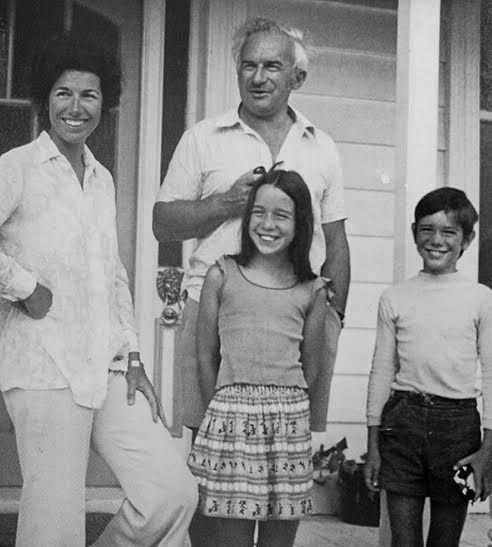
    Shirley took this picture as we said goodby to them

    Another instalment of my autobiography before I revert to my normal blogs

    The atmosphere in the Supreme Court shocked me. The Chief Justice seemed to be in a towering rage all the time, and there was a sense of apprehension in the court. Outside the glass doors at the end of the room a man was hovering. The Chief Justice caught sight of him, and loudly instructed a court official to tell him to take his hat off or go away. And that was the sort of irrational domineering energy with which the whole judicial procedure was conducted.

    The police and the crown prosecutor sat with a relaxed and satisfied air, confident that the findings would go their way. The Thomas family and supporters including the farmers and countrymen on the Re-Trial Committee sat and hated them. And I hated the lawyers who were not partisan, but who all knew each other, fenced with each other in court, and joked and chatted outside!

    At the end the Crown prosecutor read out his summing up from the second trial with all the lies, distortions and half truths in it which had helped to destroy Arthur Thomas’s credibility and convict him. So all through that night in his hotel room, Patrick (not the dilatory lawyers) went through it fact by fact, line by line and re-butted it all with the truth, the real facts and the new evidence which he’d published in the newspapers over the past eighteen months, and which negated the crown prosecutor’s summing up. As he wrote each page, the counsel’s secretary copied and typed it in her room.

    The four other judges (not the Chief Justice) were impressed by this prodigious achievement when Arthur’s counsel read it out in court, but it didn’t change their opinion one little bit. When their findings were published months later they had accepted that Patrick had proved his theory about the cartridge cases, but said they couldn’t rule out the possibility that there were bullets and cartridge cases in existence which could prove the Crown case. This extraordinary logic meant that Arthur Thomas remained in prison.

    The rest of the evidence, they glossed over… things like a gold watch wrongly attributed to Arthur in the first trial and covered in blood and mucus. It didn’t figure in the second trial because between trials, the real owner had contacted them to say it was his watch which he’d taken into the jeweller to have it cleaned after pig killing. Patrick learned of this when an anonymous caller rang and said, “Find Fisher”. He had no idea who Fisher was, but sleuthed and finally tracked down the owner of the watch who now lived several hundred miles away. When he went to see him, he asked Fisher if he still had the watch and they found it in his children’s toy box. The helpful mysterious caller must have been an honest policeman.

    When Arthur’s supporters including Patrick and Jim Sprott, his father, and the Chairman of the retrial Committee took the case to the Privy Council in London, the same bias operated against them… the Crown Law Office had phrased the appeal to ask for an opinion. When everyone had spent huge amounts of money getting to London, the Privy Council threw it out saying they only dealt in rulings, not opinions.

    We were all devastated, and on his return from London Patrick was instructed by his firm to stop his work on the Thomas case – it was the end of the road. But he refused saying that a thing that was wrong didn’t stop being wrong just because they hadn’t won yet. He continued to write stories and place them to keep the case in the public’s mind, and by doing so put his career on the line. We weren’t sure where to go next, but we knew we had to keep going wherever it took us.

    He wrote a book called Trial by Ambush and sent a copy to every member of Parliament. It disappeared into a pit of silence, and I suspect that none of them bothered to read it.

    While we waited for the results of the court of appeal in Wellington, and Sir Richard Wilde’s judgement, we had enjoyed our first Christmas in our new home, with Patrick’s eldest daughter, husband and grandson joining us, and also a large black and white bull which ambled through the garden and stuck his head in our open bedroom window to greet us on Christmas morning.

    With the coming of New Year Bill and Shirley now arrived to spend two days with us. Bill had to report to the police every day, so he had done this first thing in the morning before they left for us and he did so late the next day when they arrived to stay with friends the following evening. This meant, they thought, that they would have the two days with us, when the police would have no idea where they were, and the SIS would be unable to tail them.

    This was optimistic. Months later, when Patrick was discussing the trial with one of the Star’s reporters, the reporter said to him, “Of course – the Sutch’s stayed with you at New Year, didn’t they?”… which told us two things – one, that the reporter was an SIS spy, and two, that the SIS must have bugged Bill’s car, and knew exactly where he was – with us.

    My letters to Shirley and hers to me would take ten days to reach us and had obviously been steamed open. Our letters were perfectly innocent but it felt unnerving to know that we were under that level of surveillance. The two days Bill and Shirley spent with us was full of fun and laughter. The shock of the spy arrest had changed Bill, a proud and rather arrogant man – now he had become very gentle, and almost humble… Shirley was her effervescent articulate self, and their conversation was both provocative and thoughtful…

    We had a lot in common – including Quakerism, for though neither of them had a belief in God, they had many Quaker friends, and I had been an enthusiastic Quaker attender for years. ( Quakers are committed to non-violence, and a belief in the light in every man)

    Our new friends both loved the children – my son, who we jokingly called the mad gardener, who towed his collection of beloved potted plants on his trolley to different parts of the garden which he thought they’d enjoy, before leaving for school every day. Bill gave him advice on how to fix a lawn mower engine to this trolley to make it faster!

    My daughter gave them a spirited exhibition of the Maori poi dance, and began a friendship with Shirley sharing their love of art that lasted until she died. Shirley later gave her the wonderful advice that when she went to University she should choose subjects she loved not subjects which would be useful.

    We waved goodbye to our guests, who drove off to stay with a friend called John Male who was working with Quakers and other peace lovers to create the New Zealand Peace Foundation of which he became founding president… an unlikely friend, the SIS might have thought for a spy…

    Both children were learning the piano and they also wanted to learn the flute and clarinet respectively, and played duets together. We walked our dogs up the lane every day, which now included Patrick’s elegant afghan, and two Cavalier King Charles spaniels, both rescued, and both adored. It was about this time that as we were walking the dogs, my daughter said to me, “You know, most mothers think their geese will grow up to become swans, but you think we’re swans already!”

    It was true! And I loved trying to create an idyllic country life for them, going strawberry picking and blackberry hunting, making jam and bread, trying my hand at bottling fruit, crocheting counterpanes for our beds.

    We always had a holiday project, once it was applique, another time learning to write in copper plate handwriting, which was a disaster for my son, who’s deeply disturbed teacher at the village school, hated any sort of talent, and mocked him until he gave it up. Another holiday I borrowed a bike, and we explored the country roads on our bikes. We painted, and both children evolved painting what they called Happy Cards, some of which went to Oi, while others ended up in Arthur Thomas’s cell in Paremoremo Maximum Security Prison, two and a half hour’s drive away, when we all visited him.

    The children also created Happy Boxes, in which valued objects from shells to cards, photos, letters and other treasures were stored. These began as painted shoe boxes, but as time went by, both children used Christmas money to buy themselves a beautiful antique box each for their collections.

    When they’d done their homework and their music practise, I used to read aloud to everyone every night – one husband, two children, and three dogs in the audience – starting with ‘The Little Prince,’ laughing over Toad in ‘The Wind in the Willows,’ agonising over the fate of Boxer being carted off in ‘Animal Farm’, crying our eyes out when Dora died in ‘David Copperfield’, while the death of Gyp, her beloved Cavalier King Charles spaniel, delivered the coup de grace to us all. We ended this ritual with Doris Lessing’s ‘Shikasta’ when my son was sixteen.

    These were good days and though there were many challenges to come, we all had enough belief in what we were doing to carry us through… challenges which included my car crash, a price on Patrick’s head, and the ignominy of never winning a prize at the annual Flower Show!

    To be continued.

    Food for Threadbare Gourmets After supper the other night I had the plate of ginger, dates, walnuts and dried figs leftover which we had grazed on instead of pudding. And all the packets containing them were open. So I decided to make one of my favourite cakes.

    A reader gave me the recipe forty years ago, and even drove all the way out to our house with a sample cake. I’ve made it ever since ! The basic ingredients are a pound of dried fruit to two cups of flour, half a pound of butter, three eggs, a cup or more of sugar, and a teasp of vanilla, almond essence and orange essence.

    But I have played with it and added to it, and each batch is different to the last. I usually add a bit more fruit, and sometimes a dollop of golden syrup as well as the sugar, which is always brown. If I have bits of apricot jam, ginger marmalade or honey sitting in the bottom of jars they go in too… sometimes I do half butter, half oil… sometimes a cup of whole meal instead of all SR flour or a cup of almond meal with all the flour.

    This time, the fruit consisted of all the stuff I’d already opened, chopped small, plus a good cup and a half of sultanas, some chopped prunes, and the remains of some Christmas mince which I found in the back of the fridge, and still seemed good to go. Boil the fruit in a cup or more of water. Add the sugar, golden syrup and such-like, then the butter/and or oil. When the mixture has cooled slightly, stir in the beaten eggs one at a time, and the essences. Finally the flour.

    If I’ve added more fruit, and all the other ingredients, I’ll often have topped up more butter, another egg and more sugar, which means at this stage, more flour. I simply add enough to make a firm consistency. It’s as though you can’t go wrong with this cake. Poured into a couple of greased cake tins, lined with greaseproof paper, I often arrange crystallised ginger on the top, and sprinkle sugar to give it a sweet topping (if I’m going to over-indulge in cake then I want it sweet). I often use loaf tins instead of traditional round cake tins.

    If I use this for a Christmas cake then obviously, I top it with marzipan but not always icing… Place in a moderate oven to cook for an hour or until the skewer comes out clean. Cool in the tin, and then, if I’ve made two, one is wrapped in foil and a plastic bag, cut in three and put in the deep freeze for future use when someone calls.

    Food for Thought

    Some fun from Isaac Asimov:

    People who think they know everything are a great annoyance to those of us who do.

  • A Good Man Does Something

    Illustration from the post “A Good Man Does Something”

    Another instalment of my autobiography before I revert to my normal blogs

    In the first few weeks after arriving in New Zealand, before starting my new job, I listened to the radio in John’s little home, trying to get the hang of this new society. I heard one item which seemed to rivet the whole crime-free nation… about a farmer and his wife, Harvey and Jeannette Crewe who had disappeared, and now their bodies had been found in the Waikato river.

    Some time later, I learned with everyone else, that another farmer had been arrested for their murders. I never read crime pages, so knew no more. In the meant- time I was settling into my new life and my new job, and eventually, new relationship. I learned later that the Assistant Editor had said to himself at the end of my surprisingly long job interview – “Watch it Booth,”

    But he hadn’t, and we became – I thought – good friends on the strength of his frequent trips to my typewriter bearing cables from all over the world that he thought would interest me. Everyone else was apparently aware of the situation, but I counted him among my other visitors.

    But when at the end of my first year in the job, I heard that he was leaving to go and try to resurrect a rather boring Catholic newspaper, I felt a sudden sense of abandonment, and realised that I’d come to rely on his support and friendship. When I told him how I felt, the friendship moved to another level, except that I also told him that if he didn’t feel he could tell his wife about meeting me, then it wasn’t ok.

    I had no intention of breaking up a marriage, even though I knew it had limped on since a drama five years before I arrived in the country. My words, plus domestic dramas, the stress of his newspaper, and collision with the Bishop and Catholic church, caused him to end up in the heart unit of Auckland hospital. During the next ten days, as he struggled with life, I realised I loved him, and that he might die and I’d never even held hands with him.

    When he came out of hospital we came to an agreement. He’d decided to separate from his wife and we would eventually marry. So we did. He resigned from the Catholic newspaper and the Auckland Star took him back with open arms. At the same time, the news item I’d heard on the radio two years before suddenly assumed significance. Arthur Thomas, the farmer convicted of the double murder had many supporters who were convinced that he was innocent.

    They had formed what was called The Arthur Thomas Re-Trial Committee, and had managed to get the case re-heard by several judges, and finally won a second trial for Arthur Thomas. On the strength of the evidence, Pat Booth was convinced that he would be found not- guilty, and released. He decided to get Thomas’s story and negotiate for it himself, so attended some days at the Supreme Court.

    He began to feel troubled by the atmosphere in the court – prosecution versus Thomas supporters. The day the verdict was due, he was going home, and decided if he saw a parking space, he’d stop and go in.

    There was. He did. He arrived as the jury delivered their verdict of Guilty. The uproar that broke out, rage, despair, wails, screams, shouts, tears, Vivien Thomas, his wife, running down the court to face the jury crying “What sort of people are you? he’s innocent,” and Arthur Thomas’s mother’s anguished cry “There is no justice here” shocked him profoundly. He came home very upset, and said he would have to investigate what was behind all this.

    As he’d watched and listened in the last few days of the trial he’d become convinced that this was no impartial justice involving police, lawyers and judges, but an un-equal struggle between the power of the State and an individual with one hand tied behind his back. He’d watched the way the family were victimised, their seats in the public gallery taken from them and a burly policeman sitting in the seat where Arthur’s mother sat so she could see him.

    Arthur was bullied and harassed in cross questioning – instructed to answer yes or no when neither response was correct, and when to answer that way would be to fall into a carefully prepared trap which Thomas could see for himself, but got no protection from his pleasant but bumbling lawyer.

    So began seven years of study, investigation, travel all over the world, interviews, police harassment, hostility from many sections of society especially the police and the legal profession, and even phone-tapping.

    The police soon realised that Patrick was investigating their work, and strange things began to happen. The first was my beautiful leather brief case being stolen from my parked car… the thieves obviously thought it was Patrick’s, having discovered where we lived. The next thing was waking in the night, and seeing a tall man in a grey suit with a stocking over his head at the foot of our bed, as he reached into where Patrick’s suit jacket was hanging in the wardrobe. I sat up and cried out: “there’s a man in the room” and he bolted, blundering into my daughter’s bedroom on the way to the front door.

    Patrick raced after him, but the man disappeared into the Domain. I was just ringing the police, when he returned. Don’t bother he said – that WAS the police. In the mean-time, Patrick had contacted the forensic scientist for the defence, Dr Jim Sprott, who had had his theory about the bullets that killed the Crewe husband and wife, shot down in court.

    Patrick had the cartridge cases that were supposed to be from bullets which had killed the couple blown up in the newspaper darkroom. The photos showed that the cartridge cases had different markings stamped on the base. This was crucial, because these markings showed the date the cartridge cases had been made, and they didn’t match the year when the No 8 bullets found in the bodies had been made. This proved that it was impossible for the cartridge cases and the bullets ever to have been together . This discrepancy was at the heart of the case.

    The cartridge cases had been found in the murdered couple’s garden three months after it had been strip-searched, and so it was something of a ‘miracle’ when the police found them. By ‘finding’ them they were able to match them to the marks made by Arthur Thomas’ rifle, the person they’d already decided was the guilty man.

    He lived happily on his farm with his wife Vivien, ten miles away. In his youth he had had a crush on Jeanette Crewe, and the police had decided that over ten years later, maddened by jealousy of her husband of several years, he’d travelled across country on a bitter rainy winter’s night, and shot them both through the window. He then returned to his wife’s warm bed ! His alibi was that he was in his cow-shed tending to a sick cow, and his wife’s testimony was discounted.

    Patrick’s investigations showed that many small but incriminating details had been tweaked, altered or omitted between the first and second trials by both police and crown prosecutor in order to secure a guilty verdict. The collaboration between Patrick and Jim Sprott whose professional reputation was at stake, was an intricate detective story in itself.

    It took them to the ICI ammunition factory in Melbourne where, by tracing ten- year- old manufacturing records, they demonstrated to the company the distinctive wear marks of the stamps on the bottom of the cartridge cases which could chart the dates of their manufacture. ICI became fascinated by the course of the story, as were many others.

    Patrick had already written a damning book in a few weeks, but his publisher’s legal counsel advised against publishing the manuscript. So in a couple of days he reduced the incriminating story to ten newspaper articles which were then taken up and published all over the country. They caused an uproar. No-one had ever queried or criticised the legal profession or the police in this peaceful law-abiding country, and many people were now shocked and disquieted.

    The legal profession and the judges were up in arms, protecting their profession, but the attorney general ordered the case to go to the Court of Appeal while Patrick and Jim were in Australia. It looked like a victory and I rang to tell him. Then it was disclosed that the police had removed the vital cartridge cases from the Police Museum and buried them outside Auckland in a rubbish tip of several hundred acres. Strangely they were never called to account for this obstructive action.

    By now we had moved to the country, and we discovered that both our phones, and Jim Sprott’s were being tapped. When a technician checked our lines for repair and found a double jumper on them at the exchange, we knew we had been spied on. We felt we were under constant surveillance. Witnesses who Patrick interviewed were also visited by the police afterwards and told their evidence was not needed and therefore they did not have to go to the Court of Appeal.

    Every visit Patrick made to CAC, the ammunition manufacturers in Auckland, was followed by a visit from the police, attempting to silence them, while obstacles were continually put in Patrick’s way, even when they went to Australia. And twenty-six thousand cartridges from all over the country were sent to him and Jim Sprott for them to verify their theory by inspecting the bases of the cartridges cases. Even I became an expert, and could look at the bottom and identify them – Big C, Little C, depending on the date of manufacture.

    The case dominated our family life for the next eight years. Even the children were caught up in fall-out at school, where other children parroted their parent’s responses to Patrick’s ‘trouble- making’ work’, while at a Royal garden party, a judge cut us dead, turned his back and walked away when we were introduced as we chatted on the lawns of Government House.

    Most disheartening of all was to discover that the Crown Law Office had framed the questions to be answered at the new Court of Appeal in such a way that Patrick and the Re-Trial Committee and lawyers had no way of making their points. It looked as though the Establishment were once again conspiring to make sure that Arthur Thomas would continue serving his unjust life sentence.

    To be continued

    Food for Threadbare Gourmets

    Still wanting nice hot puddings during our winter chill, I decided on that wonderful easy self-saucing chocolate pudding. Beat three -quarters of a cup of castor sugar with a hundred gms of butter, and then add the yolks of three eggs one at a time. Add three level tablespoons of SR flour and two hundred gms of melted chocolate. Gently stir in two cups of milk. Beat three egg whites with a pinch of salt until stiff and gently fold into the chocolate mixture. Pour into a buttered two litre pie dish and cook in the centre of the oven at 180 degrees for forty- five minutes.

    It rises like a soufle, and underneath the dark chocolate top is a soft sauce. Good with cream and poached pears too, if you feel like pushing the boat out!

    Food for Thought

    All that is necessary for the triumph of evil is for good men to do nothing. Edmund Burke*

    I’d always thought that Burke said these words…. but apparently not according to one of my readers. However, Burke does imply the same thing in some of his writing …

  • Chickens coming home to roost

    Illustration from the post “Chickens coming home to roost”

    Nobel prize-winner Malala Yousafzai

    I’ve wondered why I’ve been so fascinated by it. I normally never read the news, especially salacious negative or destructive items, but I’ve been rivetted to the Harvey Weinstein story.

    As I finished the washing up after lunch today, I realised why, and what I’ve been trying not to remember… all those times it was happening every day and as part of life when I was growing up.

    I thought of the maths teacher when I was fourteen. When I started this school, my new friends warned me that when he called me out to his desk to go over some maths problem, he would run his hand up under my gym slip, and massage my thigh. Whether the massaging was more than that and my friends couldn’t bring themselves to say, I don’t know, because I was a very immature, slow developer, and he never tried it on me.

    I remembered joining the army when I was eighteen, and being measured for my uniform by the regimental tailor. Afterwards when we compared notes back in the barrack room, we all found we’d had the same experience of him feeling our breasts as he took our measurements. And I thought of a night at cadet school a few months later, when eleven of us were sitting around late at night over a cup of hot chocolate, and we discovered that nine out of the eleven of us had had the experience of a man exposing his hairy genitals to us as a child.

    The following year one of us who had been to a wedding in Scotland, was raped in the sleeper on the train back from Edinburgh. Jo – as I’ll call her – a gentle sweet-natured girl, was so intimidated by the notice which said the fine was five pounds for pulling the emergency chain un-necessarily, that she didn’t dare reach over to pull it and save herself.

    There were plenty of us who felt intimidated like that back in the fifties and sixties. When I worked on the South China Morning Post in Hongkong supporting my children on my meagre pay, the managers brought in a time and motion expert from the UK to assess whose job was necessary or financially worthwhile. The expert took a fancy to me, and I was over a barrel between trying to avoid him by fleeing the office and inventing interviews, and being seen conscientiously bending over my type-writer justifying my existence and my salary.

    It became a joke on the women’s page that he was always asking where I was, but it was no joke to me. Finally, I could avoid having dinner with this married man having a bit of fun while he was away from his family no longer, and at the end of the evening, feeling completely powerless, I ended up on the sofa at his flat. I escaped as he undid his zipper, and then had the anguish for weeks of wondering if, when he wrote his report, I would still have a job.

    I’ve often wondered since why I didn’t just say no thank you when he pressed me to go up to his flat after dinner, replying:’ I have to get my children up for school in the morning, and get to the office on time!’ End of story. But I was too fearful then of men’s power as I battled for custody of my children, and struggled to keep my job.

    Just as when the editor sent me to interview a friend of his a few weeks later, and the blonde handsome Swede behaved as though I was a call girl. Once again, as I escaped his clutches, I knew it was no use complaining to the editor about his influential friend… I would just have been a trouble maker, who couldn’t take it. I wasn’t just trying to get a job like the Hollywood stars I’ve been reading about, I was trying to keep a job which paid me half what a man was paid, in order to house and feed my children.

    The choices are just as bad for so many women even now… there are Filipino maids all over the world putting up with all sorts of forms of exploitation and wicked treatment because their families are relying on the money they send home. I read that it is now illegal for men in India to rape their teenage or child wives. But how many child brides know their rights, and how many would dare to offend a strong powerful man who had total power over her life?

    There are women and children both in Africa and England and everywhere in between, who endure the horrors of Sharia law, which often includes genital mutilation. There are states in a western country like the US where it’s legal for a husband to beat his wife, while both fundamental Muslims as well as fundamental Christians also claim this right. And many women stay in abusive relationships in order to protect their children and try to bring them up, while leaving a violent marriage simply isn’t a financial possibility for too many other women.

    So-called honour killings – when a woman or a girl has been raped – means that in many Muslim countries, it is the woman who is punished for the crime – often with death by stoning or barbaric whipping. That old joke, a woman’s place is in the wrong, is no joke in those countries. Yazidi women raped by Isis, school girls captured by Boko Haram soldiers, women forced to hide behind, and under, curtains of black material invented by men to deny their uniqueness, are up against something much worse than the harassment of Hollywood actresses and their fear for their careers that we’ve been reading about.

    Nobel peace prize-winner Malala Yousafzai was a school-girl when she was shot by Taliban in Pakistan for advocating education for women. Since then, she’s recovered from her dreadful wounds, though she’s lost the hearing in one ear. She went to England for medical treatment and to be educated safely away from the murderous men who wanted her dead, and now she’s just started her degree studies at Oxford. She has never given up her cause, and says: “I raise up my voice – not so I can shout but so that those without a voice can be heard…we cannot succeed when half of us are held back.”

    There are unheard voices all over the world, and if this scandal about harassed actresses can remind us of those other unseen, unheard women, it will be a service to them all. Because I’m human it feels good to know that one bully is being held to account for his actions, but the other part of me wants to feel that something good can also come out of this story of human frailty.

    When truth is revealed it can be the catalyst for change. I hope this story is big news everywhere, so that people everywhere get the message that it’s not okay to misuse power and terrify or deprive women; that they learn that women do have the right to all the freedoms and goodness in the world that men enjoy too. Let’s hope that this change of heart and mind can work its way into the consciousness of all men everywhere because of the public downfall of one powerful man.

    Not into the consciousness of the many good men who do care about women, but into the hearts and minds of men whose cultures have taught them that it’s okay or even de rigeuer to oppress and suppress the feminine – whether it’s their wives or daughters or other women, or the feminine in their own natures. The qualities of the feminine – gentleness, nurturing, empathy, creativity, are the things that most of us want in our homes and families, and societies, as well as the masculine qualities of strength and power. Balance, wholeness, the middle way, are what makes for health in people and in societies and honouring both sides of our natures is the way to this balance and goodness.

    A tacky scandal in the western world of entertainment may seem trivial when set against the appalling suffering of so many silenced women all over the rest of the world. But good can come out of this saga of silence if it causes a change of heart and mind beyond the homes and habitats of Hollywood and its power brokers. I do so hope so.

    Food for threadbare gourmets

    Spring is coming to this end of the world and I feel like different food. With cold chicken the other day I used a favourite way with avocado. To half a cup each of chopped avocado and cucumber, use three quarters of a cup of cream, a quarter of a cup of lemon juice, one finely chopped onion, two cloves of chopped garlic, salt and black pepper, and put it all in a blender. Whizz until smooth. I love this with raw or cooked vegetables as well as with chicken, cold turkey or ham.

    Food for thought

    “Feminism has never been about getting a job for one woman. It’s about making life more fair for women everywhere. It’s not about a piece of the existing pie; there are too many of us for that. It’s about baking a new pie.” Gloria Steinem

  • Saving the West

    Illustration from the post “Saving the West”

    Hastings

    We’ve been re-watching a favourite TV series on Youtube from some years back… Foyle’s War. Unlike real life, it’s one of those satisfying forms of entertainment in which the baddies always get their come-uppance, and the goodies triumph – hurray !

    Second time around I relish the masterly performances by actors at the top of their art…and notice many little quirks and anachronisms I’d missed first time around. But this time, I’m really aware of Foyle in a way I hadn’t been before. Much water has passed under the bridge since the years when this series – a favourite with watchers on both sides of the Atlantic – was created.

    And since then the world has changed in so many ways, which include the upsurge of terrorism with the advent of Isis, the unprecedented invasion of Europe by another culture – not just by refugees – but by armies of young men from third world countries looking to improve their lot and enjoy the largesse of western society; and many other factors like the spread of sex changes even among young school children, drunkenness among women in the UK on a scale unheard of previously, homelessness on the streets of many towns and cities, plus the religion of political correctness which means that on Twitter, another new arrival, people can be metaphorically crucified for using the wrong word…

    I try not to equate the pictures of society men and women at various depraved looking parties where guests are encouraged to personify ’filth’, the photos of young people on the streets reduced to zombies by killer drugs, and stories about university students who feel it’s Ok to sue their instructors for not helping them get better grades, with the decline and fall of the Roman Empire… Society collapsed then for many reasons, not least the gulf between rich and poor, and the bacchanalian orgies of self- indulgence which we see today with the zillion dollar superyachts, and four or five day weddings of the rich and famous costing millions of pound/dollars, typical of the Roman over-indulgence and selfish hedonism in the last years of that Empire.

    Christopher Foyle, the detective chief living in Hastings, the pretty coastal town where William the Conqueror landed, and defeated the defending Anglo-Saxon army in 1066, reminds me of some of the qualities of civilisation that I sometimes fear that Western culture is forgetting. While all around – to mis-quote Kipling – are losing their heads, failing to take responsibility, and blaming the war for profiteering, dishonesty of various degrees, for petty crime, spying, revenge and murder, Foyle remains incorruptible, refusing to cede one iota of the rule of law, built up over the centuries by generations of lawgivers and members of Parliament to create a fair and decent society.

    He’s an ordinary person in every way, laconic, kind, and generous, but implacable when it comes to refusing to accept wrong in any form, never sparing family, friends and colleagues, as well as law breakers. He reminds me of Marcus Aurelius’s words: “Whatever anyone does or says, I must be emerald and keep my colour.” He keeps his colour no matter who around him is losing their integrity, and integrity is the word which most describes the quality that is Foyle.

    Winston Churchill once said of Ernest Bevin, the great post-war Labour foreign secretary that: ‘he had many of the strongest characteristics of the English race. His manliness, his common sense, his … simplicity, sturdiness and kind heart, easy geniality and generosity, all are qualities which we who live in the southern part of this famous island regard with admiration.’

    He called him a great man, and by that measure, so is Foyle. Why do I dwell on this fictional character in a long running detective series – the only one I’ve ever watched since murder, mayhem and mystery don’t tickle my fancy? I do so because this sort of person was not so rare as to be unusual many years ago. I can think back to many fine characters who people the English way of life – the only one I can write about with any knowledge.

    People like the great statesman and gentle man, Edward Balfour, noble Sir Edward Grey, foreign secretary who tried to be peacemaker before World War One, to the thoroughly honest, decent, modest man who succeeded Churchill as prime minister – Clement Atlee. Honest politicians were not so unusual back then. They upheld the values of civilisation without even considering that by living lives of integrity this was what they were doing. And every person, however unknown, living such a life, is still today, of inestimable value to their society and civilisation.

    Kenneth Clark at the end of his magisterial book ‘Civilisation’, wrote he believed: “that order is better than chaos, creation better than destruction. I prefer gentleness to violence, forgiveness to vendetta… I think that knowledge is better than ignorance and I am sure that human sympathy is more valuable than ideology… I believe in courtesy, the ritual by which we avoid hurting other people’s feelings by satisfying our own egos. And I think we should remember that we are part of a great whole, which for convenience we call nature. All living things are our brothers and sisters.”

    He goes on to say that it is a lack of confidence more than anything else which kills a civilisation, and that we can destroy ourselves by cynicism and disillusion. And this to me is what Foyle is all about. He never succumbs to cynicism and disillusion, but sticks to the great truths of kindness, justice, the rule of law, compassion and courtesy. These are the qualities which can preserve and save our civilisation, despite the depravity of the rich few, and the hopelessness of the homeless and deprived.

    Western civilisation, with its ideals of freedom, kindness, fairness, justice for all, value for learning and for literature, for art, music and science, our recognition of the rights of all people and all races, and for all creatures; our care for the environment and for those who need protection, is a way of life worth preserving.

    If we do believe this and do not succumb to the belief that we have to cede these freedoms and rights to other cultures and customs which deprive others of freedom, dignity and the right to happiness, cultures which dictate how people should think, what they should wear, and mutilate women in the belief that a Creator demands this, we can still save our own way of life – what one blogger calls ‘the True West” in Arthurian/Camelot terms.

    We can still bequeath peace and harmony to our children and grandchildren, and we can try to share these blessings with all people. We can continue to believe in those great words from the American Declaration of Independence written in 1776, that: ‘all men are created equal, that they are endowed by their Creator with certain unalienable Rights, that among these are Life, Liberty and the pursuit of Happiness’.

    Tolkien defines the task for us in the Lord of the Rings, his epic about saving civilisation: ‘I wish it need not have happened in my time,’ said Frodo. ‘So do I,’ said Gandalf, ‘and so do all who live to see such times. But that is not for them to decide. All we have to decide is what to do with the time that is given us.’

    Food for threadbare gourmets

    Cakes- easy ones. This is one of my favourites – combining lemons with the easiest method ever. I adapted it from one of Elizabeth Luard’s recipes, and use 175 gms of SR flour, 175 gms of sugar and the same of mild olive oil, three eggs, pinch of salt and zest and juice of a lemon. I also add a teasp of vanilla into this mix in memory of my grandmother who always used vanilla in her cakes. Stir it all together and tip into a greased lined loaf tin, and sprinkle a generous helping of caster sugar on top. Cook in a moderate oven for about forty minutes or until ready.

    Food for thought

    Even as our few remaining wilderness areas are threatened, each day more of us venture into these beautiful landscapes to experience the energy for ourselves. And, immersed in the natural rhythms of the earth and the wind and the sky, our minds relax and we view our lives with quiet perspective. We can see our paths and can recognise the synchronicity that has guided our footsteps. James Redfield from The Tenth Insight

  • Religion, relevance and Planet Earth

    Image result for bishops rings images Bishop’s ring

    ( this is a bit of fun, with a serious twist at the end )

    Religion doesn’t get a very good press these days… too often associated with bishops covering up the unsavoury misdemeanours of their juniors, or straying into politics and alienating those who don’t agree with them.

    I have memories of bishops before these trendy chaps (rarely women) strayed from their narrow paths of bland conformity. Trollope’s Bishop Proudie was the first bishop I felt I knew… timid and hen-pecked husband of the redoubtable and unforgettable Mrs Proudie, the undefeated power behind the episcopal throne of fictional, but very believable Barchester Towers.

    But my first actual encounter with a bishop was in Salisbury Cathedral when I was fourteen. I was there with a dozen others to be confirmed in a small private ceremony. My parents had given up on the church some years previously, were late arriving, and kept the bishop waiting for them. Then my stepmother, who had a talent for easing sticky social occasions with gay laughter and light- hearted jokes, scandalised the waiting bishop by joking that they’d given him plenty of time to have a quick tipple of the communion wine. Which my father told me afterwards, went down like a ton of bricks.

    Maybe, I thought later, this explained why no beam of golden light shone down on my head when the grumpy bishop laid his hands on it, and I had felt no magic sense of godliness or even goodness. Instead I embarked on a career of crashing down heavily in a faint on the stone floor in church during communion, and returning home with bruised swollen jaw, black eyes and the rest, until my stepmother insisted on me having breakfast before I left.

    Bishops were not in evidence during my years in the army, but once married to a vicar’s son I had an inside look at the workings of the Anglican religion… and charity forbids me to say more. While in Hongkong bishops became part of my life for a brief season. Bishop Hall, an intrepid son of the church who’d retaliated to Japanese invasion by ordaining a Chinese lady as vicar to secretly tend his bereft flock in Macao, handed over to a more prosaic, but kindly man while I was there.

    And while the Archbishop of Canterbury back in England and safely out of reach of the brutal Japanese invaders, had unfrocked the poor Chinese lady vicar, this bishop managed to get two women into the ministry while they were still arguing about ordaining women in England years later…

    I got to know Bishop Baker quite well, when his interesting and strong minded American wife (a power behind the throne, but not in the same class as Mrs Proudie) approached me to offer a part-time job as a PR consultant for the Anglican diocese in Hongkong. This entailed going to an office in Bishop’s House every morning, and twiddling my thumbs, before going to my day job on the newspaper, unless I had a depressing visit to the teeming slums of Kowloon with a visiting Anglican dignitary that I could write about and slip into the South China Morning Post.

    There was also the monthly purgatory of the parish breakfast, when all the diocese clerics – mostly non- English- speaking Chinese gentlemen, gathered for a jolly brotherly breakfast in the cathedral hall. I was required to attend and try to mingle… the only redeeming feature of the occasion being the freshly baked and delicious bread rolls carted over from Macao by a generous cleric.

    I only lasted for six months in this extra-mural job, badly though I needed the money… but I couldn’t go on pretending to be enthusiastic about the church to the kindly bishop’s wife.

    For the next few years, both in Hongkong, and then in New Zealand deans were more likely to cross my path than bishops, though thanks to my friendship with his wife, I knew a Maori vicar who shot up the ladder of promotion to become Archbishop of New Zealand. He then ditched his churchly purple and bishop’s gold regalia to climb to even higher things, the political appointment of a Maori as Governor- General. I suppose even an archbishop found the lure of a knighthood and visits to and from the Queen more attractive than rubbing shoulders with his Maker. And being referred to as His Excellency must have been more exalting than a mere His Grace…

    So thanks to him, my last encounter with a bishop was a beaut, as they say in Australia. His Excellency invited us to a ceremonious, but small and intimate dinner at Government House, where we rubbed shoulders with half a dozen illustrious citizens, among whom was the conqueror of Everest, Sir Edmund Hillary. The Gov-General/ ex-Archbishop of New Zealand, had invited one of his old buddies to this occasion, and I was sitting next to him. He was the Archbishop of New York, a tall, somewhat dour personage who took due note of the fact that he had been tactlessly seated opposite a large dominating portrait of George III – still not a popular personage in the US – even though the poor chap had lived over two hundred years ago…

    During the grand and boring meal, I became conscious that the Gov-General’s corgi was roaming the carpet under the table. So I slipped him a morsel of my bread roll and he thus became a fixture at my feet. As the meal progressed he and I became more and more friendly. Come the cheese course, I ran out of cheese biscuits to give him, so I turned to his Grace, the Archbishop, and asked him for one of his, lying un-eaten on his plate.

    He obviously didn’t hear me, so I tried again, but he still seemed not to have heard. Never one to be deterred, and thinking my neighbour must suffer from deafness, I repeated quite loudly for the third time, the request for a biscuit for the corgi. At which the august personage turned to me and snapped: “I heard you the first time – and NO !”

    I was staggered, was there no milk of human kindness running in those American veins? Maybe it was because he was not English, and didn’t care for dogs. But did he have no chivalry either – to refuse a lady – or no good manners? Certainly, no charm.

    Bishops, it seems, are not what they once were… instead of dwelling quietly behind their splendid palace walls waiting to have their amethyst and gold rings kissed, they now make controversial statements, enjoy the worldly pleasures of hobnobbing with celebrities, and much more interesting, some are now taking part in an experiment to see if taking drugs increases levels of mystical experience. This experiment includes leaders of most faiths, except for those who refused – those who follow Islam and Hinduism. Presumably Hindus already know about these things with their centuries of meditation and mysticism – Islam – who knows?

    The participants report that the experiment so far has made them more tolerant and open to other faiths. How amazing that religious leaders could be so bigoted that they would think that the Maker of Heaven and Earth would care whether they used a rosary to pray, thought sex was not for making love but for making babies, wore a tiny scrap of fabric on the back of their head, or thought that only their founder knew the truth, and therefore everyone else deserved to be killed. How amazing that each religion should seriously think they have the only direct line to the Creator and that everyone else is wrong or deluding themselves.

    The Quaker silence has felt the holiest religious gathering I’ve attended. Like the Baha’i faith, Quakers – or Friends as they call themselves – accept that there are many paths to heaven, and that no beliefs are more ‘right’ than others. They respect all people. Genuine Quakers don’t have bishops. Instead, every year each meeting elects twelve elders. They meet once a month to work out the running of the meeting, and if all the elders do not agree, then no decision is reached at that meeting or succeeding meetings. Until there is consensus, no action is taken.

    This seems to me to be the ideal way for Planet Earth to run its affairs. Twelve good women and men, idealistic and practical, experienced and knowledgeable, paid a pittance so that no ambition mars their decisions, and elected every couple of years from the four corners of the world so they can’t make the post a career, but elect to serve as a privilege – surely this could be a true meeting of nations which would work for the good of mankind.

    No more fingers on triggers, knee jerk threats, old enmities, or profit-driven exploitation, but cooperation, peace, justice and mechanisms to make life worthwhile not just for all members of the human race, but also for ‘all creatures that on earth do dwell’, to slightly adapt the words of a Protestant hymn sung since 1561. This could be: ’a new order of the ages’, in pre-Christian Virgil’s words, words which are also the words of the motto on the Great Seal of the United States – and worth remembering in our so- called New Age. As US President John F Kennedy said: ‘Our most basic common link is that we all inhabit this planet. We all breathe the same air. We all cherish our children’s future. And we are all mortal.”

    Food for threadbare gourmets

    I love leftovers… they are often tastier than first time round food. So when I had some mince from spaghetti bolognaise, but not enough to make a lasagne with, I turned to my tried and true method of stretching leftovers. I made some pancakes again, as in the recipe in blog called ‘Do we have a choice between technology and love’. and made a really tasty cheese sauce, with plenty of cheese in it.

    Spread some meat in each pancake, roll it in three, and place in an ovenproof dish. Pour the cheese sauce over the pancakes, and heat up, gently browning the sauce topping. With salad or vegetables – delicious.

    Food for thought

    I am neither in temple nor in mosque: I am neither in Kaaba nor in Kailash: Neither am I in rites and ceremonies, nor in Yoga and renunciation. If thou art a true seeker, thou shalt at once see Me: thou shalt meet Me in a moment of time. Kabir, Sufi poet 1440-1518

  • Do we have a choice between technology or love?

    Am I a dinosaur – surely not … or a flat earther – perish the thought … or maybe a Luddite… perhaps!

    Illustration from the post “Do we have a choice between technology or love?”

    I’ve just been reading about the latest ideas in schooling… apparently instead of teaching children to spit out facts like a computer, we should be teaching them the six C’s. They are defined as collaboration, communication, content, critical thinking, creative innovation and confidence – listed in order of importance.

    And this is why I sometimes feel as though I was born into the Stone Age or something similar… I’m not even sure the people who taught me had even heard of the now unfashionable 3R’s. And my grandmother, a Victorian, was firmly of the belief that if I could read, there was nothing I couldn’t learn… but she had probably never heard of calculus, Einstein’s theory, or even Pythagoras, though she was a mathematical whizz unlike her grand-daughter.

    I look back to my school days, when I was so shy and retiring that it actually never occurred to me to tell the infant teacher I could read, so I spent the first year in total boredom chanting letters of the alphabet with everyone else, and following rudimentary stories on an illustrated frieze around the classroom wall. I remember feeling indignant too, when a girl called Manon Tipper started, and the teacher told the rest of my awed classmates that Manon’s parents were teachers and had taught her to read. So can I, I remember thinking to myself.

    Things looked up the next year with a wonderful history teacher who galloped through the Ice Age, the Beaker people, Romans, right up Henry V in enthralling lessons that I soaked up, getting ten out of ten on the narrow strip of torn off paper (no exercise books because of the war) on which we wrote short answers to his questions at the beginning of every lesson.

    The art lessons were a disappointment to my way of thinking. Lesson one was learning to draw a straight line using short feather strokes. This skill acquired by the class of restless six- year olds, we went on to mastering the perspective of drawing a rectangular box in succeeding lessons. Then the joy of bursting out into colour arrived (no finger painting for us) we had to bring a mottled, spotty, yellowy -green laurel leaf to school, to paint it, red berries and all. But our uncooperative front garden hedge had no berries, so no red for me. I think we were learning to observe as well as train the hand and eye…

    Besides the boring, daily chanting of the times tables, (which has stood me in good stead!) we had a bout of mental arithmetic which I hated, but I quite enjoyed learning to write the copper-plate handwriting demanded of us. We spent hours copying a letter of the alphabet in our printed copybooks, using a dip pen and ink – often crossing the nib during our efforts (does anyone know what a crossed nib is anymore?) Using ‘joining up’ writing, nowadays called cursive, instead of printing was a sign of maturity for us.

    A waste of time? Perhaps not – again – it taught both concentration and hand and eye coordination. And talking of such things, the boring throwing of bean bags and balancing on an upturned bench as well as bunny hops over them in our regular physical training sessions may not have been as interesting as today’s adventure playgrounds, but they did the job.

    We had singing lessons when we learned the folk songs that had been handed down for generations, as well as some of the great classics like ‘Jerusalem’, which meant that everyone could sing together like they still do at the Last Night of the Proms in London every year; and we learned poetry which trained our memories and fed our souls.

    For lack of a cell phone so we could ring each other from one end of the playground to the other as my granddaughter explained to me, we played games. We would swing a long rope and run in and out to skip until we missed a beat and tripped, or join a line of others skipping at the same time. At the same time, we chanted: ‘Wall flowers, wall flowers, growing up so high, we’re all the old ones, and we shall surely die, excepting:’ – and here we chanted the names of all the girls who were still skipping, until they tripped and fell out. We practised ball games, and at home alone, bounced it against a convenient bit of wall, swinging it under our legs or swiftly turning around, and learning to juggle two balls or more.

    We couldn’t exercise our thumb muscles the way today’s children do on their phones and game boys (which I’m told are a thousand years old now) but we learned the dozens of variations of cats cradles, and played five stones, catching them up in the air on the back of our hand, holding them between our fingers, and tossing, and catching… there were many more and more difficult variations – it took extreme skill and hours of practise and concentration – much more, it seems to me, than pressing a button on a computerised toy.

    Then there were the hopscotch crazes, chalking the squares and numbers on the playground or a pavement when we were home, hopping, jumping – more muscle skill – the marble crazes, the tatting sessions, French knitting – pushing coloured wools in and out of four tacks nailed into the top of a wooden cotton reel and making a long woollen tube (plastic reels nowadays, and useless for this ) and learning to knit properly. My grandmother taught me dozens of sewing stitches (yes, there are dozens) including hemming stitch, running stitch, herring bone, blanket, daisy chain and more.

    When we went to birthday parties we played games like musical chairs and memory games like Kim’s game (a tray of small objects displayed for a minute, then whisked away while we quickly wrote down what we’d seen. I usually won this one). And when we left after dancing Sir Roger de Coverley, the only person who had had a present was the birthday girl herself – no party bags back then..

    The difference between that rich but simple life with no TV, computer games or pop concerts, and the life of an eight-year -old today can best be illustrated by one of my first memories – watching a great tired dray horse pulling an overloaded hay wain along the narrow country lane where we lived, leaving horizontal drifts of hay draped along the high hawthorn and hazel hedges. Today I look on fields where huge green plastic rolls lie around waiting to be gathered up in the prongs of a tractor and delivered to a pile of more giant things, while farmers haven’t discovered a way of disposing or re-using the efficient, beastly plastic.

    The latest theory on education, the six C’s – collaboration, communication, content, critical thinking, creative innovation and confidence sounds wonderfully vague, and idealistic too. I’m sure creative arguments can be raised for these C- words. But I rather fancy a way of assessing children’s abilities that I read a few years ago.

    More educationalists are now taking into account other aspects of life and learning apparently, and as I remember them, apart from assessing children’s reading, writing and general knowledge, other talents are now being recognised. They included musical ability, physical skills, ethical understanding, and empathy with animals and the environment. Spiritual aptitude, which has nothing to do with religion, theology or dogma, was the last quality listed, and is perhaps the crown of a civilised life – which surely should the point of education/civilisation ….

    The qualities of genuine spiritual understanding would and could encompass many of the ideals of the six C’s, I feel. In fact, sometimes I think most of the qualities of the six C’s could be reduced to one or two simple, spiritual four-letter words, which cover sensitivity to the needs of others, and therefore collaboration, communication, content, confidence and creativity. Those two four letter words are kind and love. Kindness is easier than loving – love being the highest gift or skill or quality of all, and the simplest and most important. We ask if children are clever or talented, but do we ever ask if they are loving?

    Food for threadbare gourmets

    Deciding to fall back on my store cupboard for supper, I un-earthed a tin of pink salmon and decided to make pancakes filled with salmon. First make the pancake mixture… six ounces more or less of flour, an egg, and milk. Gently beat the egg into the flour, adding the milk in several goes. Beat until there are no lumps and leave for half an hour in the fridge. Beat again before using.

    While the pancake mixture is settling, drain off the liquid from the salmon and make a fairly thick white sauce, using the salmon juice as well as warm milk. Chop plenty of parsley and stir into the sauce, then add the salmon, salt and pepper.

    Keeping this warm, begin making the pancakes. As each is cooked, spoon some salmon mixture down the centre, and fold over each side. Sprinkle with grated parmesan, and lay on a fire-proof dish. When you’ve used up the pancake and salmon mixtures, put them in a moderate oven for a few minutes to melt the parmesan cheese, and enjoy… salad or green vegetables make this a cheap and filling meal.

    Two pancakes a person is usually more than enough… this makes five or six generously, or more if the mixture is stretched out.

    Food for thought

    Your pain is not prescribed by your creator, He is the healer thus not giver of misery. …. lay the blame where it belongs. Mankind is responsible for its environment and culture…. The day we take responsibility for our actions, will be the day God walks through the door smiling.”

    Zarina Bibi – Sufi

  • Who cares?

    Image result for images old cottages in uk

    While other squires were out raping maidens and oppressing the poor, or so legend has it, John Scrimgeour, the lord of the manor who lived at Stedham Hall, occupied himself instead with spreading cheer and happiness in the village he owned.

    At the end of Queen Victoria’s reign, he was busy putting in the village’s water supply and installed a bathhouse and a reading room for his tenants. He gave the villagers an eight-acre playing field, and he built three-bedroom houses for newlyweds.

    And when he built the houses for his parlour maids, he realised they were sited alongside the road facing east, which is one of the coldest angles in a climate like England. So he ordered them to be built end-on to the road, so they faced south. Back-to-front houses, with day-long sunshine.

    When I read the story of John Scrimgeour and his community, I felt a warm glow. But I didn’t feel a warm glow when I saw a picture of the latest super-yacht with its helipad, swimming pool, guest bed-rooms for twelve – and so on – you’ll be familiar with these sort of stories which go right back to Aristotle Onassis and his Impressionists and Old Masters dotted around the walls of his yacht… they weren’t called super-yachts back then… perhaps because they weren’t.

    I happen to know a chef on one of these floating palaces, and his stories shock me … not just the lengths he has to go to satisfy the outlandish whims of his employers and their guests, but the outrageous demands made on him too – dragged out of bed at three a.m. to rustle up bacon and eggs for a guest who can’t sleep; having to put up with the rudeness and lack of courtesy of spoiled children who complain to their autocratic parents if the staff don’t comply with their childish tantrums and demands; meals with half a dozen starters, entrees, main course, pudding and bonne bouches…

    My friend is continually head-hunted from yacht to yacht by owners who want to enjoy his expertise, so he has seen a number of these billionaire establishments, and they are all similar, with no expense spared for personal trivial self-indulgences by these newly rich billionaires.

    When I saw the picture of the latest and biggest super-yacht, my thoughts went back to a young man I saw in photos at his father’s funeral. I had already been struck by the sensitivity and goodness as well as his good looks in photos of him as godfather to Princess Charlotte of Cambridge. On the death of his father a few months ago, this twenty-six year old young man became Duke of Westminster. Not only is he now one of the richest men in England, but he inherits a dukedom with an astonishing reputation for philanthropy over several generations.

    In one impoverished area of Scotland bought by a previous Duke, he and his agent planted thousands of trees, bought a redundant fishing business, developed the harbour and established transport which created a new community, so the Duke also built a school, and gave it to the local council. There was little, if any gain to the Duke from this enterprise, which was, and still is, typical of the activities of this rich family.

    In another example the Duke bought Annacis Island in Canada and developed it, providing employment for thousands. The Dukes have given land in London to the Westminster City Council so work people could be housed near their place of work, and in the Depression they gave back fifty per cent of their rents to their tenants. Over the last seventy years this family have developed many schemes with no thought of gain – one of the most touching examples of their noblesse oblige being their generosity to Norman Tebbitt after the Brighton bombing by the IRA in 1984….

    Five members of Margaret Thatcher’s government were killed, while Tebbitt has limped ever since from his injuries, and his wife was permanently paralysed and has lived in a wheelchair ever since. The 6th Duke gave the Tebbitts a beautiful house near Parliament at a peppercorn rent (an old English term meaning literally a peppercorn) so Tebbitt could continue his ministerial duties, as well as care for his wife, and this generosity has continued ever since.

    This 6 Duke has always repudiated the word philanthropy for his activities and simply calls it ‘caring’. Now his young son has taken over this mantle of caring while his three sisters are all involved in careers which involve service to others and ’caring’. The family, whose surname is Grosvenor, has an unbroken pedigree stretching back to 1066, when Gilbert le Gros Veneur landed in England with William the Conqueror.

    th The present descendant is the inheritor of a thousand years of both riches and responsibility. How long will it take the billionaires floating around the world, to develop that same sense of caring? At this moment eight billionaires own fifty percent of the world’s riches. Some of them, like Bill and Melissa Gates, and Warren Buffet are indeed the inheritors of aristocratic generosity and responsibility, but many others seem more intent on safeguarding their gains and living as though there were no tomorrows.

    Unlike so many of the rich men of previous eras, these are men whose very businesses have nothing to plough back into the world. In previous ages, rich English landowners cared for the land, for this was where their riches came from; rich men endowed schools and art galleries, universities and homes for the poor. They supported artists, collected art, built architectural gems to live in, planted beautiful parks and gardens, and as early as seventeen hundred were opening them and sharing them with the public, just as they do now. Altruism was common when Christianity united communities.

    Today, generosity seems to be a characteristic of the internet instead, when the generosity of people with little to give when compared to the rich, becomes a groundswell of many small contributions to help individual cases of need. But the grand gifts, those that last for generations or change whole communities, as in the case of the English benefactors I’ve mentioned, don’t seem to be so common among today’s Russian oligarchs, internet moguls or mega- rich pop stars.

    There are of course, many film stars and other celebrities who do ‘care’ and who work for caring organisations and green causes, and it’s up to the rest of us to ‘care’ too, in the words of the Duke of Westminster. We CAN take responsibility, and though we think our voice or our efforts can’t make the difference we long for, this is not true.

    I do believe the inspiring words of writer, Dean Koontz, who has given over two and a half million dollars to charity: “Each smallest act of kindness reverberates across great distances and spans of time, affecting lives unknown to the one whose generous spirit was the source of this good echo, because kindness is passed on and grows each time it’s passed, until a simple courtesy becomes an act of selfless courage years later and far away … Likewise, each small meanness, each expression of hatred, each act of evil.”

    Few of us are capable of acts of evil, but it is easy to fall into the trap of hating oppressors like Assad and others. But this doesn’t help the world, while these reminders do. They sound like the perfect blueprint for the good life, be we billionaire or happy blogger!

    Food for Threadbare Gourmets

    After several episodes of global warming , or once- in-a – fifty-year storms, or Cyclone Debbie flooding, (however the weather forecasters explain it) in which we were cut off by landslips on one road, and flooding on the other, I’m planning a sort of mini- hoard for the next once -in- a -fifty year storm, whatever ‘they’ call it – iron rations, emergency rations, whatever we choose to call them.

    I searched my soul and found that there are several things I depend on… always plenty of cheese, some bacon and some Parmesan cheese in the fridge … plenty of olive oil, pasta, tins of tomatoes, and maybe minced beef in the deep freeze. With these staples, we can have spaghetti Bolognaise, lasagne, and when really up against it, pasta with butter and parmesan, or pasta with an egg, cream and Parmesan whisked together, and stirred immediately into the hot spaghetti. Simple, but one of my favourites … especially with crisp chopped bacon sprinkled on top. And there’s nothing like grilled cheese on toast when the cupboard is bare.

    Food for thought

    We can’t help everyone, but we can all help someone. Ronald Reagan

  • The kannabis trail

    Illustration from the post “The kannabis trail”

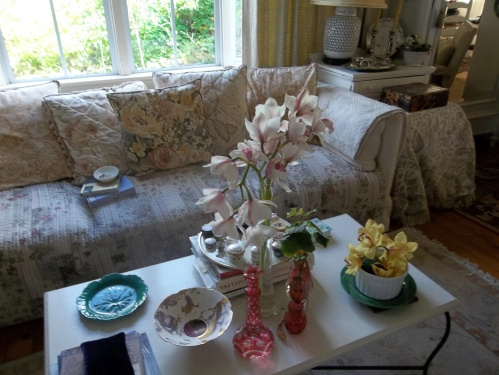
    I’m sitting on my cream sofa as I write on my little lap-top. It doesn’t need recovering, though I had these loose covers made twenty years ago … they are, you could say in that time-honoured phrase – as good as new – and have a lovely linen -like texture.

    They are made from hemp, the brother, so to speak, of marijuana. I’ve never sampled marijuana, though now that I’m getting to the end of my appointed time (maybe not) I wish I had. But in my younger days, when all around me were urging me to have a go – young lawyers, an architect, teacher, professional men – even a doctor and several nurses who dared the system – I didn’t dare.

    I feared too much that I would get caught by the punitive laws fifty years ago, and if found puffing the forbidden weed, would have my two small children taken away from me, and lose them. Though I was often subjected to constant pressure- what’s wrong with you… why are you so inhibited – the thought of my children made me adamant – no experimenting for me…

    Several things have made me change my mind now I’m past three score and ten. One was watching the moving French film and true story, ‘The Intouchables,’ and seeing the relaxed enjoyment of life that the tetraplegic experienced when his outrageous carer introduced him to pot. I was reminded of the sadness I had felt some years ago, when a tetraplegic in this country was mercilessly sentenced to prison, even though he claimed that the ‘weed’ alleviated his pain. In the past six months that I’ve been taking powerful painkillers for nerve pain in my numb foot and shin, unwelcome leftovers from my broken leg, I’ve wished that I too could take some of this helpful weed.

    The law has been changed in the last few weeks, and it is now legal for a local health board to okay the taking of medicinal marijuana in cases of need. And today I read on a Facebook this thread discussing legalising the drug:

    (It’s not as though) ‘there is … an army of NZer’s waiting to smoke it, but don’t because it’s illegal. OK! People smoke it regardless of the law. Legalizing it would put Cannabis dealers out of business, free up resources to tackle P, reduce the amount of people in prison, increase tax revenue as Cannabis could then be sold commercially under the same restrictions of alcohol, and most importantly allow hemp to be grown on large scales across the country creating jobs, and allowing NZ to produce super eco- friendly hemp products for global export.’

    Ah, this to me is the crux of the matter, because this plant has been grown and used for many purposes for over 10,000 years, according the anthropologists and others of their ilk. According to Wikipedia: ‘Cannabis is believed to be one of the oldest domesticated crops. Throughout history, humans have grown different varieties of cannabis for industrial and medical uses.

    ‘Tall, sturdy plants were grown by early civilizations to make a variety of foods, oils and textiles, such as rope and fabrics. These plants were bred with other plants with the same characteristics, leading to the type of cannabis we now know as hemp. Other plants were recognized for being psychoactive and were bred selectively for medical and religious purposes. This led to unique varieties of cannabis that we now know as marijuana.’

    According to a Canadian company that specializes in cannabis cultivation technology, ‘the core agricultural differences between medical cannabis and hemp are largely in their genetic parentage and cultivation environment.’ Apparently it’s one of the fastest growing plants and was also one of the first plants to be spun into fibre in the dawn of mankind..

    Nowadays, it can be turned into a variety of commercial items including paper, textiles like my beautiful sofa covers, clothing, biodegradable plastics, paint, insulation, biofuel, food, and animal feed. It’s been used for ropes for centuries, and animal bedding as well as feed. In France, one of the biggest producers of hemp, much of it is used to make cigarette papers.

    France, Russia, China and Canada are the biggest growers of this wonderful plant with so many uses for mankind, and yet it’s still a crime to grow it in many countries, like my own, where the law has not yet distinguished between the different types of plants- medicinal and commercial.

    Kannabis, the ancient Greeks called this ancient plant. Whenever I hear the police helicopter hovering around the sky near us, I know they are hoping to discover some illegal plots of bright green cannabis. Apparently, a local township has lived on the proceeds of this plant for years, I learned in conversation with some of the older residents who live here.

    A significant chunk of the economy of the township was based on it, and the local shops understood that the locals would run out of money until the next growing season, when the growers would pay off their accounts after the harvest. Because their livelihood was dependent on the growing of marijuana, the community fiercely resisted the highly addictive Methamphetamine- P for short – and there is apparently no P culture in the little town. It is a peaceful, unconventional community with many old- fashioned hippies!

    All these thoughts ran through my head as I sat down on my old sofa… which is older than the hemp loose covers. I bought the sofa from a friend of a friend when it was yellow and I had wanted a yellow sofa for ages. This yellow sofa was already twenty- five years old when I brought it home in triumph, and that was twenty- four years ago. I took it to be re-sprung or whatever it needed a few years ago, and the upholsterer said all it needed was new modern feet. So back home it came with its unblemished cream hemp covers to seat us for another twenty years or so.

    It had been a very expensive sofa when it was bought so many years ago, and the piped and fitted loose cream covers had cost a bomb too. They both remind me of those telling words of Benjamin Franklin who so truly said: ‘The bitterness of poor quality remains long after the sweetness of low price is forgotten.’ But I enjoy the sweetness of high quality along with the pleasures of thrift and re-cycling, and the deep satisfaction of sitting on a fabric with an ancestry as old as mankind’s.

    PS. The pic is from my old house, with a rose spattered quilt covering the cream hemp,

    Food for threadbare gourmets

    We have been enduring a horrific and un-ending storm in this country, and though we live at the top of the hill, we are trapped by a land slip one side of the road, and floods at the bottom of the other end. So I decided to cheer us up with a good lunch and try a recipe a la Annabel Langbein, a NZ Food writer.

    I had some pork belly in the deep freeze, which was defrosted overnight. After patting the crackling dry, put a couple of bay leaves and some fresh sage leaves in a baking tin, and lay the pork on top. Blitz it in a very hot oven for half an hour, and then pour in milk two thirds of the way up the meat. Reduce the heat to medium or less, and cook for at least another hour and a half, longer if the meat is not falling off the bone by then.The crackling was divine.

    We ate it with mashed potatoes beaten with lots of butter and some cream, and green beans… it went down a treat…

    Food for Thought

    Trapped in the forest by the storm, we are watching Tolkien’s ‘The Lord of the Rings’. Here is that memorable quote, when Bilbo says: … ” I wish none of this had happened. ”

    And Gandalf replies: ‘So do all who live to see such times. But that is not for them to decide. All we have to decide is what to do with the time that is given to us….’

  • The world – our village

    Illustration from the post “The world – our village”

    Whenever we hear the sound of a helicopter circling overhead, we know that someone is in trouble in our little village. The helicopter lands on the school playing field, and the one in need is whisked away to hospital.

    Last year it rescued an elderly resident who’d slipped down a cliff, the year before, a village teenager with broken legs and arms after coming off his new motor cycle.

    This time it was a profound tragedy when a young mother was suddenly rushed to hospital with a killer illness that struck out of the blue, and who only lived for another two hours. Everyone wants to surround the family and the small children with love and care and food and anything that would assuage the grief that can never be assuaged.

    That’s how a village works. When I had a car accident many years ago, the family were swamped with food and help both while I was in hospital and afterwards. My daughter- in- law has the beautiful knack of creating a village wherever she lives or works, whether it’s a block of flats and her work place in London, or her suburban street and her children’s school here in New Zealand.

    I’ve often wondered how she does it… I think it’s a mixture of care, interest in everyone around her, a willingness to become involved with their lives, and a sense of responsibility to the world and to her neighbours, however you define neighbour. And tolerance.

    I think of other villages where those were the things that not only defined the village but made them unique, and two spring to mind immediately. At a time when France allowed over 80,000 Jewish men, women and children to be deported to concentration camps, the community of Le Chambon- sur- Lignon in France hid some thousands throughout the war. This tiny community of only several thousand themselves, took Jewish children and families into their homes, and though most were poor, and hard put to feed themselves, they fed and protected their charges throughout the years of Nazi occupation.

    No-one was ever turned away. The Germans knew this was happening and several times tried to intimidate the villagers and their leader, Pastor Andre Trocme, arriving with buses to take the Jews away. Whenever the Germans came, the villagers hid their refugees in the forest, and when the Germans had left the villagers would go into the forest, and sing a song. The Jews would then emerge from their hiding place and go back to their homes in the village.

    Later one of the villagers said: “We didn’t protect the Jews because it was moral or heroic, but because it was the human thing to do”.

    One other village in Occupied Europe also did this human thing. In the tiny village of Nieuwlande in the Netherlands, every one of the one hundred and seventeen villagers took a Jewish person or family into their home and kept them safe throughout the Nazi occupation. The pastor’s son, Arnold Douwe was the moving force behind this act of compassion and unbelievable courage.

    The people in both villages showed incredible moral and heroic fortitude, not just for a day or a week or a year, but for years, never knowing how long their ordeal would last. Philosophers may argue about whether altruism exists, but as far as this naive human being is concerned, this was altruism of the highest order.

    These apparently ordinary people put themselves and their families in mortal danger, and coped with daily drudgery too – would you want the inconvenience of sharing your home with strangers indefinitely? They did this for no reward except for knowing they had done their best for other human beings, and in doing so were themselves truly human.

    Such generosity and compassion in a community can still happen. We all saw on the news the loving welcome the people of Germany offered to the tragic human beings who arrived on their doorstep in the last few days, after their months of unfathomable misery and un-imaginable hardship.

    The heart-rending picture of one small boy lying dead on a sunny beach has reached the hearts of most people in the world, and shown us once again that we really are a village. The actions of western governments and power plays of western nations have destroyed these decent, ordinary people’s lives and countries, their towns and their villages. So now perhaps it’s time for the world to remember that it is a global village, and to show with action the loving compassion of village life in societies all over the world.

    Maybe every village in the western world could pledge to share their peace and plenty with a refugee family…

    And maybe, like Cecil the Lion, whose cruel and untimely death raised the consciousness of the world about the value and nobility of animals, these terrible scenes of refugees struggling to find safety and peace for their children, will raise the consciousness of the world too. These lines of exhausted refugees, and frail boats filled with desperate families, sinking in the sea, are reminding us of our common humanity.

    They are reminding us of all that we have in common – love for our families, a love of peace, a longing for freedom, enough food, and education for our children – blurring the lines of division, whether race, religion, nationality or gender. These strange times could be a turning point in the history of the world if we could use this crisis as an opportunity to bury our differences, and work for a common cause… which is peace on earth and goodwill to all men, women and children.

    Food for threadbare gourmets

    One of my favourite dishes is risotto, and I have lots of variations. This one is a very subtle version, using leeks instead of onions. Rinse and chop two medium leeks very finely and gently cook them in butter. Don’t let them brown, as they will turn bitter. When soft stir in a cup of risotto rice, I use arborio, and then a glass of white wine or Noilly Prat. Let it boil up until the alcohol has evaporated, and then add the hot chicken stock in the usual way. When cooked, stir in a knob of butter and four tablespoons of grated parmesan. Meanwhile grill six rashers of streaky bacon or pancetta if you have it, cut it into small pieces, and when the rice is cooked, stir them into the mix, and serve with more parmesan.

    Food for thought

    Be kind whenever possible. It is always possible. Dalai Lama

  • What IS so wicked about knitting?

    Illustration from the post “What IS so wicked about knitting?”

    Knitting was for old ladies or dowdy ones when I was a child. My stepmother and her friends, or anyone with pretensions to chic would not have been seen dead with a pair of knitting needles in their hands… tapestry, petit- point, yes, but not knitting needles… while as for a crochet hook… that belonged to the dark ages along with that funny little thing even older ladies used for tatting.

    But knitting has become a deliciously domestically subversive activity these days, the latest yarn storming being perpetrated by a wonderful group of women, who are using knitting as their medium of protest… knitting against racism and sexism… which just about covers most problems of the western world, since these words are an umbrella for any number of ills, from poverty, lack of equal pay, discrimination etc etc.

    This group of imaginative and courageous women meet at a coffeehouse on the south side of St Louis, where they discuss how to knit, purl and dismantle white supremacy. They are The Yarn Mission, a collective formed in October 2014 in response to the violence and police brutality in nearby Ferguson, Missouri.

    They aim to “use yarn to promote action and change to eradicate racism, sexism, and other systems of oppression”. Founded by CheyOnna Sewell, a PhD student in criminology, the group seeks to spark conversation about race and police brutality by engaging with curious passersby as they knit, all the while providing a comforting activity for beleaguered activists.

    Their courage and their cause reminds me of the women of the Black Sash in South Africa… who though not knitters, wore a black sash to protest against apartheid for over twenty years, and who still work for the disadvantaged in their country. When meeting in groups was banned, these brave women stood alone with their banners and placards, lone figures of courage and conscience in a cruel world.

    More recently, the KNAGs have evolved their own unique women’s protest. KNAG stands for Knitting Nanas against Gas, and they, through their knitting and demos are trying to preserve their Australian countryside against gas drilling and other threats to the land, the air and the water of their regions. Knitting grannies – against big business and environmental destruction – mothers and matriarchs – are the conscience of the country.

    Over thirty years ago the very name of a Welsh group who called themselves Women for Life on Earth, gave me comfort when I felt isolated and as though I was mad in a farming community where hard- hearted practises towards animals and the earth were accepted as normal.

    These women were the start of another unique women’s protest. Women for Life on Earth evolved into the great woman’s peace protest at Greenham Common. In 1981, thirty six women and mothers protested against the US nuclear missile base at Greenham Common and were inevitably arrested. The following year, 30,000 women gathered to demonstrate peacefully against nuclear war, holding hands around the perimeter of the base. And the next year, 1983, 70,000 women came to hold hands along the fourteen- mile stretch of road between Greenham Common, the Aldermaston Nuclear site and Burghfield, the ordnance factory.

    This peaceful women’s protest lasted for nineteen years, and during that time many women camped there for years… and were often arrested and frequently maligned in the media, parliament and everywhere else… Many mothers brought their baby’s booties and tied them on the wire around the camp. The tiny flower-like knitted baby shoes hanging on the wire symbolised that this was a protest by mothers, who wanted to protect their children and make the world safe for them.

    It made me cry when I read about it. It was a very feminine protest, in that it evoked so many of the deepest feelings of women and of men who oppose violence… emotions like tenderness, sharing, caring, peacefulness , acceptance, and a deep connection to the planet being pillaged by the masculine energies of the world.

    And when they weren’t linking hands around perimeter of cruise missile sites or getting arrested, what were these women doing? Knitting of course – a very centre-ing and meditative occupation when alone, and a very social one when in company. So it was fitting that a couple of years ago when a fourteen mile memorial march was made from Greenham Common past Aldermaston nuclear energy site to the ordnance factory site at Burghfield, it was marked by knitting.

    For a year beforehand, knitters of the world, people from all over the globe had been knitting metre- long strips in pink wool, and on the day these strips were joined up the whole length of the march. Pink – the most gentle, peaceful colour in the spectrum, symbolising caring, feminine maternal energy.

    In this subversive feminine warfare, wool against weapons, the colour pink has always played a role. In May 2006 in Copenhagen’s main square, a World War II tank was covered from cannon to caterpillar tracks with more than 4,000 pink squares, woven together from the handiwork of hundreds of knitters as a symbolic act of protest against Denmark’s involvement in the Iraq war, along with everyone else. Passersby stopped and helped sew the squares and cover the tank.

    Knitting has had a long history of subversion… we all know about the fearsome Madame Defarge from ‘A Tale of Two Cities”, but in 1914 knitting also played a part in that war. Belgian officials encouraged elderly women to help in the war effort against the invading Germans.

    BBC Radio 4 reported, “they would contact little old ladies who sat in their houses that happened to have windows that overlooked railway marshalling yards, and they would do their knitting and they’d drop one for a troop train, purl one for an artillery train and so and so on…” Because of this the official US and UK censors banned posted knitting patterns in the Second World War, in case they contained coded messages.

    Even in my remote neck of the woods, we have our own yarn bombers, and even though their knitted graffiti is only fun, the fun police do their best to stamp it out. One Christmas, they knitted big red and white trimmed Santa hats for the two giant carved faces symbolising the sexes for the swept- up new public loos, only to have them whipped away the following day. But undeterred, the knitting subversives tried again, and this time their fun lasted a bit longer.

    I caused raised eyebrows thirty years ago when I took my crochet into a long drawn out Royal Commission of Enquiry. I was using up scraps of wool, not on crochet squares but on one square which got bigger and bigger as the months went by. I watched with furtive amusement the veiled horror on the faces of the three judges on the first day as I sat among grave police and scientific experts, flaunting my coloured wools, and plying my crochet hook, and knew that most of the men were itching to tell me to take it away… they never dared try !

    I was intrigued to discover a traditional knitting pattern in the English Guardian newspaper, entitled,’ Knit your own purse grenade’. At the end of the bona fide instructions it tells the knitter how to assemble the pieces, ending with: “you are now ready to throw your grenade”.

    So knitting is not all it seems – it is much more than it seems, and a wonderful, wickedly mischievous way of making a stand. It’s a potent protest against all the ills that plague us; perhaps most satisfyingly of all, it annoys the politically correct… because the subversive quality of knitting is so hard to pin down. What IS so wicked about knitting?

    PS An ironic tail piece. My subversive uncle and aunt used to set up a soup stall and sell soup to the CND anti- nuclear disarmament marchers whose annual protest march passed their door. Over the years with the money they earned, they were able to subsidise a new women’s wing at the local hospital, which the Queen Mother opened, and unwittingly congratulated my aunt on her fund-raising.

    Food for threadbare gourmets Two beloved grandsons with hollow legs for lunch today. Not having much time to prepare I did a quick and easy pudding… ice- cream with hot chocolate sauce. I couldn’t lay my hands on my Mrs Beeton cook book recipe with my infallible hot choc sauce, so I improvised with this hot chocolate fudge sauce.

    Place in a heavy- bottomed saucepan two ounces or so of butter, four heaped tablespoons of brown sugar and about half a cup of cream. Bring this to the boil and add two chopped up Mars Bar, or squares of black chocolate, a teaspoon of vanilla, and boil stirring all the time until the chocolate is melted. Let it boil a little longer stirring all the time and just re-heat when you want it… easy-peasy! I’ve also used Toblerone bars for this… just as good, and I would think some rum would be good for the right audience!

    Food for thought Our spiritual destiny is to be in the Right place at the Right time. Anon