Category: Life & Reflections

  • Gossip and gaiety – a Kaleidoscope of Extraordinary Lives

    When my husband and I became an item he told his friends to look me up on the internet.

    One of them said to me that she’d never known anyone who figured on the internet before, and this prompted me to search my memory for people I knew who were described on the internet.

    It turned out there were an awful lot – thanks partly to a career in journalism when I’d interviewed some amazing people..

    Leaving aside the privilege of interviewing celebrities who were masters in their field, like Dr Spock and Dr Seuss, wonderful ballet dancer Robert Helpman, and David McTaggart, founder of Greenpeace, who I interviewed in Auckland harbour as he set sail on his first protest voyage to the French nuclear tests in the Pacific-  the first story about Greenpeace – there were other categories .

    There were the fascinating interviews with people like the Maori Queen, novelist Iris Murdoch and Aborigine tennis champion, Yvonne Goolagong.

    There were the’ encounters’  – connecting through a best friend, with eccentric author, Barbara Cartland who wrote 723 books,  chatting with Sir Edmund Hillary at a fundraising lunch for his local surf  club, and watching as all eyes were riveted on the tall figure of Raine Spencer, Barbara Cartland’s daughter, and later Princess Diana’s reviled and then beloved stepmother, as she walked across the dining room at the Eagle’s Nest in the Hilton in Hongkong to talk to me. She had huge blue eyes, a complexion like porcelain, and oozed beauty and charm. 

    There was a conversation with Princess Alexandra, the Queen’s cousin at Government house, when  she asked me how I coped as a solo mother and a full time journalist.

    Prince Phillip joked about working above the shop, ( Buckingham Palace) when I told him I worked from home, and then on board Britannia there was the Queen, another woman with big blue eyes, and porcelain complexion.

     She was asked by a fellow journalist when we were talking, what Kava, the Fijian drink she’d just sipped in the Islands, was like.

    She was about to tell us, when she suddenly realised she would offend the people of Fiji, so she quickly quipped – ‘like a nice cup of tea.’

    And then there were the friends, and when I looked them up on Google, I realised what amazing lives so many of them had lived.

    Nicholas Groves – Raines was a lanky school mate when I knew him in the early fifties, famous at school in the Cameron Highlands in Malaya  for catching numbers of what were known as buzz bombs. Big sticky beetles with large clicking wings which made a piercing buzzing sound as they flew. After storing them in matchboxes, he released them one morning during assembly, and we all shrieked and ducked and covered our heads with our hymn books to avoid the weirdly buzzing panic stricken creatures blundering around, getting tangled in our hair. 

    His google entry describes this mischievous youth as

     ‘an acclaimed Scottish architect and conservationist renowned for rescuing and restoring ruined and neglected historic buildings across Scotland.  He has been celebrated for saving more significant historic listed buildings in Scotland than any other private individual. In 2017, he was awarded the Lifetime Achievement Award by the Royal Incorporation of Architects in Scotland.

    Then there was John Blashford – Snell, a young officer cadet, who one lunch time took me punting on the lake at Sandhurst, and when the ancient craft began to sink midlake had to ignominiously tow me back to shore in his now soaking khaki uniform.

    His Google entry describes him as a ‘renowned British explorer, former Royal Engineers officer, and author who has led over 100 expeditions worldwide. Famous for combining adventure with scientific research and humanitarian aid, he founded the Scientific Exploration Society and is the creator of the youth initiative Operation Drake/Operation Raleigh.  

    ‘He led the first successful descent of the Blue Nile in Ethiopia,  mapping the dangerous river and essentially pioneering modern whitewater rafting. He headed the British Trans-Americas Expedition, completing the first-ever vehicular crossing of the notoriously impenetrable Darién Gap swamp and jungle in Panama, and directed the first major scientific navigation of the  Zaire /Congo River, focusing on medical research regarding river blindness.

     The last I heard of him a few years ago in his eighties, he was looking for a medical officer to join him on an expedition to Mongolia!

    Footie was my next famous friend, our lecturer in constitutional history at officer cadet school. Footie’s real name was Edgar Feuchtwanger, but generations of irreverent officer cadets had called him Footie for short. Later he and I became good friends and I loved him.

     His Google entry among other things says Edgar, was a:

    ‘German-born British historian, who died at 100 year old  at his home. As a Jewish child in 1930’s Munich, Feuchtwanger had an intimate view of the rise of the Nazi Party through the daily life of one of his closest neighbors, Adolf Hitler, and wrote the bestseller  “I was Htler’s Neighbour” amongst many other books – ahistorian who was a vocal critic of Hitler and the Nazis.

    A few years later, as a gay giddy twenty year old, John Gouriet swam into my consciousness. 

    He was my best friend’s boyfriend, a captain in the 15/19th hussars, and we had a fun foursome with my cavalry boyfriend. Later when we had all married other people, John became famous “as a right-wing political activist who campaigned relentlessly in the 1970s against what he saw as the abuse of power by trade “…one of these campaigns was known as Operation Pony Express when John organised the delivery of the post when Post Office workers went on strike.        

    In later years, John Adair was the man I wished I had plumped for instead of the other man I was seeing at the time. John’s Google entry describes him as  a British academic who was a leadership theorist and author of more than 40 books (translated into 18 languages) on business, military and other leadership. I knew him when he was a lecturer at Sandhurst, and I was a lecturer at WRAC cadet school, and he was witty and kind and clever and a lovely dancer at summer balls.

    David and Elspeth were friends in Hong Kong when as young marrieds we made a foursome, who since we had amahs to baby-sit enjoyed an interlude of partying, dancing in night clubs and having fun before my marriage broke down, and I lost so many friends. David’s very long Google entry reads in part:

     ‘Sir David Robert Ford, KBE, LVO  was the fifth and the last non-ethnic Chinese Chief Secretary of Hong Kong and Deputy Governor of Hong Kong from 1986 to 1993 and was Hong Kong Commissioner in London until 1997  He was also very briefly Governor before Hong Kong was handed over to the Chinese.’

    Andrew Grima’s Google entry said among other things that he was the most influential jewellery designer of the post-war period, widely regarded as the father of modern jewellery. Prince Phillip commissioned him to make lovely brooches and earrings for the Queen and Princess Anne.

    I interviewed him when he came to buy pearls in Hong Kong, and we became good friends. He introduced me to high society and suddenly I was enjoying witty lunches at the home on the peak of Hong Kong’s then Chief Secretary, and dancing at balls in marble halls. 

    He was a big gentle dark haired man who had started life as an engineer, and on joining his father in law’s firm as an accountant segued into designing beautiful avant garde jewellery which set the tone for modern jewellery, snapped up by high society, pop stars, and everyone in between.

    Too many other distinguished people passed  through my life in Hong Kong to write about – French couturiers, singers, artists, musicians, dancers, writers, even a good, kind and talented diplomat who ended up being lynched on Shanghai station and then imprisoned in the besieged embassy in Peking, and who later became an eminent MP and knight of the realm . In the 60’s Hong Kong was a glamorous and stimulating place. 

     I finally ended up in New Zealand with my two children. Again, this life turned out to be full of fascinating people, among them a woman who became a close friend, Babette Hayes. She was French Syrian and after the war grew up in France and London, before emigrating to Australia. There she electrified Sydney with both her French gourmet cooking and cookbooks, and even more spectacularly  as a pioneer of beautiful creative interior design.

     One of her Google entries describes heras Australia’s first stylist,  recognised for her ground breaking work in magazine styling and her committment to raising standards of interior design and decoration… She loved my house, and photographed it for the Australian magazine Belle.

    Life in NZ was dramatic and traumatic in many ways, and among the extraordinary persons I became close to was probably this country’s blackest sheep, though, when I first knew him, I like everyone else was deceived by his persona- erudite, upright, art connoisseur, statesman, humanitarian. 

    In the end Bill Sutch was discovered to be a Russian spy, and though tried and exonerated in the 70’s, after his death and the crumbling of the USSR and opening the files, it was found that he’d been recruited in New York in the 50’s, when working at the UN at the height of the Cold War. 

    But perhaps the most colourful and incredible life I encountered was an admiral from the First World War. His Google entry merely records his distinguished military service, ending on a mission to Sydney in 1919, but that doesn’t even cover a fraction of his extraordinary life. After his first wife died, he roistered around the world on his yacht until anchoring in the harbour at Monte Carlo in the mid thirties when he was 68. 

    One night a 24 year old blonde socialite slipped off the deck of the yacht moored alongside, and joined the Admiral. Off they sailed, and had four children, besides the two from the Admiral’s first marriage. They rubbed shoulders with the likes of Noel Coward, and the Windsors and Barbara Hutton in the South of France, and after the war, when Monaco  became too expensive, moved to a rambling villa by the sea in a remote fishing village in Spain. They took with them the speed boat given to Clementina, the youngest daughter, after she’d rescued Barbara Hutton’s son from a hideous water skiing accident in the harbour at Monte Carlo.

    When I encountered them the Admiral was 92, Dora, his wife, 54, the two younger children nineteen and eighteen, and their tutor Mark, a fair haired handsome Canadian of 34. He was Dora’s lover, and looked after everyone, and also the wistaria shrouded villa. It was built around a courtyard, with lots of geraniums in big pots and a fountain, and they were all dependent on the ancient Admirals’ dwindled pension.

    The following year everything had changed. 

    The Admiral had died, Dora was in London, and Mark was dead from polio.

    After a delicious affair with one of the James Bonds – Shaun Connery –  beautiful blue-eyed Clementina with waist length fair hair – married a Polish Prince. The eldest son was sailing yachts in the Mediterranean for millionaires, and the youngest son turned the charming villa into an exclusive Mediterranean getaway for aristocratic friends and contacts. Even now it still flourishes as a luxury hide away for the exclusive few. 

    The Admiral’s son by his first wife had died in a Nazi concentration camp after being captured and tortured as an SOE agent, and decorated for valour, while the eldest daughter had married a Spanish nobleman who was shot by Republicans as he opened the front door. She ended up in South America married to a millionaire. The lives of this intrepid family spanned both the world and history..

    As Mae West once said,  “You only live once, but if you do it right, once is enough.” 

    Looking back through my life, I’m amazed at these extraordinary lives. Poet Rupert Brooke wrote a poem ‘These I have loved’… I can’t say I loved all the people in this list of friends, acquaintances and oddities, but I have relished them. 

    And in another poem he says – “happiness crowned the room when you were there and you and you”… and again, I feel that these lives, though I haven’t loved all the owners of them,  have added such fun and fascination and crowned mine. I feel, like Helen Keller ” that so long as the memory of certain beloved friends lives in my heart, I shall say that life is good.”

    Food for threadbare gourmets

    Only sausages in the fridge last night, so I fell back on a postwar childhood recipe.

    It went down a treat.

    Fry pieces of chopped bacon with onion and garlic. Add a tin of tomato baked beans and cooked sausages  chopped into bite sized pieces. I added some tomato puree for extra taste and a little water to lubricate the mixture and served it with mashed potato creamed with lashings of butter and a little cream.

    I had some cooked puy lentils from the night before, so I separated the onion bacon mixture and used the lentils instead of the baked beans for me – very good.

    Food for thought

    “The purpose of our lives is to be happy.” — Dalai Lama

    #lives #history #famous people

  • The House in the Forest

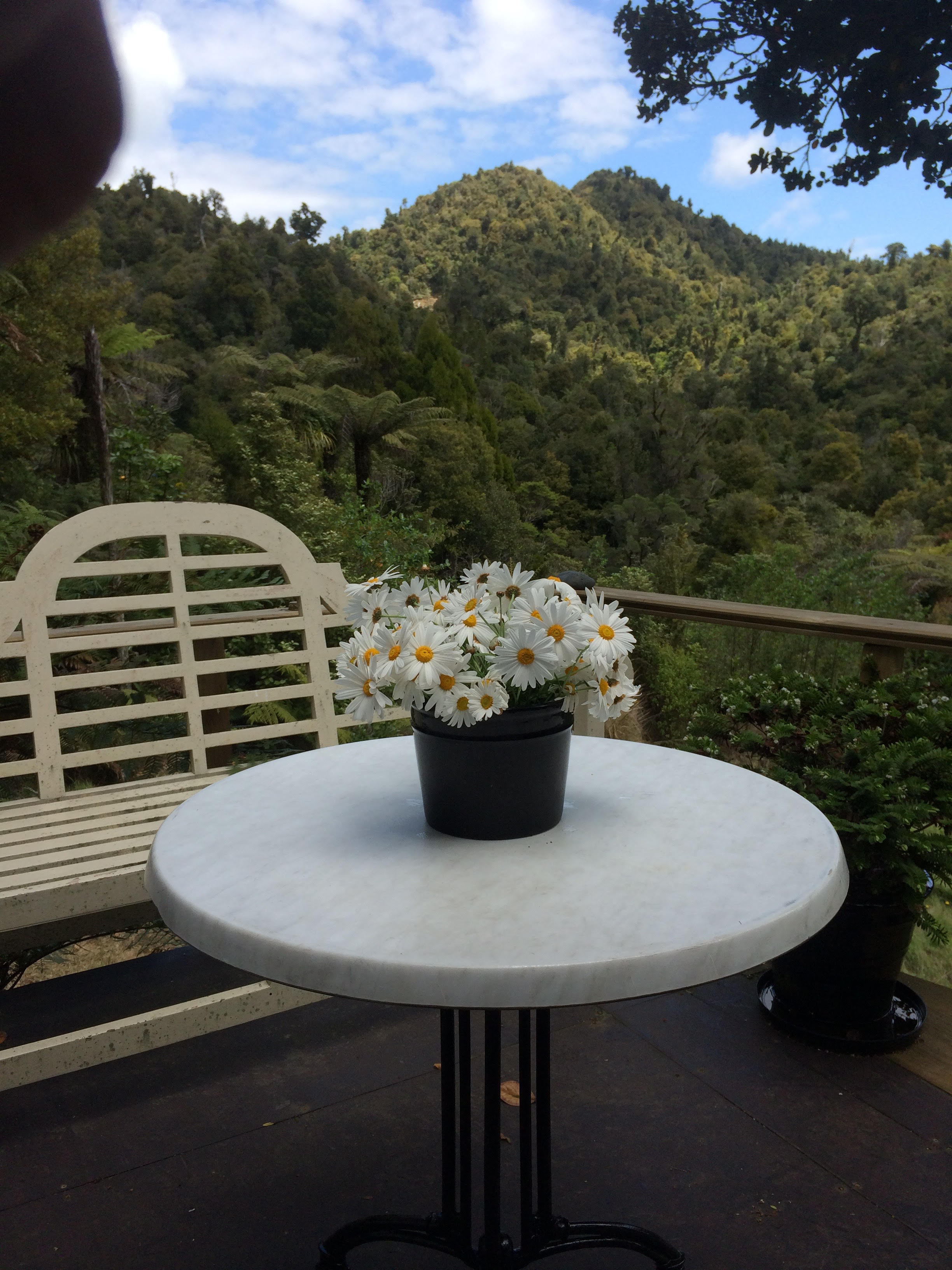
    The house in the middle of the forest, among the endless ranges stretching as far as the eye can see in the picture above, is ours.

    There are a few neighbours hidden around us in the thick canopy.

    We’ve lived here for almost eleven years now, since my husband left his far off home to join me in this remote little country of just over five million people. I was in my late seventies, he in his sixties.

    It was a leap of faith for us both, and since we had no money between us after leaving our previous lives, a tough start.

    He had left his ranch, and I left my beautiful clifftop cottage in a little fishing village.

    He found this place on the internet – a tiny wooden cabin surrounded by trees, gazing across to an amphitheatre of hills and forest.

    We joke that we own a quarter of a mountain.

    We used to gaze at the ad on the website every night for a year before he arrived on these shores, causing the estate agent to believe that there was massive interest in this remote cabin with no running water, no electricity, and no amenities.

    The forest is hidden from the winding dirt road with 298 hairpin bends by huge wrought iron gates, and is a protected area, so that it cannot be spoiled, developed or changed in any way..

    The dirt road, we discovered, was notorious for its difficulty, danger and beauty. The river which runs alongside it far below has its source on our forty acres of land.

    When my husband- to- be landed in this country, we packed up my beautiful possessions, walls of books, French antiques, china, lamps, pictures and rugs, in two 20foot containers, and arrived here on a sunny day just before Christmas. One loving friend had given us a Christmas wreath to hang on the door, and a tree one foot high equipped with tiny Christmas lights. I brought a stock of beeswax candles to light the cabin at night.

    We’d packed the bed last in the crammed container, along with candle sticks, a French mirror, a small table and lace tablecloth, and when I’d scrubbed and cleaned the inside of the cabin, we installed the bed, made it up with beautiful linen sheets and French counterpane, hung the mirror above the bed, arranged the tall candlesticks on the table under the window, and felt we had a home !

     Also to hand was a tiny gas camp stove, a frying pan and some plates and cutlery, and I cooked all our meals on a picnic table at the side of the house. It didn’t rain at all for the first few weeks, and we were able to unpack one container into a hastily erected garden pavilion so we could turn the now empty container into a minuscule kitchen and sitting room. We had bought a ranch slider from a demolition yard in a town an hour and a half away, carried home on top of the car, and installed at the end.

    Undeterred by our primitive conditions I persuaded my helpful new partner to hang up a big gilt Victorian mirror and several very large pictures in antique gold frames, we unpacked several bookcases and books to line the rest of the walls with books,

     furnished it with a sofa and two antique French armchairs, an oriental rug, and screened it from the kitchen with a weathered old grey French shutter.

    When our neighbours came to call, they were enchanted – one called it ‘petit Versailles’, another brought her mahjong group for afternoon tea to view it, and another, his daughter and then his sister out from England to view this extraordinary ‘room’ in the

     middle of the forest.

    Our neighbours were a fascinating group of people drawn here by the environment and the opportunity to help preserve both the trees, as well as some of the rare and endangered species which dwell here.

    Among the twenty so, are a well known architect, and a professor of aeronautics, who when he retired, went back to University to obtain a degree in zoology, and is now one of the foremost authorities on lepidoptera ( moths and butterflies ) in the country. He has discovered over three hundred new species of moth on the estate in the last ten years. 

    Our nearest neighbour is a Dutch cello player, and further away lives one of the country’s most renowned landscape architects and botanist wife, while further up the road, is a Dutch restaurateur and his artist wife. Nearby are a couple, one of whom is Swiss, who run a bungee jumping company in various parts of the world, an engineer, who’d retired from running African gold mines, and his Russian wife, and other fascinating characters.

    My husband is one of these fascinating characters, having started life in the US Navy as a highly trained nuclear specialist in a nuclear submarine, and when he left Hawaii to join me, was working at a famous observatory on top of one of the highest mountains in the world. He’s not only creative, designing and building our house, using a skateboard to create a sliding door and other ingenious devices, making concrete spheres and series of waterfalls for the garden and creating a thirty foot tree of lights at Christmas,  but he’s also the best informed person I’ve ever met, whether we’re talking about space and the stars, or how the body works, or the waves behave, or the theory of magnetism, gravity or Hadley Cells, or Leonardo da Vinci.

    We don’t have a television – instead every night after supper, we read to each other, a ritual we wouldn’t miss. 

    So we live in a world within a world, making expeditions down the long winding road to the nearest town for supplies, which include all the wood, doors and windows, which have been transported up the mountain to build our house on the sturdy roof rack of our loyal station wagon.

    My husband has built the house around us and as the years have gone by we have lived in warmth and comfort and beauty.

     I’ve planted a garden, and learned what flowers and plants the roaming bands of quail will spare when foraging for their salad course. 

    So this is the story of our adventure – the story of the forest and fauna and its rare and precious creatures is yet to be told.

    Food for Threadbare Gourmets

    Apple tart was a staple of our diet, growing up, nearly always eaten after Sunday lunch of roast beef and Yorkshire pudding.

    But these days I can’t be doing with all the faffing of pie-making and instead make a quick, easy French galette.

    While the oven is heating to 200 degrees, I grease a flat oven proof dish, and place in it a sheet of frozen sweet shortcrust pastry to melt.

    Three or four eating apples, peeled and thinly sliced, are fried in butter. By the time they’re ready, the pastry has sunk into the dish and the apples are then piled in the middle. Then sprinkle with sugar and cinnamon, fold the corners of the pastry over the apple, making a square… sprinkle with more sugar and cook for roughly thirty minutes.

    Leaves apple tart for dead !

    Food for Thought

    We will be held accountable for all the permitted pleasures we failed to enjoy .

    Hebrew Haggada

  • Beauty that connects

  • The staff/stuff of life

    Illustration from the post “The staff/stuff of life”

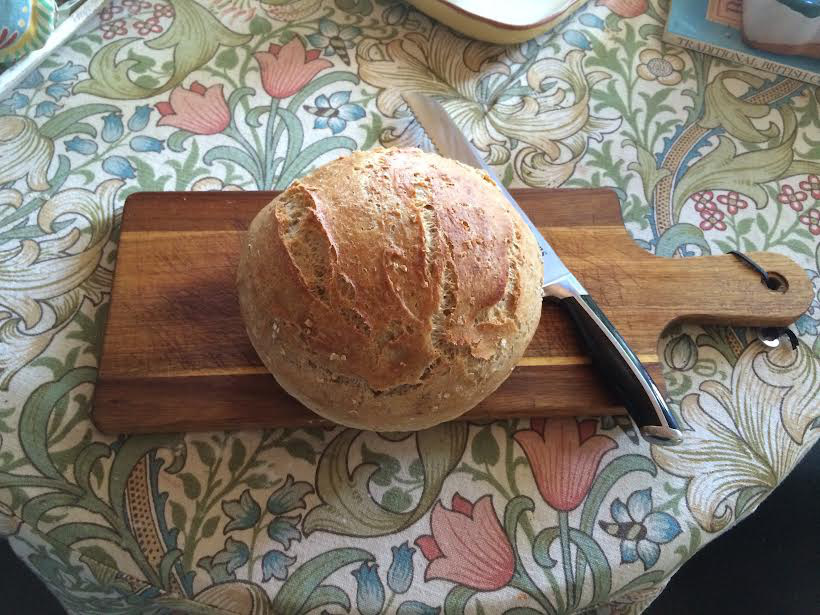
    Just finished breakfast – freshly ground coffee with one grind of salt and ten grinds of black pepper in my one person coffeepot, a la Russian neighbour. Toast from my freshly made loaf of wholemeal bread, just out of the oven, made by Moi, manukau honey from the bees in our forest, and delicious Danish butter … pigs heaven for the likes of me…

    I had Googled: What is in white sliced bread? And the answer so horrified me, that I did endless research on unmucked- about flours from Australia, New Zealand Hawkes Bay, bakers in the English Cotswolds and others in New Zealand South Island… This is the answer to the white sliced bread inquiry: Wheat Flour [with Calcium, Iron, Niacin (B3) and Thiamin (B1)], Water, Yeast, Salt, Vegetable Oils (Sunflower, Rapeseed and Sustainable Palm in varying proportions), Soya Flour, Preservative: Calcium Propionate; Emulsifiers: E481, E472e; Flour Treatment Agent: Ascorbic Acid (Vitamin C ),and it’s bleached with chlorine or calcium peroxide or other equally unhealthy chemicals!

    So I’ve now started using a brilliant no-knead bread recipe found on the wonderful internet – no hands at all, and just let it rise sitting on the kitchen bench – no fuss, and have sourced from both our local supermarkets unmucked around white flour, as well as wholemeal…

    I had lost this blog, and WordPress has changed so many times in the ten years I’ve been blogging, that I could no longer find the formula I used to use for getting back into it when I’d slipped out… I did try to jump through all the hoops, and tried hopelessly to decipher computer speak, which is a language I’ve never learned. Finally after weeks of fruitless and frustrating endeavour I found there was a simple word actually on the blog. The word was Login. So I clicked on it, and to my naive amazement, found I was back in. So here I am ….

    Meanwhile, trying to ignore climate change, wars, famine, floods and other catastrophes around the world, I’ve been concentrating on the things nearer home. We can’t have pets here, and I miss having a dog after all the years of two or three at a time – seventeen rescued in all, and I miss having a cat too, after all the years of living with their sweet presence… they’re not allowed in this wild life sanctuary/forest, where the native birds who are mostly flightless, live on the ground.

    So I find I have birds as pets – the two quail who lived here when we first came, have multiplied hideously in the seven years that we’ve been feeding them, and we now have twenty five ! They eat my flowers, so I’ve trained them to follow me from the garden up to the top of the drive when I call ‘come, come, come’. There they feast on the budgerigar seeds I scatter on a patch in the woods there. They love the budgerigar seeds best, and so do the sparrows.

    The sparrows, green finches, chaffinches, grey warblers and black headed tits always know exactly where I am in the house – if I’m in the bedroom, they flutter around outside the bedroom window. If I’m sitting on the sofa in the sitting room, they cluster in the tree outside the french windows and gather on the veranda rail, until I go out and scatter seed for them in a patch on the other side of the house, so we don’t get their droppings.

    I’m a total slave to them – leaving my breakfast and my tea getting cold to rush up the drive followed by a line of quail scuttling after me, or little birds diving down from the trees all round to make a moving carpet of little brown bodies hoovering up the seeds. My husband is just as much their slave, and has made tiny concrete ramps for the steps in the garden, so the minute balls of fluff which are baby quails, can scurry after their parents up the steps!

    And while we have been battling with the result of too much rain – landslides on the roads, pinning us inside the high wrought iron gates of our sanctuary, I’ve watched with amazement the drought the other side of the world – items of news like the great Rhine river closing to traffic because it’s so low – and wonder how the EU trade will continue, and discover that the source of the mighty Thames has dried up, with just a trickle of water five miles further downstream.

    I can’t understand why draconian water restrictions aren’t in place… not just hose pipe restrictions, and polite requests to use a low setting on lavatory cisterns. When we lived in Hong Kong in 1965- 70, Mao Tse Tung cut off the water to Hong Kong one hot summer, and all four million-plus people were rationed to four hours of water every four days, when the water was switched on from eight o’ clock till midnight. Everyone filled their kettles and saucepans and jugs and baths to try to last the four days, with long queues of desperate Chinese lining the streets to the nearest tap/standpipe, staggering home with a bucket each side.

    Because our army quarter was on the top floor of a twelve story building, the pressure took two hours to build up, so with two toddlers, I had two hours of water every four days, in the middle of a steaming, hot tropical summer we managed – the whole colony stayed at home that night, catching up on washing clothes and sheets, and having showers and baths and shampoos to last for the next four days ! This ordeal by water lasted for the four hottest months of the year, but we emerged unscathed, if a little smelly !!! As a friend said “Bah, the world is full of snowflakes who couldn’t cope – they’d probably melt if confronted with such a challenge !”

    So watching the world and its wars from the long perspective of the ‘silent generation’ ( those of us born before 1945), I sometimes wonder if TS Eliot’s words that ‘the world will end not with a bang, but with a whimper’ are the most optimistic we can hope for… But I still cling to Tolkien: “It is not our part to master all the tides of the world, but to do what is in us for the succour of those years wherein we are set, uprooting the evil in the fields that we know, so that those who live after may have clean earth to till. What weather they shall have is not ours to rule.” Simply put – the Scouts motto – DOB – do our best !

    Food for Threadbare Gourmets

    This is the wonderful recipe for no-knead bread I gleaned from the internet, with my own slight tweaks. artisanbreadwithsteve on Youtube was the original source. 475 mls of cold water1 1/4 teasp instant yeast1 1/2 teasp salt1 tablesp extra virgin olive oil 2 cups of organic unbleached white flour 1 1/2 cups wholemeal flour Pour water into a bowl, and stir in the next three ingredients. Then add the flours and mix. Cover the bowl with plastic wrapping or even a shower cap, and leave on the kitchen bench for eight hours. Stir it all again, as it dwindles down to size again, and sprinkle oats or sesame seeds on top. Tip into a bowl or saucepan with plenty of room for the dough to rise. Cover with a damp tea-towel ( no lint) and leave to rise again for about 30 minutes to an hour.

    Heat the oven to 400 C, and oil a dutch oven with olive or grape seed oil, and put in the oven to heat up. Tip the risen dough into the hot Dutch oven, and bake in the oven for forty minutes.

    Watching the dough rise throughout the day has become one of my hobbies… sometimes I use more white flour instead of wholemeal – just because…

    Before I discovered a source for organic flour, I used ordinary flour, and the loaf still tasted good. The original source for the word ‘lady,’ came from ancient Norse, and it meant ‘loaf kneader.’ Bon appetit !

  • Small Happinesses

    Small happinesses are the things that keep me going in these tumultuous times. As Thomas Paine so famously wrote as he tried to bolster the morale of the thirteen American colonies who were about to break away from Britain: ‘These are the times that try men’s souls: The summer soldier and the sunshine patriot will, in this crisis, shrink from the service of his country; but he that stands by it now, deserves the love and thanks of man and woman’.

    That was in 1765 … and today it seems that we all, all over the world need our morale boosted as civilisation seems to be struggling with crisis after crisis, which I don’t intend to list… we all know what they are. My way of coping with the outside world is to savour the world near home… it does no good to wring my hands over the tragedies and trials cutting their path through lives in every corner of the globe, it seems. So instead of adding to the pile of pain, I try to revel in the goodness of life.

    And there’s so much, from the wonderful electrician in the States, who realised that the house of Gloria, belonging to the old woman whose dangerous light fixture he was repairing, needed a lot more repairs to her dilapidated old house. On Facebook he organised a crew of tradesmen who came along and repaired and rebuilt and improved the lonely old lady’s home. They also befriended her, calling themselves Gloria’s Gladiators, and thus sparked off other communities who now do the same. (I bet Gloria’s Gladiators were both Republicans and Democrats, because goodness, generosity of spirit and kindness don’t recognise politics or boundaries)

    Then there’s the new trend of leaving a bunch of flowers on a park bench or in a bus shelter to lift spirits, and for someone to take and enjoy. There’s the old lady who used to walk around our local park refilling with water all the bowls she left under hedges for birds and the chickens who lived there; the woman who began leaving books in a phone box in an English village for people to borrow and enjoy during lockdown, which developed into a place where people left fresh eggs and home grown vegetables, and meals for people who needed them, and notes about services they could offer for free.

    There’s the retired fire fighter who sold his house and bought a small country place where he could re-house all the stray cats trapped and due for death in his town, and who now has rescued ducks and dogs and donkeys and pigeons. He works at night in order to support his menagerie. I met him in the hospital ward where I lay – where this big burly man was dancing a light-footed tango to cheer up his sick mother.

    Just reading about these committed, not random, acts of kindness lifts my spirits, and then there are other heart lifting small happinesses.

    My Albertine rose is blooming, bright pink buds flowering into blowsy pale pink powder puffs- we nursed it through drought and storm and the most dangerous attacks of all, from hungry possums who love its buds. Night after night we draped it in layers of mosquito netting to foil the pests, and now it’s rewarding us with all its beauty.

    There’s the small happiness of feeding the wild quails and waiting for the day they bring their tiny fluffy offspring… the pleasure of subsiding tiredly into a well-made bed, the satisfaction of accidentally stirring ginger into asparagus soup instead of garlic from an identical jar, and finding the soup now has an inner warmth that comforts my chest as well as pleasuring my taste buds.

    There’s the joy of sitting with friends as we did last night, eating, drinking and laughing under a starry sky, waves of perfume from blossoming manukau trees wafting by, and thinking, oh bliss, more lovely honey for this year… watching the planets and the constellations come out, Mars and Orion the brightest, the light of satellites beating across the dark void, the flashes from an old iridium satellite… and an owl calling nearby. As the sky sparkled with coruscating jewelled pricks of light the words of beauty from Yeats poem crowded into my mind:

    ‘Had I the heavens’ embroidered cloths, Enwrought with golden and silver light, The blue and the dim and the dark cloths Of night and light and the half light… ‘ The last line reads ‘Tread softly because you tread on my dreams.’ Yes, we do still dream and we do long for a peaceful world in these ‘times that try men’s souls.’

    And small happinesses for me are the signposts to finding our peace in our own corner of the world.

    Back in 1945, writer Frances Partridge wrote: “I used to assume that there was some stream of human existence which would prevent any great loss of civilisation already won. Now it seems as though that very thing has happened… and the violence of the present world. Oh how one longs for tolerance, humanity, kindness and for thought and discussions to come back into their own again.”

    When re-reading those words written seventy- five years ago (another small happiness, re-reading the books one enjoys) it felt as though the turmoil engulfing the world at the moment is yet another turn of the wheel. It seemed to me that rather than be overwhelmed by times that try men’s souls, we can still dream of making a better world; that small happinesses, and committed kindnesses, and goodwill to all men can be the yeast that quietly helps us all to rise above fear, judgement, grief, and anger, or despair, doubt and despondency during this turn of the wheel. These small happinesses bring us back to the present moment, and anchor us in the goodness of the world.

    Roses and birdsong, starry skies and soft rain, all the gifts of the world can comfort and enrich us if we recognise them. We just need to remember to look and feel. We are not ‘sunshine patriots’ in Paine’s words. We are citizens of the world, and our optimism and courage can be our gifts to our world and our civilisation, and our next step into the future as the wheel turns once again.

    PS Not having blogged for a while, I find that WordPress in its wisdom has changed the method of posting a blog… hence the strange appearance of a photo I hadn’t intended to use, but gave up in the end… que sera sera…

  • Keeping body and soul together

    Illustration from the post “Keeping body and soul together”

    About a month before the full extent of the crisis which is now overtaking the whole world was obvious, I began quietly accumulating food-stuffs in my store cupboard. Two of this or three of that instead of just one. So when the catastrophe reached this country, and we went into lockdown within a few days of the first cases of the plague arriving in these shores, I didn’t need to do any panic shopping, just last minute perishables like milk, mushrooms and courgettes.

    When the drawbridge went down and we all retreated to our own castles, I felt like a biblical wise virgin – perhaps not – a wise crone perhaps, with the oil in my lamp, ready for the challenge, not of spiritual growth but of living without all the amenities that we take for granted in the western world. We had stocked up on gas for the cooker, and petrol for the generator in case the power went down, filled the car and checked the oil.

    The old freezer we’d replaced when a friend bequeathed her up-to-date appliance while re-modelling her kitchen, was still sitting here. No-one else had wanted it. So it came back into service in this emergency and absorbed all the bulky things like bread, and the extras like the butter and grated cheese and pastrami that we weren’t going to be shopping for in the foreseeable future. We felt ready for anything.

    I can live off baked beans for a month, my love bravely declared. There’s no need, I kept re-iterating, we’ve got plenty of everything. And now we seem to have so much more time than we did before the Great Retreat, I’ve also had more time to think about food, and how to marshal our resources; and also to read new recipes and ideas.

    We seem to be living rather luxuriously, rather than frugally… though that may come. So instead of just putting together my normal macaroni cheese which is a favourite in this house, I found a French recipe which we tried last night.

    I left out the tomato puree, which I didn’t fancy, and for lack of a bacon hock, just chopped up and lightly fried some rashers of good bacon. Instead of making a normal cheese sauce, I broke into the packet of mascarpone nestling in the fridge as per the recipe, and beat it into the yolks of two eggs.

    I added grated cheese, no Gruyere in the house, just good old Cheddar, leavened with some Gouda with cumin seeds, found at the back of the fridge and grated, which added a layer of je ne sais quoi to the mix. With plenty of black pepper, the bacon, the cooked pasta and all, was tipped into a casserole with a layer of grated parmesan on top, and left with enough time in the oven to warm it up and grill the top till crisp.

    Even the pasta wasn’t macaroni. I had several packets of two-minute noodles sitting in the cupboard, having previously used their sachets of chicken stock for flavouring soups. I simply pour boiling water over the noodles, and leave them for a few minutes until they’re soft and ready to drain and use. Combined with all the other ingredients, their humble origin didn’t matter. The whole dish took only as long as separating the eggs, frying the bacon at the same time, and soaking the noodles, before ten minutes or so in the hot oven.

    This is my idea of cooking these days – something quick, easy and delicious, using for the most part good ingredients, and not shying away from short cuts. I do a lot of things now, that I inwardly swore when I was young, I’d never do, like using chopped garlic from a jar, buying grated cheese, and even using pre-cooked packets of rice, when I lack the energy to slave over a hot stove. These packets of basmati, long grain and jasmine rice, which are more expensive of course than loose rice, were the despised unwanted items left on supermarket shelves during the Great Shopping Rush, but for me, they are a gift.

    They mean a fried rice, or a kedgeree, or a curry in a few minutes instead of the hard labour of thoroughly washing and rinsing, boiling and draining of the real thing. Nearly fifty years ago, I remember watching in Stanley Market in Hongkong, an old Chinese lady, wispy white hair scraped up into a tight bun, wearing clogs and grey sam-fu with black trousers, crouched by a tap on the edge of the pavement, washing and rinsing rice in a battered aluminium pot, over and again.

    She poured in the water, swishing it about with her hands, draining it carefully out through her old wrinkled fingers, never losing a single precious grain, and then beginning the whole process over again until the water ran clear into the gutter.I think of her, every time I cook rice, but no longer feel guilty at cutting corners to save my energy, as I used to.

    Energy is precious, and so is time; and while plenty of time is the gift of the Great Retreat, energy is not so plentiful. Yet this too is the gift of this unexpected home detention, isolation, withdrawal, lockdown, whatever we call it. Time is our own. We can measure our energy, plan our time, listen to our inner clock, and nurture the needs of our mind and soul as well as our body.

    Those of us who are retired, and those who have no duties of care for children, or family who need us, are fortunate. We can still enjoy human contact by phone, the internet, skyping, even blogging. Even those of us who don’t have pets to nurture, and be nourished by, still have the time to enjoy the pleasures of books, music, knitting and other pastimes we often don’t have space for in our busy western lives.

    I’ve been painting a new porch and veranda black – posts and roof and steps and lovely curved front, a bit Japanese looking, jutting out into the forest. Bitten by the bug, I then painted the wicker chairs black, and then a white side table which had once been gilt and then white, became black, and a big pot which had once been black, and then white, is also black again!

    And so now we have another place from which we can look into the trees, watch the weather, listen to bird song, gaze at the sunset, and see the moon rise. So many people in their homes and apartments, in so many places throughout the world, are cut off from the outside world, and yet by a strange paradox they are now savouring the growth of spring in the northern hemisphere, watching the clouds and the rain, becoming conscious of the sun rising and the moon waning, and connecting more and more with the natural world. So too, are we, in the southern hemisphere, as autumn creeps up on us. For once, in the poet’s words, we all have the time to stand and stare.

    Food for Housebound Gourmets

    For those who fancy trying my fancy French macaroni cheese, here are the amounts for four people:250 gms crème fraiche, 2 egg yolks, 225 gms macaroni, 115 gms gruyere cheese, and a sprinkling of parmesan

    Stir crème fraiche and egg yoks together, add cooked pasta and all the other ingredients, including pepper. Sprinkle parmesan over the mix and bake until hot and the top golden. Enough for four, and we will have it again tomorrow jazzed up with salad etc.

    I would use cream instead of creme fraiche next time, as I like a looser cheese sauce… or I’d use my other short cut… cook the pasta and stir in a tin of condensed chicken soup, grated cheese, black pepper and nutmeg, loosen it to taste with cream or milk – and hey presto.

    I’m keeping a record of what we’re eating and will be fascinated to see how it works out over the time. So far:

    Day one: Coq au vin using chicken legs.

    Day two: pork chops, plus leftover risotto from the deep freeze, fried onions for him, kumara/sweet potato for me, and acid free tomatoes cooked in butter and cream a la famous chef, Dr de Pomiane.

    Day three: spaghetti Bolognaise for him, egg/avocado/tomato salad for me.

    Day four: chopped cooked chicken from deep freeze stirred into a white sauce flavoured with chopped bacon, chopped mushrooms and nutmeg, the sauce made with some meaty stock made from scraping the pork chop pan the other night. (plus cream!)served on rice with green beans.

    Day five: baked chicken drumsticks cooked on a bed of chopped onions, with rice, mushrooms and tomatoes for him, kedgeree with hard-boiled egg for me, and enough to store half in the deep freeze..

    Day six: macaroni cheese.

    Ah, food, glorious food. As someone once said, “The only thing I like better than talking about food is eating it.”

    Food for Thought

    Over three hundred years ago a prisoner in the Tower of London carved on the wall of his cell during his long imprisonment: ‘It is not adversity that kills, but the impatience with which we bear adversity.”

  • Time has told, Small IS Beautiful

    Illustration from the post “Time has told, Small IS Beautiful”

    They don’t make it easy, to quote Megan Markle speaking on quite another subject. I was actually trying to wrest the immoveable foil covering off the plastic milk bottle, and as usual was giving up, finding a sharp pointed knife, and prizing it off.

    I thought of the good old days, when we had shiny aluminium tops on glass bottles, which were washed out every day to be exchanged for a fresh bottle of milk the next day. It was usually delivered by the milkman driving his horse and milk cart – the horse, so familiar with the routine – that he stopped and started at each house, while the milkman ran in and out of each gate to leave the milk bottles on the door-step.

    He was an un-official social worker as well as a milkman, and if the milk went uncollected for more than a day he’d check in the house or alert the neighbours, and many an old person was rescued from illness or accident in this way.

    Before the aluminium tops, we had cardboard lids on the bottle with a little cut-out circle indented in the centre which we pushed open, if the sparrows hadn’t got there before us. They enjoyed the cream as much as we did – yes, we had cream in our milk in those days, you could either pour it off to save and consume as cream, or you shook the bottle up, and distributed the cream throughout the milk.

    Sometimes at school, instead of drinking our half pint of milk given to us every day by a benevolent state, we shook up the bottle for fun until we’d made a knob of butter from the cream, and later spread it on our lunch-time potatoes. We also used the cardboard circle from the bottle to wind wool round and make bobbles, or thread on a ribbon and paint for Christmas decorations

    Prising the top off the milk isn’t the only strongman feat I’m forced to perform every day. If I want to open a bottle of vitamins there’s a tight clear plastic wrapper bonded to the bottle and the lid. When, with a pair of nail scissors I’ve managed to break into this casing, and unscrewed the lid, there’s the same sort of stiff foil lid stuck irrevocably to the bottle as with the milk. More jabbing with knife or scissors, and when I finally wriggle into the jar, there’s a long wad of cotton wool to drag out into the light of day. The pile of plastic rubbish from just one small bottle of vitamins is outrageous.

    A packet of bacon? Plastic wrapped cheese sweating in the casing? A new toothbrush – that truly is the worst – it’s almost impossible to break into all the wrappings, both plastic and cardboard, that bar entry to a simple toothbrush.

    I waste hours of my life trying to gain access to items of food and household products which were once sold loose, but now need equipment in order to eat, drink, use or cook.

    When I used to read the Manchester Guardian in my salad days I was transfixed with wonder, when a woman wrote to say she was tired of trying to break into biscuit packets. Back then in 1965, it seemed like a miracle that biscuit manufacturers got the message, listened to a woman and provided consumers with a tab to pull, so as to gain entry to said biscuits. We really can be heard, and can change things, I gloated, somewhat prematurely it seems.

    For today, health and safety and hygiene requirements, techniques for packaging to extend ‘shelf life’, marketing strategies to make products seem more desirable, have meant that most food items are now locked away behind plastic, unless it’s an unwashed potato . So even though we virtue signal with plastic bags banned in our supermarkets, we still have mountains of plastic rubbish after each shopping trip, be it a new shirt, or a bag of rice. The sort of plastic rubbish that pollutes oceans and clogs up the stomachs of whales and sea-birds, fouling the oceans and killing the wild life.

    And speaking of potatoes, in my youth we bought muddy potatoes in a small hemp sack. The mud preserved the minerals in the spuds, and the darkness of the sack kept them fresh, so even at the bottom, the potatoes were still good to eat. Washed potatoes in a see-through plastic bag, the very opposite of mud and sack, means that the soil around the potatoes which preserved them has gone, so they go stale and lose much of their nourishment, while the clear plastic lets in light so they deteriorate quicker. And what about parabens?

    So I buy unwashed potatoes, and being somewhat lazy, I now get the mud off by washing and scrubbing them with pan scourer, kept especially for the purpose.

    A friend gave me some of her new laid eggs from her hens and brought back long forgotten childhood memories as she wrapped each egg in a small piece of torn newspaper, before laying them in my little basket. There was something very sweet in the gentle handling and detailed care with which she wrapped and packed them. It felt a world away from the dull supermarket routine of shopping in bulk.

    Before the coming of super-markets, we shopped every few days, meeting and greeting neighbours and other shoppers as we walked to the grocer, who was often ‘on the corner’. It’s now acknowledged that this simple routine was a wonderful boost to everyone’s emotional well-being as they connected with neighbours, and nodded to strangers who became familiar during the regular shop. We took baskets and string bags and no-one expected a shop to wrap everything we bought.

    Shops had regular hours, so when you ran short of sugar or needed an onion, you had no 24- hour dairy or superette to fall back on. Instead you fell back on your neighbours, and a child was often dispatched to borrow half a cup of sugar, or a jug of milk. These small inter-actions and friendly connections stimulated a sense of community. The sharing of garden produce, small helpful deeds and kindnesses, borrowing and returning, nourished human relationships, friendships and neighbourhoods, fostering small societies, and creating villages within villages.

    And back then there were plentiful bus services and little local railway branch lines, so people didn’t need cars. It was easy to move from village to town, or town to city on reliable public transport, and there were no roads clogged up with parked cars or traffic jams of weary people. I don’t remember pollution either…

    When we all get down to the serious business of becoming carbon free, and relinquishing our right to car ownership, maybe the powers that be will re-instate these antiquated forms of transport. The one thing I do hope no-one suggests, be they government agencies or climate campaigners, is to use a horse and trap, or other animals as beasts of burden. The blessing of the motor car was that we gave up exploiting animals to get us around, flogging them to death, with overwork or not enough food.

    Yet at the moment we still seem to have a mind-set which involves the right to own our own transport. The car industry estimates that there are 1.3 billion cars on the road at the moment and projections rise to two billion by 2035. Cars are a passion, both in the first world and the third world, and technology is forever coming up with new ideas for a driving future. Yet all this effort, which is now going in the direction of self-driving electric cars, seem self-defeating to me, since each such vehicle requires the equivalent of 40 desk top PC’s in energy consumption for the computer brain. Then there’s the energy needed for the battery. So much for reducing carbon emissions.

    Maybe the challenge of tackling transport, climate change, pollution, the plague of plastic and all the other problems of our wasteful throwaway and over packaged society is to find a way of life which is as simple as the one I remember. It was a way of life in which we lived ‘care-fully’, buying food in small amounts so we had no wastage, a way of life in which we used public transport and helped each other in small, kind and ‘care-full ways’. ‘Small is Beautiful’, Schumacher’s creed, now overtaken by globalism, may be the answer to the huge problems of over-consumption, wasteful habits and huge soul-less cities, whether buying the family groceries, owning a car, or finding a happy home.

    A Guardian article some years ago wrote that; ‘Schumacher warned against exactly the issues we are now dealing with as levels of mental illness – depression, anxiety, panic attacks, stress – rise and the World Health Organisation predicts that depression will be the second most common health problem in western developed nations by 2020.This was what Schumacher feared, and his answer was “small is beautiful”.’

    Schumacher’s thesis was that we should go back to the human scale: human needs and human relationships. He felt that from that small scale would spring the ethical response of stewardship to the environment.

    And as we re-create such small kind communities, I’d be grateful if we could also solve the plastic crisis, and mountains of resulting rubbish. The wasted hours spent tackling the menace of packaging could be used for so many other small and beautiful pleasures. Dwight Eisenhower once remarked that in his childhood, “Our pleasures were simple – they included survival”. That could well be the case in the future.

    Food for Threadbare Gourmets

    Though I love leftovers, leftover slices of slices of breast from a roast chicken can be boring. My way round this last night was to combine leftover mushrooms, cooked in garlic, cream and parsley, with the chicken. To top up this mix, I added more garlic and parsley, and the essence poured off from the hot chicken the day before. A little cream to make it thick and delicious, and the chicken was transformed. Eaten with mashed potatoes, peas and fresh spring asparagus it was as good as the original roasted chicken.

  • Stop Press !!! recipe was wrong !!!!

    Dear friends who may have read Food for threadbare gourmets in the latest blog here… my daughter has e-mailed me to let me know I’d got the amounts of the ingredients wrong in the speedy scone recipe. If this is of interest to you, the blog has now been corrected, and I hope no-one had tried their hand at cooking these cheese scones in the last two hours since I posted the recipe !!!

    And thank you so much, Victoria XXX

  • Gossip is good for us

    Inline image 1 I am an unashamed gossip. Gossip to me is the spice of life, a valuable tool of information, and the oil that greases human relations.

    Years ago I was shocked when an acquaintance said to me in reply to my query, ‘what’s going on for her?’ – “I’ve given up gossip”.

    I was so taken aback that I retreated, feeling in-adequate and really rather nasty, as though I had been caught out in some secret disreputable, or unmentionable sin.

    I thought about it for some days, and then my common sense re-asserted itself. If someone didn’t pass on to me that a mutual acquaintance had a life threatening illness then I could miss out on the chance to support them. If someone didn’t tell me a couple were breaking up, I could tactlessly invite the couple for dinner, and rub salt in their wounds with my ignorance. If I didn’t know that a child had gone off the rails or was in hospital I could be blithely unconscious of their need for help, whether emotional support or a hot meal delivered to a family under stress.

    Too often gossip is confused with back-biting, whereas to me, gossip is passing on information that is useful or even valuable in our inter-actions with each other.

    And there’s another aspect to gossip – not just useful vital information that enables us to respond appropriately, but sometimes it also gives innocent pleasure !

    Yes, I remember the fascination with which I listened to the story of a party where two guests had had a row, and one had tipped a glass over the other…and wished I had been there to see it… drama always happens when I’m in the next room, I felt. So is this voyeurism or schadenfreude I asked myself?

    And I also remember reading years ago, that Lord Butler, an English stateman who knew the Queen, reported that like ‘all intelligent women’, she enjoyed gossip. First, I was delighted to think that an enjoyment of good gossip was almost a virtue, and meant that I was intelligent, but it also made me look at what gossip actually is.

    It’s the tiny facets of personality or of life that can illuminate a whole character, or light up a situation by showing the human interest behind the dry bones of fact.

    When reading history, it’s the delicious details of human conduct that rivet me – reading that Charles 11 loved his cavalier King Charles spaniels so much that he allowed them to whelp in his own sumptuous four posters beds… causing distaste and disgust among his courtiers – ‘God bless the King and damn his dogs,’ one quipped. This gossip made me love him.

    I loved to read of George V fulminating about his son wearing ‘vulgar turn-ups’ on his trousers, and loud checks, and Queen Victoria complaining about her second son’s sartorial habits too. Even better is the unexpected and almost outrageous, like hearing of the love between Nehru and Lady Mountbatten, which gossip had informed me of long before the current spate of film and biography.

    Just knowing that this beautiful high -minded man who ruled India, had fallen in love with the elegant witty aristocrat married to the semi- royal Viceroy, made them both so much more human, and therefore interesting. To read that she was found dead with all his letters opened on her bed, to be re-read before she went to sleep, and that the heart- broken statesman had sent a destroyer to her committal beneath the sea, to sprinkle showers of marigold petals on her coffin as it sank beneath the waves, was beautiful.

    And to discover that the Queen Mother – who gossip tells us had a wicked tongue – quipped that: “dear Edwina always liked to make a splash,” gave me another frisson of pleasure.

    ‘One shares gossip as one should share good wine. It is an act of pleasure,’ wrote Sarah Sands, a journalist in an essay on gossip ‘There is an art to gossip, which is really a moment of memoir. Philosophers of the human heart… or heartless but comic diarists … tell us more about social history, politics and humanity than autobiographies of public record… I always learn more from a gossip than a prig. Life is a comedy…’

    This is gossip as fun. But gossip is also the passing on of important information that we may need. Not the cruel behind their backs stuff, but the details that may help us all. We can be kinder and more tolerant or even forgiving, if we know the pain or difficulties behind some-one’s inconsiderate or strange behaviour.

    Women have a well-deserved reputation for gossip, but it’s often this sort of passing on of useful information. On the other hand when I was the only girl in an all-male officers mess, I was shocked at the sometimes cruel and careless gossipy remarks of the men I overheard. Yet my experience of living in an all-female community had been that kindness was acceptable, but catty comments were not.

    So yes, I am a defender of the art of gossip…I relish the flashes of insight which an apt morsel of gossip can bestow. This is not gossip as slander, back-biting, envy, jealousy or small mindedness that so many arbiters of human nature have condemned. This is gossip demonstrating the endless fascination of human nature, and as an aid to understanding ‘what’s going on’ for each other.

    And if, as Socrates said, strong minds discuss ideas, average minds discuss events, weak minds discuss people, there speaks a man who doesn’t understand the value of emotional ties and the genuine connections between people which make the world go round.

    The picture is Chatterboxes by Thomas Kennington

    Food for threadbare gourmets

    We were meeting friends off the ferry, half an hour’s drive away, and bringing them back home for lunch. Which meant being organised. So while a hot winter’s lunch was heating up in the oven, I needed a little something to keep them going. So spicy pumpkin soup which could be quickly re-heated, it was.

    Steam chunks of pumpkin, and scrape it off the skin when soft. Fry some onions and garlic until soft, and add the pumpkin. In the whizzer put portions of this mixture, adding enough warm chicken stock to make a thick smooth mixture, and then return to the pan.

    Add salt and pepper and either nutmeg or curry powder to taste, and heat it up. Just before serving, add cream to taste, and serve with fingers of crisp crunchy fried bread, fried in olive oil or hot fat.

    Food for thought

    The angels keep their ancient places–

    Turn but a stone and start a wing!

    ‘Tis ye, ’tis your estrangèd faces,

    That miss the many-splendored thing.

    Francis Thompson

  • Eating for Easter

    Illustration from the post “Eating for Easter”

    A beloved friend coping with laryngitis wrote to say she intended to cure herself by eating Easter eggs. An idea, which, as my delicious daughter would say, ‘had legs’, but which was not one which appealed to me.

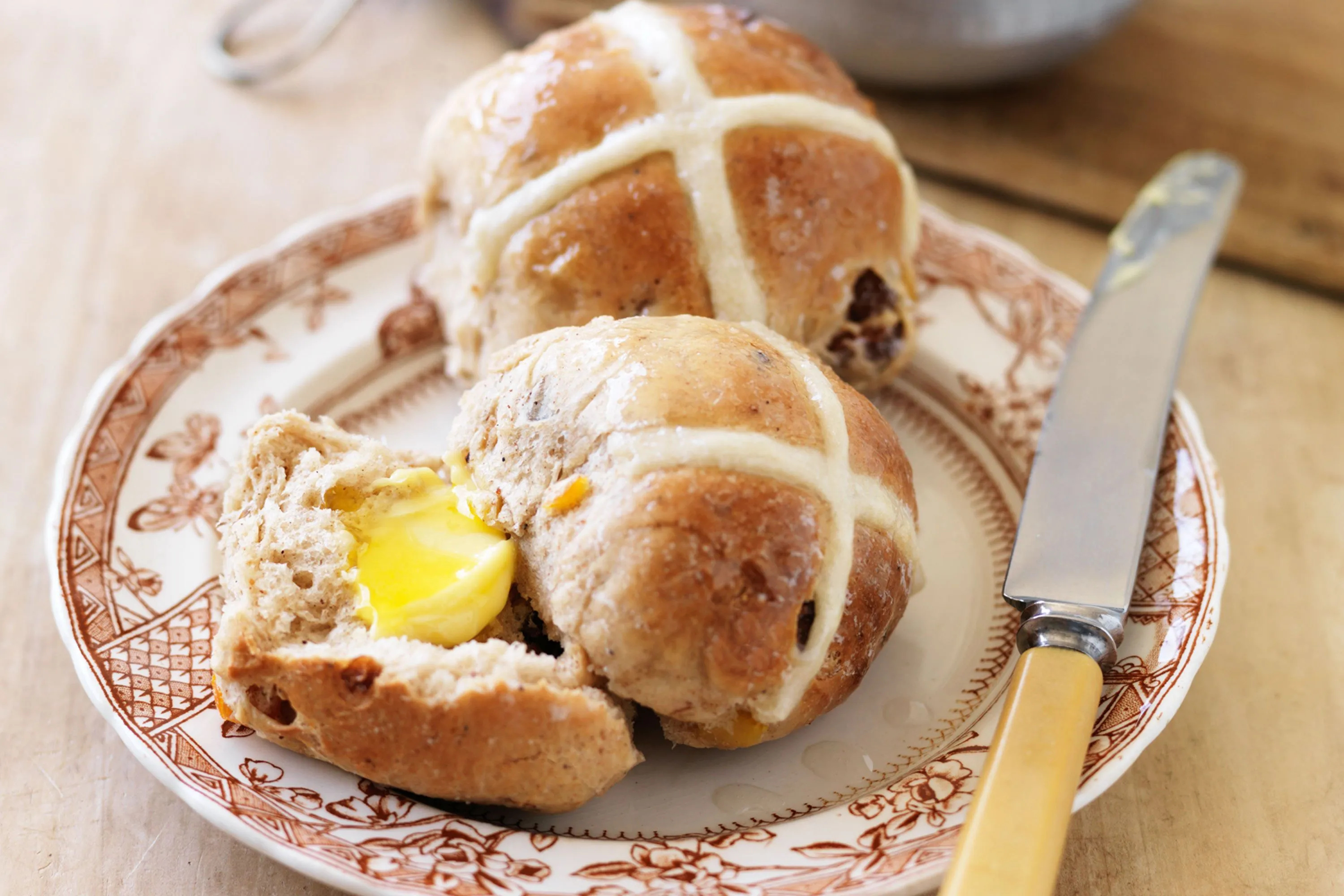
    My preference for Easter is hot cross buns, spicy, and with a good, sweet cross, heated up gently in the oven, and eaten with lashings of butter for breakfast on Good Friday.

    Food marks the seasonal calendar as much as the religious reason for the various festivals. One of my favourites, Pancake Day, aka Shrove Tuesday, evolved in order to use up the butter, eggs and sugar which were no-no’s during the penitential Lenten days leading up to Easter.

    In England, it was once known as a half holiday which began when church bells were rung at 11 am. and then pancake races were and are run in towns and villages all over the country, even today. Legend has it that in 1445 a housewife in Olney, Buckinghamshire was so busy making pancakes that she forgot the time until she heard the church bells ringing.

    She raced out of the house to church, still carrying her frying pan and tossing the pancake so as to stop it burning in her hot, probably iron, pan. Today, the rules for the race are strict, and it’s mostly run by women, who must wear an apron and a head scarf, and must toss the pancake at the beginning and end of the race.

    This jollification is not so different from the Lenten carnivals held in more extrovert Latin countries…. The word carnival evolves from the Medieval Latin carnelevamen – “the putting away of flesh”, and this was the last opportunity to put away not just meat, but also the pleasures of the flesh, eating and drinking and celebrating before the hard, hungry, deprived days of Lent.

    Easter, marking the end of the forty days of Lent, is, as everyone knows, never the same date every year, but is calculated according to a full moon, and what are called The Golden Numbers which are too complicated for me as a maths dud, to even try to explain. (I have an antique Anglican prayer book printed in 1745, in which the golden numbers and the dates of Easter, have been worked out up to the year two thousand, which must have seemed like an infinite eternity to the mathematician who calculated these figures).

    Then there was a brief opportunity to indulge the pleasures of the flesh on Mothering Sunday, which fell on the third Sunday before Easter. I remember as a girl picking wild daffodils to take to my step-mother on this Sunday, which has now evolved into another wholesale commercial festival with bought flowers, chocolates, and gifts of every description, including taking mum out to tea or lunch.

    In the eighteenth century, servant girls were given the day off to visit their mothers, and were usually given some food or clothes by the ‘big house’ to take with them. But long before then, joyous people had been celebrating Mothering Sunday with a simnel cake, a delicious confection with two layers of marzipan (not your pallid shop-bought stuff, but the real thing, almonds pounded with an egg white… sweet and rich). One layer went inside the cake for the baking, and one layer went on top to be toasted. Yum…

    Apart from the Christmas feasting, there’s another delicious foodie ritual for those who observe the rhythms of the Christian calendar, and that’s ‘Stir-up Sunday’. This happens on the last Sunday before Advent, (meaning the coming of Christ) which means it’s five Sundays before Christmas… often the last one in November, but like everything else in the Christian calendar, it varies every year, and so is a moveable feast.

    The name comes from a prayer that Christians have been using for over a thousand years, originally in Latin, and translated into Archbishop Cranmer’s beautiful English in 1549. It goes: ‘Stir up’, we beseech thee, O Lord, the wills of thy faithful people”… but for centuries the stirring has also been associated with the making of the Christmas pudding. Stir-up Sunday means mixing all the spices, fruits, suet, sugars, in a big bowl, and everyone takes a turn in stirring the mixture, and usually making a wish. There are religious rituals too, but I’m talking food here.

    Some families leave the bowl for a week to ‘mature,’ and also leave a bottle of brandy by the bowl, for passing family members to sling a slug into the pudding, and give it a stir. Eventually the flour and other ingredients are added, and then the whole thing is bundled into basins, wrapped and boiled and stored for Christmas.

    We always had a goose for Christmas when I was a child, much more delicious than the turkey which has become fashionable since then. On Boxing Day, my father used to give me a slice of good bread covered in cold goose dripping sprinkled with salt and pepper. Few children today would ever know how utterly delicious this simple pleasure was. I tried to re-create it one Christmas in this country, but when the farmer’s wife told me the goose she had decided some weeks earlier to fatten up to sell to me, knew, and ran off all over the farm to escape her, I never ate goose again!

    Which brings us full circle back to Easter, and those chocolate Easter eggs. Most people know Easter eggs have an association with a pagan goddess called Eostre, and the Easter egg custom percolated into Europe from Mesopotamia, and the Greek Orthodox church, but my interest is in chocolate Easter eggs. I discovered that a splendid old Quaker, Joseph Fry, started a chocolate business in 1759, and his sons later invented not only my favourite chocolate – Fry’s Cream in 1866 – but the chocolate Easter egg in 1873, getting on for a hundred and fifty years ago.

    Quakers dominated the chocolate industry in England, Cadbury, Rowntree, Terry, Fry, were all owned by Quakers, just as so many banks were, including Barclays and Lloyd’s, and firms like Clarks Shoes and Bryant and May matches. This was because Quakers, as non-conformists, were barred from universities and the professions, but because their word was their bond, they prospered because everyone trusted them.

    They became incredibly rich, which bothered them, so their money went into charitable causes, including the first model town Bournville, for Cadbury employees who were given free health and dental care amongst other advantages.

    And the reason all these Quakers were in the chocolate business was because they invented chocolate drinks for the poor to drink, instead of beer and alcohol. This meant that the poor had to boil their water, a healthy practice in a time when water was not always pure, and the chocolate flavour was neither addictive nor debilitating, unlike alcohol.

    Which is a good and Christian thought, that we all enjoy our chocolate treats because a group of high-principled men tried to find something delicious but not in-ebriating for us all to eat and drink! So yes, let us eat chocolate Easter eggs, even if they don’t cure laryngitis!

    Food for threadbare gourmets

    I’m still thinking in emergency mode, since our region is officially in a state of civil defence emergency as we endure Cyclone Cook.… and thinking of all the things I can do to improve the taste of tinned or packaged food, if necessary. I have a packet of pumpkin soup which I will jolly up with some chicken bouillon, a knob of butter and a little cream, and either some curry powder to ‘hot’ it up, or nutmeg to spice it.

    Tins of tomato soup I jazz up with vegemite or marmite, about half a tea-spoon, plus the butter and cream. A tin of baked beans I’ll ‘improve’ by stirring in tomato puree, a slurp of balsamic vinegar, and some stevia to taste, even a little molasses…and then there’s tins of salmon – well I could write a whole book about ways to use a tin of salmon, but will curb my enthusiasm now, as we batten down our hatches. I’m posting this blog early, while we still have electricity.

    Food for thought

    Learn to wish that everything should come to pass exactly as it does.

    Epictetus Ad 50 – 135 Roman Stoic philosopher, whose teaching sustained the late Rear-Admiral James Stockdale throughout his seven years captivity, torture and solitary confinement during the Vietnam War.