Category: Life & Reflections

  • A peculiar Christmas feast and the 4th Wise Man

    Illustration from the post “A peculiar Christmas feast and the 4th Wise Man”

    Polar explorer Captain Scott and his team celebrated Christmas on their way to the South Pole in 1911. As a foodie, I find their feast a little lacking in… je ne sais quoi …

    After his historic Christmas dinner with Wilson and Oates, Bowers and Evans, Scott recorded in his diary what he grandly termed four courses: ” The first, pemmican, full whack, with slices of horse meat flavoured with onion and curry powder and thickened with biscuit; then an arrowroot, cocoa and biscuit hoosh sweetened; then a plum pudding; then cocoa with raisins, and finally a dessert of caramels and ginger.”

    Pemmican was the classic polar food, preserved, dried meat and fat… not my idea of gourmet nosh, but Birdie Bowers, and Taff Evans both felt so filled with warmth and human kindness after this extraordinary collection of unpalatable rubbish, that they decided when they got back to England they would: “get hold of all the poor children we can and just stuff them full of nice things,” in bachelor Bowers’ words.

    I just feel the polar feast could have been warmed up with a wee dram of whisky perhaps, or even a swig of medicinal brandy. But then, I feel the cold.

    Bowers was responsible for this jolly Christmas celebration, having smuggled the food over and above the allowed weights for the journey. Once the recalcitrant and desperate Mongolian ponies – who had suffered so terribly on the sea journey to the Antarctic, and who had then struggled endlessly in appalling weather and conditions with food they couldn’t eat- had been killed, every man carried his own food and equipment on the heavy sleds.

    Bowers had always sneaked his night-time biscuit to his pony. On the night before they were all killed, Wilson, St Francis’s man, gave his whole biscuit ration to the poor creatures, like the condemned man’s last meal. This was the only time I cried during the film: ‘Scott of the Antartic’ with John Mills. I was twelve, and blow the men, it was the ponies I wept for.

    Thankfully my Christmases have never been as cold as theirs, though it felt like it in the hall in which we rehearsed for the Nativity Play when I was five. I had no idea what a rehearsal was, or why we had been marched – or straggled would be a better word – to the hall just down the road. Neither did I really understand the story we were acting in. We seemed to stand around for hours in the unheated hall while teachers talked animatedly to each other, and shifted bodies and chairs around the stage.

    I just knew that the white nightie thing I was wearing like all the other little girls, was freezing. To cap it all – like the other angels in their nighties – I had a boring triangle to keep chinging on. This was a watershed in my understanding of the world. I understood then for the first time, that boys had all the fun. Not only were they all dressed up as kings and shepherds, but they got to play drums and tambourines, trumpets and recorders.

    I felt as aggrieved as I did when I first saw huge Persil ads, in which the dark haired woman had the grubby grey sheets, and a bright blonde had the sparkling Persil washed sheets. Apparently blondes were better than brunettes.

    But that’s another story… a year later my grandmother took me to a midnight carol service. I was riveted. A boy sang the first verse to: ‘Once in Royal David’s City’ in an un-earthly soaring treble, and then read the lesson. At one point his clear voice rang out with the words “And Mary pondered these things in her heart”. My heart leapt. I had no idea what the beautiful words meant, but for many years I treasured them and pondered them in my heart too.

    The next memorable nativity play was when my daughter was five, and she was playing Mary. I thought she was utterly precious as she gazed at the world with her big brown eyes, her little face framed by a blue head covering, her solemn gaze taking in far more than I ever did. I sat and watched her with tears running down my face and my heart nearly burst with love. And the same when my small son sang the solo so sweetly at his Christmas concert.

    Much the same too at all my grandsons’ nativity plays, only not tears, laughter. My heart nearly burst with love then too, and lots of giggles, as the head mistress darted down from her pulpit to drag a little finger from some-one’s little nose, and then he simply used the other finger on the other hand and the other nostril as soon as she was safely back in the pulpit.

    None of them were magnificently garbed magi, just lowly shepherds … but we all sang the sombre, beautiful carol, ‘We three kings of Orient are…’ My favourite wise man is the fourth one, and that old Christmas legend telling his story is one of the most beautiful Christmas stories, to my mind…

    He had set out with the other three Magi, but on the way, they came upon a traveller who’d had an accident, and the fourth wise man stopped to help him. Seeing he would be a while, he told the other three to carry on with their journey, and he would catch them up. But he never did, for he kept meeting some creature or traveller who needed his help to get them to safety, and by the time he got to Bethlehem the kings had been and gone, and so had the Child he was seeking.

    He spent many years following the trail which had always gone cold when he got there, to Egypt and Nazareth and elsewhere. He was constantly delayed by yet another needy person who asked for his help. The gifts he brought and the stock of gold he had carried with him for the journey, dwindled until he had hardly enough left to buy himself food.

    And then he heard that Jesus was in Jerusalem. He hurried there, and arrived in time to stand and watch Jesus carry his cross through the streets. He had one final treasure that he was keeping to give to the One he had been seeking, a beautiful sapphire jewel. But just before Jesus passed, a Roman soldier began to assault a young woman. The fourth wise man intervened, and by now, old and frail, was unable to stop the soldier. Finally he offered him his last possession, the precious sapphire, his gift for the Messiah, and the soldier took it and left.

    At that moment Jesus reached the fourth wise man, and he knelt and asked Jesus’ forgiveness for having nothing for him because he’d stopped so often on the way to help the hungry or lost or needy. And Jesus looked at him and said: ‘For as much as you have done it unto these, you have done it unto me.’

    In other words… we are all one… so a happy Christmas-tide to us all, dear friends around the world of blogging.

    Food for threadbare gourmets

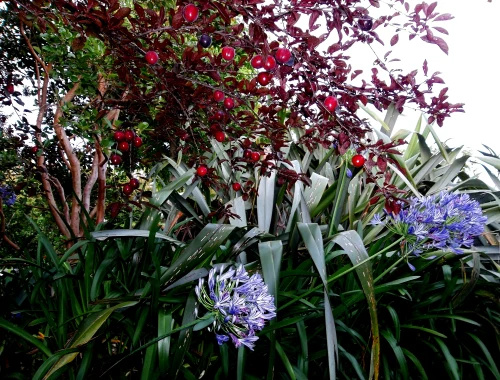
    When Christmas is here, our little purply-red plums are ripe, and though I gave this recipe last year, I think it’s worth repeating The plums which are only so-so for eating raw, are delicious when cooked. Every-one who receives a basket of these fruits also gets the recipe I use – borrowed from Nigella Lawson.

    To a kilo of plums – more or less, use 300 ml of red wine – more rather than less! Nigella says stone them – I don’t bother, the stones come out quite easily when cooked.

    Put the plums in an oven proof dish. In a saucepan boil the wine with two bay leaves, half a teasp of ground cinnamon, two cloves, one star anise, and 200g of honey. Pour over the plums, seal with foil or a lid, and bake for an hour or longer at 160 degrees, until they’re tender. You can keep them in the fridge for three days, and you can freeze them.

    Serve with crème fraiche, ice-cream, or custard. I also think they’d be good with rice pudding on a cold day. The aromatic scent while they are cooking is so delectable that I’d love to catch it in a bottle and spray it regularly around the kitchen.

    Food for thought

    “My idea of Christmas, whether old-fashioned or modern, is very simple: loving others. Come to think of it, why do we have to wait for Christmas to do that?”

    Comedian extraordinaire, Bob Hope 1903 – 2003 His grandson said that when asked on his deathbed where he wanted to be buried, he characteristically quipped: “ Surprise me .”

  • Days of wine and roses

    Illustration from the post “Days of wine and roses”

    It’s been the one of those glorious days when ‘cherubim and seraphim are casting down their golden crowns around the glassy sea.’ Silence… a small white yacht gliding over the still shining water, scarcely leaving a wake, using the engine because there’s no wind for the sails… the islands we never normally see, floating on the horizon, palest purple against a lavender blue sky… an enchanted stillness, the only sound the cooing of the doves in the trees.

    When I awoke this morning the sky was just turning pink, so early though it was, I jumped out of bed, dressed, and headed out to watch the rising sun across the sea. The dawn chorus was just beginning, so I turned around and walked by houses with curtains drawn and solitary gardens, thrush and blackbird seeming to pass me on from one song to the next.

    Theirs was the longest and sweetest serenade, while the soft incessant cheeping of the sparrows filled the spaces, and the slow crescendo of the doves cooing began. As I retraced my footsteps back along a grassy track, I saw with pleasure that mine were the only footprints in the dewy grass. I never met another soul as I meandered around the sleeping village.

    Back home I crossed into the cemetery and disturbed a couple of speckled hens who scurried fussily back into their own garden next door, clucking agitatedly. I walked across to the end of the peninsula to get my daily fix looking out to sea through the grey gnarled branches of the ancient pohutakawas.

    Later, I sat on the veranda feasting my eyes on the glittering water, with breakfast of toast and a boiled egg from the errant chickens. When I had visited their owner Kate the day before, she had given me a handful of newly laid eggs, and the one I ate now was so beautiful I could hardly bear to break the shell. It came from her oldest hen, she said, a black Arakan, a breed which presumably comes from Arakan in Burma, and this little black hen lays eggs of the same pale blue as the sky today.

    During the morning I went to the next village to buy a birthday card for a man. No flowers then, and since most men’s cards are covered with the inevitable cars or golf clubs, I did some lateral thinking and came away with a card with a message: “ If you resolve to give up drinking, smoking and loving, you don’t actually live longer: it just seems longer.” My son-in-law will be delighted with this encouragement to enjoy these permitted pleasures.

    Stopping off at the garden cafe down a long avenue of poplars, the vivacious young Indonesian proprietor greeted me as usual with: ‘Ah Miss Valerie, are you ready for your coffee today?” Since she always jumps the queue for me, and makes piping hot coffee I can forgive her the spinsterly ‘Miss’. I sat in an ivy- covered alcove framed with late wisteria blossom and white jasmine, their scents wafting over the smell of coffee.

    Before getting home, I called in on Friend, to collect various things from yesterday’s rollicking party for 45 oldies who came from far and wide. Others were there too to collect their vases, or napkins or fish slices. “The sun’s over the yard arm”, announced the man of the house, which though it was only lunch-time, gave us the excuse to finish off the champagne from the previous day.

    Then, we had sat on the terrace in the sun, looking out over the turquoise sea, the lawn fringed with white iceberg roses in full bloom, and red roses lining the long white table cloths.

    We’d enjoyed a four course lunch, starting with a terrine followed by freshly baked ham, salmon and asparagus, the cheese course – big rounds of fresh Brie, fresh strawberries and blueberry tarts – each course accompanied by different wines and champagne –French of course! And finally the birthday cake, a pyramid of moist chocolate brownies and truffles. In other words a feast! And all made by friends.

    At the end of the afternoon someone brought out a guitar. We sang ‘Blowing in the wind,’ ‘Michael row the boat,’ ‘Kumbiya, ‘He‘s got the whole world in his hands’… all the old favourites. I sang my heart out, and had to restrain myself from dancing.

    But as a somewhat acid -tongued acquaintance observed to me, all the men were glued to their seats – and they all look alike, she said. “They all have white hair, and are wearing the same sort of blue and white checked shirts, most of them have walking sticks and a lot of them have paunches!” The women on the other hand, were younger, sprightlier, beautifully dressed and immaculately groomed.

    That evening several of the guests came to dinner, though we couldn’t eat much. We sat on the veranda in the dusk, by the loquat tree covered in golden fruit, with a fat green and white wood pigeon rustling around swallowing them whole. We had wine and laughter and fun, discussed everything irreverently, and enjoyed the party all over again.

    Days of wine and roses and golden laughter …when I returned flushed with champagne from Friend today, I found another generous neighbour had called while I was out, and left a bag full of freshly picked broad beans hanging on the door handle.

    They were so delicious that for supper, I simply ate a dish of the tender little green jewels glistening with hot butter, though the old chap had steak with his. And I’ve just returned from the field above the harbour where the two little white goats live. They feasted on the broad bean pods, and seemed to feel the way I do about them.

    ‘Gather ye rosebuds while ye may’, wrote the poet, ‘Old time is still a-flying’, and I’m dedicated to this advice…. my rosebuds may be different to other people’s ideas of rosebuds, but I’m picking them as fast as I may.

    So I sit here on the veranda writing, watching the evening sky turn pink and lilac and pale turquoise over the still, silver water, the scent of sweet peas, a gift from a friend’s garden drifting through the house, and savour my blessings. I began with the words of a hymn, so I’ll end with some. These shining days are filled with rosebuds – moments of pleasure and goodness – friends and fun and flowers, chickens and birdsong and beans, ‘all things bright and beautiful, all creatures great and small’.

    Food for threadbare gourmets

    The strawberry season means Eton Mess for me! The first time I tasted it was just outside Eton, at a place called Datchett, at a rather grand dinner to entertain some visiting Argentinian polo players who’d been playing on Smith’s Lawn at Windsor. My best friend and I knew we were only there simply because they needed some girls to balance out the chaps. But we gave the food a lot of attention too.

    The version I ate then was a variation, because the crushed strawberries and broken meringue were pressed into a big dish of ice- cream, and then re-frozen. Whipped cream was piled on when it was served, on a huge carving dish. I like doing it this way too, using freshly made local artisan ice-cream. Really, the amounts are up to you… you can’t go wrong. As an added touch I sometimes whizz up a punnet of the fresh strawberries with some sugar, and hand that round in a sauce bowl, to drench the already sumptuous mixture in it! Food for the gods….

    Food for Thought

    He had picked it up, he said, on a beach; it was a piece of sea-washed wood in the shape of a human head. It was made of hard wood, shaped by the waters of the sea, cleansed by many seasons. He had brought it home and put it on the mantelpiece; he looked at it from time to time and admired what he had done.

    One day he put some flowers round it and then it happened every day; he felt uncomfortable if there were not fresh flowers every day and gradually that piece of shaped wood became very important to his life. He would allow no one to touch it except himself; they might desecrate it; he washed his hands before he touched it. It had become holy, sacred, and he alone was the high priest of it; he represented it; it told him of things he could never know by himself. His life was filled with it and he was, he said, unspeakably happy.

    From Krishnamurti’s Journal

  • Confessions of a bag lady

    I am a bag lady. I cannot resist them. So when I passed a shop with the most beautiful handbag I’d seen for a while, I couldn’t stop myself going in to check the price. It was elegantly flat, not the sort of handbag that I could cram with the wallet that holds all my cards and cash, my photographs that always go with me, and lurking receipts; the other wallet with my cheque books, the small half-empty bottle of Chanel no 5, my spare specs, my lipstick case, my little notebook and diary, my fold-up hairbrush brought back from Holland by a friend, my sparse makeup case, and a pen. It was a soft apricot coloured leather and shrieked class.

    It was half price in a sale and was still three or four times as much as I’d normally pay for a nice handbag – if I needed one. And there-in lies the rub. I have a number of handbags which, each time I bought them were intended to be the last handbag I ever bought, as they were such good quality and so timeless in design that they’d never date, I convinced myself!

    Illustration from the post “Confessions of a bag lady”

    At the bottom of the pile is a very good and hardly used classic tan handbag which I definitely thought would, as my husband is prone to saying – see me out. Hardly used, actually, because superseded by an elegant slim-line dark brown leather handbag… then there’s the exquisite twenties black snakeskin pochette which I often use in the evening, fought for at an auction, and the thirties brown snakeskin clutch discovered in an op-shop, perfect for my brown winter clothes. The Burberry, found for a song in a sale, always sparks up my winter blacks worn with a cream silk scarf as well, and a very nice boxy black satin evening handbag given me by my daughter is also well-used.

    And then there’s the very beautiful black handbag in the softest leather with wide plaited handles, giving it a subtle appearance of haute couture… a wedding anniversary gift after my husband had watched me lusting after it. The large cream leather Dorothy- shaped bag is perfect for summer, and for my landmark 70 birthday I bought the really big red leather handbag which looks so good with black, though I don’t wear it with my red shoes as it looks too dated and matched if I do that. For travelling – wonderful on planes when I want to

    th disguise just how much hand luggage I have – is the huge black tote bag, which has eased many frantic last minute packs and panics. And last year my daughter brought me back from Istanbul (not Constantinople as Danny Kaye would say) the handbag I always use now. It says it’s Prada, and I don’t dare to insult her or hurt her by asking whether it’s real, or a clever beautiful fake. Either way, it’s stood the test of time and looks hardly used.

    So do I really need another handbag? The inner dialogue went on for several days… you don’t need another. You could get rid of all the ones you hardly use. It’s too expensive. But I have my little nest egg saved for these extravagances. In a world of conspicuous consumption, and desperate poverty you should not be buying something you don’t need at huge expense. But it’s half price, and I’ll never have the opportunity to have anything half as beautiful, precious, or valuable ever again. That is the most snobbish and shallow thing to even think. But it would go with all my blacks, and with all my browns, and so many other things. I could wear it to lunch on Friday and it would just make my boring old trousers and top look so much more elegant ….Get over it! This inner battle tormented many waking moments, and even broke in on my sleep as I turned over. Sometimes I would wake up quite clear in my mind that I did Not need another handbag, and then the siren voices began again with all the same persuasions.

    The sale lasted for another week, and I could pick up the bag when I went back to the big smoke to deliver my grandson’s 22nd birthday present. By yesterday I still hadn’t made a decision, leaving it to fate and a last minute gut feeling. I drove into town with the present and a birthday card, and since the grandson’s parents were away, I thought I’d spoil him with all his favourite cakes I used to treat him and the others with when they were little. So parking the car outside the delectable cake-shop, I chose a selection of cream dough-nuts, choc slices, iced tarts, chocolate éclairs and the rest.

    Swinging out with the big box of goodies in my hands, I came on a traffic warden bending over my little car, which was in a free parking space. “Don’t worry”. I beamed at him, “I’m just going.” He looked bleakly at me. “I’m not giving you a parking ticket. I’m giving you an infringement notice”. Walking blindly to my fate, I was unfazed. “What’s an infringement notice?” I blithely inquired. He pointed to the notice on the windscreen, which I have to say, I never bother to look at. “Your warrant of fitness is overdue. It’s a $200 fine.” And he walked off.

    No words came to my lips. No point in saying but they must have forgotten to remind me at the garage like they always do. Conscious that there was no-one to blame but myself I glared at his back as he carried on peering officiously into the windscreens of other cars. A wave of hate swept through me as I thought of his pinched face, cold grey eyes, and pursed prim mouth. And then I thought of all the negative energy and hostility and anger he must attract all day, and I wondered how it was for him and for his family when he went home every night bringing that miasma of misery with him. My anger towards him died, but I was still sore. I tried to remember not to sweat the small stuff, and also to remember that this was one of the things I couldn’t change, so to let it go…I clung to the words I’d read in a small book on Epictetus which I’d found on a second hand book stall two days before… which amounted to not fussing about the stuff you have no control over… but.. but – it didn’t give me as much serenity as I hoped for.

    Why couldn’t ‘they’ give us a week’s warning or something, I thought bitterly to myself. And then I remembered Socrates As he waited in prison to receive the poisoned hemlock for the crime trumped up against him of corrupting the youth of Athens with his ideas, his friends offered to bribe the guards, and help him escape to another city and avoid death. But Socrates refused – saying that if he did so, he would break his social contract with his city, which he had no desire to do, therefore he would abide by their rules. My resentment faded. Yes, I’d flouted the rules of my society by my carelessness or irresponsibility.

    Chastened I delivered the birthday goodies, and drove straight home. The handbag seemed irrelevant now. Not only had I squandered half the money needed for it, but it didn’t seem to matter anymore. Isak Dineson, who had plenty of trials in her life, wrote that all sorrows can be borne if you put them in a story or tell a story about them. She was right… not just the handbag, but the infringement notice are no longer significant… it’s now emotion recollected in tranquillity, to quote Wordsworth. And this morning I was at the garage at 8am to comply with the rules of my society!

    Food for Threadbare Gourmets

    The roasted almond and lentil loaf has had a few takers, so here’s the recipe, not as simple as most of my cooking… wash and boil until soft half a cup of dried lentils. I’ve used red lentils and puy lentils, and they are both good. While the lentils are cooking, gently toast in a frying pan without any fat, a cup of ground almonds. When lightly browned, set aside. Heat a table spoon of oil and gently fry a finely chopped onion, a stalk of chopped celery and a grated carrot with all the moisture squeezed out of it, plus a teaspoon of dried thyme, sage and finely chopped rosemary. When soft, remove from the heat and stir in the toasted almonds, cooked lentils, four slices of bread crumbled into breadcrumbs, quarter of a cup of tomato sauce, one tablespoon of Worcestershire sauce, and one of balsamic vinegar. Salt and pepper. Mix it all together with an egg and press firmly into a loaf tin lined with well-greased cooking paper long enough to overhang the edges. Bake in an oven 180 degrees for forty-five minutes.

    I actually think it tastes best the next day either cold or lightly heated. Cut it in thick slices and serve with the rich gravy from the last post. This is enough for six, and makes a meal served with new potatoes and green beans or asparagus, which is plentiful here in the Antipodes at the moment.

    Food for Thought

    Suffering occurs from trying to control what is uncontrollable, or from neglecting what is within our power. As part of the universal city that is the universe, it is our duty to care for all our fellow men. Those who follow these precepts will achieve happiness and peace of mind.

    Translation of Epictetus’ words. Epictetus AD 55- 135, was an ancient Greek, Stoic philosopher who thought we should live our beliefs. Born a slave, he became a Greek sage. Born in Turkey, taught in Rome, banished to Greece.

  • We’re all born brainy !

    Illustration from the post “We’re all born brainy !”

    When Catherine Windsor aka Kate Middleton drove away from hospital the other week with her day old baby she did an interesting thing. She waved to the ecstatic crowds with her left hand, but her right hand was resting gently on the baby’s stomach as he lay in his car seat for the first time in his short life. She was so tuned in to her baby that she knew instinctively not to let go physical contact with him, but to re-assure him with her touch. It was rather beautiful, and I wished that all babies could have had that gentle bonding with their parents, meaning I wished that all babies could be secure and happy!

    I find it incredible that we all, from day one, possess nearly all the neurons in the brain that we will ever have – nerve cells to you and me – even though most are not yet connected in networks. And this connecting process is so rapid in the first year, that by twelve months, the baby’s brain is close to the adult brain. Sound, sight, touch, taste and smell are the senses through which from birth to one year we learn about the world, usually through playing.

    From eighteen months to three years, when the brain is at its most active, children are like sponges, soaking up words, information and new skills. It’s amazing to me that between the ages of eighteen months and three, the toddler’s brain is twice as active as the adult brain.

    And this is also when the structures of the brain that are sensitive to language and social-emotional responses develop, while motor development, or physical skills are developing at a rapid pace too.

    When we actually look at what babies learn to do in those first few years of life, the range of skills, physical, mental and emotional is awe-inspiring. By the time children reach three to six years, they enter the fastest growth period for the frontal lobe networks, including emotional development, speed of processing, memory and problem solving. By six years, the brain is at ninety per cent of its adult weight.

    And at the same time babies are learning how to be people! Modern research has shown that when babies are happy, talked to, sung to, cuddled, included, and have lots of eye contact, what are known in neuropsychology as the “ the hormones of loving connection” nourish the brain and stimulate the growth of connections in the regions of the brain to do with emotions. The simple things that loving parents do with their babies, help them to grow into considerate, loving and confident people from the very beginning.

    This nourishment for the emotional centres of the growing brains makes babies feel secure and happy, and means they tend to be more independent, confident, more resilient, empathetic and caring. Babies who are comforted when they’re upset, grow up knowing that nothing is really a disaster, so they are the ones who don’t panic or go into despair when things go wrong.

    Because they learned when they were little that everything passes, they can cope. Adults who didn’t get this sort of supportive parenting tend to re-act to stress with behaviour like flying off the handle, losing their temper, blaming other people, or going into despair and depression -because they grew up with a lot of fear and no faith that life would support them.

    Researchers now know that when a baby is left to cry, cortisol levels rise in the brain. If the baby is lovingly comforted after a stressful incident, the body absorbs the excess cortisol. But if the stress happens regularly the cortisol levels remain high and become toxic to the brain cells. Cortisol can cause damage to the emotional centres of the brain, and if this happens regularly children grow up prone to anxiety, anger and depression. The old advice to leave a baby to cry has meant many insecure and sad children, and sometimes, angry violent adults.

    Enlightened child experts now feel that this deprivation of loving attention, comfort and understanding of a baby is responsible for many problems in older children – problems ranging from ADHD, depression, panic attacks, phobias, eating disorders, anxiety and substance abuse. So children and young adults with these problems are not innately troublesome or born with a pre- disposition to these problems. They simply didn’t get enough emotional food for the brain – those hormones of loving connection.

    I researched this stuff for an article in a parenting magazine I write for. It blew me away to realise what intelligence and potential are already contained within those tiny wizened little day-old babies. It’s so easy to think that just because they can’t talk or communicate with us yet, that they don’t have the thoughts and feelings that research shows us they do. Maybe it’s we who need to work on our communication skills, rather than the babies, who seem to be doing huge amounts of unseen work and learning while we change their nappies and feed them and put them to sleep.

    They are so hard-wired to learn and absorb and connect with our world, that as long as we cuddle and talk and sing to them, they seem to do most of the work themselves. Babies are such miracles of complexity and potential, and each single one, wherever it is born in the world, has all this potential and complexity. And yet at this moment we all know too, that only some babies will have the chance to become who they were born to be.

    Food for Threadbare Gourmets

    When I want to spoil my grandchildren – and that is all the time – I make them their favourite pudding. For one it’s chocolate mousse, for another a family favourite we call pink pudding, and for everyone – a lemon meringue tart.

    I usually make the pastry case ahead, so all there is to do later is to squeeze two lemons and make up their juice to half a pint with water. Use some of the liquid to mix with an ounce of cornflour, and boil the rest before stirring it on the cornflour mixture. In a pan, boil it for three minutes, then stir in an ounce of butter, an ounce of sugar and the grated rind from the two lemons. Cool slightly, add three egg yolks and pour this mixture into the tart case. Bake in a moderate oven for about 25 minutes or until set.

    Whisk the egg whites until stiff, gently fold in three ounces of castor sugar, and pile onto the lemon tart. Dredge with castor sugar and return to a cool oven until the meringue is set and slightly browned.

    Food for thought

    If you have not often felt the joy of doing a kind act, you have neglected much, and most of all yourself. Anonymous

  • Ancient Rituals and a Modern Valkyrie

    As I write I can hear soft rain falling, punctuated by the larger sounds of drips from overloaded leaves, and the swishing of the sea on the rocks below. The pink-breasted doves are cooing contentedly, bringing a sense of peace– all eleven of them, who now enjoy two free meals a day. It feels as though the village is in rest and recovery.

    A few days ago a man died just beyond our village boundaries. He was the Maori chief and landowner for this area, and had great mana. He was a noble, handsome man respected by everyone, and had a striking, beautiful Pakeha (European) wife, whose dignity and courage matched his. Their marriage was a triumph; she accepted and lived by the local Maori customs, as well as keeping her own integrity, and creating a life of art and culture, warmth, and hospitality. She introduced visitors to the long, empty, pale gold beaches on their land, edged by the rolling blue Pacific; and she kept a herd of nearly a hundred horses, for tourists and locals to ride. She worked hard the way only those whose lives are committed to the wellbeing of horses will know.

    Illustration from the post “Ancient Rituals and a Modern Valkyrie”

    The chief was buried at the Maori marae, which lies across the harbour from where we live. The marae is the spiritual centre of Maori life, and the tangihanga – the funeral – is the most important ceremonial that takes place there, taking precedence over every other activity. The body lies on the marae for at least two days before the day of the funeral, and is rarely left alone. Friends, family and members of the tribe come from near and far, dressed in black, and the women often wearing green leaves in mourning wreathes around their heads. They look wonderful. They will talk and sing to the person lying there, recalling both good and bad things about them, laughing, joking – all expressions of grief are encouraged and accepted.

    The person who has passéd is commanded to return to the ancestral homelands, Hawaiki, by way of ‘the spirit’s journey’ – te rerenga wairua . Close kin do not speak. On the last night, the ‘night of ending’, the pō whakamutunga, the mourners hold a vigil and the coffin is closed. Then either at night or dawn on the third day, the funeral service is conducted, and when the burial rites are complete, a hakati – feast – is served. Everyone who attends brings their share, or gifts called koha.

    And when it’s over, the home of the dead one is ritually cleansed with songs, chants and prayers called a karakia and desanctified with food and drink, in a ceremony called takahi whare – ‘trampling the house’. That night, the pō whakangahau – ‘night of entertainment’ – is a night of relaxation and rest. And after these powerful and therapeutic rituals the widow or widower is not left alone for several nights following.

    So when our chiefly neighbour died, mourners travelled from all over the country, including the famous and powerful, to participate in the tangi. The ceremonies on the last day took from ten in the morning to four in the afternoon. At the same time, another villager died. He too was a distinguished man, a Pakeha, but he had no children and no family. He wanted no ceremony or funeral. ‘So we can’t say goodbye,’ sorrowed an old, old friend…

    While this has been going on, I’ve joined for the first time, the annual village winter ritual of having the flu, and as the second week dragged on found myself irritated that I couldn’t even have flu to myself, but had to start nursing my husband as well. Late last night after a second bad fall, I couldn’t move him, so called out the Volunteer Fire Brigade, the local version of guardian angels. It took three of them to get him off the floor, and I then began a chase after the ambulance to hospital an hour’s drive away. Leaving him to be diagnosed and pumped full of drugs, I drove home to bed at three thirty in the morning.

    As I made the most of this drama to the statuesque and very beautiful young woman who comes to clean, I asked how her week had gone. Not as exciting as yours, she disclaimed modestly, before regaling me with the story of her horses. She has two. This particular night she had joined friends at a farewell fancy dress party, and worn, she told me, a glittering sequinned body stocking for the first time in her life, accessorised with a net skirt covered in sequins. As the party raged, she received a text saying her horses were loose, and had last been seen galloping in the sea at a nearby village.

    After several nerve-racking hours, with reports of them all over the place, she finally ran them to earth in another bay. Abandoning her car, she rode bare – back on one, leading the other by a halter, body stocking glowing in the moonlight, sequins glinting, and net skirt billowing in the wind. ‘I was just glad no police ever clapped eyes on me,’ she said, ‘they’d have thought I was high on something!’

    I wish I’d seen her, a magnificent, glowing Valkyrie beneath the shifting clouds and silver moon. As we laughed there was a knock on the door, and there was one of the firemen from last night come to see how I was, one of many others , family, friends, neighbours who’d rung or enquired how we all were.

    Life and death, laughter and rain… the village is breathing, the rhythm of the sea encircles us, the in-breath and the out-breath of the universe continues, the heart-beat of life and death still pulses. The ancient rituals ease the transitions, the soft rain cleanses and refreshes; we are in rest and recovery, and the unknown road still stretches mistily ahead for us all. ‘We may not be taken up and transported to our journey’s end, but must travel thither on foot, traversing the whole distance…’ And in this small world we live in, we know we are in good company.

    Food for Threadbare Gourmets

    Wanting something light and easy, I found an old recipe for ten minute cheese soufflés. Separate the eggs and yolks of two eggs, and mix the yolks with salt, pepper, a pinch of cayenne and a little mustard. Mix in two dessertsps of grated cheddar cheese, and then fold in gently the whipped egg whites. Fill two thirds of well greased individual soufflé or ovenproof dishes, and bake in a hot oven for six to eight minutes until well risen and golden brown. Serve at once. This amount makes three to four small soufflés. I’m thinking they’d be a nice easy first course for dinner with friends.

    Food for Thought

    I loved this foodie thought from writer Lawrence Durrell ( 1912 -1990): ‘The whole Mediterranean.. all of it seems to rise in the sour pungent smell of these black olives between the teeth. A taste older than meat, older than wine. A taste as old as cold water.’ Just reading these words makes me feel the heat, smell the scent of thyme and rosemary, and long to savour some strong red local wine beside a lapis lazuli sea….

  • Domestic dramas and our daily bread

    Illustration from the post “Domestic dramas and our daily bread”

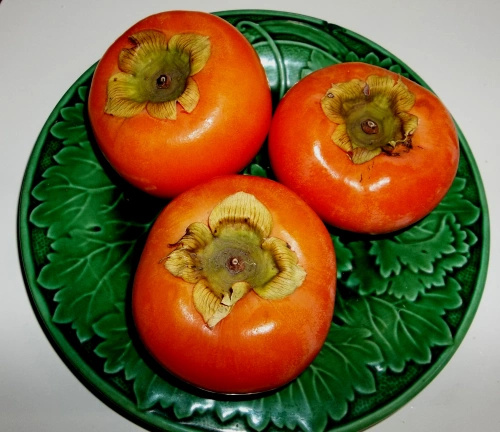
    Life’s rich pageant is sometimes not quite what I expect. The last week or so was one of those times. I’ll start with the good times… coffee with Friend at a garden cafe. At the entrance the glade of persimmon trees was a flaming circle, though the trees have shed half their leaves. Those that are left hanging are tawny orange, and round ripe red fruit hang from every branch, decorating every twig like an elegant Christmas tree. The whole grove was a blaze of glowing colour and sound, birds perched in every tree, singing, whistling and feasting.

    There were tuis whose bright turquoise plumage glistened richly against the red of the fruit, acid green silver eyes flitting from branch to twig, and a host of sparrows, a few thrushes and blackbirds. The green grass sprouting after all the rain was littered with the empty flame- red carcasses of persimmons expertly cleaned out by tiny beaks. It was a busy and happy scene.

    The next day began at seven am with me pulling back the curtains of the French windows from where I can glimpse the road. I saw a flash of white, and then another … just too big to be a dog. Oh no, I thought, Anna and Mike’s new baby goats. No time to ring someone to catch them they were going so fast. It was down to me! Luckily I had my slippers on (fluffy), and I prayed that it was too early for any friendly village pervs to be going about their business, as I dashed out in my pyjamas. (Age is irrelevant … the mere word pyjamas electrifies some elderly gents!)

    Rushing up to the top of the garden, and down the road, I clapped my hands and called them – they are known as the little darlings. Easy-peasy, they came running, relieved to find a person who would look after them. Slowly I edged and skipped sideways in the fluffy slippers, and led them back down the cul de sac to where their field lay. Robert, the in-house, elderly billy- goat gave them heaps when I pushed them back into the field. They have little white pointed faces, sensitive and exquisite. Saanen goats originally came from Switzerland – these two from the SPCA shelter – neutered, and male, so unwanted since they can’t produce milk! The official description of these goats is rather charming – they are described as large, kind, and friendly. These ones are little, sweet and friendly.

    I thought I’d give them a handful of goat treats, and had to crawl into the back of their hut up on the side of the hill-side to get their bowl out. Before I could say knife, all three goats were in and around me, as I scrabbled for the bowl on my hands and knees and was jostled by three determined bodies, and twelve dainty legs. I finally retrieved my dignity and the bowl, and fobbed them off with the goodies.

    Back home and off to the big smoke with Friend for a farewell lunch with the various sprightly and foot-loose octogenarians who were about to leave for energetic tours around Germany, Italy or Alaska, we two returning to our frail husbands who cannot be left. “We were lucky to find a tour that would let over – eighties join,” said one… “We have to carry our own luggage around Italy,” chirped another.

    The next morning, overcome by tooth-ache, the dentist squeezed me in, and an hour later and some thousands of dollars lighter, I was the bemused possessor of half a bridge, until the whole one had been made to measure. Things went from ache to worse in that department, and I was back again, if not writhing in pain, certainly not a happy camper, a few days later. And there’s more today!

    Later, as I backed out of the garage in the rain to return a book to a neighbour, I heard a horrendous bang, and slammed on the brakes. Shaken I climbed out of the car to survey the damage. A wicked squalling wind had just blown off the sea, caught the very high tilt door, designed to let boats in, and slammed it down on the back of the moving car. The electric door was hanging dangerously off the runners at an angle, and badly dented, while the back of the car was chewed up, red glass from the lights scattered everywhere. I backed it out while I could still get it out of the garage.

    So now we need a new door, and a new back on the car. Insurance, yes, but by the time the excess is paid on both, it’s a sizeable chunk of money just for a second in the wind. Later, as I searched my soul for the reason for this kick in the back-side, I got the message. Just regretful now that I must have been so dense, and that it took something so dramatic to learn a life’s lesson!

    And all the while there’s blogs to read, and birds to feed. The tuis and wax-eyes, and blackbirds love the apples and persimmons I nail onto the fence-line, so I can watch them from the sitting room window. And now I’m looking for a Perspex or glass bowl to hold frozen peas and frozen sweet corn. This is food for wood pigeons. Both the loquat fruit and the guava harvest having failed after the drought this year, the pigeons are hungry and likely to starve through the winter. A bird rescue centre advises us to put the food in a glass bowl so the pigeons can see them, and wedge the said bowl in a pururi tree… in my case, it’ll be the guava tree which they already know, and which I can reach easily.

    “Bit expensive, isn’t it?” murmured my other half un-easily.

    “That’s the price we have to pay for preserving our wild life,” I returned briskly and pompously. But it did the trick, and silenced the poor chap.

    So this is life these days… in ‘The Pursuit of Love’ Nancy Mitford once described this humdrum of ordinary existence as the wholemeal bread of life… and so it is… but even so, I sometimes long, like Kubla Khan, to feed on honeydew and drink the milk of paradise.

    So as I went to put another log on the fire last night, I was thinking to myself that yet again, I hadn’t done much with my day, when I remembered Michel de Montaigne’s wonderful words. He was a lovely man and a writer and philosopher in sixteenth century France, who has often cheered me up and given me confidence, since most of his writing is about himself and his thoughts… like mine! In his essays he used anecdotes and personal ruminations which his contemporaries thought was self- indulgent, and detrimental to proper style. But he said: ‘I am myself the matter of my book’, and his popularity has lasted, while his critics have disappeared.

    His words which came into my mind were: “Alas, I have done nothing this day! What! Have you not lived? It is not only the fundamental but the noblest of your occupations”. Thank you Michel de Montaigne – that gives me a whole new appreciation of my wholemeal bread! Persimmons and pigeons, goats and garage, the daily bread of life, they all have a place in the hidden scheme of things… and my part is to love them and live with them, and value them, and to remember that this is a noble occupation.

    Food for Threadbare Gourmets

    Wet, cold wintry weather demands hot, satisfying stodge, so to ring the changes I decided we’d have onion tart. First step is the shortcrust pastry shell, in this case I’m afraid, ready-made, not my normal style, but needs must…. While it’s baking blind in the oven for ten minutes, I peeled and gently sautéed eight big onions – plenty- in four ounces of butter. Don’t let them brown, but gently cook until they’re a soft yellow mass. Beat an egg with two tablesp of white wine, stir in quarter of a pint of cream, salt and black pepper and a good pinch or grind of nutmeg. Stir into the onions, and cook very gently until it begins to thicken, then pour into the pastry case. Return to a moderately hot oven for about thirty minutes, until the top is lightly browned. You can also add two ounces of dry grated cheese like Gruyere.

    Food for Thought

    Kindness in another’s trouble, courage in one’s own … motto of Princess Diana 1961- 1997.

    She also practised and advocated: ‘random acts of kindness.’

  • The drug we can’t live without

    Illustration from the post “The drug we can’t live without”

    “Thank God for tea! What would the world do without tea! How did it exist? I am glad I was not born before tea.” I couldn’t agree more with Sidney Smith, an Anglican clergyman, who died in over a hundred and fifty years ago. And as far as I’m concerned it can’t be any old tea. And certainly not a tea-bag, a monstrous invention that I suspect is just tissue paper filled with tea-dust left in the bottom of the tea chest after my proper tea leaves have been packaged.

    And for me the only tea worth drinking is Twining’s Lapsang Souchong. It comes from Fujian Province in China. According to the packet: “the delicious smoky flavour is produced by lying the leaves on bamboo trays, and allowing the smoke from pinewood to permeate through them”. Ah, so … other tea now tastes quite crude to me after years of drinking nothing but this brew.

    Though the Twining family may be surprised to hear this, I always feel quite connected to them, as I had a great friend who was a Twining, and my former in-laws had lived in a rose- coloured, brick Georgian house built by Elizabeth Twining down by the River Thames. I spent a lot of time there in that beautiful house, very conscious of Elizabeth. The firm of Twinings has been selling tea for three hundred years from premises in The Strand in London, so when the latest head of the Twining family came out to NZ to talk tea, naturally I heeded his instructions on how to make it.

    Always happy to take the least trouble, I was delighted to hear from him (on the radio) that we don’t need to heat the tea-pot – swishing boiling water around the pot before putting the tea-leaves in. Previously it had been an essential part of the ritual of making a pot of tea. But my tea leaves now go into a cold tea-pot. I missed the rest of his talk so I don’t know whether he addressed the thorny problem of milk. To have or not to have – that is the question. Purists don’t. I’m not a purist. I’m a conservative who has had milk in my tea for more than seventy years.

    There‘s a further twist to the milk problem – known as MIF. Legend has it (which is not always reliable) that the Royal family refer to people as MIF’s. But I don’t believe this snobbish canard. MIF means exactly that – milk in first. And this is what the late Nancy Mitford used to funningly call non-U. (U meant upper class, and non-U the opposite!) Milk in first means you’re probably the sort of person who’d lift the port decanter and push it across the table instead of sliding it along clockwise around the table – horrors – or would say: ‘pleased to meet you,’ instead of:’ how do you do!’ – shudders! Incredibly, when I grew up these snobbish rituals defined the man – or woman.

    So for most of my life, I had put the tea in first. But the worm turned about fifteen years ago, when I discovered that the tea tastes much nicer when you do MIF ! This puts me firmly on the wrong side of the tracks – but the bonus is delicious tea.

    If I’m offered a cup of tea that I know will not meet my impossible standards of taste and strength – other people’s tea is always too strong for me – I add sugar, and then it becomes something else. Tea out of a mug is not the same as tea out of a bone china flowered cup and saucer. I dread the day when I’m plonked in an old people’s home, and will have no lapsang souchong and no bone china tea-cup.

    Life without tea is unthinkable. There was no bombing so bad in the Blitz, that you weren’t offered a cup of tea after it; no shortage of water in the Western desert so tight, that there wasn’t always enough for a pot of tea brewed by the tanks; no misery so deep that a cup of tea doesn’t at least give the sufferer a second’s respite; no cold so deep that a cup of hot tea doesn’t warm the innards; no thirst so terrible in the tropics, that a cup of tea doesn’t quench it, and no morning in the office so boring that a cup of tea doesn’t briefly break the monotony .

    I often jokingly use the poet Cowper’s delicious phrase: ‘the cup that cheers but doth not inebriate!’ My grandmother always had a trolley laid for such a cup – on a lace tea-cloth with two tea-cups and saucers, sugar pot and tea-spoons, and the milk jug covered with a crocheted lace doily weighted with coloured beads. (Milk that wasn’t mucked about with didn’t go sour like it does today!)

    In her book ‘Urban Shaman’, American writer CE Murphy writes a delicious description of having a cup of tea: “In Ireland, you go to someone’s house, and she asks you if you want a cup of tea. You say no, thank you, you’re really just fine. She asks if you’re sure. You say of course you’re sure, really, you don’t need a thing. Except they pronounce it ting. You don’t need a ting. Well, she says then, I was going to get myself some anyway, so it would be no trouble. Ah, you say, well, if you were going to get yourself some, I wouldn’t mind a spot of tea, at that, so long as it’s no trouble and I can give you a hand in the kitchen. Then you go through the whole thing all over again until you both end up in the kitchen drinking tea and chatting.

    “In America, someone asks you if you want a cup of tea, you say no, and then you don’t get any damned tea. I liked the Irish way better.”

    She must have forgotten that the American way with tea is simply to toss it into Boston Harbour!

    Food for Threadbare Gourmets

    This is the perfect cake to have with a cup of tea – if you’re not planning on cucumber sandwiches! It’s the classic French cake with equal quantities of everything. So it’s four eggs, and the same weight of butter, sugar and flour. You can halve the amounts for a smaller cake. Soften the butter, and beat it with the sugar – until it’s almost white and fluffy. Add the eggs whole, one at a time and beat. If it starts to look grainy, add a spoonful of sieved flour. When all the eggs are in, fold in the flour a spoonful at a time, using a metal spoon.

    Add enough milk to make a soft smooth mixture which drops off the spoon. Stir in the grated rind of half a lemon. Gently push into a buttered cake tin, the base lined with greaseproof paper, and bake in a moderate oven around 180 degrees. Bake for fifty minutes … if it’s still soft and hissing, cook for another ten minutes.

    Leave the cake in the tin for a few minutes, and then tip onto a rack to cool. I make a butter icing for this, soft butter, icing sugar and lemon juice and the other half of the grated lemon rind, all beaten together. Food for Thought

    Development cannot fly in the face of happiness; development should promote human happiness, love and human relati0ns between parents and children and friends. Life is the most important treasure we have and when we fight, we must fight for human happiness.” Jose Mujica, President of Uruguay at the Rio Conference

  • Food, fear and films

    Illustration from the post “Food, fear and films”

    Village life takes ingenuity in a tight spot, and stamina – plenty of it! These are the times that test men’s souls! Well, we haven’t actually had any chicken stealing like Mr Woodhouse in ‘Emma’, but life has been pretty hairy in our neck of the woods in the last few days.

    Where do I start? We are a quiet law-abiding community, we look out for our neighbours, share our garden goodies, swap cuttings and seeds, and admire each other’s grandchildren. Our greatest excitement is the weekly testing of the fire alarm by the volunteer firemen. But the other night the peace of the four hundred law-abiding souls was rudely shattered. A dog began barking as dusk fell, and continued without end for the rest of the night. I woke every hour of the night, and heard all the other dogs joining the chorus. I overslept and arose bleary – eyed, and then had to rush to attend a veteran’s memorial service in the graveyard.

    I came away somewhat disgruntled that the officiating clergywoman should in-appropriately refer to the Somme as a romantic name. The Battle of the Somme was the day that the British Army lost 20 per cent of its men – 60,000 killed or wounded on one day in France, my step- grandfather being one of the badly wounded. No! Not romantic. Naturally I aired my disgruntlement back at home, and felt all the better for it! So I was quite gruntled when the phone went later that afternoon and a friend rang to see how my husband was; and since his wife was overseas, I invited him for supper that night – three hours later in fact..

    Putting down the phone, my mind raced through the possibilities. We were going to have cauliflower cheese, but could I give this to a man accustomed to gourmet cooking from his talented wife? I thought of various alternatives, but I was always missing one vital ingredient. Cauliflower cheese it would have to be! We were already having Brussels sprouts and carrots with it, and toasted almonds sprinkled over the cauliflower, so I added some chopped and baked golden kumara – crisp and crunchy on the outside – soft and sweet inside. Washed down with pinot gris.

    With some pumpkin soup from lunch, thinned with a little cream and jazzed up with a sprinkling of coriander, served in little gold rimmed coffee cups before we sat down, it seemed a reasonable meal, topped off with hot chocolate sauce poured over locally made coffee ice-cream. No-one wanted coffee after that, but smoky lapsang souchong tea went down well.

    Later that night, I heard the dog again. I thought: I cannot face another night worrying about it. So I jumped in the car and scouted round the neighbourhood in the dark. In the next street, I found a frantic pit- bull terrier on the loose – pacing back and forth and barking ferociously and fearfully outside a darkened house. We have no hedges or fences, just grass flowing out onto the pavement. So there he was, and I was available to him…

    I went next door, where I could see a light on, knowing the people there, and hoping the resourceful man of the house had a solution. But they were visitors, who’d borrowed the house, and were dreading another night of torment. So it was up to me! The husband told me the dog had been alone for two days, was dangerous and and had frightened two children, so I revved off back home to deprive my husband of six pork sausages sitting in the fridge for him to enjoy the next day.

    Back at the house, Daphne, a friend living across the road from the deserted house, was talking to the other neighbours. When I got out of the car, she hurried across, sounding so relieved to see me that she made me feel as if I was the US Cavalry. She warned me to be careful. The poor dog had now retreated to the back of the house, so while I strewed sausages around the front lawn, she went to get some water to fill his empty bowl.

    Home, and a glorious peace settled back across the cottages and gardens, the only sounds the restless sea surging onto the rocks and an owl calling. So I rang the lovely Daphne, and she told me the renters had come back not long after. I tried not to regret the sausages, and hoped the dog had managed to eat them all before his somewhat callous-seeming owners returned. (There are dark rumours that they are on drugs and are up to no good!) But a good night’s sleep was apparently had by us all, both the (slightly) wicked and the (mostly) virtuous .

    After all this mayhem I took myself off the cinema in the next village in the morning, as I feared the film might go off before I’d seen it -‘Performance’ – about a quartet, set in a snowy and romantic-looking New York. When one member of the quartet has a crisis, all the others go to pieces, with all their repressed emotions and frustrations about their lives welling up. The famous quartet is in danger of dis-integrating, until they finally put their art before their distress, and play the glorious Beethoven Violin Quartet No 14 Opus 131, music which reverberates through the whole film.

    A simple story, and I was glad I hadn’t read the dreary reviews of it before I saw it, as they were all uniformly patronising. So, ignorant of the fact that apparently the film had so many fatal flaws, I loved every minute, and came out walking on air, feeling joyful that art had triumphed over all!

    This was thirty six hours in the life of our village for me – mundane and busy – no mystery or profound or significant events… just the daily round and common task. A spiritual teacher once said to me that our spiritual destiny is to be in the right place at the right time. So I have to accept that however mundane, this is my destiny these days – right place – right time… food for friends, fearful dogs, and flawed, enjoyable films.

    Food for Threadbare Gourmets

    Kumara is the New Zealand equivalent of sweet potatoes, and I love the golden ones best. I cut them to the size of a walnut, this time – normally I’d have them bigger. They were then parboiled, and when the water had been drained off, the kumara was slammed around the saucepan and flour sprinkled over them. So with a rough surface covered in flour, hot oil spooned over them and quickly baked in a hot oven, they were crisp and tasty – the crunchiness was just the texture we needed with the soft cauliflower and brussels sprouts.

    Food for Thought

    I don’t know where this comes from:

    Weak people revenge, strong people forgive, intelligent people ignore.

  • The good enough life

    Illustration from the post “The good enough life”

    Back in the last century, a psychologist called Dr Winnicott coined the comforting phrase ‘A good – enough mother’ …. I looked back at yesterday, and thought, yes, I suppose it was a good enough day …

    I woke to the sound of the sea smashing onto the rocks. Good, I thought. I love it when there’s a thundering sea running. Up early to take my husband for minor surgery, I went to the cliff edge to see the white foam breaking over the rocks, and looked out to the horizon. The sun was just rising, a flaming red band above the sea, fading to amber, and then to palest turquoise, the few clouds black in the pearly lightening sky. Still. Not a breath of wind in spite of the pounding waves.

    I fed the birds and then drove into our nearest country town, and it was chill enough for rags of white mist to drape the hollows, and drift across the dips in the road. By the time we had reached the surgical centre, the sun was up and the burnt gold and brown fields were lying defenceless in the baking heat again. Animals lying heaped in scraps of precious shade …

    Leaving the old chap to the anaesthetic and the knife, I searched for a cafe open at 7.30 to have some breakfast, and decided that Eggs Benedict would help to while away the two hours until I fetched him. But by the time I’d picked up the invalid and driven back home with my wonky liver making its grumpy presence known, I realised that Eggs Benedict that early in the day was not a good idea.

    Later the morning soared into joy with a long phone call from eldest grandson, completing a double degree in arts and science at Uni. By the time we’d debated GM experimentation and the environment, knocked off Schopenhauer and his will to live, breezed through Nietzsche, explored his theory of the nature of pain, tried to define happiness a propos Nietzsche and his fulfilment of will, covered the architecture of Paris, categorised various behaviours as schizoid, narcissistic etc, explored Maslow’s concept of peak experiences, agreed on beauty, argued about the number of different species of birds, butterflies and animals, discussed his fitness regime and the nuances of rock climbing, I felt as though my brain had had its own peak experience and a mental workout as well.

    I put down the phone smiling like a Cheshire cat. Nothing – not even a peak experience – beats talking to my grandchildren. Lunch was a breeze, as a neighbour had dropped in some hot savoury scones and cheese turnovers, so I didn’t have to cook. I replenished the bird’s various feeding bowls with wheat, and then tooled back into town to the surgeon for the invalid’s dressing to be changed, and various instructions for his care. At the chemist, picking up the prescriptions to administer, I was greeted warmly by another customer, a youngish woman in a huge multi-coloured caftan to disguise her weight, and only one arm. As her joyful goodness enveloped me, I felt ashamed of my livery grumpiness.

    So I’m now not only cook, bottle-washer, car-washer, gardener, log- carrier, accountant, chauffeur but also nurse. Not, my friends tell me, the sort of cheeky flirty sort that they were in their young days, “ All the men in my ward fell in love with me,” giggled one still beautiful seventy- year- old on the phone… Stopping at the village shop for milk on the way home I found a parcel waiting for me. It was ‘Carolina Cavalier’, the biography of James Johnston Pettigrew, the other General who led Pickett’s Charge at Gettysburg. One of his descendants, a dear friend, had sent it, knowing my fascination for the Civil War.

    Early to bed, too tired to start my new book – I just needed some mental knitting – so skipped happily through a Georgette Heyer. Before putting out the light, and opening the window wide so that the sound of the sea would fill the room and all the spaces of the night, I thought about that phrase, a good enough day… and remembered that old legend about the poor man who had a horse he treasured.

    One day it disappeared, and all the villagers commiserated with him about his bad luck. But he brushed aside their sympathy saying it wasn’t good and it wasn’t bad. A few days later the horse re-appeared bringing with him a herd of wild horses. Everyone congratulated the old man on his good fortune, but he again brushed it off, saying it was neither good nor bad. His son began breaking in the horses, so that they could sell them, but one day he was thrown, and broke his leg.

    More commiserating moans from the villagers, and once more the old man shrugged and refused to judge what had happened. While the son was laid up, the king levied a call on all young men to join the army to fight for their country. How lucky you are that your son can’t go, exclaimed the villagers. And the old man made no comment again. He never judged anything that happened, recognising that he actually never knew whether what happened was fortunate or unfortunate. Life just is.

    So I looked back on another daily round filled with common tasks, which furnished all we ought to ask, in the words of the hymn, and there were unexpected gifts as well as the expected challenges. I don’t know what the hidden significance of any of it is… maybe one day I will. Maybe I will never know. Maybe I will know when I reach the other side. It was simply another good enough day. Neither good nor bad. The stuff of life.

    Food for Threadbare Gourmets

    I have people coming for dinner on Sunday. It started out as four of us, but visiting overseas mutual friends, means that we’re now eight. So I’ve decided to haul a small turkey out of the deep freeze. I’m also going to Benjamin Britten’s War Requiem in Auckland on Saturday night with my daughter, and a party afterwards, and know I won’t be as on the ball on Sunday as I’d like to be. So I cooked the pudding today and it will reheat perfectly. Because it’s a sort of Christmas turkey, I thought I’d do one Christmassy- type pudding, and one refresher – a lemon cream. The Christmassy option is apple crumble, the stewed apple mixed with Christmas mincemeat. It lifts apple crumble into another realm, especially with a little brandy added to the apple- mincemeat mixture, and the crumble a really rich one.

    For the crumble – a big one – I used ten ounces of flour, and two of ground almonds, six ounces of butter and eight ounces of sugar, plus grated lemon rind. Mix the butter into the flour, add the rest of the ingredients, tip over the fruit in an ovenproof dish, and bake for forty minutes or so in a medium to hot oven. It will wait in the fridge, and re-heat on the day. I’ll serve it with crème fraiche.

    Food for Thought

    Life will give you whatever experience is most helpful for the evolution of your consciousness. How do you know this is the experience you need? Because this is the experience you are having at the moment.

    Eckhart Tolle born 1948 Influential teacher, philosopher, and best- selling author of spiritual books

  • Zen and the Art of House Maintenance

    Illustration from the post “Zen and the Art of House Maintenance”

    I think house maintenance has a better ring to it than boring old housework… this way, instead of being a housewife I could even be called a house maintenance executive, or a house maintenance CEO.

    But dressing it up in fancy names doesn’t get me away from the essential boringness of cleaning the bath, vacuuming the house, dusting picture frames and the rest. A recent survey in the UK reported that women spend a year and a half doing housework, men half that. This amounted to four and a half hours a week housework… pea-nuts… In my incarnation as a fifties- type housewife, I did at least two hours housework a day, not including the washing, ironing, cooking and baby care.

    When I was first married in 1963, I did it all automatically, every day, and without thinking. Brought up by a dedicated exponent of house maintenance who when I was a child made me strip the bed to the mattress every day, and leave it to ‘air’ before being allowed to make it again, conditioned me to being a domestic automaton. It was a habit I found hard to break as an adult. But becoming a single mother and working full time put the brakes on vacuuming and dusting every day. And later the entry of duvets into our lives changed mine!

    I once read that the late Jean Muir, an English fashion designer with a perfectionist ethic, had been taught to make her bed by the nuns at her school somewhere in the West Indies. She said it was then and there that she learned about perfectionism and attention to detail. I have this vision in my mind of a long, high-ceilinged, calm, white convent dormitory with a white robed nun, watching the creation of these little works of art – a perfectly made bed with a white counterpane – and making each child re- make their bed until it really was the best they could do.

    I can imagine the atmosphere in a room like that, where everyone was putting their hundred per cent into what they were doing… when something like that happens in a room, it affects the atmosphere. When I did a series of personal growth courses for seven years, one of the things we had to learn to do on a gruelling two week residential course, was to ‘Zen’ our rooms. It was the same thing that the nuns were teaching the children.

    We had to leave our room in the most perfect state of cleanliness and harmony possible. Few of us managed to achieve this state of indefinable perfection… and most of us were still mystified or defeated by the concept at the end of the course. But over the years it’s something I’ve come to understand and treasure, and it lifts mere housework or house maintenance into another sphere.

    When I was a helper on another of these residential courses, and we were packing up to go after all the course participants had left, someone came in while we were having lunch, and said: “Have you seen Hut Number Ten’s woodshed? We all piled out, and one by one stood in the doorway, and experienced an indefinable sweetness… the wood was piled around the shed, and the shed was spotless… but no more spotless than anyone else’s wood shed. I decided that what made the difference was the love and commitment that had gone into stacking the wood and this left the woodshed in a perfect state of equilibrium. Nothing you could see or describe, but something you feel.

    These days that’s how I feel about housework/ house maintenance. I want the place to feel ‘Zenned’, as we used to say. That’s difficult with my amount of clutter, but I know it has more to do with the way I feel about cleaning the house than what’s in it.

    Though there is also a sense of rightness about the things that are in the room… maybe a touch of William Morris’s dictum, “ have nothing in your house that is not beautiful or useful”.

    Sometimes I move and do everything at half speed, which means that I have to stay totally present and conscious, and though I’m doing it slowly, somehow everything gets done in good time, and in far better shape than if I’d just done a quick tidy-up.

    Sometimes I just do it with my whole heart, not cutting any corners, doing it as thoroughly as I can. And I find when I’m doing this, I don’t find it boring. Something about paying attention to the detail and doing it without resistance, changes the whole equation. If I do the vacuuming grudgingly, it’s a chore. But if I can make that leap of will and give up the resistance to it, it’s a different experience.

    More than that, I find chaos or dusty rooms depressing. And sometimes I want my home to feel like sacred space. Needless to say I’m not consistent in my efforts. In fact sometimes I feel like Sisyphus forever pushing his stone uphill before it rolls down again… this is because though children, grandchildren, seventeen dogs and one cat can make a mess, none of them can compare with a husband.

    Robert Pirsig in his ‘Zen and the Art of Motorcycle Maintenance’ wrote that: “Peace of mind produces right values, right values produce right thoughts. Right thoughts produce right actions and right actions produce work which will be a material reflection for others to see of the serenity at the centre of it all.” But I wonder if you work backwards if the same applies… by doing the right actions, do we discover peace of mind and all the steps in between?

    And the right action seems to have a lot to do with detail. I remember our teacher on one of these courses saying how he had travelled from the US to Japan to do an advanced course with Zen monks, and he was thrown off it on the first day… he had failed for not paying attention to detail… as I’ve grown older and fractionally wiser I can understand this.

    God is in the details, and it’s in the details that the satisfaction and the perfection resides. I was reading Celi at http://www.thekitchensgarden.com and her blow by blow description of feeding lambs and the best milk mix and best timing for their well-being was a most moving testament to the beauty in the detail.

    This every moment of the twenty- four- hour – seven- days- a- week commitment to keeping the lambs alive and thriving, warm in their coats, and cherished in their sheltered corner of the barn, was a demonstration of how attention to detail becomes a labour of love – and maybe not even a labour – but a journey of love.

    Unless Celi did this marathon task with love, I wonder if she’d even be able to keep it up, with feeds every few hours day and night, trips to and fro through the snow and the dark between house and barn, heating the milk- not in the easy micro- wave but in hot water – giving the four lambs colostrum from her cow which she milks, and keeping them hydrated through the day with endless sips. But when we do a task with love in our hearts, the love gives us the energy to do it.

    It feels as though by paying attention to the detail, we are actually being a channel for love. And this is what can carry me through the washing up and the bed-making. It certainly carries me through the three meals a day routine of feeding an always hungry husband. I do find it impossible to cut corners and give him an overcooked fried egg, or a soup bowl with a splash on it. And though I don’t manage to keep up a constant commitment to Zen and house maintenance, at least I know the recipe for making it less of a chore and more of a commitment to beauty…. which somehow must make a difference to the world, since we are all connected.

    Food for Threadbare Gourmets

    Chicken mince was on special at the grocer- cum- delicatessen in the nearest village so I took some home for supper. Mixed with chopped onion, garlic and celery, grated carrot, mixed herbs, salt and pepper, and fried in little patties, they’re good either hot or cold. We ate them with new potatoes and smashed peas, one of our favourites. Fry a chopped onion and some garlic. When soft, add lots of thyme, frozen peas and enough chicken stock ( I used a chicken stock cube) just to cover the peas. Boil until the peas are soft, and the stock almost disappeared. I used to just mash them with a potato – masher, now I whizz them in my new stock blender. Any left over goes into a green soup.

    Food for Thought

    “Men occasionally stumble over the truth, but most of them pick themselves up and hurry off as if nothing ever happened.” Sir Winston Churchill 1874 – 1965 Leader of the free world against Hitler until the US and USSR joined in two years later.

    He also said:” I like pigs. Dogs look up to us. Cats look down on us. Pigs treat us as equals.”