Category: Memoir & Family

  • Harry Windsor and the Poisoned Chalice

    Christmas Day when I was twelve was made hideous by my younger sister’s tantrums all day because she thought I had one more walnut than she had had in our Christmas stockings. I had four, and she had three. The next day the fourth walnut was found under her bed where it had rolled.

    I was reminded of this when I read Harry, ‘Prince of England’, as he calls himself, sharing his angst with the world over the time William had three sausages and he had only two, while his older brother had a bigger bedroom than he.

    Like my poor sister, he has drunk deep of the poisoned chalice of jealousy and envy.

    Five years after the Walnut Debacle, my headmaster at boarding school was writing to my father that my sister was obsessed with jealousy of me, as a reason for some of the mayhem she was creating.

    Disturbed  children with painful backgrounds rarely do well at school, and Harry is a classic example. 

    But unlike my sister who had lost our mother at age five, and with a father fighting in North Africa and then Italy, and no family, Harry was surrounded by love, with not just a very concerned father, but devoted grandparents, aunts, loving cousins, a friend and companion in lieu of a nanny appointed to always be there for him, and various dedicated military men who made it their business to mentor him.

    With all this love and support Harry is still stuck in self pity and victimhood, and is still possessed of a burning sense of injustice that he didn’t get the same goodies as his brother.

    He says he’s done lots of therapy (with that same brother’s support, he tells us) to move on from the grief of losing his mother – though he doesn’t acknowledge that his attitude towards his brother is jealousy.

    But therapy is designed to help people cope better with their problems and their lives, and not to change their personalities. Unfortunately Harry’s personality has been revealed to us in his autobiography, his interviews and self-indulgent films for Netflix.

    And his real self is not a pretty sight. Perhaps the most extraordinary aspect of the Harry saga is his level of ingratitude. Rules have been broken for him, strings pulled, excuses made, cover-ups concocted either to explain away his behaviour or to get him what he wants.

    Somehow he scraped into Sandhurst with two questionable A levels, and somehow got through the four to five day long officer selection board during which time a team of senior officers watch, note and assess every aspect of a candidate’s behaviour. 

    During my assessment at Westbury, I still remember the unnerving sound of the officers scribbling their notes on their mill boards throughout all the test sessions, inside and out.

     I remember a question right out of left field – what book are you reading at the moment? Fortunately the book I was reading was also being read by the Colonel at that moment too, and we had an amicable chat – what books would Harry have been able to list:  ‘How to look after a polo pony,’  or a: ‘ Guide to choosing in-offensive fancy dress’?

    Luckily the experienced staff sergeants and sergeant majors at Sandhurst have nursed  kings and princes from many countries through the Academy, from Jordan, Oman, Dubai, Bahrain, Qatar to Luxembourg, so Harry was in practised hands at Sandhurst.

    Yet during his time in the army he brought it into disrepute when he gained headlines for wild antics –  playing naked pool in Las Vegas, (his CO was not pleased) tossing girls in full evening dress into a stately house swimming pool, (until stopped by the butler) and staggering out of nightclubs barely able to stand up, (supported by a sober military mentor). 

    After being caught smoking cannabis as a teenager, Charles took him to a rehabilitation centre to help him see the long term consequences, yet in 2023 he was recorded as saying 

    that: “psychedelics are a fundamental part” of his life and that he used “psychedelics, ayahuasca, psilocybin, mushroom.”.

    Which leads me to wonder if these mind altering drugs may be responsible for some of his irrational behaviour and vengeful pursuit through the courts of those who incur his displeasure, or who thwart his desires for status and recognition, including round the-clock- police protection.

    The Anglican church broke its rules so Harry could have a big, fat, white wedding like his brother, even though his father had had to make do with a registry office when he married a divorced woman. But after the wedding the green-eyed monster pounced again, when instead of moving into a 20 room apartment like his brother, he had to settle for the same three bedroom cottage that William had used when he was first married.

    The faithful, loyal Duke and Duchess of Gloucester were turfed out of the 20 room apartment in Kensington Palace where they had lived for 47 years so Harry could move in. But his new wife preferred Windsor Castle – the Queen gave them a five bedroom cottage in the grounds instead.

    In his book Spare, Harry details his rows and disagreements with his brother and sister-in- law, and the annoyance of the ‘grey men in suits’ who were trying to keep his circus on the road, and disguise his irresponsible behaviour, as they had been doing ever since Harry had left school  – hard work for them, but which Harry felt was obstruction and interference. 

    And now he has removed himself from behind that shield of help and protection, the world has seen who and what the real Harry is. And the strange thing is that Harry himself has revealed it, reminiscing about his school days when he mocked a disabled teacher at school as she made her way painfully backwards down the stairs, and disparaging the first girl he had a sexual experience with.

    It’s an absolute taboo in the forces to mention lives lost in combat, but Harry boasted of killing 25 Taliban who probably had wives and children like him, describing shooting them from a helicopter.

    As Captain General, an honour he inherited from the Duke of Edinburgh, he skipped the  memorial service for Royal Marines who were killed in the 1989 Deal barracks IRA bombing, a tone deaf dereliction of duty, in order to posture at the Lion King premier with his wife, and angle for work for her.

    And since his departure from Royal duties, this person who didn’t even have the courtesy to speak to or visit to tell his future father-in-law he was marrying his beloved daughter, has undermined, maligned, lied about and sabotaged his own family.

    He has colluded with his wife, who has fuelled his jealousy, in a campaign of revenge for all his imaginary injustices and has become a professional victim in which his steadfast family, the grey men, the press, the legal system and anyone else who thwarts him are villains out to get him. In the years since he married, the party-loving, rebel young prince has morphed into a resentful, tone-deaf, middle-aged man exuding self-righteous, offended dignity

    Many commenters keep quoting the Prodigal Son as grounds for forgiving and welcoming Harry back into the family. But they miss the point about being forgiven. The Prodigal Son had repented, but Harry doesn’t think he’s done anything wrong. 

    Instead, he’s demanded apologies from the family he told radio listeners during his engagement had welcomed Meghan, and had become: “the family she had never had.”

    (Never mind the father and uncles who’d paid for, supported and loved her.)

    My husband has a saying you can’t fix stupid, which puts me in mind of the ancient Sufi 

    adage: ‘He who knows not and knows not that he knows not, is stupid – avoid him.’

    The next line is: ‘He who knows not and knows that he knows not is ignorant – teach him’.

    But sadly no-one seems to have been able to teach Harry anything. 

    He remains in a permanent state of not knowing and unawareness, and permanently too, in the claws of the green-eyed monster. Like my late sister he will probably be unable to escape this misery for the rest of his life. As Quaker William Penn said, “The jealous are troublesome to others, but a torment to themselves.” 

    Food for threadbare gourmets

    I’m always fascinated by chefs and the like who disclose what are the staples that they always keep in their larder or pantry, aside from the obvious like bacon and eggs. For me, this is virgin olive oil, pasta, tins of tomatoes and parmesan in the fridge.

    When there’s nothing ready to eat in the fridge, and there’s no flicker of inspiration, these handy ingredients are the answer. Chopped fresh or tinned tomatoes are gently fried in the olive oil while the pasta is cooking, and parmesan grated. When the pasta is ready, tip it into the tomato mixture, toss it together, and sprinkle the parmesan on each  helping.

    Torn shreds of fresh basil are delicious if you have fresh basil on hand. I cook the pasta in cold water, a la Nigella Lawson, and find it avoids the dreaded clumping as long as it’s given a stir every now and then.

    Food for thought

    Those who do not have power over the story that dominates their lives, power to retell it, to rethink it, deconstruct it, joke about it, and change it as times change, truly are powerless because they cannot think new thoughts.

    Salman Rushdie

  • A life-changing accident

    I was dragged screaming from the car. No- one realised that the reason I couldn’t lift my leg to get out was because I’d broken my hip.

    Once inside the hospital the next ordeal was the battle to save my clothes. Cut off the expensive trousers l’d only been able to afford because they were in a sale? No, no, no… Cut off the top given me by a friend who only gave expensive extravagant beautiful presents? Again no. My newest bra? At this my love exploded,” I’ll buy you fifty bras, to replace it”… the bra went.

    After the X-rays, came the two-and-a-half- hour drive in an ambulance over winding country roads which seemed to be pitted with railway level crossings every half mile. Thank heavens for morphine.

    In the orthopedic ward, there were five other women – three other feisty intelligent women with a wicked sense of humour. Another was so ill that her three daughters kept a vigil by her bed – three graces – elegant women with long legs, wonderful clothes and an active sense of humour. They wore clothes to gladden the eye – a skirt made of pleats from every shade of red, pink and orange to yellow, a long red sixties dress… The daughter who kept the night vigil made us tea in the night and pulled up our blankets to cover us when we fell asleep. The sixth woman was a gentle sweet soul who was too vague and forgetful to look after herself, and brought us all together in our efforts to protect her.

    In the bed opposite me lay Jane, a kindred spirit, and one who had risen above the tragedy of her terribly handicapped daughter and helped to revolutionise the care of disabled people, including organising a nappy service, taxi services, and getting the law changed in recording the very existence of such children. In the far corner was an older Maori woman typical of so many older women of her race – full of life and fun and stroppiness and dignity, while in the other corner was a quiet, witty and intelligent English woman.

    The nurses were gentle, kind, mainly Filipino and Indian girls, while the two male nurses were a gift. One, a tall American engineer, had changed course in mid career and put himself in the power of bossy female charge nurses. His dry sense of humour and calm competence and compassion brought serenity into the ward every time he appeared, while the other young man with the bluest eyes , was intelligent, capable and fun.

    “Is there any word in the English language you don’t know?” he asked me after a couple of days. He then instituted a game in which we both presented each other with an arcane word every day which we had to recognise and spell.

    When we had all had our operations and split up to go to other hospitals, the Maori woman stood in the doorway surrounded by her daughter and grandchildren and sang a Maori farewell. I replied by singing ‘Auld lang syne’ and everyone in the ward joined in, a beautiful swelling chorus of male and female voices. When we said goodbye to the three graces the eldest said she had always thought hospitals were sad places, but she’d never laughed so much in her life.

    Jane, who had had the same operation, and I, repeated the purgatory of the ambulance ride back to our local hospital, but this time it was a journey filled with laughter, as our ambulance driver took on the persona of an airline pilot, and conducted the whole journey as a send-up of a plane flight.

    Back at the hospital, Jane and I shared a room decorated in soft celadon green with heavy expensive matching curtains and our own bathroom. There was a legend, that on the door of our room was a notice saying ‘Do not mess with these women’, and our days filled with laughter continued.

    When we were able to totter around on walkers, I found that every ward looked out onto flower gardens. Every day I sat in a bower where hundreds of gardenias scented the air, a blue jacaranda tree flowered overhead and birds sang in the sunshine.

    The delicious food, we discovered, was cooked by the chef from the local restaurant in town that was a by-word for good food. Each day we ticked our choices off on a form, and the second day I decided to buck the system. Where it listed sweetener for the porridge I wrote ‘Lots of brown sugar’. To my surprise, lots of brown sugar arrived, so the next day I pushed my luck even further. Where the list said margarine, I wrote ‘lots of butter’. These treats arrived for several days and then the Food Police pounced. ‘Please consult your dietician and health professionals about your diet.’

    I groaned and gave up, knowing the days of brown sugar were over. But lo, the next morning porridge and brown sugar arrived for me. I never discovered who had noticed and intervened and sneaked in the magic words on my order, but what a joy to know someone cared! After a week at this happy little hospital, I returned home armed with enough medication and rehabilitation equipment to equip another ward, and settled back, to be visited by teams of helpers, physios and nurses.

    While the rest of the world struggles with Covid, all I have to cope with is a broken hip, and the experience was truly life- enhancing. If having an accident was bad timing just before Christmas, the silver lining was the amazing experience of being with so many beautiful people.

    I emerged from what could have been an ordeal, with the knowledge instead, that goodness, kindness, courage, and laughter are as much part of our world as all the misery we read of in the media. I had been reminded that these are the things that keep the world turning, not politics and mayhem. Happy memories and gratitude and the knowledge of the goodness of life, are the lasting after- effects of another profound experience with which life has gifted me. In that alternative universe where goodness triumphs, all is well and all manner of things are well, as Mother Julian reminded us.

  • Heaven is a Place on Earth

    T Our home in the forest

    This is the last instalment of my autobiography before I resume my normal blogs

    Illustration from the post “Heaven is a Place on Earth”

    I asked the Salvation Army’s Missing Person’s Bureau to find my mother when I was nearly fifty. It took them three years, and when they did, I immediately flew to London to see her.

    We met on neutral ground at the Tate Gallery, and sat on a leather bench in front of a masterpiece. I have no idea what the picture was, but the pattern of the red brocade wall- covering surrounding it is stamped on my memory forever. We stayed there for hours until the gallery attendant gently told us they were closing, and then we paced the Embankment trying to catch up on a lifetime.

    In the end we never did bridge the gap of that lost time as she only seemed to remember the good times we had had, while I remembered the bad times, but what I learned about her broke my heart over and over again. Her father had left before she was born, and two stepfathers died of cancer.

    When she was eight months pregnant with my younger sister she lived through the angst of waiting for her husband to return at Dunkirk. He didn’t. He escaped two weeks later. Two years after this, when he returned to do his officer training she became pregnant again, and gave birth to that child on her own as well.

    And now, she met a farmer from the Channel Islands, who was working on Pluto – Pipe- Line Under the Ocean, a top -secret invention to supply fuel to the armies at D-Day. They planned to marry when the war was over and take us children to live on his family farm. There was an accident and he was killed. My mother was pregnant, and in despair she fled.

    She couldn’t afford to keep the baby, adopted her, emigrated to Australia to start a new life, and eventually re-married a man she’d met on the voyage out. Back in London she had a daughter with her new husband, and when that baby was a few months old, this man went into a sanatorium with TB and when he recovered, never returned to her and their child.

    She brought up that child alone, and became an efficient civil servant. On her retirement she sold her house in order to move and buy a house near her sister. Shopping for a new sofa, she learned from the hushed gossip in the local shop that her solicitor had hanged himself after embezzling all his clients’ money including hers.

    She had a few thousand pounds left, which she blued on a trip to China, to fulfil at least one life’s dream. She had whiled away the long lonely years by learning Chinese, attending cookery classes, playing chess and listening to opera. And when I met her, she was living in a council retirement flat. She was a gentle, refined woman, and never at any time when I met her at intervals before her death, made any complaint about her life; and though she was sad, she was never bitter.

    After a forty-year silence, I met my stepmother again too. And the weeks I now spent in her company were amongst the happiest in my life. All the dislike, hostility and coldness she had shown me had dropped away. And all the hurt and pain and anger I had felt at being rejected also dissolved. The love between us was so complete and miraculous, it felt as though we had transitioned to the next plane of being, when we see each other clearly, and recognise the love and beauty of each other’s soul.

    My father died fifty years ago. He shaped the person I am today. Back from the war when I was aged ten, he used to stop at a second- hand book stall set up by his bus stop on Friday nights. There he chose his old favourites for me, like Lord Lytton’s ‘The Last Days of Pompeii,’ and ‘Harold’, Kingsley’s Westward Ho and my very favourite – read and re-read – Hypatia, the Greek woman philosopher and mathematician who came to a sticky end, thanks to men! Then there was David Copperfield and so many others.

    When we moved to Catterick, he shared the books he was reading then, which included Sir Nigel and the White Company, Conan Doyle’s historical romances set in France in 1366, C.S. Forester’s Hornblower Books, and Napier’s History of the Peninsula Wars. And every night, when I’d finished my homework, he read aloud to my eleven- year- old self from H.M. Trevelyan’s ‘English Social History,’ setting up my fascination with history.

    Still eleven, he taught me the value of money and compassion. Sitting at the dining table I had suggested my stepmother buy some sheepskin boots because her feet were cold, “they only cost five pounds,” I blithely chirruped.

    “Look out of the window,” my father ordered. A worn working man with a deeply-lined face and shabby clothes covered in grime from a building site, was dragging tiredly past. “That man earns five pounds a week to feed his family”, my father grimly pointed out, and lectured me on extravagance in words that would have profited Marie Antoinette.

    Later in Malaya, when I was sixteen, and we entertained the Indian quarter -master to tea with his wife in her colourful saris, and I had to give them my books on the Royal family who they loved, he demonstrated tolerance and the opposite of racism.

    Back in England in the mid- fifties, he taught me to accept homo-sexuality at a time when it was scarcely mentioned. I commented on a strange man on the bus who wore a brown striped suit with flared trousers, a wide brimmed brown felt hat and thick makeup. He laughed, told me he was a wonderful old ‘queen’ and was such a punishing boxer that no-one dared jeer at him.

    He demanded respect for all his soldiers, telling me they’d fought through the war, were bringing up families on a pittance, and were fine decent people. Like Abou Ben Adhem, he ‘loved his fellow men.’

    Later when I was twenty-one, he suggested that my outlook was a bit narrow, and that I should read The Manchester Guardian. Back then it had a reputation for fine writing, tolerant humane values, and wide culture. I became a sensible feminist, reading Mary Stott on the women’s pages, learned about good food, enjoyed witty TV criticism, discovered avenues of musical appreciation, and acquired a burning social conscience, which cut me off from all my family and many of my friends!

    When he retired from the army at forty-five he commuted/cashed up his army pension to pay for his youngest son’s expensive schools, and so condemned himself to working to support his family for the rest of his life. But he died in 1968 at fifty-four.

    I wonder if anyone will remember me, fifty years after I am dead? At the moment, I am far from dead, and know that he would have loved to know what risks I have taken to live my life as fully as I can and to be able to love as deeply as I do now.

    When I began blogging, I inadvertently stumbled on an unusual blog when I was looking for some poetry I’d enjoyed. When I left a comment on this rather beautiful blog, which was not poetry, the writer replied with such courtesy that I was enchanted. In the science fiction writer Robert Heinlein’s words – I ‘grocked’ him. Which meant I felt I knew him, and recognised him, and understood him at a very deep level.

    We began ‘following’ each other, and our comments reflected a mutual admiration. My new follower wrote exquisite remarks on my blogs, but when a rather malicious stalker I’d attracted from the day I first began writing, began sneering at my “followers massaging my ego,” I feared that he might recognise the underlying message of love in the sensitive, perceptive words my new friend wrote on my blog. I feared that my stalker’s spite could spoil this friendship.

    So I wrote to my friend, suggesting that we write privately instead, to avoid any unpleasantness. Two years and two thousand letters later, my friend – now my love- left his country, his home of forty- five years, the job he loved at a world-famous observatory, his family, and his friends and came to begin a life with me.

    I read recently:”I don’t think genuinely falling in love is negotiable. The heart goes where the heart goes. Age has nothing to do with it.” This is true – he’s much younger than me, cherishes me the way I’ve never been cared for before, we share the same spiritual values, and revel in a life of love and freedom.

    Like me, he had left behind not just his home, but most of his assets too, so we looked for a place where we could afford to live, that would give us the environment we both wanted. It was waiting for us. Just as out of over eighty million bloggers we had found each other, so we discovered the perfect place that we could not only afford, but which turned out to be a haven of beauty, peace, and community.

    We bought a tiny one room log cabin set on forty acres of covenanted podocarp forest, where we look across a valley like an amphitheatre and gaze up to our own mountain. We listen to our streams tumbling over rocks below, and hear birds singing from the dawn chorus in the morning to the moreporks/owls through the night. Our property is home to various almost extinct species of frog, lizards, geckoes, to more than three hundred species of butterfly and moths – or lepidoptera as I’ve learned to call them – and to rare plants and trees. People come from the universities and world-wide societies to study these precious vanishing species in this time of the sixth great extinction.

    Our neighbours, hidden in the forest, have a shared environmental commitment to keeping the sprawling hills and ranges free of pests and to nurturing the creatures who’ve made their homes here for milleniums. These neighbours come from all walks of life – an architect, a musician, zoologist and landscape professors, a geologist and several engineers, a restauranteur, a painter, a therapist and others. They are all nationalities, Swiss, English, Australian, Belgian, Dutch, Maori, Russian, Mongolian, American.

    Behind our high wrought iron gates, we share a civilised social life, and work together to preserve the forest. On our property, we’ve extended our original tiny dwelling, planted fragrant flowers, created architectural flights of steps, made melodious bells from diver’s tanks, re-cycled doors and windows and other found objects, and live a blissful life of creativity and harmony.

    I wake in the morning and look out of the window to where the dawn shines gold on the peak of the mountain. I turn to my love and whisper, “the sun is on the mountain.” And another day begins of a quiet mystical life of love and beauty.

    The end

    Food for Threadbare Gourmets

    I love Indonesian food, and a friend gave me a little booklet of recipes years ago. One page in particular is stained and dog- eared… with the recipe for sambel goreng telor on it – this means eggs in coconut milk.

    For two people hard boil four eggs, cut them in two and put in a deep dish. Fry a chopped onion, and when soft add tomato, clove of garlic, half a red pepper, a table spoon of brown sugar and salt to taste. When they’re soft, add half a cup of coconut milk, heat and pour over the eggs. Delicious with plain boiled rice.

    Food for Thought

    Hear our humble prayer, O God, for our friends the animals, especially for animals who are suffering; for any that are hunted or lost or deserted or frightened or hungry; for all that must be put to death.

    We entreat for them all thy mercy and pity and for those who deal with them we ask a heart of compassion, gentle hands and kindly words.

    Make us ourselves to be true friends to animals and so to share the blessings of the merciful.

    Albert Schweitzer, doctor, humanitarian, writer, musician, organist and organ restorer

  • The future in the distance

    I know I said this would be the last instalment of my autobiography, but as it turns out, there is one more chapter to come.

    When I was in the army as a twenty- two- year old lieutenant, I had to take a detachment of my girls to help at a local fete at Stratford-on -Avon. My job was to look after John Mills, the film star, and his daughter Juliet, also a film star. They were opening the village fete.

    Illustration from the post “The future in the distance”

    When this not-too- onerous task had been completed, I was free to wander round the fair ground, though feeling somewhat conspicuous in my dark green army uniform. I ducked inside a fortune teller’s tent for fun and sat down in front of her crystal ball. She took my hand, and peered at it. “There’s writing in this hand,” she said. “you’re going to start writing and you’ll never stop. It’s all through the rest of your life.”

    Nothing was further from my thoughts at the time, and I dismissed it as a fortune teller’s fantasy. It took another seven years before her prophesy came true, and I’m still writing! During the years of Patrick’s retirement when he was still churning out a weekly column and editing a grey power magazine, I was still writing too.

    Not only did I write for his magazine – interviews, columns, and cookery articles, (all unpaid) helping him design covers and acting as courier to and from the printers, but I also checked his books before they went to the printer, thought of titles like: ‘Sons of the Sword’, ‘Dangerous Journeys’, and provided material to give them extra depths like the extracts from the Mahabharata about a nuclear explosion, when he wrote of Hiroshima in ‘Sons of the Sword’.

    When he ran out of ideas for his column, I’d cook up a reader’s letter for him to discuss, or find and research a topic for him, and as he grew less able, I’d check over every column trying to re-write confused sentences and connect unconnected trains of thought. He used to get very angry with me at correcting his work, and I dreaded doing it every week, but it had to be done to maintain his credibility.

    A publisher commissioned me to write sixteen illustrated books on New Zealand, I wrote for a parent’s magazine, and for my pleasure also began writing a book called ‘The Sound of Water.’ Through all the sadness and despair of the last years of our marriage this writing energised me and gave me pleasure.

    Patrick had six major operations during this time, and they were always followed by complications. When we could still afford private care, it was daunting to discover that once the operation had been completed, and paid for- we were out on the street! Not even any help into the car with a severely disabled heavy patient, and there was no follow-up care.

    When we had to fall back on the state health system, the follow-up care was meticulous and took a great weight off my mind; but we still had the long treks into the pain clinic, the geriatric department, the heart unit, operations for cataracts, endless visits to the hearing clinic for hearing aids, and regular trips to the doctor… I was now facing what so many women who marry much older husbands have to cope with.

    When he fell over, a frequent occurrence, I would have to ring the local volunteer fire brigade for help in lifting a heavy and inert old man – it would take four men to get him off the floor, and then onto a stretcher and into an ambulance to hospital.

    The army of medical practitioners involved in his care all told me that now was the time to ask for family help, ‘you can’t go it alone’. But like so many other families, mine too was spread around the globe or coping with their own burdens.

    Though I was frequently ambushed with depression in this time, and so stressed that heart pains made me wonder if I was having a heart attack, the support of friends, coffee, lunch or little get- togethers kept me going. And now I discovered opera, becoming an afficionado of the New York Met’s filmed operas which showed at our local cinema regularly.

    Back home I’d compare different versions on Youtube, and found solace and stimulation in this new passion. And then blogging became a hobby too – more writing! And because I always looked bright and efficient, loved my garden, books, music, clothes, good food and friends, no-one ever thought I wasn’t coping.

    Once I organised a two week stay of what was called ‘respite care’ in a nearby retirement home, paid for by the health service, and Patrick’s children were appalled at my callousness. During this time, I was so exhausted I slept most of the time, which I’m told is typical for carers. I began to wonder guiltily if I would ever have any life left to enjoy, when this long period of illness and frailty was over for a husband – who in spite of all his operations and constant illness was still, it seemed, indestructible.

    I began to seek comfort in the words of people like Ibsen:

    ‘ELMER: But this is disgraceful. Is this the way you neglect your most sacred duties? NORA: What do you consider is my most sacred duty? HELMER: Do I have to tell you that? Isn’t it your duty to your husband and children? NORA:I have another duty, just as sacred. HELMER: You can’t have. What duty do you mean? NORA: My duty to myself.’

    I found the lines in Oriah Mountain Dreamer’s poem gave me courage:

    ‘… I want to know if you can disappoint another to be true to yourself. If you can bear the accusation of betrayal and not betray your own soul. If you can be faithless and therefore trustworthy.’

    And Hillel’s words written two thousand years ago: ’If not you – who? If not now – when?

    So in the end, after giving him a rousing eighty-fifth birthday party which all but two of the children were able to attend, I decided I had to make a decision. Three weeks later, with my doctor’s encouragement, I told him I couldn’t go on any longer, and that I’d found several good retirement homes for him, which of course he refused to consider, saying he was not ready for that yet.

    It happened, and I incurred odium and ostracism from all his family and most of the people connected with him. Even during the first year on my own, struggling with too little money, a burden of guilt, and legal woes, I was happier than I’d been for years.

    Patrick lived in a luxury retirement home, where his daughter was the manager. He was immediately assessed as needing to be in the hospital wing, which I felt justified my decision. Family and work associates all made the trek out to see him regularly, though no-one had bothered to do this when I was looking after him!

    He was still collecting Japanese artifacts and still writing his monumental and unreadable history of Japan and the Pacific War. I moved to the Coromandel peninsula, a four hour drive away, and when I received a phone call one evening three years later, saying he was ill and unlikely to last beyond the next day, I drove through the night to see him.

    He was unconscious, and I sat by his bed for three hours until I felt his daughter wanted me to go. I bent over to kiss him and say goodbye, and he opened his eyes and looked straight into mine.

    He had been twenty-one when he joined his beloved Auckland Star. On its masthead back then were the lines:

    For the cause that needs assistance,

    For the wrong that needs resistance,

    For the future in the distance,

    For the good that we can do.

    He faithfully and steadfastly lived those words for the next sixty- eight years of his life until he died at nearly eight-nine.

    At his funeral, as the hearse was about to pull away, an elderly man stepped forward and placed a flower on the coffin. It was Arthur Thomas.

    Food for Threadbare Gourmets

    This is a wonderful lunch dish for a special occasion. I found it in a magazine a few years ago, and now that spring is here, am about to dust off my quiche tin for it. Having prepared and cooked a short crust pastry shell, the recipe suggests to cook six sliced red onions in two tablesp of oil and four tablesp of brown sugar until soft. When golden leave to cool. Mix five egg yolks with three hundred g of crumbled blue cheese, 22 g mascarpone, six slices of prosciutto or thin streaky bacon and eighty g of pine nuts. Stir in the onions and spread the mixture into the pastry case. Bake at 180 degrees for 20-30 minutes or until cooked. If the top starts to brown too fast, lower the oven to 160 degrees.

    I like it with half cheddar and half blue cheese, use cream instead of mascarpone, and chopped fried streaky bacon – still good… The magazine recommends six small onions, and the quiche is double the normal size I cook, serving ten people. When I make it in a normal sized quiche tin for five/six people, I use two onions, and 100g of blue cheese plus several ounces of cheddar and a good helping of cream.. I also use five whole eggs. Hope this answers your query Nicki, from Expat Alien… I’d feel the same if I saw those amounts recommended by the magazine !

  • Extraordinary year, strange events, fascinating people

    Illustration from the post “Extraordinary year, strange events, fascinating people”

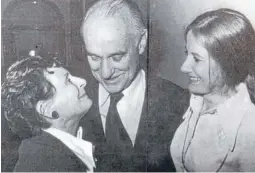
    Bill Sutch with his wife and daughter after his trial

    Another instalment of my autobiography before reverting to my normal blogs

    It was an extraordinary year, but it just seemed ordinary at the time! After Bill and Shirley’s visit at the start of 1975, our family plunged into village life, which included the annual flower show, probably the most important event of the year in our valley. We were still visited regularly by our extra-terrestrial visitors, and the whole family became accustomed to their presence.

    We were also visited by different members of Arthur Thomas’s family, his parents, his various brothers, his wife…all needing to chew over the cud and somehow wring some shreds of hope out of their visits, after which I usually felt totally drained.

    A few weeks after the end of the summer holidays, the children and I set off for a distant country school across the ranges, where a district sports day was to be held. With both children in the back seat, we could manage one more child there, though I resolutely refused to let any child sit in the front seat by me, in these pre-seat-belt days.

    So when we skidded sharply over fresh gravel on a hair pin bend with a steep drop one side, and rode up the steep bank the other side, it was only me who shot through the wind-screen when the car turned upside down. I was pinned with my arm crushed between the roof of the car and the road, but luckily all three children were able to climb out of the back, with only the petrol from the tank spilling on them as they crawled out.

    Another car full of children now rounded the corner, and then another, and the farmers driving them were able to extract me. They were so concerned, that I felt anxious and quite protective towards them. I sat and thought, so this is what an accident feels like.

    Later in hospital, I had a four-hour operation to get all the glass and grit out of my shattered hand. A dentist had to cut my rings off as there were shards of glass sticking out all the way down each finger. I returned home a few days later with my broken arm in a half plaster cast, and swathed in bandages for the lacerated hand and wrist.

    At home, I found a certain amount of chaos. My son now lapsed into shock and wandered round the garden sucking his thumb, and holding his pillow. My daughter checked on what we expected to get from the insurance for the car which was a write-off, and began scanning the for-sale columns of the newspaper for a replacement car at the same price. Bill and Shirley were on their way to spend a weekend with us, and Patrick had been unable to track them down on their journey north, to ask them not to come.

    They arrived half an hour after I did, and at the same time as the wonderful district nurse, who came to suss me out and check on my bandages. She then soaked my arm in warm salt water in a deep antique Victorian bowl, the salt water a home remedy far more helpful than anything else.

    The chaos was compounded by a neighbour’s teenage daughter seeking safety in tears of fright because she said a man in a car was following her. The one thing I didn’t have to worry about was food. The whole community had rallied round and delivered pies and casseroles and cakes of every description.

    Shirley bustled off to a law conference, leaving us with a very frail-seeming Bill to look after. So he was unable to rescue me when I went for a one- armed walk with the three dogs on leads, who darted into a bramble bush after an enticing smell, and dragged me in with them. There we stood until a neighbour passed by in her car, and untangled us all, the long haired afghans and cavalier King Charles spaniel!

    The arm took three months to heal, and the doctors told me I’d never have the use of my hand again. But as the months went by I felt the pain and stiffness drain out of each finger while I was meditating and within months was back to normal – able to crochet, play the piano, and peel potatoes!

    I only missed writing one column in the week of the accident, and immediately got back to work the second week, typing with one hand and one finger for the most part!. We couldn’t afford for me to miss my payments, as we were terribly hard up since Patrick was paying two thirds of his salary to his first family.

    Our life never stopped while I coped with the aftermath of the accident, friends like John and Oi came and went, and another new friend, Richard Hirsch, came often too. Before we met him he had been director of the Auckland Art Gallery, but after much- publicised internecine struggles with the staff, he resigned and then threw himself out of the window of his apartment on the top floor.

    When he came out of hospital, he had lost a leg, and on my way into the Star to deliver one of my weekly columns, I suddenly realised that this person slowly negotiating the hill down to the Auckland Star on crutches, and then making his way to the reading room, was Richard. Work in the reading room was all he could find to do after all his misfortunes.

    I suggested to Patrick that he could stop on his way to the newspaper every day, and give Richard a lift, and so developed a friendship. Richard’s parents had been part of the group of rich artistic American friends who had supported the poet Kahlil Gibran, author of ‘The Prophet’ and Richard had grown up being the only focus of his doting parents, who thought he was too special and precious to go to school like ordinary mortals.

    So though he passed his childhood in places like Paris and New York and Switzerland, he was deeply angry and bitter at never having had a normal childhood, and he found it hard to sustain any relationships at all, hence his problems at the art gallery.

    He found some solace in his friendship with my children. Underneath his pain and rage and bitterness was a loving and gentle soul, and it leapt in recognition of those same qualities in the children. I longed for him never to move away from this essence of himself, but his deep rage and unhappiness exploded even in an innocent conversation when drying the dishes.

    Inevitably Richard became the recipient of Happy Cards too, and once after my daughter had sent him a picture he wrote: “Thank you so much. There are a number of varieties of pictures. Some are pretty or merely alright. And then there are others which I call nourishing – like yours. Nourishing? Well, yes. Have you ever thought that the eyes are hungry all the time? A good meal – and you won’t feel hunger for hours. But your eyes roam all the time – hunting for patterns. Hunting for them everywhere in the room. Toys for the eyes to play with. Nobody ever talks about the games the eyes play every minute of the day… So thank you for providing such a lovely toy for the hungry eye.”

    Richard died a few years later from cancer of the throat, choked, I felt, by his un-assuaged pain. But for a time I felt we gave him a little joy.

    Now came Bill’s trial in this year of milestones. I couldn’t bear to read the reports of what was a sensational event in New Zealand’s history. The trial turned out to be black comedy. The charge was that Bill gave ‘unspecified information’ to the Russians, in spite of him having retired years before and having no worthwhile information. All his various appointments to talk to the Russians were written in his diary, so there was actually nothing secretive about them. And someone must have tipped off the SIS who observed every meeting with his Russian friend.

    The agents were revealed as incompetents who lost dates, muffed places and times, and actually didn’t have any evidence against Bill. Their strongest card seemed to be the journey he had made across the top of the world as an adventurous young man in the early twenties, when he explored places like Tashkent, Samarkand, Afghanistan and northern India. This proved he must be a communist! (though this was not illegal in a free country like NZ !) Bill was not a communist and he was acquitted. But he didn’t recover from the ordeal of the trial. For a patriot like Bill who had spent his whole life working for his country, it had been a betrayal.

    As autumn turned to winter, the nights turned cold and we awoke to frost, beautiful and sparkling in the clear bright sunshine. And now the friend I had helped to start Alcoholics Anonymous in Hong Kong, came to visit, bringing her alcoholic husband, three daughters and toddler son. They stayed for two weeks, and we had long intimate talks, family feasts, evenings dancing and laughing while my son played the piano, playing games, and showing them the beautiful country-side where we now lived.

    Though I was sad to see them go, I was also exhausted from cooking for ten of us, and looking after everyone, plus the dogs, one of whom was feeling so neglected that she made her feelings known by peeing in our bed.

    Oi suggested that I come and spend a restful day with her. Hardly had I arrived at her tranquil home hidden amid trees and by a stream in the prosperous Auckland suburb where she lived, than Patrick rang me from the office. He told me that my friend Phillipa’s ship was on fire, and she was in a life-boat.

    I spent the day praying for my gallant friend and her children. By the end of the day it was obvious there was no hope. The next evening, I rang the hotel where Jean, her husband, was staying. I heard the recognition and relief in his voice when he heard me say who I was, and as soon as he had dealt with the aftermath of the disaster he came out to stay with us.

    It was an excruciating time. He spent long hours walking through the valley, and I never see white clematis now without remembering Jean who climbed a tree and brought me back a spray.

    We drove up to Whangarei for the funeral, though my daughter refused to come. ‘God will hear my prayers just as well from here,’ she said. I arranged for her to spend the day with friends. At the ceremony in the church, Jean wore his naval uniform, and with his great height, pale skin and huge black haunted eyes looked like a remote, carved stone figure, a medieval knight rather than a twentieth century sea captain.

    After the ceremony, we drove to the harbour at Tutukaka, where a police launch was waiting. We piled the overpoweringly sweet- scented spring flowers from the church, which we’d brought in our car, into the cabin, and then made our way out to sea. We rounded the point and moved slowly across to Whananaki where Philippa had died. It was a sparkling winter’s day with smooth glassy water, cloudless blue sky overhead, and in the distance, the line of yellow sand on the beach where a solitary policeman stood watching and waiting.

    “Here,” said Jean, and as the launch slowed to a stop we were surrounded with an exquisite fragrance. Then the door from the cabin was opened and the church flowers were brought out. We caught our breath – they had a different perfume to the other- worldly fragrance which had been surrounding us … was it the Presence of Love, or Philippa – it has always been an unsolved riddle…

    Now, deep in his pain, Jean slowly tossed the flowers overboard as he said his last goodbyes to those he loved. With great courtesy, he gently gave the last bouquet to the only child there – my son – to throw into the sea. This ritual with the flowers was an old Breton custom in the fishing community Jean came from on the other side of the world.

    Back in our country home, Jean continued to visit until he left New Zealand. We didn’t tell him we were about to celebrate our marriage – it seemed too cruel. And when we wrote to invite Bill and Shirley, Shirley replied saying that Bill was dying from cancer of the liver, and had only another week to live. He died after he had held his new born grandson in his arms.

    A week or so later Patrick and I married in a quiet Anglican church not far away. I felt the absence of our cherished friends, but we now began a new chapter of our lives, in which the plight of Arthur Thomas continued to dominate, and into which was added a dreadful new dimension of drug-runners, and their threats and dangerous actions which dogged us during these years of drama and derring-do.

    To be continued

    Food for Threadbare Gourmets

    Sometimes I want a quick refreshing pudding and this one made with fresh oranges is the answer. Allow two or three oranges for each person. Peel, cut in half and then thinly slice across the fruit. Pile into a glass bowl and pour over a glass of wine and four heaped table spoons of caster sugar. Leave in the fridge until needed. Then spoon into small glass bowls and top with a dollop of whipped cream.

    Food for Thought

    Books are the carriers of civilization. Without books, history is silent, literature dumb, science crippled, thought and speculation at a standstill. Without books, the development of civilization would have been impossible. They are engines of change (as the poet said), windows on the world and lighthouses erected in the sea of time. They are companions, teachers, magicians, bankers of the treasures of the mind. Books are humanity in print. Barbara Tuchman historian

  • Country Life, UFO’s and Russian Spies

    Illustration from the post “Country Life, UFO’s and Russian Spies”

    Another installment of my autobiography before I revert to my normal blogs

    As the Thomas Case unfolded, we were putting together a new life, and moving out of the city.

    I’d imagined living in a village, but the New Zealand country-side is not like that. Instead there are a few scattered small towns among dairy or cattle farms which spread in great swathes across rolling hills and fields.

    We, of course, didn’t want a farm, but somewhere to live not too far from Auckland to work. We found it. A half- acre of abandoned tennis courts forty minutes from the city. It lay in a valley mostly farmed by descendants of the original settlers, and who, we learned later, were well known in those parts for somewhat antique life styles and opinions which had not changed much since their ancestor’s distant pioneering days.

    In the beginning we were an exotic phenomenon. Half the farmers were Catholic, so Patrick was a familiar personality to them through the Catholic newspaper, and as such we were disapproved of … were we married or not? Others decided we were Jews, which was not a term of approval. Others were not too keen on people who were undermining the justice system, and trying to get a guilty man who’d murdered one of their kind out of prison. ( All this information came home via the children at the village school)

    As time went on I compounded this mistrust by campaigning in my columns (which were read) against the spraying of the fields with a dioxin pesticide, 245T – now discontinued – felling of trees, treatment of animals and other unpopular causes.

    We found an old Victorian villa, with traditional white lacy carving along the verandas, and moved it out to our little piece of land, transforming the wrecked shell into a warm, colourful and beloved home, and planted trees and grass and flowers over time.

    While we were still settling into the house and the community, I flew to the South Island to open a solo parent conference in the mountains above Nelson, a beautiful little city. On the way I stopped in Wellington, the capital, to have lunch with a well- known lawyer and civil rights activist- Shirley Smith- who had contacted me. She was married, I learned, to another well-known New Zealander, Bill Sutch, historian, writer, top civil servant, ex-diplomat, now retired and Chairman of the Queen Elizabeth Arts Council.

    The diminutive, untidy sweet- faced woman who met me at the airport was quite unlike the elegant sophisticated lawyer I’d expected. She had a wonderful simple directness, as well as being articulate, warm and intelligent. Being a somewhat disorganised housewife, she stopped at corner shops on the way up Wellington hills to pick up butter, bread and various things for lunch.

    And then this highly civilised woman took me into her house on the hill where I enjoyed her conversation and the resources of her remarkable mind. It’s a rare pleasure in these times, for someone to be able to fall back on ancient poetry or history to illustrate a point, and when few people are fluent in Greek and Latin, French and German- and also Anglo-Saxon- which she had learned to keep pace with her daughter when she was at University.

    I was overwhelmed with the beauty of the house designed by renowned Austrian architect Ernst Plishke and filled with fascinating and precious objects…walls of books, tribal rugs, a large T’ang horse, pictures by famous painters stacked because there was nowhere else to put them, brass Buddhas, ancient terracotta Etruscan figurines, Eskimo carvings, antique pewter. I learned later that her husband Bill’s collection was famous.

    Bill himself now came in from the garden, which was his pride and joy, and in which he’d created a Mediterranean micro-climate to grow olive trees and protect other exotic fragile plants from the cold Wellington winds. He was wearing an old red checked shirt pinned together with safety pins at irregular intervals where there had long ago been buttons, and wearing battered corduroy trousers…

    He was shabby and courteous and delightful. As time went by, I loved him for his sense of humour and incredible erudition, for his love of sophisticated art and his joy in simple things like my blackberry and apple tart or bunch of buttercups on our dining table.

    On this day, lunch was eaten at their table, laid with fragile German china on a Mexican tablecloth, with reminisces about how these things had ended up in Bill and Shirley’s home, mixed with anecdotes about Bill’s time in politics, with UNRRA after the war, and at the United Nations in its earliest days… places and people from the headlines of my childhood, from all over Europe and all over the world… at the League of Nations and watching Anthony Eden battling at Geneva before the war, Eleanor Roosevelt after the war, his struggle to keep Unicef going when the UN wanted to close it down, (one commentator has said that Bill should have been included in Unicef’s Nobel Peace Prize) Bill tramping across Tashkent, Samarkand, Afghanistan, into North-western India in the twenties, exploring Mexico together, and Shirley’s memories of pre-war Oxford when she was studying classics.

    Shirley’s simplicity was the polarity of Bill’s immense complicatedness. Bill cared for the under-privileged because it was the duty of all upright people to do so. Shirley loved the poor and the oppressed. She was incapable of passing by anyone who needed help, and spent most of her time in her law practise helping those whom others wouldn’t help, acting for those who couldn’t afford legal expenses. She never made a penny out of her practise.

    When they delivered me back to the airport, I was drunk on the glory of enjoying what Mr Eliot in Persuasion described as the best company – “clever well-informed people who have a great deal of conversation.”

    I continued my journey to Nelson, wearing what Patrick used to describe as my Russian spy outfit, consisting of a long high- necked black coat trimmed with fur, black trousers and long black boots, and large black sunglasses. This was quite relevant when Patrick rang me the following Friday afternoon.

    “That charming gentleman you had lunch with last week”, he said, “has just been arrested as a Russian spy”. He added – “I hate to think what the SIS made of you arriving at the airport in your Russian spy outfit, going up to their house, and returning to the airport to fly out again”. “I don’t believe it,” I replied, and sat down to write to Shirley. I learned afterwards that many of their friends deserted them after this appalling incident.

    Shirley was in a state of shock after the Secret Intelligence Service- SIS – had crashed into their house late at night after they’d arrested Bill- who didn’t drive – walking up the street with a bottle of milk from the dairy…having been seen talking to a Russian diplomat. The SIS men went through the house, taking out every book in the shelves, searching for any incriminating evidence – none of which they found.

    Bill’s trial – the first and only spy trial in this country, was set down for the next year, but now in December, we were caught up again in the Thomas Case. I used to say we ate, drank and slept the Thomas Case, with phone calls, conferences, Thomas family calling in to see us, angry, desperate Vivian visiting, public meetings, and now the Court of Appeal in Wellington.

    Patrick was the go-between and principal mediator between the different branches of the campaign, including the Thomas family, his parents and all his brothers and sisters, the lawyers, the Retrial Committee, the police, the newspapers, and the politicians.

    While Patrick was in Wellington battling the arrogant bullying Chief Justice and his panel of mainly prejudiced judges, I stayed behind with the children and had the first of many extraordinary experiences. At the Guy Fawkes gathering, and over tea at the Country Women’s Institute I had heard people claim to have seen UFO’s in the valley.

    Farmers up at four o clock in the morning for early milking saw them, one woman was terrified when she saw them and locked her doors, others were more pragmatic and curious. I didn’t know what to think… farmers tend not to be fanciful…

    On this evening, at about seven o’ clock on a summer’s night, when it was still light, with no stars in the sky, I saw a large light hanging above the hill opposite our house. As I stood there, wondering if this was a UFO. I became convinced. It was too large for any star. It hung there silently and unmoving. Then suddenly it shot up vertically and without a sound at enormous speed, and disappeared and I was left with a strange sense of joy and peace.

    The next day I flew down to Wellington to the Court of Appeal and sat through the drama and hate and pain which pervaded the court room.

    To be continued

    Food for Threadbare Gourmets

    A friend was coming unexpectedly for supper last week when the cupboard was somewhat bare… we’re half anhour away down a muddy tortuous road to the nearest shops, so there’s no chance to nip to a corner shop for emergency supplies. So out of the deep freeze that afternoon came a packet of frozen pumpkin soup and some frozen chicken. I boiled the chicken with onion, carrot, celery and garlic, which gave me chicken stock and chicken.

    I flossied up the pumpkin soup with a chicken bouillon cube, stirred in some butter, cream and nutmeg, and this cheered up a bought soup. I made a risotto with the chicken stock, white wine, onion, garlic, chopped mushrooms and arborio rice, and at the end grated a courgette into it before adding the chopped chicken, cream, salt and pepper and some fresh parmesan.

    We were having this meal on our knees on a cold winter’s night, so the soup was served in cups to sip. The risotto with extra parmesan was easy to eat on our knees, especially since I’d put the vegetables in the dish, so we didn’t have to cope with salad. My friend was trying to lose weight so I didn’t make a pudding but arranged on a pretty plate dates, walnuts, dried figs and crystallised ginger so she could graze if she wished. She did – strict diet not withstanding! And we all downed with gusto the pink champagne she had bought.

    Food for Thought

    We are not going to be able to operate our Spaceship Earth successfully nor for much longer unless we see it as a whole spaceship and our fate as common. It has to be everybody or nobody. R. Buckminster Fuller

  • Strong Spirit – Bright Beautiful and Beloved

    Illustration from the post “Strong Spirit – Bright Beautiful and Beloved”

    Another instalment of my autobiography before I revert to my normal blogs

    I first saw Philippa as I stood in line at the chemist. Like me she was waiting for a prescription for her son. Unlike me, her four- year- old son was sitting in a push chair, obviously unable to walk, while around her, enfolding her exquisite Pre-Raphaelite beauty was a miasma of pain.

    A few weeks later, I discovered at a parent teacher meeting that this unforgettable young woman was my son’s new teacher. As I worried about him, she told me fiercely that children from single homes were no more disadvantaged than children from two parent homes, which were often more dysfunctional than single parent homes.

    A few weeks later when she was passing my gate, pushing her four- year- old spina bifida son, Mua, and her younger son Tane, walking beside her, I rushed out and asked her to come in for a cup of coffee. We became the closest of friends, and I marvelled at her amazing courage, tenacity and intelligence. She had married a Fijian-Indian, and gone to live in a Fijian village where life became unbearable with the birth of her handicapped son who everyone rejected. One fearsome night, as a tempest raged and floods rose, she seized the opportunity amid the fear and confusion, and fled taking both children, and returned to New Zealand.

    On her first Sunday back with her parents, her father insisted that she go to church, knowing she had rejected their Catholic faith. She had the choice – church or banishment. Her integrity and courage intact, she left her home, rather than compromise herself.

    Life with two pre-schoolers, one a toddler, the other suffering all the worst aspects of his birth defect, needing constant operations, and having no financial support was an un-ending struggle. She could only cope by going back to teaching, putting her elder son in a home for other handicapped children during the week, and taking her toddler to play centre every day.

    She loved coming to see me in what she called ‘my blue room’ and said how the life we’d made for ourselves gave her courage that she could have a good life too. Every time she was depressed I’d raid my wardrobe to cheer her up with an exotic garment. She looked amazing in the orange quilted Chinese tunic I gave her to wear to parties, but which she wore with black trousers to school, and also the turquoise satin embroidered Indian robe which must have cheered up the staff room no end! Driving to school, I’d see a beautiful figure walking down the road in jodpurs or hot-pants and crane to see the front of this fascinating person, and it would be Philippa.

    She agreed to me writing a story about the life she led, with no support or understanding from the community, in which even a bus driver bellowed at her when she was slow climbing onto the bus, carrying the inert body of one child on one hip, and the toddler on her other hip. He yelled at her: “It’s not my fault he’s handicapped.” So she never went on a bus again.

    There were the hours spent waiting in hospital waiting rooms for surgeons to see her for another patch up operation on her child – “He thinks because he plays the harpsichord and drugs my child into a vegative state to numb his pain that he‘s doing something wonderful for humanity,” she raged bitterly.

    I wrote about the misery of carrying her heavy child as she toiled up the steep staircase of the condemned house where she’d managed to find cheap lodgings – and even made it look like a home, with pretty bits of glass and pottery and coloured fabrics draped across the windows and beds. Amazingly, Philippa had borrowed a friend’s clarinet, and managed every now and then to get a lesson. This was her life-line, and she doggedly worked away at the instrument.

    The effect of the newspaper story was magic. A charity sprang into action, helped her find a good ground floor lodging, and carpeted it, so her son wasn’t dragging himself around on a bare floor. They bought a washing machine and dryer for her, to cope with her son’s incontinence, and the play centre stopped charging fees for her toddler son’s attendance. Between her headmaster, her doctor and I, we were able to cobble together a living allowance for her based on a sick benefit, so she could rescue her son from the crippled children’s home which he hated, and give up teaching as her health was giving out.

    From now on I also had a friend who would always have my children on their sick days or during holidays, which had always been my greatest anxiety. The four children all became close, and my two would go with Philippa to help her with Mua at his swimming therapy. Philippa now became accomplished on a clarinet which she bought on hire purchase, and began teaching at schools, to earn some extra money.

    And then she met a handsome French sea captain, who was as good as he was kind. He adored Mua, and took the whole family off to Sydney where he was based on land for a year. Philippa attended the Conservatorium of Music, and Jean took the children skiing, having secretly taught Mua to balance on his calipers to surprise his mother. Jean bought a state of the art wheel chair for him and the only car big enough then to accommodate the wheel chair. When they returned to Auckland the following year, Philippa was pregnant and even more beautiful. But I was terribly concerned. I wondered if she was going to die in child birth. I felt there was some awful fate awaiting her.

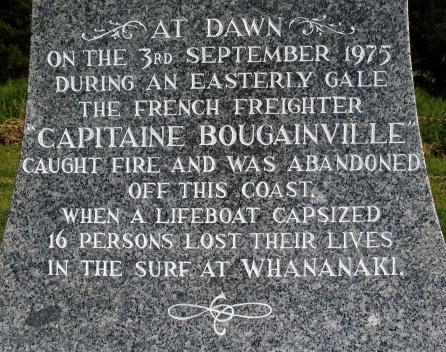
    I was right. When the baby was a few months old, the family embarked on what Philippa had decided would be their last sea trip across the Pacific with Jean before settling into their house and children’s schools. It was their last trip. After a happy evening in the company of musician friends who came on board and made music with Philippa, who played the expensive new clarinet Jean had bought for her – his ship, the Capitaine Bougainville – sailed for the Islands.

    A few hours later a vicious storm blew up, and in the pounding seas further up the coast of NZ, a tool fell off the bulkhead in the engine room, and cut the fuel pipe, feeding the engine. The engine caught fire, and there was no way of putting it out. The life boats were lashed onto the roof of the engine room, and Jean had to make a decision to wait on the burning ship to be rescued, or leave the flames and escape in the lifeboats before they were destroyed in the fire.

    His Mayday message was never received, so he had to take the dreadful decision to launch into the mountainous seas. A sailor took each one of the children, but each time the life boat capsized, another child was lost. After three hours Philippa died of exposure and exhaustion and slipped from Jean’s grasp as his feet touched sand. He was tossed and tumbled in the surf, vomiting salt water before collapsing on the sand. He told me he had to resist turning back into the sea to end his life then, rather than face the years without Philippa. But forcing himself to get to his feet, he ran to the nearest house where he found a holidaying family at breakfast and raised the alarm.

    A few survivors made it to shore, but twelve sailors as well as my friend and her children were drowned. A few days later, Mua’s little body was washed up, and we drove the five hours up to Whangarei for his funeral and for his mother, brother and baby sister Jasmine. Jean then travelled to the islands visiting the families of all his sailors who had drowned. In the months that followed, Jean often came to stay with us at our new home in the country where we now lived with my new husband. His pain was terrible.

    Eventually he returned to his home in Brittany, and captained a cross channel ferry to England. He married again and returned to this country a few years ago to be present at the ceremony marking the monument being erected on the beach, in memory of those who had been lost. He wrote a long poem straight after the tragedy which he sent to my children… he wrote of saying goodbye to my bright beautiful beloved friend before she stepped over the gun-wale to reach the bucking life-boat below: ’Your smile and your serenity, Your only luggage for eternity’…

    To be continued

    Food for threadbare gourmets I didn’t get the food back home quick enough and found the frozen peas were too soggy to go into the deep freeze. Chagrined, I couldn’t bear to waste them, so made a quick and easy pea soup with a chopped onion zapped in the microwave and added to a generous helping of chicken stock.

    When the stock was boiling I tipped in most of the peas and cooked them until the peas were soft but still bright green. After being whizzed smooth in the blender, I added cream… and the soup ended up being sipped for lunch, and the other half ended up in the deep freeze anyway!

    Food for thought

    “It is not the strength of the body that counts, but the strength of the spirit.” ― J.R.R. Tolkien

  • Another mansion

    House, 24 Domain Drive, Parnell by John Fields

    Our new home

    A life – another instalment of my autobiography before I revert to my normal blogs

    With a job under my belt, working on a liberal family- owned afternoon newspaper, The Auckland Star, I now had to find somewhere to live. I stumbled into the perfect place, in a good suburb only a few minutes drive from my office, with a good school in walking distance, and a small community of interesting neighbours.

    Once again, John was behind my find. A friend of his contacted a friend of hers, and within a week I was ensconced in a beautiful second floor apartment in a huge old house on the edge of the Domain, a splendid botanical park which was a buffer between the business heart of the city and our little suburb.

    The Victorian house had been built by a rich wine merchant on the lines of the American Belle Epoque mansions, only doubling its size. Architectural experts loftily said the house had no value except for the beautiful fanlight above the front door. But the ballroom on the ground floor which housed an exquisite carved marble fireplace, and sash windows with the bottom pane high enough for a Victorian crinolined lady to step out onto the wide pillared veranda was intriguing in itself; while the wide curving staircase and banister ascending to my apartment was a small boy’s dream to slide down.

    My new home sported a sitting room, twenty- two feet long and eighteen feet wide, with floor length windows in the big bay at the end of the room, overlooking lawns and then the huge plane trees which edged the Domain.

    It wasn’t too promising when I first saw it, a hodge-podge of elements cobbled together to make it a flat. But the landlord who lived downstairs decided to improve it for me. I chose plain blue tiles for the kitchen, bathroom and loo floors – to his amazement – wouldn’t I want different patterns in every room? The hideous – patterned coloured wallpapers in each room he promised to re-paper over time, room by room, and was astonished when I said I just wanted them painted over in white, and everything – paintwork, carved wooden fireplaces – all covered in white.

    The only thing left was the dreadful green patterned carpet with sprays of red, brown and blue flowers. But I got his permission to dye it. Every night for six months I came home with small tins of blue dye from the chemist. When the children were in bed, I changed into my bikini, so as not to spoil my clothes and scrubbed boiling dye into the carpet with a stiff nail brush.

    Even with rubber gloves, I could only manage three square feet of the scalding hot dye a night, and the blue splashes easily washed off my arms and legs and torso when I’d finished. I sewed blue curtains by hand, finding beautiful fabrics in sales, and made blue velvet cushions for the second- hand arm chairs discovered in junk shops. I found a big chesterfield sofa with brown Sanderson flowered linen loose covers and dyed them blue in the washing machine. By the time I’d finished I had a beautiful blue and white room adorned with the treasures I’d brought from Hong Kong- a pair of Bokhara rugs, lamps, blue and white china, pictures, and books.

    The house was set back from the road in a big garden and surrounded by trees. The first day we moved in, I looked out and saw the two children lying on their stomachs on the soaking wet grass. I flung open the window and called – “what are you doing?” “Looking at the grass, “ they called back, after four years of living in a concrete jungle. We bought precious nasturtium seeds and planted them, and then, astounded, ripped them out again when the gardener confronted us to ask why we were planting ‘weeds’ in ’his’ garden. They spread everywhere, he grumbled. Now I grow them everywhere!

    Our first weekend in our new home, when we still just had new beds, and a tiny eighteen- inch square side table that had been left in the flat by a previous occupant, we knelt around it having our porridge for breakfast, and then put on coats and jackets and walked around the corner to the beautiful Anglican cathedral, the largest wooden building in the southern hemisphere.

    I didn’t realise then, but we were a striking threesome – a tall woman in black, holding the hands of two children immaculately dressed in red quilted coats and red trousers. I had bought three polo necked ribbed jumpers each for them in black, white and red, so they could get dressed quickly and always look neat. I had my own formula for speedy mindless dressing too, – black trousers and jackets and red, black and white jumpers.

    When we arrived, the dean of the cathedral came across to greet us, and showed us to a pew, and after matins ushered us into the adjoining parish hall for morning tea, where he introduced us to his other parishioners. One of them was a kind practical woman with children the same age as mine, who offered to have the children for three weeks on their way home after school, until they got used to walking home alone.

    So began a friendship which progressed through her husband’s elevation to bishop, archbishop and then Governor General, during which time we enjoyed meals in their vicarage, then bishop’s house, archbishop’s residence, and finally governor general’s stately home. The Dean also became a good and helpful friend, calling regularly to chat in my blue and white room, enjoying a glass of sherry. I had other regular callers too, including my landlord, who came so often for a tot of sherry that I used to joke to others that what I didn’t pay in rent I paid in sherry.

    The children settled into their new school, and I trained them to come back to the unlocked home, eat a snack and a drink waiting for them, and then have a nap. As they got older and I acquired a television, they watched until I got home, until my daughter, always gregarious, began to explore our neighbourhood.

    She was going on seven now, and before long, she was the trusted friend and helper to our landlady downstairs who had an ulcerous leg, making tea for her, chatting and keeping her company. She watched TV with Peggy the childless taxi-driver’s wife across the road, and frequently kept Mrs Andre – the doctor’s wife round the corner – company while she had her early pre- dinner sherry and gave my daughter lemonade.

    She played patience with crusty, chain-smoking Lady Barker, a recluse of seventy- plus, who lived behind locked and barred doors. I never discovered how she and my daughter got to know each other. She helped Mr Buchanan, our grocer who delivered every Friday, to unpack his butter and bread, and fetch and carry stuff in his shop. Melanie, the drug-addict’s wife on the corner with three small boys, relied on her for company, help in amusing her boys, and even helping to paint her kitchen.

    While I found myself battling social welfare for Melanie’s payments to arrive on time for her, and creating mayhem with surgeons on her behalf when the hospital kept cancelling her appointment for an operation, my daughter was her daily prop and stay. I tried to avoid this sad depressing woman, who used to call on me to come and sort out the dramas when her violent husband turned up to make trouble, but my daughter was able to lift her spirits most days.

    I also came home from work a few times, to find this enterprising child had co-opted her brother into picking the garden flowers, setting up a stall on the pavement and selling the flowers to passers-by. And she would ring me at the office to tell me she’d been reading the newspaper, and found an ad which said if I got to a certain shop in Karangahape Road by such and such a time, I could buy toilet rolls with ten cents off. They were funny, happy days…

    When Princess Alexandra came to Auckland, and was dining at the Auckland Memorial Museum, a few hundred yards from our home, my daughter insisted on my taking her to watch the Princess arrive. In the darkness of the winter night, she scoured the garden for some dahlias, wrapped them in a creased brown paper bag from the kitchen drawer, and when the Princess in shimmering evening dress arrived at the Museum, stepped up to her and smilingly presented the little bouquet. I still have the press photos of the moment and was told that Alexandra had carried the unlikely bouquet all night.

    Her brother, meanwhile, was engaged in small boy activities which included helping the taxi-driver to wash his treasured limousine, exploring with his mates what was known as the Ho Chi Minh Trail back then- a wild path down by the railway- and to my horror when I discovered, scrambling across a huge drainage pipe which stretched for over a mile across a deep muddy tidal creek down by the harbour. He also haunted demolition sites on his way home from school, filling his trouser legs and arms with pieces of wood when he could carry no more.

    It took him hours to make his way home thus burdened and stiff-legged, unable to bend his knees for the splints of wood in his trousers, and as I said to a friend, if I’d asked him to carry these huge unwieldy loads, he wouldn’t have done it. They were of course destined for a ‘hut’ hidden in the garden.

    When our landlady banned him from sliding down the banister on the grounds that he’d fall and break his leg, he would slowly walk down the stairs instead, mimicking the sound of his sliding, and poor Pat would rush out to catch him, and be met by a gap- toothed small boy smiling blandly at her. These times were some of my favourite memories … gentle and happy …

    And I was carving out a career on The Auckland Star. I knew nothing about journalism when I had bluffed my way into a job, having only learned to write stories after a fashion. But the nuts and bolts of the profession, the art of finding facts, knowing who to go to and how to find information, were a closed book to me. So I felt I was walking a tight-rope of ignorance for the first few months until I found my feet. And as time went by, things changed.

    To be continued Food for threadbare gourmets

    We had half a bought cooked chicken left over after an emergency meal, and the weather was far too wintery for cold chicken salad to be appealing.So I made a thickish white sauce, using chicken stock, chopped the chicken into it, and lightly flavoured it with cheese.While this was cooking, pasta of the sort used for macaroni cheese was cooking. Tipping the drained pasta into a casserole, I added the chicken mixture, and stirred in enough grated cheese to lightly flavour the already flavoured sauce. Covering the top with grated parmesan, it went under the grill for a crisp brown topping, and turned out to be a delicious lunch, with a salad.

    Food for thought

    “There are only two kinds of people in the world. Those who are alive and those who are afraid.” Rachel Naomi Remen, inspirational writer and therapist

  • Diamonds and dysentery

    J.J.’s intriguing home…

    Another instalment of my autobiography before I revert to my normal blogs

    Can’t you find some nice man to marry and look after you, Annette, a diminutive blue-eyed brunette asked me as she joined me on the beach with the children. She’d already given me food for thought by telling me her first husband had died of hepatitis. Since then she had struck gold, and married illustrious journalist, Stanley Karnow who was now working on his definitive book on Vietnam and was a friend of Welles and Pat Hangen.

    There were actually plenty of people, but I wasn’t interested in any of them, my whole focus being on the children. The only person I did fancy didn’t want children, whereas all the others enjoyed my four and five- year- olds. I also attracted the lesbian wife of Larry Adler, who left him, and pursued me for three months or more, with me so anxious about her bouts of depression and weekly delivery of pills sent from England that I was too frightened to be too fierce in my rejection of her.

    I was perpetually anxious about the next stunt she would pull to entrap me. The following year, her husband, Larry Adler, the famous harmonica player, flew back to Hong Kong and proposed to me over lunch at the Foreign Correspondents Club where he too was rejected. I had met them both when I went to interview Larry, and they both made a great fuss of me, and I was so naïve that I didn’t recognise all the undercurrents.

    And then I developed a plague of boils… when I was up and running again, I interviewed Andrew Grima, the Queen’s jeweller, a charming, gentle bear of a man, who having been an engineer during the war, had discovered a talent for creating fabulous jewellery when he joined his father-in- law’s firm to run the books. He straddled the worlds of royalty and high society, and the pop world of Carnaby Street, models, musicians and fashion designers. (His gorgeous designs have just some back into fashion again)

    We became friends, and he introduced me to the high society of Hong Kong. I suddenly found myself enjoying balls in the marble halls of houses of Victorian colonial splendour, and grand dinners in the homes of Hong Kong’s movers and shakers. One Saturday at the home on the Peak of the Governor’s number two, after a lunch with witty clever conversation and much laughter, we sat on the veranda looking down over Hong Kong below. Andrew emptied out his exquisite jewellery from a big jewel box for us to see.

    All the ladies tried on necklaces, earrings and bracelets, with gorgeous designs using Andrew’s signature of chunky unpolished semi- precious stones, set in hammered, textured gold – also his invention. To me, the most beautiful designs of all were a series of brooches of delicate gold ivy leaves with diamonds sprinkled across them like drops of dew . ” Have you got something to suit Valerie?” asked my elegant patrician host, as we gasped over this treasure. ” Nothing beautiful enough for her,” replied the jeweller to my astonishment and disappointment.

    All this was heady stuff. My neighbour at the lunch table had been J.J. Killough, an elegant young interior designer and we became firm friends. A week later, sitting in his flat at midnight having coffee after a party at the Mandarin, I listened to his life story. I was wearing a black satin, long – sleeved mini dress with white cuffs and collar, long string of pearls and sheer black stockings. As I lounged in one of his wonderful, worn, highbacked leather chairs with carved arms in his fascinating apartment, I felt as glamorous as a Vogue photograph, and savoured this borrowed beauty and splendour.

    J.J. – short for James Julius – came from an American family, and adored his mother, and disappointed his father. Doing his compulsory military service, he fetched up in the office of a famously gruff Admiral. He barked at J.J. : “Why would a pansy like you choose the navy?” “Because I liked the colour of the uniform”, replied J.J. undaunted. He said he and the Admiral hammered out a working relationship in spite of this unpromising start.

    From the navy he went to London, and into interior decorating, and a love affair which had lasted for some years until the other half found someone else. J.J. was still recovering from a broken heart. Though he’d mentioned the word pansy, I supposed it was just a figure of speech. I was also surprised to discover that the impression of youth which he gave, slipped late at night when he was feeling lonely and unloved, and he looked his full forty years. I had taken him for late twenties.

    His fascinating home was a showcase for his interior decorating skills, and I was charmed by the mix of European and Asian artefacts and antiques, which forty years ago was not as common as it is today. The effect of the elegant, worn leather chairs teamed with a Chinese altar table, wonderful mother of pearl and black lacquer Chinese screens, Philippine carved saints and madonnas found in an abandoned church, huge blue and white Chinese vases, and Italian Renaissance architectural drawings grouped together, leaving other walls completely bare, was grand and satisfying.

    Since then I’ve seen his homes in other parts of the world featured in Architectural Digest, and recognised the same furniture, and the same elements. He had great style, and I learned a lot simply by observing his rooms. He was waited on by a very small neat Chinese man servant, who only cooked Chinese food, so J.J. only ate Chinese at home, on fragile Chinese porcelain, with chop-sticks.

    He gave a me a precious ivory frog with green malachite eyes for Christmas. As I got to know him, I found he was incredibly visual, and incredibly ignorant and naive about anything outside his decorative world. He struggled through his working relationships by guesswork and wicked intuition and seemed to be always having rows and makeups with his rich clients scattered round the world, who would fly him back to the States to do a room for them, or to transform their log-cabin.

    Over Christmas he went to Tokyo, and when he came back, kept ringing me to ask me to go and see him, but I was unusually busy at my journalistic grindstone, and didn’t get there until one day, three weeks later, when he insisted I come for afternoon tea. It was a grey January day. I was wearing a black wool trouser suit, and the hairdresser had piled my long dark hair up into the fashionable Madam Butterfly style.

    When I arrived J.J. wasn’t ready for me. The manservant showed me into the drawing room looking down over the wintry harbour, a wistful symphony of soft greys and misty greens, which matched my elegaic mood. Ferries were churning back and forth to Kowloon and Victoria, and junks chugging up and down in the wake of the stately white liner Canberra gliding slowly down the centre of the harbour to her mooring.

    As I watched, his voice called out: ” Never do your hair any other way”, and I turned around to see J.J. standing in his bedroom door, with a long, black silk kimono embroidered in scarlet poppies draped around him. He invited me into his bedroom, where he sat on his astonishing, antique, Chinese opium bed to talk. It was a bed fit for a king, encrusted with gold leaf and intricate red painted carving. He was drying his fair hair with a hair-dryer, the first time, in those macho days that I had seen a man using a hair -dryer.

    But why not, I inwardly chided myself. He bemoaned the fact that I could wear eye-shadow, and men couldn’t. I began to see what I hadn’t recognised before and began giggling inside at myself and him. The silk kimono was magnificent, and I told him so. “That’s why you’re here,” he replied.

    He had brought one back for me, an antique Japanese wedding kimono, in mellow cream silk shot with silver, and embroidered in solid gold thread with cranes. It was immensely long, to tuck over an obi, and lined with red silk. It was the most precious gift anyone had ever given me. In the end it was such a responsibility that I felt I couldn’t look after it properly, and gave it to the Auckland War Memorial Museum, so that it would be cared for as it deserved.

    A few weeks after the interlude with Andrew Grima and his Hong Kong friends I had to look for another place to live, as our year was nearly up. I found a charming one in a small block of four apartments, overlooking the sea below Stanley Bay, just around the corner from the bustling Chinese marketplace.

    And then I was suddenly ambushed by severe dysentery. I shed eleven pounds in five days and remember thinking that this was how prisoners died like flies in Japanese prison camps during the war. A friend dropped in on the second day and found the children eating dry bread from the fridge. She rang my doctor, and when he arrived, he took my daughter to stay with him and my friend took my son.

    The doctor said he knew I couldn’t afford to go to hospital, and he would let me stay at home if I got someone to be with me at night. I did. Ah Ping, who had left to try to qualify as a nurse a few months earlier – a terrible blow – came to see me. The mysterious Chinese grape vine had told her I was ill- how they knew I never discovered. She disclosed that the man who had a fruit and vegetable barrow on wheels which he pushed around Repulse Bay to make a scanty living, lived in a tiny pig shed with his wife and children, and who I’d supplied with blankets and clothes, had waved her down and ticked her off for leaving me.

    After two weeks of hell, I tottered to my feet and began packing to move house. My lovely Swedish friend, married to an Englishman, wouldn’t return my son until I was stronger she said, and my daughter came home looking tired and a bit grubby, the doctor’s wife didn’t get the children into bed until late. We loved our new home with most of the big windows opening out onto the view of sea and beach below. We watched the junks of the fishing fleet sail out into the sunset, red sails unfurled, and then saw them stream back in the morning and unload their night’s catch on the beach below our window.

    We loved exploring the market and narrow alleys crammed with cramped Chinese shops, crammed with strange foods, and pungent smelling condiments. I bought two big earthen-ware jars, about two feet high that stored sugar, and turned them upside down, to use as side tables by the sofa. A large rice wine jar made an unusual base for a lamp with a big shade fitted, and I bought Chinese bowls and pots and china for a song. One afternoon my son and I were meandering hand in hand through the market on our way to meet the school bus and my daughter, when I heard a low throaty roaring. It reminded me of the awful sound of the baying crowd when I’d been taken to a bullfight. I came on a mass of Chinese men in a tight circle, four or five people deep.

    They were shouting and encouraging something, and as I craned to see what was going on, suddenly in a crack of space between the swaying bodies, I saw a tiny skinny six-year -old boy dodging around the tight circle and crying. A strong, crazed- looking youth of about fourteen was brandishing a length of piping which he was bringing down on the child who couldn’t escape as the men enjoying the spectacle barred his way.

    Without thinking, I dropped my four -year -old’s hand, and pushed through the throng. I had no idea how I was going to stop it, but the solution appeared as I stepped into the circle. I grabbed the pipe as the youth, who seemed out of his mind and mentally handicapped, raised it above his head to bring it down again. He was so surprised that he stopped for a second, and the child seized his chance and darted away. There was a deep groan of disappointment and the crowd began to disperse.

    And now I turned to gather up my son and he was nowhere to be seen. When I found him sometime later, he said he had no idea where I’d gone, so just went on plodding through the market and up the hill! As I put down the phone in the office after accepting another invitation for the children to spend the day with a friend and play in her big leafy garden — a rarity in Hongkong – my junior turned to me and said “You must have the most popular children in Hong Kong. You’re always getting invitations for them.”

    It was true. From the day they were born I’d talked to them with the same courtesy that I spoke to my friends, and always checked how I would like to be treated if I was them. It had paid off. They were such co-operative good-natured children – articulate, well-mannered, and dressed in the beautiful clothes from places like Liberty’s sent from England by doting grand- parents, that many people found them irresistible.

    Friends with children away at school in England would ‘borrow’ them to cheer themselves up, unmarried friends, both male and female would ask to take them to the ballet and pantomimes, while friends with children always wanted them to play with theirs. Sadly, my friend Pat who was always keen to have them, was now a broken- hearted woman hanging onto a thread of hope that her husband Welles was still alive in Cambodia. He’d been ambushed and beaten to death by the Khymer Rouge, which she didn’t learn for over twenty years, in 1993.

    The only people who weren’t interested in the children were my ‘lodgers’! I had stopped doing an extra part-time job as PR for the Anglican church, because I felt like a hypocrite since I was anti-God then. The Bishop’s wife had asked me to take on the job, but in the end it felt all wrong. So then I tried to make ends meet by using the children as photographic models in ads and doing radio programmes and TV game shows myself. Finally, I hit on the idea of letting my spare room which was equipped with an en- suite bathroom.

    I suppose it was inevitable that it was always odd bods who wanted a room, rather than socially competent achievers. The men were loners, one mummy’s boy who hung around my living area and wanted me to look after him or entertain him, another who had stormed out of his marriage, and was always attended by cohorts of righteous managing friends, or when he was alone, making vicious calls to his ex-wife on my phone. I didn’t need money so badly for them to stay. Three weeks for the first, one week for the second.

    The girls were worse. They always had lovers, or fiancees, so I always ended up letting the room to two people instead of one. I could write a book about each one and their love affairs, broken engagements, car crashes, and strange personality quirks which impinged on my life. But I didn’t enjoy them.

    I was Women’s Editor now and enjoyed crafting columns and writing about social issues like Hong Kong prisons, abortion, feminism, child care and such-like. My readers seemed to enjoy this mix along with fashion shoots, and makeup advice dished out by cosmetics advertisers, my recipes, and celebrity interviews. But the arithmetic of staying in Hong Kong became impossible when school fees went up, and I now had a second child ready to start school. We decided it was time to start a new life in a new place.

    To be continued

    Food for threadbare gourmets Meeting two beloved friends for a celebration lunch, we ended our feast with crème brulee accompanied by banana and walnut bread. It was so delicious that I decided to try making some myself.

    Sift one and quarter cups of SR flour, one teasp baking soda, and half a teasp salt into a medium bowl and set aside. Whisk two large eggs and half a teasp vanilla together in another container. Cream half a cup of butter and a cup of sugar until light and fluffy. Gradually pour the egg mixture into the butter and mix. Add three ripe mashed bananas – the mixture will look curdled, but don’t worry.

    Gently mix in the flour mixture, fold in half a cup of walnuts and pour the batter into a buttered loaf tin. Bake for 55 minutes in a pre-heated oven at 350F or until a toothpick inserted into the centre of the bread comes out clean. Cool the bread in the pan on a wire rack for 5 minutes then turn it out and let cool completely on the rack. Wrap in plastic wrap, it’s best served the next day, sliced with butter.

    I roast the walnuts first, to avoid the danger of them being rancid.

    Food for thought

    This was the poem and beautiful words by Richard Wilbur that one of my friends copied into my birthday card:

    ‘Blow out the candles of your cake

    they will not leave you in the dark

    who round with grace this dusky arc

    of the Grand Tour which souls must take’.

  • World on Fire

    South Vietnamese troops battling the Viet Cong in Saigon during TET offensive

    A life- another instalment of my autobiography before I revert to my normal blogs

    My husband’s affairs – in every sense of the word – meant that he and his intended had stumbled into a mine field. When Candida, as I’ll call her, told her naval husband of her plans, he hit the roof. He had no intention of parting with his elegant sweet-natured wife. The thing began to take on diplomatic proportions, and the General and the local naval boss now got involved, and Candida and husband were posted hastily back to England to avoid further scandal.

    This meant that my husband was storming tactlessly and angrily around the place, and the padre came to see this cold, unloving wife who had driven her handsome, charming husband out of his unloving home. There was probably more than a grain of truth in this by now, as I certainly didn’t love him any more!

    It was that tense turbulent year of 1968 when the world seemed on the edge of drama month after month. After North Korea captured the US ship Pueblo, imprisoning and torturing all eighty- five of her crew at the end of January, the ripples of the surprise Viet Cong Tet offensive in Saigon then reached us. Friends from the office were holidaying in Saigon, and were caught up in that murderous mayhem which continued all through February.

    When Martin Luther King was shot in April, I hurried up to see Pat Hangen to somehow try to comfort her. When Robert Kennedy was shot in June, it seemed unbelievable. I shall never forget the silent shock in the newspaper office, before I rushed up to see Pat again…it seemed a devastating thing to be American at this time…

    This was also the time of the Prague Spring when another mid European country tried to throw off the Russian yoke. And now in August, we listened with anguish and watched television as the Russian tanks rolled into Prague to crush freedom, as they had done into Hungary nearly nine years before.

    We were in the middle of a very destructive typhoon, and in spite of the wooden shutters over the windows, the towels laid along the window sills and carefully led into bowls, were soaking wet. I went from window to window wringing out wet towels and feeling intimidated by the storm while I watched the Czechs being intimidated by the tanks. My heart was wrung for Anton Dubjek as my hands wrung my wet towels!

    A few weeks later, I went to the doctor who gave me some pills to check the constant nausea I’d been feeling, and taking one straight away, I only just managed to drive home. Tottering into bed, I woke to consciousness in the evening, having slipped into a coma with pills that had apparently knocked out my liver. The next day the doctor rang and said he was sending an ambulance round straight away – my tests had come back – and I had hepatitis with secondary infections of glandular fever and jaundice.

    The children went to play school in the mornings, and before this happened, I’d just organised a gentle, friendly, eighteen-year- old school leaver out from England to come every afternoon to read to the children and play with them. I was worried that their vocabularies might stagnate with just their loving Chinese amah to talk to, and I hoped now that my husband would stay with them in the evenings.

    In hospital in Kowloon, I lay in my room overlooking the harbour, and watched the glittering water sparkling in the magical light of the sun at the change of the season. I also put myself together and found my inner strength again. My doctor had given me a book of D.H. Lawrence’s poems, and ‘The Song of the man who has come through’ became a sort of prayer and affirmation.

    Not I, not I, but the wind that blows through me!

    A fine wind is blowing the new direction of Time.

    If only I let it bear me, carry me, if only it carry me!

    If only I am sensitive, subtle, oh, delicate, a winged gift!

    If only, most lovely of all, I yield myself and am borrowed

    By the fine, fine wind that takes its course through the chaos of the world….

    And his other words… ‘It is not easy to fall out of the hands of the living God…”

    The Red Cross trolley with library books came round every day, and along with the biographies and books on travel and exploration I gobbled up, there were some Elizabeth Goudge. ‘The Dean’s Watch’, about the power of love, shifted me on from my little local world into a larger perception of all that is, and I was ready after five weeks to go back and transform my little world.

    I wrote to my step-grandfather who was still writing to me, and asked him if he could loan me five hundred pounds to get started, but he replied rather pompously that he would have no hand in breaking up a family with young children. (Many years later, when an old man, he wrote to say he had a guilty, nagging feeling that he had let me down over something, and I spared him and wrote to say he had always been a loving friend)

    Meanwhile my husband, who was still marking time over his enforced separation from his intended, every now and then suggested that we have another go with our marriage. Not convinced that leopards change their spots I told him that I would be gone in a month, after Christmas, and his response was that he would smash me mentally and physically before then.

    Still feeling frail and ill I managed to find a flat for us. It was always hard to compete with Americans who had large housing allowances and lots of money compared to the rest of us. But I drove round Repulse Bay, hoping to find ‘flat to let’ signs. By a miracle I found one hanging outside twelve -foot high, brightly painted gates, with painted peacocks embossed on them, the mansion behind hidden by high walls. It had been built by a Chinese millionaire for his family to come and live with him, but they had refused.

    When he showed me the flat, and told me the price, I said I couldn’t afford it. So he said, what can you afford? And when I told him, he said I could have it for a year. I lived for that first year of independence beneath the splendour of chandeliers, with an elegant panelled walnut entrance hall and an amazing, huge, pink marble en-suite bathroom.

    Back home, my husband came to me in tears. His bank was threatening to foreclose on his debts, and this would mean being cashiered by the army, and no financial help at all from him for the children. I wrote him a cheque for half my savings and feeling sorry for his humiliation said he didn’t need to write an IOU as he offered, but that I would trust him. I never saw the money again.

    I persuaded my husband to ring England and tell his parents what was happening, and the first response of my father-in-law was to ask if his son had got good legal advice. Yes, he’d been to see an old school friend who was a lawyer. As I listened, I felt a cold hand over my heart. No concern for me, it was going to be a power struggle aided by the law and family. I felt truly alone.

    I thought I’d better get some legal advice too. But when I went to see the army legal services, my husband had been there first, so they would have no truck with me. It was the same at the navy and the RAF. All the free legal services were closed to me. My husband had been to see them all, and this debarred them from giving me advice, they each insisted.

    The establishment had closed ranks. In those days male chauvinism was alive and well, and it felt as though all the men had ganged up on me. The army lawyer then sent me a letter telling me I was no longer allowed to set foot in the garrison. Being an army daughter, a serving officer and an army wife was a part of my heritage, and I was devastated by what felt like a gratuitous insult.

    The result of these snubs was that I was driven to find expensive, civilian legal advice. I contacted a friendly solicitor who I’d met at a party. He felt there was some urgency when I rang him, so that Sunday I spent at his stylish flat, curled up in an elegant orange Arne Jacobson ‘Egg’ chair, dictating my divorce petition to him.

    It was a cold winter’s day, and still feeling fragile a couple of weeks out of hospital, his warm, cosy flat in the Mid-levels seemed like a safe haven away from the stress of my own home. As I dictated, my eyes wandered over stacks of beautiful fabric -covered boxes on the bookshelves. They housed his collection of precious snuff bottles, but as a philistine, I thought then the boxes were prettier than the bottles.

    He rang a few days later. There was an alarming hitch. It seemed that no woman had ever divorced her husband in Hongkong before – this was 1968 – and there were no legal precedents. He was at a standstill but would try a few other avenues. He came up with something from Indian and Colonial law. It was possible for an Englishwoman in India to get a divorce in that country if she had been resident there for at least three years.

    Peter said he would try to get me a divorce quoting this Indian precedent. The element of uncertainty was unnerving. By the date of the hearing my husband had followed his intended wife back to England, so it was a very empty court I attended. I had already left the army quarters, packing all my belongings into the Red Cross ambulance the doctor lent me. I realised as I looked back that nearly every other army wife was standing on her veranda watching the astonishing sight of another wife leaving her husband under their very eyes.

    Before the divorce Peter told me the judge was homosexual. I didn’t know how this would affect the outcome in which the custody of the children was at stake. I dressed very carefully in a demure, white dress with a hem at knee level, in this year of mini skirts. When the case began, the judge questioned the validity of it, and Peter provided him with the Indian and Colonial volumes.

    I sat in suspense while the judge pored over the pages, and finally agreed the case could go ahead. Called into the witness box, for some routine questions, to my horror I could feel tears coming. I had left my handkerchief in my handbag on my seat, so had to sniff through my answers. The tears were pouring down my cheeks by the time I returned to my seat. And the white dress was wasted, the judge didn’t even look in my direction.

    On the way home in my battered Morris Minor convertible – all I could afford after I’d given my husband half my savings – it broke down and ran out of control down the hill to Repulse Bay. Apparently, the rust which held the chassis together had finally weakened, and there was no connection between the steering and the wheels.

    It took thirteen monthly instalments to pay the huge bill to patch it up. The floor in the back seat had rusted away, so I tucked cardboard over the holes, and the children would complain their feet were getting wet when it rained. I always had to drive over the Peak in wet weather, as low-lying Wanchai would have flooded it.

    I discovered quite by chance that some of my rich American friends thought I’d chosen this broken-down form of transport as part of my English eccentricity. It never crossed their minds that the South China Morning Post paid women so badly that I earned two thirds what a cub reporter earned. Another subtle local distinction was that people recruited from overseas for their jobs earned far more than impecunious “locally employed”.

    The first months were tough. The doctors hadn’t told me I would be depressed for six months after my illness, so I didn’t realise until my six- monthly check-up that the fatigue and depression I was felt was normal. Instead, when I thought longingly of walking into the sea and never coming back, it was only the thought of the children that had kept me going. I was so run down that my teeth packed up and I racked up big dentist bills, while my husband’s American bank – one of the many he had swapped around – wanted me to pay his debts.

    I worried that I couldn’t afford my son’s play school anymore, and I worried when my husband’s small cheque didn’t arrive, which spelt disaster on my tiny salary. I kept a pocket diary which I filled in every day at the office. No words, just two colours – red for good red-letter days, blue for bad blue days… at first the blue days far outnumbered the red.

    I had copied two quotations into it – one from William the Silent: ‘There is no need of hope in order to undertake, or of success in order to persevere’… and the other from Clement of Alexandria: ‘We may not be taken up and transported to our journey’s end, but must travel thither on foot, traversing the whole distance of the narrow way…’ I read these rather grim exhortations regularly to inspire me to ‘just get on with it!’

    And with all the struggle, I would gloat to myself that I was an independent woman now. I had two beautiful children, a home through my own efforts, a car, and a job I enjoyed. I knew that life could only get better. And, of course, it did. The worst was behind me.

    To be continued

    Food for threadbare gourmets

    When I make one of our favourites, feta cheese and courgette fritters, I usually serve them with chilli jelly, salad and hot rolls. But I really love beetroot relish with them too and decided to stop buying it from the supermarket and make my own.

    Place in a pot three peeled and roughly grated beetroots, one finely chopped onion – red if you have it – a cup of brown sugar, half a cup of cider vinegar or balsamic, quarter of a cup of water, a table spoon of olive oil, half a teasp of ground cumin, salt and black pepper. Heat gently for thirty minutes or until the liquid has been absorbed. If it dries up, add enough water to keep it moist and juicy. Place in a jar or bowl and refrigerate until ready to use.

    Food for thought

    A certain percentage of those who have survived near-death experiences speak of a common insight which afforded a glimpse of life’s basic lesson plan. We are all here for a single purpose: to grow in wisdom and to learn to love better.

    We can do this through losing as well as through winning, by having and by not having, by succeeding or by failing. All we need to do is to show up open-hearted for class. So fulfilling life’s purpose may depend more on how we play than what we are dealt… Kitchen Table Wisdom by Rachel Naomi Remen