Category: Memoir & Family

  • Life and loss, love and death

    Illustration from the post “Life and loss, love and death”

    Deepwater Bay

    Another instalment of my autobiography before I revert to writing my normal blogs

    Ensconced in Deepwater Bay, life now took on the tone and routines that shaped our lives until the final disintegration of our marriage. My husband would go off to University every day and return home in time for dinner. After dinner he would take off back to Victoria – to the officers mess, he would say, to see Henry or Richard or whoever… I assumed for some time that he was bonding with the other people on his course, in spite of having spent all day with them.

    Later he would say there was a party or a get together. And later still, when the whole saga had ended, friends would tell me that I had no idea of how many girl- friends there had been – “You didn’t know the half of it”….

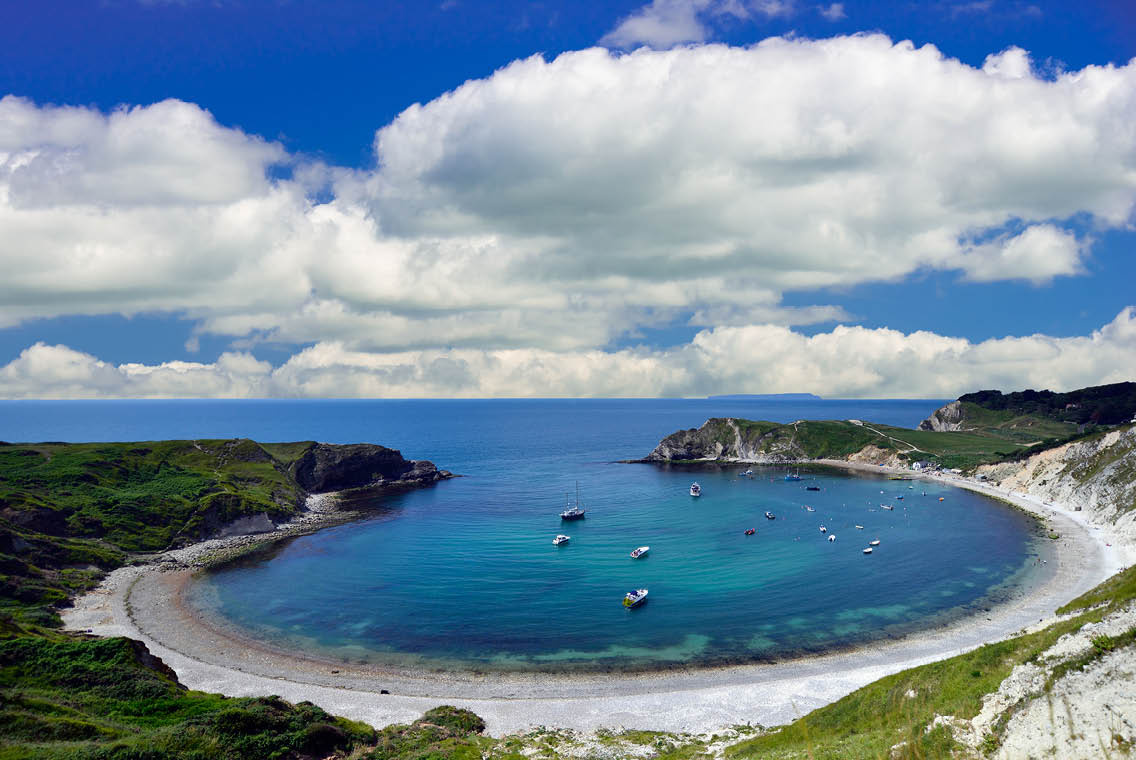
    I tried everything, and one night I remember in despair taking the car before he did and driving round to beautiful South Bay, an empty semi- circle of still water, ringed with flame trees, and where I watched the flaming sunset. The beauty was so moving, I felt I must share it with him, and drove back home, and persuaded him to come back to South Bay with me. He did, and then took the car and drove off- somewhat delayed – to whatever rendezvous he had in town.

    Two things helped me through this time. I had found a wonderful amah, Ah Ping, a shy eighteen- year- old girl with very little English, and a lovely nature. She adored the children, and we had a little competition at bath-time over which of us was going to enjoy bathing the youngest, still very much a baby. She learned to speak English with my accent and tone, so that people thought it was me when she answered the phone. She helped to maintain the happy atmosphere for the children and they loved her.

    The other thing that sustained me, was my first foray into writing. I studied the woman’s pages of the South China Morning Post, the main English speaking newspaper in Hong Kong, and realised that the one element missing was cookery.

    Cheekily I offered my services to the woman’s editor, a childless and fashionable young woman, Jane, the same age as me. Feeling plain and boring by now, I somehow managed to keep my end up with her at my interview and got the go ahead to write a cookery column on Fridays. I had no qualifications for this of course, apart from an abiding love of food, but I managed to make it sound as though I knew what I was talking about.

    After six weeks, I was offered another bite of the cherry, when Jane suggested I write a story to fill Thursday’s page – she wanted something about bringing up children, and now she had as it were, a captive mother, I filled the bill. This was meat and drink to me and writing about children and parenting became one of my areas of expertise and was something I only stopped doing fifty years later at seventy- seven.

    My husband’s social life was costing us, and debts had begun to pile up, so the money I now earned was important to me, as I knew I could always feed the children with it. I could also afford to visit the famous alleys, and find cheap lengths of gorgeous fabric, which I sewed by hand, making glamorous new summer dresses. I had new friends, and was making a life, but I still felt miserable and longed to be loved. I tried to fill the emptiness by playing Bob Dylan and the Beatles and they left me feeling even more alone and bereft. I also started having blinding migraines which took five days out of life every time they struck.

    One evening my husband came home and said we’d been invited to a party at the naval base on the commander’s ship. I put on a red dress from my pre-marriage party days and set off, feeling like I always did these days, in-adequate and plain.

    At the gangplank we were warmly greeted by a man with piercing blue eyes and golden hair. His wife was a ravishing blonde ex- ballet dancer with huge brown eyes, beautiful features, and a pile of hair pinned up, so long that when it fell to her ankles when we were dancing, she looked like Rapunzel. Her chic little black dress showed off her ballet dancer’s figure to perfection. I was in awe of both these glamorous people.

    Later we went back to their house where we all sat down at the dining table for an impromptu dinner. Our host sat me at his right hand and talked to me as though I was actually interesting. I felt such gratitude for his kindness. We continued to meet at parties as our friends were old childhood friends of them both. At each occasion he sought me out, raising his glass to me across many crowded rooms before making his way through the throng to us.

    And then one night as he handed me out of his car after a party, he squeezed my hand. The next party we went to was at a French officer’s house. He and his wife were a gentle couple, and we played silly childish games, since we were a mixture of French and English couples with few of us speaking each other’s language, so conversation was difficult.

    During one game if a player won some sort of forfeit, they placed a cushion in front of the person of their choice and knelt and gave them a kiss. My naval friend placed his cushion in front of me when it was his turn, and I said to myself if he does it again, I will know that he meant it. And he did. The next two months were a dizzy time of love and longing set against the back drop of riots and curfews and water rationing and our move into army quarters in Repulse Bay, where we became neighbours. Neither of us ever said a word but were drawn to each other at every meeting.

    At the same time, I was fascinated by his ravishing wife, and couldn’t believe that he could care for me, when he had such a spell- binding partner, who I knew he’d loved since they were children. I could see that she was scatter-brained and sometimes strangely childish, but still found her beauty entrancing.

    The night before they left to return to England we all met for one last time. As we danced he told me he loved me. I said I thought it might have been a sailor’s girl in every port, and he reproached me. He told me that his fey, feckless wife was a millstone round his neck, and that we both had “to make a go of it”.

    They flew out the next day, and I went into a sort of collapse. I literally couldn’t get out of bed for a few weeks, and somehow struggled on into the grey winter like a zombie. The migraines ambushed me more and more often. I felt too fragile and depressed to write to my father.

    My husband now asked me not to leave him alone with the husband of a woman I’d thought was my best friend because he feared being beaten up. The husband had discovered that my husband and his wife had been having an affair. I felt shocked and betrayed by my friend, but then, I found my husband was having another affair with another colleague’s wife, and I stopped caring.

    After Christmas Jane, the woman’s editor offered me a fulltime job, and I began in January. A few weeks later, I woke up one morning, looked out at the sea, watched the fishing boats streaming back after their night’s fishing, and felt different. It was as though a huge grey cloud had lifted from me, and my first thought was – now I can write to my father. Because I was still trying to juggle my job and the children, and learning the ropes at work, I put it off until I had a moment to sit down and enjoy communicating again.

    A few nights later I dreamt that one of my father’s good friends who was in Hong Kong, was sitting on my bed with its beautiful blue and green patterned Venetian bedspread, with his arms around me, comforting me. When I awoke in the morning I inwardly castigated myself that I was so desperate that I was dreaming about my father’s friends!

    That night, as I slept, I heard the phone go, and my husband answer it. I heard him say: “Thank you, I’ll tell her.” When he walked into the bedroom I sat up in bed, and cried out, “Don’t tell me. I don’t want to know.”

    “Your father’s dead.” he said. The War Office had rung.

    I immediately rang my father’s friend Ian, and unwittingly destroyed a dinner party. Ian came straight round, and as he sat on the bed and put his arms around me, my dream came back to me.

    It felt as though the bedrock of my life had been ripped from beneath me. It seemed like the worst thing that had ever happened to me, even though I knew it happened to everyone. But he was only fifty- four. My siblings who were scattered around the globe on various rocks – Gibraltar, St Helena, Aden gathered, but I was too far away. No-one contacted me. I never heard from my stepmother again for nearly forty years when she was in her late eighties. My father-in-law wrote and told me about my father’s funeral, and now I was alone.

    I had leant Pat Hangen my copy of Towers of Trebizond in which was a poem I felt I needed. As soon as day broke after the phone call, I rang and asked her to return it. The poem was like a lifeline back to sanity. Every time I was overwhelmed with grief, I read it again and it brought me back to a place where I could still stand being alive. It was John Davies of Hereford’s dirge for his friend Thomas Morley:

    Death hath deprived me of my dearest friend.

    My dearest friend is dead and laid in grave.

    In grave he rests until the world shall end.

    The world shall end as end all things must have.

    All things must have an end that nature wrought.

    Death hath deprived me of my dearest friend.

    The rhythm of these lines helped somehow, while the words of the gurus did not. “Participate joyfully in the sorrows of life.” Joseph Campbell once said, and: ‘we can choose to live in joy’. But had he ever experienced the sorrows of life, in his long, happy, childless relationship (with none of the agonies and ecstasies of parenthood) and his sheltered affluent university life- style? Words like his seemed to mock.

    In my world, enduring the sorrows of life, it took weeks to move beyond the pain of grief and despair, and my husband lost patience with me. Then both children developed bad cases of measles. It took the spots ten days to come out for my son, and with his high temperature I feared he’d develop encephalitis. A little knowledge is a dangerous thing. My daughter developed bronchitis and was very sick at the end of her bout of measles.

    One night, as I lay by her side in bed anxiously watching her, my husband came to the bed room door. I’d been so pre-occupied with the children’s sickness, that I hadn’t really noticed that his party round had been even more frenetic that usual. He stood in the doorway, looking dreamy and dazed, and said to me, “I’ve just met the woman I’m going to marry.”

    I replied coldly, “Well, you’re still married to me.” But inside, I felt a surge of relief. We must be on the home straight! We were. I even stopped having my debilitating migraines. I began saving my earnings for when I would need then.

    Now too, my job became really interesting. I began interviewing all the interesting people who came to Hong King. They included charming, handsome Dr Seuss, a man of goodness and integrity. Writer Iris Murdoch was a challenge, and I wish I could do it again now that I know more about life. But then I was so naive that I wondered how such a plain woman could have found a husband! John Bailey, the husband who later betrayed her when she had Altzheimers, was vague and donnish when I met him. Robert Helpman, the great ballet dancer was a joy, gentle, charming, and kind.

    Barbara Cartland, so exuberant and full of life at seventy- four (honey and vitamins she told me) took me to her bosom- literally – when I mentioned one of my closest friends who was her son’s best friend. When Raine, Lady Dartmouth, her daughter, came to Hong Kong a few months later, she was just as friendly and charming, seeking me out with all eyes on her as she walked across the dining room to greet me while I was lunching in the Eagles Nest of the Hilton. She was radiantly beautiful, tall and elegant, with big china blue eyes and peaches and cream complexion like the Queen’s. It was hard to see her as the wicked stepmother of Princess Diana in the years that followed.

    I don’t think I was very good at writing interviews, but I did uncover a talent for writing columns which blossomed when I moved to another country. I also discovered that journalism could be a powerful force for good when a woman rang me one day and asked to see me at my home. She gave me what she said was a false name.

    I opened the front door to a tall, fair-haired sweet-faced woman with great poise and dignity. She wanted to talk to me about setting up Alcoholics Anonymous and Al-Anon, the family support group in Hong Kong. I ended up attending meetings of both, and then writing several stories. Both groups took off, and today, the woman, who became one of my closest friends, tells me there are at least seventeen groups now flourishing in the territory, three of them for Europeans.

    To be continued

    Food for threadbare gourmets

    I’m still on my what to do with lettuce and greens jag and have adapted this recipe for lettuce soup from my old copy of the one and only Mrs Beaton. I use four spring onions if I have them and soften them with a couple of thinly sliced onions, a chopped garlic clove and a finely chopped carrot. When this is soft I pour in three cups of heated chicken stock. The lettuce then goes in, torn into small pieces, and a cup and a half of frozen peas, salt and pepper. Cook for eight to ten minutes and remove from heat while the soup is still bright green. Whizz in the blender until smooth. One of my oldest friends combs the hedgerows in the Forest of Dean for edible wild plants, and she would add leaves like nettles to this soup. I am not so brave…

    Food for thought

    You start dying slowly If you do not change your life when you are not satisfied with your job, or with your love, If you do not risk what is safe for the uncertain, If you do not go after a dream, If you do not allow yourself, At least once in your lifetime, To run away from sensible advice… by poet Pablo Neruda
  • Sunset over Hong Kong

    Illustration from the post “Sunset over Hong Kong”

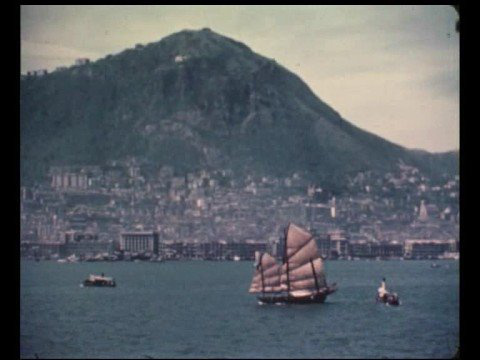
    Hong Kong in the mid-sixties

    A life – another instalment of my autobiography before I revert to my normal blogs

    Before we left England, we enjoyed two quintessential English events. The in -laws gave us their tickets for the Summer Exhibition at the Royal Academy, one of the glamorous fixtures on the London calendar fifty years ago. I watched with interest the people and clothes, as well as the pictures. Standing next to a woman dressed in exquisite soft pale blue suede with matching knee length suede boots, I recognised the heiress Tessa Kennedy, famous for her elopement at eighteen with painter Dominic Elwes.

    They had fled to Havana to escape the English courts and marry there, before eventually fleeing Cuba on a raft during the anarchy of Castro’s era… I watched the President of the Academy reverently ushering through the galleries the fascinating Dorelia, Augustus John’s mistress, then partner for over fifty years. She was tall and stately, her gypsy beauty undimmed, her bright draperies fluttering as she moved. The famous and the fashionable thronged the beautiful galleries.

    Earlier in June I had sat in Whitehall- dressed in a big navy straw hat, coral linen dress, and navy court shoes, feeling deliciously elegant- this time in seats obtained by my father, for us to watch the Queen’s Birthday Parade close up. She rode side saddle into the great parade square, escorted by the Royal Dukes on horseback, all gold braid, chain mail, spurs, bearskins and majesty. The Guards and the Household Cavalry trotted and wheeled and manoeuvred in their timeless rituals as the colours were trooped, and we sat spellbound on a perfect summer’s day, the glorious trees of the parks all around framing the pageantry and splendour.

    We returned to old Thomas Twining’s two hundred and forty-three year old house down by the Thames, also surrounded by ancient trees, where squirrels scampered along the top of the high Georgian garden walls. A hundred yards away, a small boat was moored. This was an ancient ferry crossing, and a boat had waited there since medieval times, ready to ferry passengers across the river to Ham Common and the beautiful country on the other side of the river.

    History and historic houses, parks and woodland dotted the banks along this stretch of the river. I loved it all. And had I known then that I was leaving this blessed plot, this beloved place, ‘this precious stone set in a silver sea’ – this England – forever, I would have been rent with grief.

    But then, simply looking forward to our next adventure I set blithely off. Expecting the gentle energy and rich tropical environment of Malaya, I had a terrible shock when we landed in Hong Kong. The army had laid on a bus to take us from Kaitak airport and deposit us at our hotel and as I looked out of the windows in horror at the traffic, black exhaust smoke, pollution and shoddy blocks of flats, there just below our window, was a truck filled with bloody red animal carcasses covered in flies. This nauseating sight accompanied us the whole way to Kowloon and coloured forever my feelings about this extraordinary place.

    Our hotel turned out to be plum in the middle of the thriving and noisy red- light district of Kowloon. The girls whose beauty had bowled me over at first with their elegant cheongsams, beautifully coiffed chignons of shining black hair and immaculate make – up turned out to be prostitutes plying what looked like a prosperous trade with the legions of cropped headed American servicemen on R and R – Rest and Recreation – from Vietnam.

    Nights were made hideous with the sound of rows and roistering in the bedroom next door, as well as the traffic outside, and honking of horns and shouts of hawkers who never seemed to go to bed. But after various vicissitudes, we eventually found a beautiful flat in Deepwater Bay, across the harbour on Hong Kong Island. It was ideal, as all the other flats were occupied with young families like us, and there was never any lack of playmates.

    We had arrived in the blistering heat of summer, but in September something magic happened. The humidity dropped, and the air became crystal, clear and shimmering and the light glittered on the blue and silver sea. The atmosphere changed too and became charged with a beautiful and haunting nostalgia.

    After that first year, I waited for the day, and every year the same magic suddenly returned to the strident city, and transmuted for a few glorious weeks, the raucous harshness of the place and people. Some people never noticed the poetry which suddenly flooded those days and nights. Those who did, likened it to the light of the Greek islands. It lasted for a month to six weeks, before ebbing away into the grey mistiness of winter.

    The rest of the time for me, Hong Kong was a place to be endured. Yet now, since China has grasped the prize, I sometimes think back with nostalgia to those years spent on that amazing rock, ten miles by five miles, where then, nearly four million people hawked and spat and bargained and gambled and drank and starved and jockeyed for the biggest profits and built the highest high rises.

    In the mid-sixties, with Vietnam and flower power both at their zenith, Hong Kong was both a place of rest and recreation for American troops slogging it out in Vietnam, and a place too, where some draft dodgers quietly eked out an alternative life style.

    There were also the grand, old-established British families of several generations who had built up the great English Hongs, or business houses, there were colonies of newsmen, especially from most of the top American news agencies, from CBS and NBC, Life and Time, Newsweek, The Washington Post and Los Angeles Times – to name a few – there were birds of flight from New Zealand and Australia, working their way across to Europe for their OE – overseas experience- refugees from South Africa and apartheid, army and navy contingents, the Foreign Office and government clusters, the Indian community, Portuguese- Chinese immigrants from Macau, the rich Chinese and the endless army of poor Chinese, most of whom had fled China in different waves, ever since the Communist takeover.

    This was also the beginning of the Cultural Revolution. Just before coming to Hong Kong, I’d read the history of the Boxer Rebellion. It struck me then, even in the mid-twentieth century, that China was a good place to stay away from. At a dinner party one night soon after we had arrived, a handful of us farewelled a lowly foreign office official, named Ray Whitney.

    After learning Chinese like my husband and all those dining with us, he’d left the army to join the foreign office and was now posted to what was still known as Peking. Sitting next to Ray after dinner I naively suggested to him that it was a dangerous posting with the Cultural Revolution in full swing, and shades of the Boxer Rebellion. He swung his whole person round to look at me. “My dear young lady”, he exclaimed, ” I regard this as an adventure”.

    A few days later, we read the reports of him and his colleague being beaten up on Shanghai Station and smeared with glue. When they reached the British Embassy in Peking, it became their prison. The diplomats there were beaten up while hordes of Chinese Red Guards chanted Kill! Kill! and part of the embassy was set on fire. Back inside, they were besieged, and no-one could leave for nearly eighteen months.

    Requests would reach Hong Kong for Italian cook books and the latest novels with which to while away the captivity of an embassy of bored, beleaguered, idle diplomats. (Ray Whitney, a lovely man, had a distinguished career after this, knighted for his very real services, becoming an MP and a member of many influential offices and commissions.)

    Reports were also reaching us of cruel mock trials of intellectuals and artists and other Enemies of the People. Old men were made to parade around in dunce’s caps at their trial and sentencing. It was a grotesque gesture by Chinese hooligans who had no idea of the history of Duns Scotus’s medieval hat. The Red Guards had now transformed the symbol for a dunce into a ritual for sadistic humiliation.

    This was the year too of the Star Ferry Riots, when the government tried to raise the price of the Star Ferry tickets by one cent, the first rise since 1947. Those riots were just over when we arrived, and the next riots were soon to begin, fuelled by the unrest in China.

    A curfew was laid upon the island. Everyone had to be in their homes by some ridiculously early hour like six o clock. I climbed into our turquoise Volkswagon and drove round from Deepwater Bay to a look-out on the Peak. I was the only disobedient soul outside and as an army wife, I felt slightly guilty. I looked down to Victoria, the town centre. Nothing moved.

    Trams sat abandoned on the sides of the roads, cars were left empty and parked. The streets were silent and empty. The throngs of shoppers, the hurrying workers, the hawkers and Hakka women in their rattan hats trimmed with black, the street vendors, the prostitutes and the students, the toddlers who lived and played on the pavements, the school children crouched on the side- walk doing their homework in the shelter of a sewing machine or street stall, the rick-shaw men, and the porters in white vests and black shorts and wooden clogs, the business men in grey suits, the camera-laden tourists – all had disappeared.

    It was eerie and frightening in the same decade as films of nuclear war and lethal clouds of radio-active dust destroying all life, leaving cities full of dead but still standing. That was how Hongkong looked that night, silent and empty. The silence was almost more un-nerving than the emptiness.

    The unrest went underground, and suddenly erupted one hot summer’s afternoon. Perhaps as karma for disobeying the curfew, I found myself in the middle of the next round of dissent. I was driving up Garden Road with the children to see Pat Hangen. She and her children lived on the Peak with her husband Welles, NBC Bureau chief, always away in Vietnam and who later disappeared forever in Cambodia.

    I had only recently learned to drive, and uphill starts were still a challenge, though there was only one junction where I might be called upon to use them, I thought. But, as I passed the Helena May Hostel for Young Women, I came on a mass of white-clothed Chinese youths, all shouting and waving Mao’s Little Red Books in the air.

    I slowed down, and another group converged from another direction. I tried to edge out of the crowd, but more and more columns kept coming from all directions. I slowed right down to walking pace, and realised I was in the middle of a hostile, fanatical mob, and if I made one mistake, like running back or edging forward too quickly, it would be more than dangerous for me and the two now very silent toddlers in the back.

    I wound all the windows up so that air came in through only a crack at the top, and the heat became stifling. Sweat ran down my face and spine in rivers, soaking my thin cotton dress. The children’s hair was plastered to their heads with sweat and I could smell the musty smell of their damp scalps, and something else – our fear.

    There were thousands and thousands of young men shouting in unison and waving their red books in the air. As they moved at slow walking pace, I was obliged to shift the car at the same speed, crunching the hand brake on and off, as we slowly revved up the steep incline. Then, suddenly, I could see where it all ended. They were all advancing on the Governor’s Residence off to our right. Thankfully I left the Governor to it, and made our way to Pat, shaking all over from the tension.

    And after that, things took on another momentum, with bombs exploding all over the place, and many areas placed out of bounds to Europeans. The Bank of China in the middle of the city began a propaganda war of noise, blaring out raucous, Chinese communist marching songs and party chants. The deafening noise was augmented by the childish response of the authorities, who used the tower of the Hilton Hotel across the road from the bank, to play decadent, western rock and roll to drown out the Chinese music.

    It seemed to go on all summer. What also went on all summer, was the Chinese water torture. Hongkong and the New Territories relied on water supplies from China, and some years, flexing her muscles, and also to annoy, China restricted the water. This revolutionary year was no different and for the four long hot months of sweltering summer, we were severely rationed in order to survive.

    There was no water for three days out of four. On the fourth day, water was piped for four hours in the evening, during which time we had the opportunity to fill baths, buckets and every available jug, bottle and kettle with water to last for the next four days. We all also seized the opportunity to shower or bath during this precious four hours.

    Unfortunately, our flat was at the top of a twelve-storey building, and the pressure didn’t build up until the water had been on for two hours, so we only had the precious stuff for two hours every four days.

    And we were the lucky ones. The Chinese living down in Wanchai and among slums built on the sides of hills from boxes and cardboard, queued for several hundred yards by the intermittent taps. They had to manage with buckets and containers small enough to carry back to their dwelling places. These were the people who had fled China after the Communist takeover and it was their teenage children who were now demonstrating in Hong Kong, mimicking the excesses of the Red Guards under Mao.

    The much-maligned Colonial rule in Hong Kong prevented the same victimisation and destruction here. Yet at the same time that these rebellious Hong Kong teenagers were enjoying their Maoist demonstrations, dissidents were risking their lives to escape from China, in the continual exodus which had never ceased since the Nationalists under Mao Tse Tung had driven out the Kuomintang under Chiang Kai Check back in 1949. In 1949 alone, the population of Hong Kong had doubled.

    Since then, the borders had been closed, and now most people slipped across the border in darkness or swam across, and were picked up in the New Territories. These refugees arrived undernourished and dressed in patched rags, testimony to the poverty that reigned in China under Mao. The society they now joined was a heartless one. Many once penniless Chinese had made good in the years since they too had arrived destitute.

    They had obliterated their peasant past and educated their children at western schools and universities, penetrating established, rich society. Others had arrived from places like Shanghai with all their riches and built lordly homes on the upper slopes of the great rock which meant safety to them all. But they were indifferent to the plight of the newest arrivals. There were no charitable organisations to help them or the struggling poor. Philanthropy was not a characteristic of Hong Kong society.

    A hundred and fifty years before, in 1812, the city of London with a population of a million, had free hospitals, alms houses, dispensaries and nearly three hundred free schools educating, feeding and clothing nearly twenty thousand children. Arthur Bryant, the historian who gathered these facts, wrote that ‘London could claim her real palaces were hospitals. Wren’s Greenwich and Chelsea; Gibb’s St Bartholomew’s with its Hogarth staircase; St Thomas’s with its four great quadrangles treating and discharging 11,000 patients a year; the new “Bethlem” and St Luke’s for the insane, with their enormous classical facades, were buildings that a king might have been proud to inhabit.”’

    By contrast there were only two hospitals provided by the government here in Hong Kong for three and a half million people – huge rabbit warrens – not palaces. There were no facilities for the handicapped or insane at all. In a population of four million, there would have been a minimum of 200,000 mentally and physically handicapped, judging by the normal ratio of such figures per head of population. No-one knew where they were, though there were stories of deranged figures chained to verandas.

    There were stories of goodness too. Two English teachers received a divine message to go to Hong Kong where a task lay before them. Obediently they packed up and came. Once in the colony, they had no idea what the task might be. They ‘waited on the Lord,’ and seemed to feel they should buy an old house in the New Territories. This they did, still having no idea why.

    After a few weeks, they found a baby girl on the doorstep one morning. They took her in. And then the unwanted babies kept coming. They knew their task now, but they had no money. So they prayed for what they needed. And whenever they needed money or assistance, they prayed and it arrived. They called this place the Home of Loving Faithfulness.

    The Dean of Hong Kong Cathedral and his wife were very pleased to have a new house built for them among the old trees just behind the Cathedral. It was handy, central, and of course, unlike most vicarages, new and efficient. In order to build this house, a destitute old lady who squatted beneath the trees, and scavenged enough food to cook small meals on a tiny stove, had had to be moved on.

    But she always came back. The dean, a good man, and his wife, equally good, then organised a real home in a new block for the old lady, and there she was taken. By the following week she had found her way back, squatting where she had always squatted, which was now the veranda of the brand-new house. There she stayed, her acrid cooking smells drifting through the windows into the house. This was her home, so we have no right to force her to leave, said these worthy representatives of a sometimes- maligned church. So she stayed.

    To be continued

    Food for threadbare gourmets

    I love the idea of thrifty ways to avoid wasting food. I found a recipe the other day in one of my scrapbooks for using up the remains of salad leaves to make a good pesto. Whatever the leaves, and someone else tells me she’s used radish leaves – put them in a blender with olive oil, garlic, and grated walnuts, salt and pepper. Whizz enough to make a textured mix – I use it over pasta, or with poached salmon. Amounts of olive oil etc depend on how much wilting lettuce you have in the fridge !!! I grate the nuts in my parmesan cheese grater.

    Food for thought

    This poem by Wendell Berry soothes my soul and brings me peace:

    I go and lie down where the wood drake rests in his beauty on the water, and the great heron feeds.

    I come into the peace of wild things who do not tax their lives with forethought of grief. I come into the presence of still water. And I feel above me the day-blind stars waiting with their light. For a time I rest in the grace of the world, and am free.”

  • Living in Splendour

    Illustration from the post “Living in Splendour”

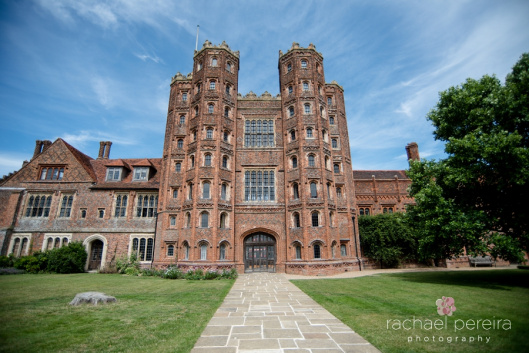
    Layer Marney Towers – photo by Rachael Pereira photography A life – another instalment of my autobiography before I revert to my normal blogs

    Within two months I was pregnant again, and within four months we had moved house again. I was just as under the weather with this baby too, and also had a baby to care for. My husband was often away on army manoeuvres and what were called practise camps, so there wasn’t much support around.

    The one difference this time was that I knew another young army wife with two young children who was as lonely and stressed as I was. Neither of us could drive, but we both had a telephone. We spent hours on it, never saying anything of much import, but just whiling away the time talking to another adult. We had very little in common, and when I moved house again some months later, I never heard from her again. But we’d each served a purpose in each other’s lives at that moment in time.

    This time around too I also had the absorbing interest of watching my daughter growing. I’d discovered a fascination with child development after reading a sociological magazine called New Society for several years. Now I was watching child development in action. I knew from my reading that from eighteen months to three years, when the brain is at its most active, children are like sponges, soaking up words, information and new skills and that between the ages of eighteen months and three, the toddler’s brain is twice as active as the adult brain.

    As I watched my daughter, I could see that the range of skills babies acquire -physical, mental and emotional – was awe- inspiring. And I was watching a baby of ten months thinking and deducting. One Friday afternoon as I sat on the sofa feeling ill, hearing the helpful local grocer deliver our box of groceries for the week and leave it in the kitchen, my ten- month old daughter skated into the kitchen on her bottom, her normal mode of getting about. I let her. Some-time later she came through to the sitting room and tugged my hand, making it clear she wanted me to go into the kitchen.

    When I did, I was awed. She had unpacked the box, putting the butter, cheese, bacon and yogurt by the fridge door which she couldn’t open. Neither could she open the cupboard door under the sink but the things like wash-up liquid, harpic, vim etc were neatly lined up by the cupboard door.

    The jams, tins of baked beans etc, were neatly lined up on the lowest shelf in the larder where they were stored. Everything was in its place. Unbeknown to me she had watched me and learned where everything went, even stuff like baked beans and cleaning materials that she had no truck with. She’s continued to organise me ever since…

    Her brother’s birth some months later and a fortnight early was so painful that I passed out, having no pain threshold at all, and my last thought being; “this is worse than anything I thought possible.” When I regained consciousness, I found a whole host of seemingly worried people gathered around my bed. I left hospital the next day so that my daughter wouldn’t notice that I’d gone and revelled in being thin again, and fitting into a tight pale blue dress bought by mail for three pounds from Kings Road, Chelsea, fashion capital of the world for my generation!

    Shortly after the birth of his son, my restless husband decided to apply to learn Mandarin-Chinese and take off for Hongkong. This entailed spending a year at the School of Oriental and African Studies in London, before attending Hongkong University for several years. So we had to find somewhere to live within reach of the capital.

    One night I was cursorily scanning the personal columns of the Daily Telegraph looking for somewhere to live. My husband was away with his regiment on manoeuvres, and I was filling in the trying gap between the baby’s ten o’clock and two o’clock feed.

    I found a few lines offering a country house in the right area for nearly the right price – for a year. The next day I rang. The owner was delighted – he was off to Greenwich Naval College and wanted someone to keep his house warm. “Chudor, ya’ know,” he told me, listing the bedrooms… he said he’d pay the gardener.

    We arranged a time that weekend to inspect the place, and when my husband returned the next day he went off on what he called a recce. He came back looking rather panic-stricken. “It’s bigger than Hampton Court,” he said, “and looks like it too, all red brick.”

    Reference books describe the place – Layer Marney Towers – as a Tudor palace, composed of buildings, gardens and parkland, dating from 1520. The handsome red brick gate house is the tallest in England.

    Undaunted, I persevered, rather fancying the idea of living in a stately home. We’d never be able to heat it, my husband argued, and then I saw the light – with an eighteen- month- old and a four- month- old, that mattered.

    So I returned to the personal columns, and struck gold a week later. “This one sounds OK”, I said,” right area, right rent, and only five bedrooms” (my ideas had expanded considerably since my brush with Layer Marney Towers the previous week). I rang the owner – same story – wanted someone to live in it for a year, this time while he wound up his boat building business in East Anglia. “You’ll love it,” he said, and reeled off the amenities: “there’s the garden bedroom, the oak bedroom, the red bedroom, the four- poster bedroom, and the end bedroom…” My husband panicked again.

    But a few days later we set off on a light June evening driving through quiet Essex lanes, with honeysuckle and dog roses winding in among the high hazel, hawthorn and elderberry hedges. We found Newney Hall (also a listed historic building) dreaming between fields and hedgerows, a small lake – which in the twilight was almost black and edged with a tangle of lilacs and shrubs – lying between it and the road. The house, Tudor red brick, and Essex pantiles on the upper floor with casement windows, stretched beyond the lake, reaching into a circular lawn with a cedar in the middle. Beyond that, a walled orchard.

    As we walked down the gravel drive I could hear the sounds of music coming from the house. A knock on the door revealed a rather vague looking woman with a viola tucked under one arm, and the bow held in her other hand, as though she could hardly bear to stop between bars to open the door. “George!” she called imperiously, and the seigneur hurried to welcome us. Within minutes the deal was done, and we moved in a week or so later.

    The house had been built in the time of Edward the Sixth, Henry the Eighth’s son, and all the land around had been gifted to Wadham College, Oxford in the same reign, so nothing in the landscape had changed for over four hundred years. The fields and trees, lanes and barns were untouched by time, and since there was no sound of traffic, no jet planes practising, and only occasionally the sound of a distant tractor, the whole place lay wrapped in an almost primeval peace. There was no other house in sight.

    Wood pigeons cooed incessantly somewhere in the trees, cocooning us in their summer sounds, the donkey in the next field brayed occasionally, the cows mooed as they shambled past to the milking shed at the farm beyond the house. The old black painted, red-roofed tiled barns, grain sheds on staddle stones, and stables were laid out around a square, where the cows sheltered in winter. I walked across to the cow- shed every day, my eighteen month old trotting along beside me, baby on my hip, and carrying a big cream- ware jug in which to to collect my fresh milk. We also went there to pick up new-laid eggs from the farmer.

    The house was built from huge beams and filled in between them with a mixture of mud and straw. They were plastered over, and the walls were about three feet thick, with deep window ledges where I put books and vases of flowers. Two old aunts had been living in the house before expiring and gifting it to George. In the mid-sixties they were over ninety, and the house was unchanged since the days when they had been born back in the 1870’s. So was the dust. When I moved an antique chest of drawers to dust behind it, a thrush disintegrated into fine powder.

    I scrubbed and polished, opened windows, put flowers in jugs in the deep window sills, polished brass, and made the tables shine, re-arranged the country Hepplewhite chairs, and the drop-leaf Sheraton table, cleared thick cobwebs from behind the family portraits and arranged our still -new wedding presents, clocks and silver, antique oriental rugs and a few good prints and pictures, all my books, and the baby’s equipment and paraphernalia.

    I spring cleaned from top to bottom, washed curtains, scrubbed floors, and polished and dusted the elegant Chippendale chairs. It was like living in a time warp. No heating, a gas stove so old I’d never seen one like it, and neither had the serviceman when he came. If it’s working, best leave it, he said, shaking his head. I had a big kitchen with a big square scrubbed table in the middle, red and white checked tiled floor which needed scrubbing on my hands and knees every week, and a real larder with marble slab. The only gadgets – my wedding present pop-up toaster and a wooden spoon!

    At weekends, we filled the house with friends and others. School friends from Malaya, friends from my laughing, irresponsible army days, all of us weighted down with two and sometimes a half, children. Anne coming to stay while her husband laboured through Staff College, forgot the address, so simply peered at windows of large houses till she saw toys in them, she said.

    Others came in distress, a girl friend known since childhood days at Catterick, diagnosed with MS, a fellow officer of my husband’s who’d been court- martialled, and who had nowhere to go; then there was the Polish-French, Quaker student at London University who’d never been invited to an English home in his previous three years, and who told my husband I worked too hard – which puzzled me exceedingly – didn’t everyone who had children?

    There was the person behind an SOS in the personal columns of the Telegraph – pregnant and needing a home. She stayed for six long weeks, lolling around the house in pink, fluffy, bed-room slippers, never leaving me in privacy with my new-found neighbourly friends, and not enjoying my food. She’d left a previous haven because she didn’t like the vegetarian food. She left us after six weeks for another address, presumably hoping the food there would be better. She’d arranged to give the baby to a woman who wanted one!

    And there was my teenage cousin who introduced me to the Beatles – not in person! She had a genius IQ and had been sent to an expensive boarding school to make the most of it. But she hated her school, and at this juncture, her mother too, so she came to us for regular holidays with tangled hair and skimpy skirts. There were parents and in -laws, brothers and their girl- friends, Helen, my former colonel, now a god-mother… and then back to primeval peace during the week

    All this entertaining meant lots of food and cooking. Now we were at last the grateful recipients of marriage allowance, I was able to move on from mince and baked beans and tins of stewed steak and indulge in good food and pander to my sweet tooth with chocolate souffles, choux pastries, croquembouche, mousses and more.

    My husband meanwhile had made plenty of new friends in his new working environment, including a pretty blonde girl called Angela. Although I liked her when he brought her home, we had several fierce rows because he went to parties with her, leaving me at home with the babies. I tried everything to make home seem attractive, cooking delicious dinners for him, having a drink waiting for him when he got home…

    One night during one an angry argument about Angela, I dumped his steak and kidney pudding and vegetables on my husband’s head in despair. Mistake. He was a tall powerful man who never understood that when he hit my head with the full force of his hand, I wasn’t doing a Hollywood as he called it, when I sank to the ground too nauseous and dizzy to stay upright. On this night, apart from painful physical reprisals, I’d given myself lots of cleaning up to do.

    And later, I lay in the long sweet -smelling grass in the orchard, where I’d seen the red fox glide through, and cried my eyes out under the late evening summer sky. At twenty- seven I thought no-one would ever love me.

    To be continued

    Food for threadbare gourmets

    I’ve always made the same recipe for chocolate mousse, using an egg per six squares of dark chocolate, but this three ingredient recipe from NZ cookery writer, Annabel Langbein, is a delicious quick alternative. She uses 200g dark chocolate and recommends chocolate with as high a chocolate content as possible – I use 72% .

    Break the chocolate into squares and melt very slowly and gently with a cup of cream and a cup of white marshmallows. (250 ml of cream, and 100gm of marshmallows.)

    When smooth and melted remove from heat and allow to cool to room temperature.

    Beat remaining cream to soft peaks and fold through chocolate mixture. Pour into glasses or bowls and refrigerate for at least 6 hours or overnight before serving.

    Most recipes recommend putting the ingredients in a bowl and placing over boiling water to melt. I’ve never bothered. I just put everything into a saucepan and gently melt. The trick is to do it slowly so the mixture doesn’t go grainy but becomes smooth. And if it does become grainy, this doesn’t affect the taste, so you can soldier on regardless! And I always add a few drops of vanilla to the mix.

    Food for thought

    We are all broken. That’s how the light gets in.

    Ernest Hemingway, American writer and hell-raiser

    Having huge issues with internet, so apologies for no response to the beautiful comments before this page clicks out on me. Back soon !!

  • The end of the golden weather

    Illustration from the post “The end of the golden weather”

    A life – another instalment of my autobiography before I revert to my normal blogs

    So we sailed away from the golden weather and un-ending sun-shine, back to a world that had changed since we had sailed east three years before. The journey reflected this. We couldn’t leave the ship at beautiful Colombo, there were strikes on the docks, and it was deemed unsafe for us to land. At Aden we were allowed to land but not to roam the town. We were whisked straight up to the RAF Officers club where we enjoyed a swim in the blazing heat and sun.

    Sailing through the desert on the Suez Canal in late February meant scarlet dawns and blazing sunsets seen across the desert sands in sparkling clear air. These were the last moments of golden weather and beauty. At a cold rainy Port Said the presence of two menacing uniformed Egyptian guards at the top of the gangway deterred us all from leaving the boat…we were warned there was no guarantee we would get our passports back or be able to re-board. This was just a few months before the nationalisation by ‘The Dancing Major, ‘as President Nasser was known then. I realised then that Pax Brittanica had passed.

    We landed in a cold misty dawn amid the grim grey docks of Liverpool, and by the time we reached London on the boat train from the docks, I was so cold and so depressed that England seemed very unwelcoming. I still had some months to go before taking my last A levels, so I was enrolled in the University Entrance Department of the Regent Street Polytechnic, my scholarship still opening doors for me.

    My first day there felt so bleak and intimidating, that by lunch-time I had fled, and walking blindly down Park Lane, head down dodging the icy rain, sought refuge in Apsley House, The Iron Duke Wellington’s London pad where it was warm. When it was time to go back home, I caught the tube, and didn’t divulge where I’d spent the time. Days passed, the only heating in the whole building seemed to be the miniscule coal fire in the common room, which I could never get near.

    I shivered uncontrollably with cold, prompting one student who arrived every day in a chauffeur driven Daimler to chide me kindly and ask why I didn’t wear warmer clothes. I was wearing all I had – a short-sleeved white muslin blouse, thin white cardigan and grey flannel skirt donated by my step-grandmother with whom we were staying. I was already at my new educational establishment when the rest of the family had taken themselves off to Simpsons in Piccadilly to get kitted out with warm clothes.

    I felt totally intimidated by my fellow students – including the sophisticated girl delivered every day in the Daimler. I noticed a beautiful Indian youth from a princely family, a woman in her thirties who attended classes as a way of passing the time instead of working, an exquisitely mannered and groomed Jewish girl I became friendly with, some arrogant young chaps from Eton, a blonde elegant girl famous for being a general’s daughter, and a plain young man, the inheritor of a shoe – making empire who took me out in his green MG until I couldn’t bear being with him just for the sake of the MG.

    There were others too, like the charming Polish girl who told me of starving in the ruins of bombed out Berlin as they fled west from Poland to escape the Soviet soldiers; and another Polish girl -this one fair-haired, blue eyed, and Jewish -who had endured unspeakable things.

    These hard-up refugee girls somehow knew their way around a sort of student underground, knowing where to buy good second- hand clothes before the term vintage had been invented, getting their hair beautifully styled by trainee hairdressers needing models, having their teeth done by trainee dentists needing someone to practise on and getting free tickets to concerts and student activities.

    Eventually I became part of a foursome who stuck together, Vera, a Hungarian Jewish refugee with a cloud of fair curls, blue eyes, and an anxious manner, Joanna, a calm gentle girl who lived in Hampstead, and Winifred, slim, elegant and as naïve as me. Joanna had been at school with Jackie Collins, before the budding actress had been expelled at fifteen and Joanna regaled us with stories of both Jackie and her older sister, Joan Collins. My history teacher was Mary Quant’s father, while one of the rich girls was the daughter of the man at the head of the cool new TV station, ITV.

    All these hints of a larger world made us feel as though we lived on the fringes of glamour and excitement. Bill Haley’s Rock around the Clock shocked our elders, when teenagers – a term just invented – began dancing in the cinema aisles to this song. We would gather to dance this new rage of rock and roll too, at the central hall in the Regent Street Headquarters, though I was still too shy to dance and watched from a balcony with Winifred.

    When we broke up for the Easter holidays, I caught the tube to Acton, where I had heard there were lots of factories. I walked down a long road lined with them and seeing a sign saying ‘vacancies’ went in and signed on. When I got back to my step- grandmother’s where we were staying, every one reacted as though I had said I was joining a brothel, but I ignored the disapproval and went anyway.

    I lasted the week until Easter, packing thousands of yellow plastic lemons that would hold lemon juice. I became so bored that I ended up scribbling verses from Omar Khayyam inside the cardboard boxes, in the hope that someone, somewhere, would read them… sort of message in a bottle sent from a factory…

    With the five pounds so hardly earned I took myself off to Marks and Spensers and bought a blue and white pinstriped blouse, a grey flannel pleated skirt and a cardigan. Back at Regent Street, I ended up making other good friends as well as my close foursome, and having lots of fun, skipping classes to see Ingmar Bergman’s incomprehensible ‘The Seventh Seal’, an exquisite Russian version of Twelfth Night, great lover Rudolf Valentino in The Sheik and The Four Horsemen of the Apocalypse and lots of goodies at the Baker Street Classic. The wondrous Wallace Collection was just around the corner, and museums and art galleries all within walking distance.

    One day Joanna said her parents were away, and invited the four of us to their rambling house in Hampstead to try out a oujia board. With great enthusiasm and much ignorance, the four of us gathered around a table, and wrote the letters of the alphabet on separate squares of paper which we arranged in a circle. In the centre we placed a glass. We then each put a finger on the glass and sat in silence.

    When the glass began to move, we each laughingly accused one another of pushing it with our finger, but then it seemed to gather a momentum all its own. In silent disbelief we watched it glide from letter to letter, and then hurried to write down each letter so we could work out the words and the sentences. As the séance progressed we all became more and more un-easy. The messages we were getting seemed rather malevolent, telling us that people we knew were untrustworthy, another was entangled with the wrong person, and other personal details.

    Feeling we were playing with danger we broke off the session, made ourselves some coffee and dispersed across London to our various homes. I was so frightened by what felt like a mischievous and unpredictable energy that I didn’t dare switch off the light in my bedroom back at my step-grandmother’s flat that night. Nor did I switch it off for some weeks until the memory of the nastiness had faded.

    As for my education – I never caught up with my Latin – though I enjoyed the lessons, as the Anglican church in North Audley Street was just through the classroom wall, and the organist was always either rehearsing or playing for a wedding – mostly the wonderful Trumpet Voluntary – a small compensation for my struggles with the subjunctive and ‘The Aeniad’.

    My lovely history tutor, Mr Quant – didn’t teach my history period. I begged him to just let me swot myself and recommend some reading as I couldn’t face starting somewhere else, and we hobbled towards the finishing line together, and somehow I passed. Thus ended my schooldays, but not my education.

    I now joined my parents in Monmouthshire, where they were living in a house belonging to friends who were overseas. Here I walked in a field golden with buttercups, edged with high hawthorn hedges. Here I felt again the sweetness and gentleness and ancientness of the English countryside that I had hungered for in the tropical heat when the only flowers apart from frangipani, were yellow cannas, purple bougainvillea and the scarlet flame tree.

    I was eighteen and this was how I had remembered the scenes of my childhood… shades of Sir Walter Scott’s:

    Breathes there the man with soul so dead

    Who never to himself hath said,

    This is my own, my native land…

    We were living in a house lent to us by friends, far out in green hills and deep valleys. The name of the house revealed that it was built on the site of an Iron Age fort. Offa’s Dyke was reputed to end in our garden, just above a huge S-bend in the River Wye. Offa lived from 757 to 796 and invented the penny. His dyke separated Mercia from Wales and stretched for ninety-eight miles from north to south. Whatever the truth of the rumour, behind the un-used stables there was a large mound stretching into the back garden from the fields and woods beyond and covered in hazel and hawthorn.

    The house was part Victorian and part Georgian, with a charming regency style wrought iron porch stretching along the garden side of the house. It looked over a lawn, where two ancient lime trees hummed with bees in summer, and which seemed like silent sentinels in the wintry mist which hovered among their thick tangle of branches in winter. Beyond the lawn was a ha-ha, but not deep enough to keep out the piebald pony who led a small herd of young steers through the gate-posts, up the drive, avoiding the ha-ha and across the lawn while every-one else was at church parade one Sunday morning.

    By the time I’d rushed downstairs to shoo them away, they had meandered on into the little sheltered garden with a sundial, and pushed their way through the scraggy hedge which gave onto a lane, leaving only their deep hoof-prints.

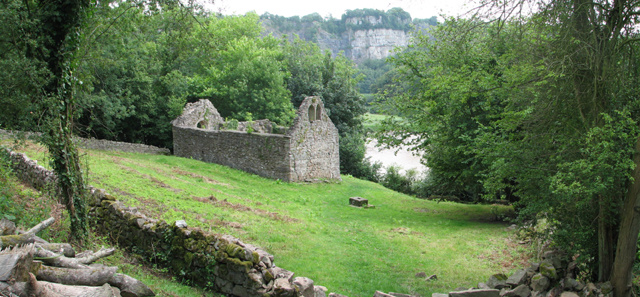
    The lane led down to a farm house, but before I got there, I would branch off through the woods with my puppy and take the winding path which meandered down to the river. Just below the tree-line, and in the grass which bordered the riverside was the ruin of the tiny sixth century church of St James, only its outer walls still standing, empty windows framing the sky, ivy climbing part of the grey stone walls, and tangled brambles guarding the foundations. In spring the woods were filled with bluebells and windflowers.

    The house was faded and gentle, dreaming in the silence of the country-side, no neighbours within sight. My bedroom had pretty flowered wallpaper, pale green painted thirties furniture and long windows looking over the garden. It had a soft sweet atmosphere. The other place that I loved, and where I spent solitary afternoons engrossed in a book was the so-called ballroom. Not a grand one, its claim to fame being the ceiling which had been copied from some famous library in a country house.

    Apart from the large and somewhat threadbare faded old carpet on the polished floor, the only other furniture in the room was a big drab-green brocade-covered Knole sofa, and a large gilt mirror hanging over the carved fireplace. That was all I needed. On sunny days I sat on the cushioned window seat, on other days I curled up on the sofa. When I shut the door the silence and the solitude were absolute.

    So I dreamed around the place, head in the clouds or in a book, picking flowers, adopting two wild kittens as well as the puppy, my dreaminess driving my parents mad. I didn’t know anyone, but once a boy nearby invited me to a hunt ball at Tintern, and the rather erudite and elegant bachelor who lived on the corner further down, in a house filled with books and good furniture invited us to a pre-ball party. I thought he was much more interesting than my escort, and found the ball very dull, spoiled with too many in Malaya.

    It was around now that both the Suez crisis blew up, and the Hungarian revolution was crushed by Soviet tanks. The Suez crisis didn’t bother me much… there had always been tanks and guns rumbling somewhere throughout my life, though this felt nearer, having so recently traversed that contested strip of territory. It seemed to get tangled up in the drama of the Hungarian tragedy. I cried my heart out when I heard on the radio the last words that came out of Budapest from Radio Rakoczi on October 23:

    “This is Hungary calling! The last remaining station! … For the sake of God and freedom, help Hungary.” Then a horrifying silence. It felt unbearable that the west that I was part of, wouldn’t lift a finger to help the Hungarians.

    I mooned around, not sure what to do with my life. I wanted to go to university but didn’t know how to go about it, and also shrank from more difficult years of trying to mask my scanty wardrobe and lack of funds. I’d never been able to save as my stepmother used to ask me if I had any money when she sent me shopping, and so my Christmas and birthday postal orders had dwindled away on potatoes and bacon and sausages.

    I tried to repeat my factory stint by signing up to work in a local brush factory, and also tried to apply for a job interview at the local hotel for a receptionist. Both these schemes were vetoed by my father, who said he didn’t want to see his daughter behind the hotel desk when he fetched up there for a drink with his friends. So I continued to drift, until the day my father came home and said he’d made an appointment for me with the recruiting officer in Cardiff.

    Which was how I ended up joining the army. I left home in the dark at six thirty, one cold January morning. My parents put me on the bus to the station with my suitcase, gave me three pounds, and I left my childhood behind.

    ( the picture is St James Church with acknowledgements to Mercurius Politicus)

    To be continued

    Food for threadbare gourmets

    To cheer up lunch, which was just bread and cheese and chutney, I decided to knock up a courgette and cheese loaf to make life more interesting!

    So easy… two cups of SR flour, a cup of grated cheese, a cup of grated courgette, quarter of a cup of oil, an egg, salt, a teaspoon of mild curry powder and a cup and a half – or more if needed – of milk. Just mix them altogether, and tip into a greased loaf tin. Cook for forty minutes or so in a hot oven, and there you have it… serve warm or cold, it’s just as moist the second day, and particularly delicious with soft blue cream cheese. I’ve also served it with cold meats…

    Food for thought

    There are three forms of culture: worldly culture, the mere acquisition of information; religious culture, following rules; elite culture, self development. Revelation of the Mystery by Sufi master Al-Hujwiri

  • Tropical learning curves

    Illustration from the post “Tropical learning curves”

    A life – another instalment of my autobiography before I revert to my normal blogs

    We sometimes played hockey on the padang at Tanah Rata, the nearby township where I quickly learned to play on the wing after my first attempt at playing centre. As we bullied with our hockey sticks in the slight dip where water had collected, my legs became covered with small red leeches. Trying to prise these horrifying bloodsuckers off was a practical demonstration of the phrase ‘he stuck to him like a leech.’

    I also played fast and furious tennis with three teachers (one who had been a Junior Wimbledon champion) who needed a fourth on Saturday afternoons, and as head girl started the school magazine; I made a wonderfully arrogant and stupid Lady Catherine de Burgh in the school play of Pride and Prejudice, arranged the flowers for church every week, and ignored various nice boys (in retrospect) who tried to get my interest.

    My best friend and I also enjoyed infuriating two young but frumpy teachers who we knew thought we were bumptious and too big for our boots. Apart from this friendship with my best friend which has lasted our life-times, the greatest gift I took away from this school was the ability to write clearly.

    The man who tried to teach me to write was a very patrician academic, who wrote book reviews for The Times and was also an army officer. He was our charismatic headmaster – tall, elegant, witty and charming. He didn’t normally teach but he decided to coach me himself for the newly introduced A levels.

    I quickly discovered that I was a sloppy thinker, with very little idea of how to write. This uncomfortable realisation hit me after my first essay, when I referred to ‘the naked truth’. Robin (I learned to call him this later) made me look up the meaning of the word ‘naked’ in the dictionary, and it was a lesson I never needed to learn again – to make sure I actually knew the meaning of a word before I used it and forget about clichés!

    He taught me to write short simple sentences, to use short Anglo -Saxon words, and never pompous, pretentious Latin words. He’d say chuck instead of throw and tried to teach me not just to write good direct prose, but to think for myself too, and once when I had written an obsequious essay on Anthony and Cleopatra, he teasingly wrote at the bottom: “Beware too slavish an adulation of the Bard!”

    The best training he gave me was to write a précis nearly every day, of a piece of weighty Elizabethan or Restoration prose, reducing each piece to a third of its length. It was a rigorous exercise, which trained me to express meaning in the most efficient and simplest way. It taught me to understand the meaning of words so I could translate them into a simpler briefer version and sharpened up my whole writing style. And that was it – the nuts and bolts of writing.

    When I hear or read of people’s experiences with gifted teachers today, I marvel at the creative opportunities they have; but on the other hand, these simple rules he gave me have been a useful scaffolding on which to build a writing life. Yes, I missed out on the metaphors and similes, and creative flights of fancy. I just had simple guide-lines for communicating clearly, with no tiresome tics of speech or writing, no frills or clichés, no worn-out phrases, un-necessary words, purple passages or exhibitionist long words.

    I learned to write truthfully, and to avoid sentimentality – I think! And this for me, is still the challenge of writing, over half a century later; truth means finding the exact word with no compromises, which means knowing how I truly feel.

    Every holidays, I seemed to go back to a different house or hotel. One Easter, my parents met me at the station, and I was whisked back to the rest house at Port Dickson, situated right on the beach. We spent a week here, with the usual routine of lazy morning, tea and bananas served after siesta, shower and change for dinner, dinner, post -prandial stroll along the empty moonlit sands, before moving to Malacca and a government bungalow on a cliff edge outside the town.

    It was a big, two-story house with magnificent views. At night, looking out over the sea, and up into the clear night sky, my father pointed out to me the North Star and the Southern Cross in the same starry sky as we stood almost on the equator.

    Malacca by daylight had the charm which was missing from every other Malayan town. The Malayan kampongs in jungle clearings were attractive, traditional communities constructed from indigenous materials, wood and coconut leaves, and composed of small groups of dwelling places on stilts. By contrast, the towns were simply concrete shells with shops in the bottom usually owned by Chinese merchants, and crude dwellings over the shop.

    Garish signs and raucous music from the radio were also elements of these depressing environments. To enter these un- attractive townships, or rather, small tropical slums, one ran the gauntlet of terrible smells from rubber factories, and then from durian, a fruit whose smell is legendary. Brave people said it tasted delicious, but few were brave enough to battle past the smell.

    Malacca had an architectural European past, both Portuguese and Dutch. The Portuguese buildings, dating from 1511, included the old fortress, parts of which were still standing when we explored in 1954, over four hundred years later. Eventually Protestant Dutch traders arrived in 1641.

    The Dutch built much of the old town that remained when I saw it, a little corner of the Netherlands transplanted to the tropics. Fifteen years later, when I stayed in Macau, occupied by the Portuguese in 1557, it too had the same charming atmosphere of an alien architecture dreaming far from home.

    But whereas Macau was Portuguese and Mediterranean, and the architecture had a certain suitability for the climate, the little Dutch red-tiled buildings were derived from a northern style designed to keep the warmth in. It was strangely incongruous in the humid sunshine of the old sea-port, by then silted up, trade gone and only Malayan fishing boats crowding the moorings.

    The British got here in 1795, and in spite of the modern tendency to sneer at all colonial activities, the policy of the British then was to preserve the sultanates, the Muslim faith and the Malay way of life, and those aspects of Malayan life still dominate the modern country of Malaysia today. We visited the Malacca museum and listened to a music box playing Mozart which Dutch exiles would have heard nearly two hundred years before, admired the Dutch-built church, now Anglican, the old Dutch government offices, and explored intriguing little shops for jewellery and non-existent treasures.

    In the afternoons while every-one else slept, I read dog-eared orange and cream -covered Penguin books left behind by previous visitors, including the unforgettable Ambrose Bierce and, in cheap editions, Helen Waddell and Mary Webb, Robert Graves and Stefan Zweig. Or I’d play Beethoven’s Ninth Symphony on 78’s, piling them up on the long central column, so that they plonked down one after the other.

    Or I’d walk along the golden, empty sands below and swim, till one day I foolishly swam half a mile out to a fish trap, not realising that it was sited there precisely to catch the current. I slowly became aware that no matter how much I swam, I was getting no nearer the fish trap, but a very long way out to sea.

    Trying not to panic, I remembered that to get out of a current you have to swim with it, and across it. It took me over an hour to get back to shore, miles away from the rest-house, pursued, I was quite sure, by sharks. Jack London’s horrible book ‘ The Sea- Wolf’ had already made an indelible impression on me. That afternoon, it haunted me, with every splash of my tired feet probably being the snap of a shark’s jaws. Once back at the rest-house, I kept this escapade to myself.

    The next holiday was spent in an army quarter in Mentekab, a garrison built in the middle of a clearing in the jungle, it seemed. Now, I felt I had finally emerged as an adult. I was sixteen, and one of the subalterns in the regiment asked my father if he could take me out. I didn’t know him at all, apart from a dance the previous week, but I jumped at this opportunity for my first grownup date.

    The day arrived, and so did he. My stepmother had provided us with a picnic basket. He drove to Temerloh, where we embarked in a long Malayan rowing boat, and he rowed us down the wide, muddy brown river edged with endless palm trees down to the water’s edge. Mile after mile was the same.

    Two complete strangers faced each other in the boat, with nothing to even remark on as the miles slipped past. I sat, apparently entranced, as he described in a self- conscious monotone, stories about Japanese opera which he had seen while on leave in Tokyo. Now I’ve seen some myself, I’m even more amazed that he should have bothered to watch. The women’s magazines I had read said that men liked girls who listened to them, and who hung on their words.

    They also said men liked a touch of white at the neck, and the daisy- fresh look of white gloves. No hope of that in this dripping heat, alas. I sweltered in a tight, waist- cinching, fashionable, elastic waspie, and a frou of frilly white petticoat I’d made myself – all the rage in northern climates, but as unsuitable for the tropics as the Victorian crinolines and Edwardian bustles of previous memsahibs and missies in this sticky climate.

    The young man suddenly spied a small patch of what passed for grass in this part of the world and rowed across to it. By the time we had tied up, spread the prickly wool tartan rug, undone the flask and poured the hot tea which brought out fresh beads of sweat on brow and upper lip, the inhabitants of the nearest kampong had materialised and stood around us in a circle, giggling and chattering in Malay.

    They must have thought we were deaf, or that they couldn’t be heard in a foreign language, for they called out to friends who hadn’t yet arrived, and generally carried on as though we were the afternoon’s entertainment. As we were. They were obviously deeply interested in European courting rituals, observing every bite of our picnic, and commenting loudly to each other on our every movement.

    Finally, I opened the raffia box in which my stepmother had tastefully packed an iced chocolate cake and started back horrified as a horde of ants tumbled out with it.

    At this, we abandoned the whole expedition and followed by waves of what felt like derisive laughter from the indigenous peoples, made our way painfully back up the river. At the other end, my father was waiting mischievously with his speciality, dinner of spaghetti Bolognaise made with the longest spaghetti he could find – extremely difficult to eat with dignity, his subtle plan to embarrass the poor young man and sabotage an occasion which was already an anti-climax to put it kindly.

    To be continued

    Food for threadbare gourmets

    I love Caesar salad, but don’t like bought Caesar dressings. This dressing is worth the little extra effort for a delicious salad.

    Place the following ingredients in a stick blender: one egg yolk, one tbsp Dijon mustard, two to three cloves crushed garlic, one small chopped shallot, four or five chopped anchovies fillets, and the juice of one lime. I use a lemon if I haven’t got a lime. Gradually add 75ml oil – extra virgin olive oil and canola oil mixed, and continue to blend. When thick stir in a few handfuls of finely grated Parmesan.

    If you have time, make the dressing ahead and let it sit for a while so the flavours meld together.

    Food for thought

    “When a relationship stops working, it usually means that someone has grown. Someone is now ready to receive more and have more than the relationship offers. Someone is ready to be loved, honoured, and treated the way they really want to be treated. Could that someone be you?”

    ~ Iyanla Vanzant

  • Guns and exams, ancient peoples and bandits

    Illustration from the post “Guns and exams, ancient peoples and bandits”

    A life – an0ther instalment of my autobiography before I revert to my normal blogs

    The first eclipse I ever watched was at school in the Cameron Highlands in Malaya. School was on a plateau surrounded by tea plantations and hill farms, and we had a clear view. They were dangerous times, the hundred and twenty children who attended the school were transported from all over the Malayan Peninsula in the greatest secrecy so that ‘the bandits’ wouldn’t ambush us. ( ‘Bandits’ were Communist Chinese guerrilla/freedom fighters who wanted to take over the country). We never knew the date of the beginning of term or the beginning of the holidays until the last minute.

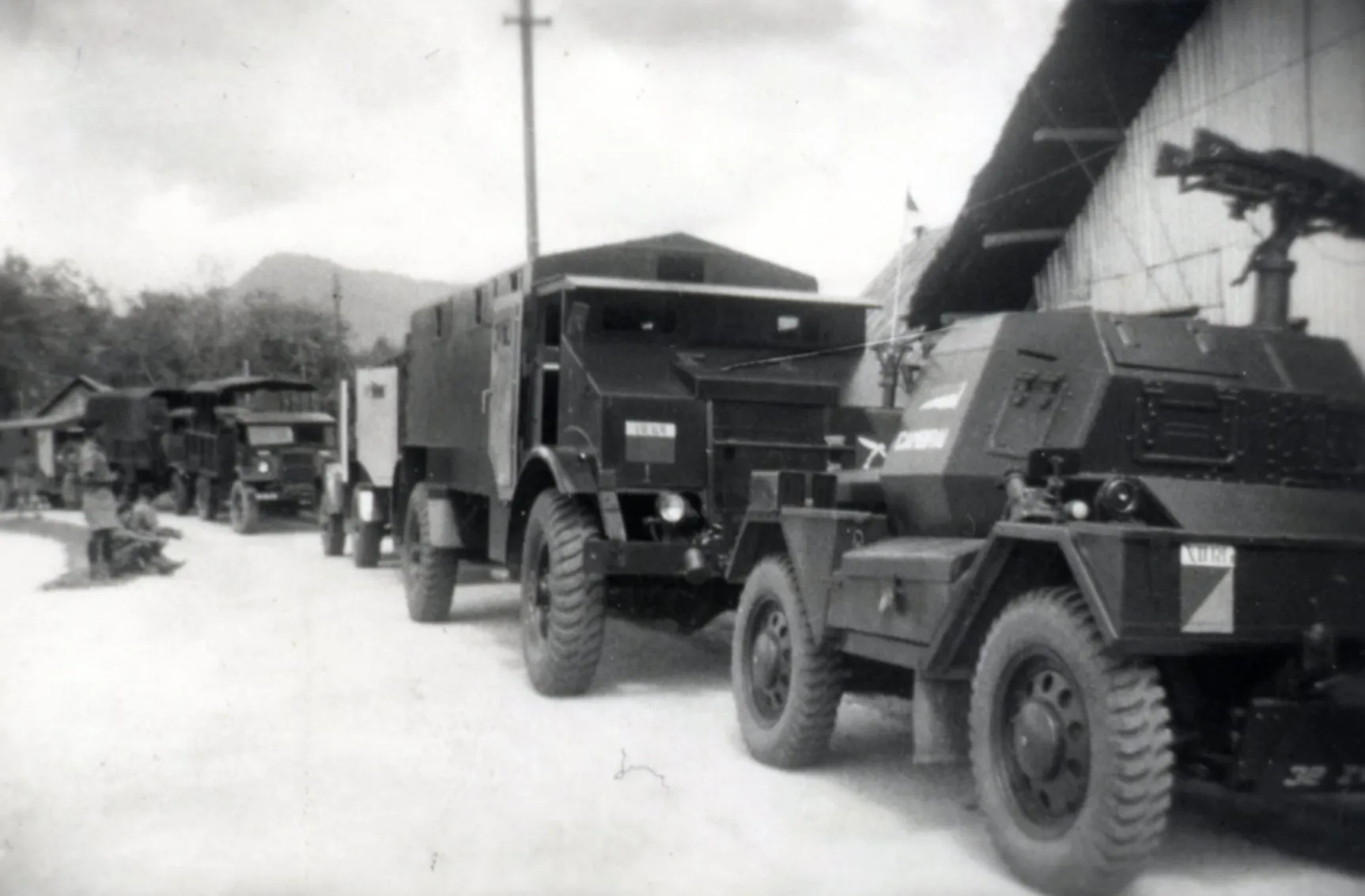
    When I lived in a remote jungle station in the middle of Pahang, I travelled in a convoy especially convened for me. The army sat me in an open jeep (stupid in hindsight) with my officer escort, in the middle of a long convoy of armoured cars escorting me to Kuala Lumpur. Here I stayed the night, before joining everyone else on the school train to Ipoh. We were then taken to Tapah, the staging post at the foot of the Cameron Highlands, where we gathered from all over the country.

    After lunch at Tapah we were all packed into what were known as ‘coffins’ for the forty- mile drive. The coffins were armoured boxes on wheels with a few narrow slits about a foot wide, which could be opened when it was supposed to be safe. There were low, narrow wooden benches to sit on, and a dozen of us would crouch on them, sweltering in the tropical heat, locked up in these metal cages with nothing to eat or drink. Between each coffin in the convoy was an armoured car, and overhead a plane patrolled back and forth, until one term it crashed, so the authorities decided that one danger outweighed the other and didn’t replace it.

    Halfway up the 600 or so hairpin bends of the mountain road, the convoy stopped for us to crouch behind clumps of pampas grass on the side of the road to have a pee. Since we were ringed with soldiers with their rifles cocked, ready to spring into action when the bandits fell on us, I could never muster much enthusiasm for this so -called break. I was never sure that I would actually be in private for the occasion. We’d finally reach our destination after dark, having travelled for two days. When my family moved to Kota Bahru up on the East Coast, the journey took even longer, beginning with the flight to Kuaka Lumpur in an Auster light plane via Bangkok, where I caught a connecting flight.

    The bandits had a more sinister effect on our lives than anyone realised. It was only after I left, that the authorities discovered that our cook, Mr Su, Mrs Su, his wife. Ah Yu his son, and his two minions Wong and How, were feeding the bandits our food. Every term we were weighed at the beginning and end, and I would always have lost half a stone. I nearly died of hunger, I felt so ravenous all the time. But the food we were given was inedible. I realise now that everything was mixed with water or oil, to stretch it, so that the bulk of the rations could be sent to the bandits who invisibly surrounded us m the deep jungle.

    Some children managed on this diet, but those of us who were accustomed to good food couldn’t stomach what was served. Mr Su and his team were several times given an in-depth cooking course, and while the team of instructors were there, we feasted like kings. But as soon as they left, we were back to watered down baked beans, butter that tasted like lard, grey- black potatoes, thin watery jam and stale bread. I used to hang around the staff room after break and afternoon tea, in the hope that the teachers had left some of their dainty sandwiches. A quick dive in before Wong or How came to clear the table, and the raging hunger might be momentarily cheated. But not for long.

    Every night a platoon of soldiers arrived to guard us, and the thud of their boots as they patrolled past our dormitories in the moonlight punctuated our sleep. In retrospect, our food guaranteed our safety much more effectively than their guns.

    One of the few privileges of being a senior girl was that one could get permission to go for a run before breakfast. Our route went around the golf course overlooked by the Cameron Highlands Hotel. My best friend and I did this, not because we had the slightest interest in athletics, but because on our return we could ask for an extra piece of toast to keep us going till breakfast.

    Early one morning while dawn was still breaking we were stopped in our tracks in the cold mist. From out of a thicket a single file of very small people emerged from the trees, like no others we had ever seen. We were riveted to the ground with fear. We didn’t know whether if they saw us there, they would raise their blow-pipes and dispatch us with their poisoned darts. There were half a dozen lean, long-legged, warriors leading the tribe carrying their long blow-pipes, the women and stick-like old people following, bearing large loads, while the children kept up in the middle of the group.

    They moved swiftly and silently, practically naked. Unlike the known indigenous Sakai tribes, this tiny handful of people were a much older race, the Senoi, a tribe of Orang Asli, and were long-limbed, delicately made, almost pygmy people. We had heard of them by repute, but they were rarely seen back then. Looking neither to right or left, they disappeared as quickly as they had appeared, and we were released from our spell of fear and amazement. And I think we forgot about them after we’d eaten our hot toast back at school.

    Thanks to a wonderful music master, music was one of the passions that lightened our days, and we sang to Gilbert and Sullivan, listened with delight to Dvorak and Greig, marvelled over Beethoven’s Fifth Piano Concerto, swooned to Rachmaninov’s Second Piano Concerto, danced to Scottish reels, waltzed to popular songs and sang in the school choir. When the music master acquired a copy of Beethoven’s Ninth Symphony, conducted by Toscanini, we senior girls were invited to listen to the sacred record. It was a Sunday afternoon and we sat shyly and solemnly in the staff-room and were overwhelmed by it.

    And when the music master found the art master thundering out the last movement on the piano in the assembly hall, a great feud erupted between them which lasted the whole term, the art master seeing no reason for not extemporising on the piano, and the music master condemning him for bowdlerising and cheapening Beethoven’s masterpiece. It seemed to matter terribly. Those who liked the art master were on his side. Those who didn’t like him were for the music master.

    This was in 1954. Music was hard to come by then, and so far more significant than it is today. And we made our own. Some nights during the holidays we sat outside our house by the river at Kota Bahru, when a group of chaps used to come, and all the generations sat and sang to someone’s flute – songs like ‘The foggy, foggy dew’, ‘On top of Old Smoky’. Lots of Burl Ives.

    We didn’t sing well, we just enjoyed singing. Where we sat under the stars by the river, the Japanese had passed in their motor boats at dawn, twelve years before, on the morning they invaded Malaya at the same time that they bombed Pearl Harbour. The line of bullet holes from their machine guns was still there in the pink stucco walls, testimony to their random brutality.

    Guns also punctuated my exams. Artillery had been positioned on a ridge across the valley from school, and when the guns aimed into the jungle, the thunder of their firing was followed by the terrible crashing of trees, cries of birds and endless echoes around the mountains. It was a continuous and thunderous bombardment which totally destroyed concentration or peace of mind. This went on for weeks.

    The firing began again during my A level exams, which lasted for three hours. When the overwhelming noise began, the head master came quietly into the exam room where I scribbled alone with an invigilator, the only one taking English A levels. He took my paper, noted the time when the firing began, and came back to log the time when the thunder of the barrage ceased several hours later. I always hoped these unusual entries would cause the examiners to deal leniently with me… and maybe they did as I was pleased with my marks.

    Living in the remote places that we did, my parents didn’t often manage to get up to the Cameron Highlands Hotel, though they, like everyone else so soon after the war, were tickled by the address book, with its historic page dated ‘January 1942’ and inscribed with what felt like an arrogant flourish: “Nippon”.

    There were no further entries until 1945, when British troops re-took the hotel, and triumphantly defaced the next page with the scrawl -” Nip-off”.

    My father had now transferred to a Malayan regiment, which like the Gurkhas, was staffed by English officers and NCO’s. So we left Penang and all moved to a clearing in the jungle in Pahang, which was called Mentekab. It’s a thriving town now, but then, it was just lines of barracks, officers and sergeants messes and families quarters.

    My father quickly achieved the highest “kill” of bandits, being extremely good at jungle warfare, in spite of having spent the war in tanks. One day, we were shopping at the local Chinese grocery store in Temerloh, Tek Seng’s, the only source of food in the middle of the Pahang jungle. My father was spending the normal six- week spell in the jungle, so we were surprised when he arrived at speed, and with company – a Chinese man in tattered clothes.

    He practically lifted the man into the back of our car and told my mother to run back into the shop, as quickly as possible and get a box of oranges. When she returned, he peeled one, and fed segments to the wilting man in the back seat, put the rest of the oranges on the seat beside him, telling him with hand signals to eat them, and then drove off. I had to follow in the army vehicle.

    The wilting man turned out to be a Chinese bandit, and the policy of starving bandits out of the jungle was working so well in this particular area, that this one was half dead and suffering from starvation and scurvy. Hence the oranges. With hospital treatment he eventually recovered and went to a rehabilitation camp. Here he recanted his Communist beliefs and then joined the army. Seven years later, my father was in his office at Whitehall in London, when a Chinese soldier asked to see him. It was the bandit. He was now serving in the Royal Signals in Gibraltar and had got leave to come and present my father with a wrist watch as a thank you for saving his life. We wondered later how he had managed to track down my father.

    Gallivanta sent me the link to this photo of the convoys up to school with the coffins and armoured cars

    To be continued

    Food for threadbare gourmets

    Invited for lunch with a group of neighbours, I volunteered to bring pudding. Carrying food is always a challenge, so I decided on a tart which couldn’t spill or spoil. So pear and almond tart it was. This is my quick fix on it short cuts and all. I used some quality bought short crust pastry for a base. Spread a layer of plum jam on this cooked base. Drain a tin of pears, and when about to use, pat them as dry as possible with kitchen paper, and slice horizontally, keeping the shape of each pear half.

    Cream 6 ounces of butter and seven good tablespoons of sugar together, then stir in an egg. When smooth, add a teaspoon each of vanilla and almond essence, then an ounce of SR flour, and eight ounces of ground almonds. Mix well and spoon this mixture into the pastry case, and gently arrange the pear halves in the almond mixture – don’t press them down or they disappear during baking. Bake for 55 minutes in a moderate oven or until cooked. Good hot, cold, or warm with cream.

    Food for thought

    “If you are depressed you are living in the past. If you are anxious you are living in the future. If you are at peace you are living in the present.” Lao Tzu, reputed author of the Tao Te Ching

  • Sailing to the fabled East

    Illustration from the post “Sailing to the fabled East”

    A life – another instalment of my autobiography before I revert to my normal blogs

    Southampton 1953. The first night on board ship (shown above) my father took me for a walk around the deck while my stepmother settled my brother and our luggage into our cabin. It was the first time we had gone for a walk together since that memorable and devastating day in London when we first joined him and my stepmother. He had mellowed in the six years since then. There was a joyous bustle and excitement everywhere we walked in these last few hours before we sailed.

    Since I was fourteen I was allowed to eat with the adults, which meant attending the formal dinner every night. Though this was a troopship, the elaborate routines and rituals of an ocean-going luxury liner were still maintained. It had been a German ship during the thirties and when captured during the war, had been transformed into the military ship in which we were now travelling, though still with its sweeping curved staircases and ornate dining room, and a waiter who still processed around the corridors banging a soft gong to announce each meal. So every evening, we ate a full Edwardian dinner, course after course, in full evening dress.

    My father had deliberately packed his uniforms, which were now buried in the ship’s hold, so he couldn’t dress up in full regimentals. This had earned him a very black mark from the captain, to which he was impervious. All around us, other officers sweltered and swaggered in mess kit, short jackets laden with gold braid, jingling spurs and tight overalls – as their long tight trousers fitting over Wellington boots were called – while my father relaxed in bow tie and dinner jacket.

    With my stepmother wearing her long black silk evening dress he apologised to the others at the dining table for looking so funereal, and as he made his witty remarks, I watched the two poised and elegant young naval officers on our table fall under the spell of his debonair charm, like all his young regimental subalterns. These two young men were exquisitely mannered, especially the blonde blue-eyed one with an indefinable air of distinction, who, my father told me, came from a distinguished aristocratic family.

    As the voyage progressed, and we sat with the same diners at every meal and got to know each other, both these young naval officers told me what a wonderful man my father was. By then, I was old enough to see something of what they meant. He was handsome and distinguished in his own right, witty and wicked, with a mischievous sense of humour, gay and rather gentle, and exuded integrity and intelligence. Above all, he shared a zest for life, a joy in people, and a laughing disdain for authority.

    This was partly why we were on our way to Malaya, where he was going to help form the Federation Regiment. His career as a gunnery expert was soaring when he had complained to the Army Council about the lack of proper treatment for accidentally injured soldiers during a huge army exercise. Whistleblowers always suffer for their intransigence, so this had meant the end of his career. He left the cavalry and became an infantryman, an unusual career move!

    He had had a long hard war, and didn’t get away from France until two weeks after Dunkirk. His tank regiment had been ordered to support the French on the line of the Somme, but the French never turned up to be supported, and his outnumbered, outgunned regiment was in considerable peril from the swiftly advancing German army. They managed to retreat to Cherbourg, where they destroyed all their tanks and equipment, and were packed onto a cargo ship for the dangerous cross channel journey through the night.

    Two thousand men were crammed on to the deck, hungry, exhausted and relieved. He said he never forgot the women of Plymouth in the WVS, waiting for them on the docks at dawn with hot tea. He was then sent to Africa, to serve in his tank regiment in the Eighth Army, and then the First Army. He was one of the famous Desert Rats. The names of his battles echoed through my childhood: Tobruk, Sidi Bahrani and Sidi Rezegh, Bardia and Benghazi, Salerno and Cassino…

    I knew where he was, because he sent little cream cards with Pharaohs on them, sitting sideways with their arms bent, with long, black hair and black, almond shaped eyes. He also sent little wicker baskets of almond nuts, perhaps when he was in Tunisia. And later, when he was in Italy, he wrote letters and drew pictures of himself drinking wine at the top of steep hills. But then, after my mother disappeared, his letters stopped coming. As though the heart had gone out of him.

    So I sat at table now, in the big dining room, and watched as he charmed our dining companions, who included a childless couple, he, very conscious of his grand regiment; she, still living on her memories of being ‘presented’ at court before the war, when, she told me, as a debutante she wore her long white dress with a train and two white feathers in her hair, to make her curtsey to the King and Queen at the evening courts.

    I wore a smart new summer dress my stepmother had bought for these occasions, but since the rest of my wardrobe was in tatters, and my only shoes were a pair of gym shoes, she lent me a pair of flat red Russell and Bromley shoes to complete my outfit.

    With a life-time of war-time rations behind me, I couldn’t believe my eyes as course after course of delicious food was served, not just at dinner, but at lunch and breakfast, and even afternoon tea. Few adults slumbering in their cabins, bothered with afternoon tea, but to me it was unmissable, with cake stands laden with mille-feuilles, meringues, slices of Battenberg cake, Florentines, petit fours and other delicacies I’d never even seen before. (The waiter named each exotic cake for me)

    After the first week or so of this high life, I was approached by a group of young army lieutenants. They had asked my father first if they could include me in a play they were writing. I discovered that they called me Angelina, and I now enjoyed a court of charming young men who spoiled me and made me the heroine of a play they wrote and produced for the entertainment of the other passengers, so I enjoyed a brief moment of glory.

    But I was immune to their considerable attractions, as the night my father had walked me round the deck, I had fallen hopelessly and secretly in love with an unknown naval officer with blue eyes, standing with a group of friends having a drink in the bar. I saw him through the open window as we passed. I never knew his name or anything about him, and craned to see him in the dining room, and hoped to see him in the lounge, and never passed him on the deck.

    At Port Said we visited the places my parents knew for old times sake, so I never saw him there. At Aden he was nowhere to be seen, and at Columbo, as we sat and had tea at Mt Lavinia, the famed hotel by the sea, I saw he was playing tennis, and my heart turned over. When we disembarked at Singapore, and he sailed on to Hongkong, I cried for days. I must have driven my parents mad, and no doubt they put it down to hormones, since they didn’t know why I was such an emotional wreck!

    Sailing into Singapore in the flaming red dawn was a little like approaching Venice from the sea, and this old port was just as fascinating back then before the skyscrapers arose, and the old streets and dwellings had been razed. It was still a maze of narrow alleys, where long bamboo poles festooned with drying clothes protruded from windows high above pedestrians and trishaws, and below them, shops crammed with intriguing foods, clothes and rugs, jewellery and carvings lined the thronged pavements.

    We stayed in a hotel just around the corner from the fabled Raffles Hotel. Our hotel was built around a courtyard where tall palms grew and fragrant frangipani scented the air. In the warm, dark tropical night, I looked down from our bedroom windows to where knots of people squatted around the flames of tiny stoves on the pavement and cooked their evening meal… the scents of their spicy food, and the sound of their voices drifted up through the night, and they became a part of the palimpsest of this strange and enchanting Eastern city.

    It was still recovering from the years of deprivation, persecution, and near starvation under the brutal occupation by the Japanese during the war, but then I only saw the beauty and fascination of another culture.

    For a few weeks we explored the city, visited old friends in the army quarters and every day took a taxi to the beautiful Botanic Gardens in the cooler late afternoon where we fed the monkeys pea-nuts. Then we took the long train journey the length of Malaya, trundling endlessly through palms and past muddy rivers until we reached Penang, another romantic island, approached by ferry this time. We arrived in this beautiful place to another great hotel, the Runnymede, a rambling white stucco building on the edge of the sea, originally built by that splendid Georgian Englishman, Sir Stamford Raffles, as a home for his first wife and family in 1805.

    He’s remembered as the founder of Singapore, but he also abolished slavery wherever he was posted, established law and order and free trade, religious freedoms and free schools. He spoke Malay and wrote a history of Java and was one of the founders of the London Zoo, and London Zoological society. Typically, he was frowned on by the English government, which refused him a pension, and fined him twenty- two thousand pounds when he retired because his land reforms meant he hadn’t made enough profit from the territories he administered! It was a risky business and didn’t pay to be a just and creative colonial official!

    The Runnymede Hotel had been extended enormously since Raffles’ time and had evolved into one of the legendary hotels of the East, like Raffles Hotel in Singapore, and the Peninsula in Hongkong. Life for the wives in Malaya before independence – or ‘Merdeka’- as it was known, had a thirties flavour. Very little had changed since before the war in this tiny enclosed world. We spent eighteen months living in this luxury hotel on the edge of the sea which had been commandeered by the army to house officer families.

    So while the husbands were scattered all over the Malayan peninsula, banging off at Chinese bandits or Communist freedom fighters – depending on your point of view – in steaming, leech-infested swamp and jungle, their wives and children lived lives of bored luxury in Penang. I, of course was one of these fortunate children, and since now my step-mother’s friends had amahs to look after their children my child- amusing duties were redundant.

    I was at an awkward age -fourteen and a half – too young to really be included, but useful when they were short of one for canasta. Too young to learn bridge, or to be invited to join them and their friends for a pimms or gin and tonic before dinner, but too old to eat with the children. So I watched them and tried to understand the shifting friendships and social hierarchies.

    To be continued

    Food for threadbare gourmets

    We’re having roast chicken on Easter Sunday, so I decided to make bread sauce, which I haven’t bothered with for years. It’s supposed to be served with turkey or partridge, but I think it’s just as good with chicken. Stick eight cloves in a peeled onion,and put it in a small saucepan with 500mls of milk, two bay leaves and two springs of thyme. Slowly bring to the boil, and then leave to infuse for at least thirty minutes.

    Strain the milk, discard the herbs and the onion. Stir into the milk a 100gms of fresh white breadcrumbs (I use sour dough) and slowly bring to the boil stirring all the time to make a thick smooth sauce. I make this the day before. On the day I will add 100 ml of cream, salt, pepper and nutmeg to taste. It can be thinned with more cream or left nice and thick which is how I like it.

    Food for thought

    According to my parents, I was supposed to have been a nice, churchgoing Swiss housewife. Instead I ended up an opinionated psychiatrist, author and lecturer in the American Southwest, who communicates with spirits from a world that I believe is far more loving and glorious than our own.

    Elizabeth Kubler Ross. Pioneer in near death studies

  • Kingdom by the sea

    A life – this is another instalment of an autobiographical series before I revert to my normal blogs. Three years, three schools. During the next three years I went to three different schools, as my father went from one army posting to another. Richmond High School was unusual. It had been built just before the war started, and was a no- expense- spared, state of the art modern building with even the chairs and tables designed ergonomically and in harmony with each-other and the architecture.

    Illustration from the post “Kingdom by the sea”

    Unlike the historic boy’s grammar school nestled down in the town opposite the medieval parish church, the girls’ school was built high above the River Swale on the edge of the town looking across rolling farmland.

    Designed by Denis Clarke Hall, a modernist architect, whose father was one of the founders of the National Society for the Prevention of Cruelty to Children – NCPCC – it broke new ground for school design. Building was completed in 1940, the windows arriving miraculously from Switzerland, and the school furniture was designed by the great Finnish designer Alvar Aalto.

    From the entrance hall the staff rooms, and library led off to the right, the assembly hall to the left, and straight ahead stretched a long, blue- tiled light-filled corridor for about a hundred yards. On the right, three short blue-tiled corridors or stalks as they were known, branched off from the main corridor at intervals, and at the end, divided into two classrooms. The classrooms were large, high-ceilinged airy rooms with windows stretching along two sides, from desk height to ceiling, and equipped with full- length Venetian blinds – very modern in 1950.

    In the cloakroom, we each had our own hooks for hats and coats, and beneath them fitted benches equipped with shoe boxes for our indoor shoes. Similarly, in the gym cloakroom and showers, we had our own hooks for shorts and gym vest, towel and shoe racks. It was a perfect example of architecture actually working for the purpose it was designed, with no fish-hooks in it. It also educated my eye, so I was already in tune with the lines of Scandinavian architecture and furniture design which became the rage during the fifties and sixties.

    From here I went to Aldershot Grammar, an old fashioned red brick building, over-used and over-crowded, and I missed the beauty of Yorkshire, the charm of old Richmond, the great achingly-empty spaces of the moors, the thick leafy trees in the dale, and rushing water of the River Swale, ruined abbeys, medieval churches and the Norman castle. Then, moving from the built-up Aldershot garrison town and rather grim grammar school, I started yet again at Swanage Grammar, another red brick building, this time on the edge of a sea-side town.

    It had a joyous atmosphere, partly due to the constant creativity nurtured within its walls. The annual arts festival was the focus of our lives for a large chunk of the year, during which we wrote and painted and rehearsed, and the classrooms rang with choirs practising, soloists practising their instruments and voices singing and declaiming poetry and speeches… The festival was so devised that everyone could find some talents to develop and was required to enter four events… I won the short story competition, and the declamation prize, making my mark with Shakespeare’s ‘This royal throne of kings’.

    Today, these three schools no longer exist. The first was merged with the medieval boy’s grammar school and local secondary modern schools, the second seems to have disappeared so thoroughly it’s not even in records, and the third stands empty, merged with other area schools. I find it sad.

    Each school I went to belonged to a different examining board, the Oxford, Cambridge and London, so I had to start afresh with a different syllabus at each one, and this was where my reading stood me in good stead, though it didn’t help with my disjointed maths career. My navy school uniform which had lasted me since the first school, just made it to the day I left to go to Malaya, darned and skimpy and about to collapse! In the two schools with brown uniform I had stood out like a sore thumb.

    After my London holiday, my next was in France, an adventure I wrote about in my blog called My Tour de France. The last summer holiday before leaving England was at Lulworth Cove. We lived there for a year, and to get to school at Swanage I had to catch a bus at 7am, change to catch a train at Wareham, arriving in Swanage to catch another bus up to school. The return journey saw me wearily arrive home at six o’ clock.

    It was a hard year. I cooked my own breakfast- one egg, one rasher of bacon and a piece of bread- at six thirty, fed and let out the twelve chickens and two geese we had invested in to feed the whole family at Christmas, and left the sleeping household undisturbed as I went to catch the bus. A finicky eater, I couldn’t stomach the dreadful school lunches, but since my stepmother was sure that I had had a good midday meal, and was also sure that I had eaten it, tea back home was just some toast, followed by cornflakes before I went to bed after finishing my homework. I was always hungry.

    I used my penny for the bus up to school and back to the train, to buy a dough-nut for the return train journey like every- one else, until my step-mother discovered this. Always hard-up, she decided that if I could walk and run the last mile to school and back, I didn’t need the penny each way, so I sat in the train and watched everyone else eat their snack, pretending my stomach was not rumbling with hunger.

    As soon as I got home, there were the chickens and the geese to round up and feed, and shut up for the night in their respective huts. Homework and then bed at eight completed the day. But a bookworm can’t stop reading so I would read whatever book was obsessing me, kneeling by the bedroom door to use the crack of light from the hall, until my parents went to bed.

    This was the year I discovered Thomas Hardy, beginning with Tess of the D’Urbervilles. This was Hardy country, we all read him, and talked about him, and echoes of his words haunted every corner of this beautiful place once known as Summerlands.

    The Dorset country-side was enchanting, old grey stone cottages, and historic unchanging villages, nestled in the folds of the valleys on the Isle of Purbeck, where hedges were bent against the prevailing wind from the Channel, fat lowland sheep grazed, and ancient churches dreamed through all the days. History and folk lore and old memories brought each place alive for me.

    Every morning on the bus, we drove past the grey stone Elizabethan manor house where Tess spent the first night of her honeymoon with Angel Clare… round the corner in Wool was the ruined abbey where Angel carried her when he was sleep walking… While Norman Corfe Castle, where the Roundheads in 1645 had twice besieged and finally overcome Lady Mary Bankes and her Royalist garrison by a betrayal from inside – and which was then ruined on Cromwell’s orders – was a historical landmark on our journey.

    Perhaps the most poignant moment of history was a moment in our present. At eight o clock on the 28th January 1953, just as the train pulled out of Wareham Station, we looked at the time, and silence fell on the carriage of eight girls of different ages. We sat there in a long tense vigil, and it was a long time before anyone broke the silence, as we all lived and died the last few moments of nineteen- year -old Derek Bentley’s short life as he was hanged in London.

    It seemed utterly unbearable that a life should be taken in such a brutal way, that a life should just be obliterated while we sat with bated breath in our little train travelling towards school for another day of life and laughter and learning. (Sixteen- year- old Christopher Craig, who actually shot and killed the policeman in the case, served ten years and on release became a plumber.)

    That summer of my fourteenth birthday, my stepmother’s nephew came to spend the long holidays with us. She adored him, and gave him wonderful memories of idyllic weeks with picnics and expeditions every day. This was idyllic for me too, since I was the one taking him for the picnics and long walks and jaunts to the different beaches and bays.

    With our satchels filled with egg sandwiches and sometimes ginger pop, we would set off, our favourite place being a remote bay down a steep cliff, called Man o’ War Bay. We walked up the hill past a fascinating Lutyens house, through fields, down crumbling steps to reach the pebbly beach and blue water, clear as crystal, and played and swam until time to come home.

    Back home, my stepmother who never made cakes, had a magnificent high tea waiting for us with scrambled eggs or baked beans on toast followed by warm, freshly baked, utterly delicious date cake. The whole holiday felt like something out of Enid Blyton, ‘Four Go Away on Holiday’ sort of thing, without a care in the world.

    Most weekends for the rest of the year, I explored remote bays and paths that few walkers could ever use, for I roamed across the shooting ranges of the Gunnery School where my father was second in command. So I was able to reach forbidden and forbidding Arish Mell Gap, and to explore the desolately lovely village of Tyneham – commandeered by the army in 1943 to practise firing on the land surrounding it. In the early fifties, the two hundred villagers had only been gone for ten years, so their homes hadn’t suffered too much damage from gunnery shells or the decay of desertion. Back then it was a particularly beautiful English village, haunted by its past and untouched by the present, where time had stood still.

    From there I’d scramble up to the 2,500 -year- old Iron Age fort, where later, the Romans had eventually wrestled it from the local Durotriges tribe and then maintained their own watch, and I’d look down on Worbarrow Bay, also out of bounds. In the other direction, I went for solitary swims right round at the furthest edge of the curve of the circle of Lulworth Cove, the legendary beauty spot on the Jurassic Coast. Once I swam in mist so dense I couldn’t see further than a few yards, just deep green water surrounding me and feeling long slippery strands of sea-weed waving between my legs…

    When it rained, I would kneel on the sheep skin rug on the floor in my bedroom and lose myself in my latest library book. Though none of my school friends lived nearby, I was never lonely, as I had a rich interior life – books, art, music, the history of ballet, ancient Egypt, history, poetry – all these interests meant I was never bored, but always dreaming, always in the midst of some absorbing passion. So I was overcome by grief at the end of The Mill on the Floss, mesmerised by autocratic Mr Rochester in Jane Eyre, irritated by Emma, loathed Becky Sharp, hated Jack London’s Sea Wolf, loved Prince Andrei and Natasha, mystified by Virginia Wolff’s allusive writing and learned by heart ‘Annabel Lee’, in her kingdom by the sea.

    I spent a lot of time painting. My father would bring me long strips of cardboard from the packings of the shells they fired every day on the ranges. These strips were about eighteen inches wide and three feet long, and on them I depicted in the vivid poster paints always given to me for Christmas – nursey rhyme characters like Wee Willie Winkie, Little Boy Blue, Miss Moffat and all the others. These pictures adorned not just my brother’s bedroom, but the toddler’s bedrooms of many of my stepmother’s friends.

    Years later one mother told me she still had these pictures. I was known as ‘good with children’, so often these same friends would borrow me to amuse their toddlers in those days before play groups and kindergartens. One mother even borrowed me for a fortnight to look after her toddler while she was recovering from the birth of her second child.

    While we lived here by the sea, with the help of the army padre I was confirmed in Salisbury Cathedral, and shortly after, the King suddenly died on 6th February 1952. We still, in those days, stood when he had given his speech after Christmas dinner and the National Anthem was played. The radio – no TV for us then – only played chamber music, as it was called – for a week, the newspapers were framed in black, and we all felt we were part of a huge national event.

    The new Queen was young and beautiful… and now after the passage of time, and the longest reign in English history, it will seem perhaps even more apocalyptic when her spoiled elderly heir inherits that ‘royal throne of kings’.

    The following year sweets came ‘off ration’ in the week before we sailed for Malaya. For the first time in my life sweet shops were full of sweets/candy instead of running out of stocks in the first few hours, and it was possible to buy as much chocolate we wanted, without waiting in a long queue and having to count out a measure of measly sweet coupons!

    To be continued

    Food for threadbare gourmets

    I’ve always loved date cake since that year by the sea… and this recipe brings back those days. Soak 250 gms of dates in a cup and a half of boiling water and a teasp of bicarbonate of soda for about 30 minutes until the dates are soft. Beat 125 gms of softened butter, three quarters or more of a cup of brown sugar, and a teasp of vanilla. When pale and creamy add two eggs one at a time, and then stir in the date mixture and two cups of SR flour.

    Pour into a greased tin, the bottom lined with greaseproof paper (I use a loaf tin) and a bake in an oven at 180 degrees C for about forty minutes, or until a blade comes out clean. I often sprinkle the top with extra white sugar, just because if I’m going to indulge in sugar, it might as well be really sweet!

    Food for thought Don’t take anything personally. Nothing others do is because of you. What others say and do is a projection of their own reality, their own dream. When you are immune to the opinions and actions of others, you won’t be the victim of needless suffering.

    The Second Agreement from The Four Agreements by Miguel Ruiz

  • A beautiful woman

    Image result for affluent tree lined london streets A life – This is the thirteenth instalment of an autobiographical series before I revert to my normal blogs

    My step grandparents accepted me for better or worse, but not as a grandchild, so I called one Uncle Bill, which wasn’t his real name, the other Nana. She was a tall, slim, elegant woman with a cloud of white hair piled up on her head. When she went out, she wore little, high-crowned, fashionable forties hats with a black veil tipped over her fine brown eyes.

    She wore expensive and beautifully- cut black or grey suits in wool or gaberdine, with slim straight skirts, and flimsy, white blouses, in silk, finest lawn or crepe, which buttoned to the neck or tied in a bow. She always wore high heeled, black suede shoes by the Swiss makers Bally, the style called Toby, and she never wore anything else, summer or winter.

    She lived happily alone in her flat in a wide quiet street lined with large Victorian houses, in an affluent leafy suburb, which was as unchanging then as she was. I loved her walnut sideboard with elegant mirror hanging over it, and the Imari bowl on a stand on the piano which rang when your finger tapped it. On the mantelpiece she had a pair of fine bronze statues, a pair of large art nouveau urns with tulips on them, and over it, another large mirror.

    We sat in deep grey and black velvet sofas and chairs round the fire. She always sat in the same chair, or rather, perched in it, at an angle, with her elegant long legs crossed, and her back unbending. Even when alone, she sat in this way reading The Telegraph, living out her vision of herself as a beautiful lady.

    On the refectory dining table in the window, set with high backed comfortable chairs, she always had a vase of beech leaves, verdant green in spring, somewhat darker and leathery in summer, and in autumn, sprays of brown leaves. She bought them from the same florist, year after year. On a trolley by the kitchen door a set of cups and saucers, sugar bowl and milk jug with a net cover weighted with beads over it, sat ready for a cup of tea to be made. She herself lived on tea and toast fingers. She said they helped her keep her figure, and they certainly did, until old age, when her system collapsed with shingles.

    She had no friends, except perhaps, the two nuns who called once a year, collecting clothes for the poor. These callers she welcomed in, and laid her finest china and crispest napkins, and plied them with afternoon tea. They must have known that this visit was one of their most valuable acts of charity, for they never failed to make time for this occasion.

    She told me once, that when she was a young wife, she saw a tramp outside, so she invited him in, and laid a tray with her best china and linen, and gave him a slap-up meal in grand style. She loved style, and she was obsessed with privacy. She could open up to the strangers at her gate, but to no-one else.

    There were pictures of herself and her separated husband in the spare bedroom, where I slept when I stayed. She was a beautiful young woman with wide, large eyes, a mass of dark hair, and a whimsical smile playing round a firm, well-shaped mouth and strong chin. Her husband was in his World War 1 officer’s uniform, a fine-featured, handsome, young man quite unlike the rather gross, heavy-jowled old man I knew.

    The only remnant of his former beauty was his fine, well-shaped nose. Neither of their children had inherited these good looks, but neither had they inherited their parent’s personalities either. The son was as courteous and good-humoured as his father was irascible and unpredictable, and the daughter was as gay and energetic as her mother was withdrawn and languid.

    I lived with her for six months when I attended the Regent Street Polytechnic after I returned from Malaya. She gave me her favourite book to read, ‘Testament of Youth’ by Vera Brittain. In the mid- fifties Vera Brittain hadn’t become fashionable again, but I read it, and was ravaged by it, in spite of having to overcome my resistance to her pompousness and priggishness at the beginning.

    I understood my step-grandmother much better after reading this. She told me she had watched her fiancee march gallantly off to war in 1914, bands playing, banners waving, flowers flying through the air. The tiny remnant which survived returned to the little north country town, to be met by a shattered community. She never really recovered from the loss of her fiancee, but settled for second best, rather than be left on the shelf.

    So they both suffered, but her vanity supported her through the long, lonely years of her life. She told me about the doctor who told his sister he had seen the girl he was going to marry, and his chagrin when he saw her pushing her baby’s pram, the clothes she had worn then, and on other occasions, and which outfits won her flowery compliments.

    She described the floating thirties chiffon dress she wore to the garden party at Shrewsbury School when she met the Prince of Wales, the complimentary things that sales girls said to her out shopping, or having tea at Fullers, telling her that she and her daughter were the nicest mother and daughter who came regularly… and she told me about the second war, the war which came to civilians, when they hid under the stairs night after night as the planes came over, and stepping over the fire hoses in Leicester Square, going to see ” Gone With The Wind” after a heavy night’s bombing.

    She told me these things, not because she was close to me, but because I was interested, and I was someone to talk to. I don’t think she ever felt any affection for me, but she was never unkind to me. Our relationship was one of unchanging good manners and consideration. I was polite and grateful, she was kind and courteous.

    As the years went by, the drawers in the walnut sideboard stuck, the handles became loose, and a hinge fell off the cupboard door. The art nouveau vases on the mantelpiece developed a jigsaw of tiny cracks, while the velvet chairs sagged, and the springs went, but she went on perching upright in the corner on the springs, nibbling her toast fingers and sipping her tea. Until one day, it all caught up with her. She was very ill and never recovered.

    Now she began to disintegrate. She needed constant nursing, so they found a good nursing home. The respite only lasted a month or so, and then she was expelled. This pattern continued for the rest of her life. No nursing home could handle her. So she came home. Now, after a life of food deprivation she had become a foodaholic and was forever raiding the kitchen wherever she was.

    After starving herself all her life, now she couldn’t stop eating. She became a hugely fat old lady. Everything in the kitchen at home was locked up, but she would even stand on a stool dangerously balanced on a chair, to reach cold mashed potato hidden at the top of a high Victorian cupboard.

    The last time I saw her was on my wedding day. Wearing her fluffy pink dressing gown, she called me into her bedroom where she had permanently sequestered herself, and produced, from heaven knows where, a box with a beautiful little coffee set in it. It was finest white porcelain, with a deep blue and gold border, cups, saucers, sugar bowl, jug and coffee pot, unchipped and perfect. She told me it had been given to her on her wedding day. I never used it, but I carried it around the world for years.

    A few years later in Hongkong, I had a brief letter from my stepmother – the only one she ever wrote to me. It consisted of two sentences, one which said she hoped life was still treating me royally – had it ever really treated me so, I wondered? And the next sentence told me her mother had died.

    Food for threadbare gourmets

    We had gone to a barbecue supper with some neighbours, but since it turned out that they rarely ate red meat like us, there was a lot of barbecued steak left over after we’d eaten. Rather than condemn themselves to eat it, they pressed it on us, so nothing daunted, my love suggested they come the next night to eat it with us! What to do with cooked steak? I found a recipe which sounded just the job- beef stroganoff.

    I made it as simple as possible – whizzed the chopped onion in the micro wave, gently cooked lots of sliced mushrooms with garlic, added a good glug of red wine and let it boil-up, then stirred in a heaped table spoon of flour. I’d made stock by boiling all the mushroom stalks, and I now stirred this into the mushroom mix, added the onion, stirred them altogether, and added a dash of Dijon mustard and a stock cube.

    When we were ready to serve, I stirred in the steak, chopped into thin bite-size pieces, plus half a cup of cream –( I should have used sour cream for a stroganoff, but in deference to a toddler, I went for something less sharp), plenty of black pepper, and served it with rice and salad, and sliced courgettes cooked in olive oil and garlic. It was as good as re-cooked steak could get!!!

    Food for thought

    “I have one major rule: Everybody is right. More specifically, everybody — including me — has some important pieces of truth, and all of those pieces need to be honoured, cherished, and included in a more gracious, spacious, and compassionate embrace.” ― Ken Wilber – philosopher, writer, teacher

  • Glorious London

    A life – This is the eleventh instalment of an autobiographical series before I revert to my normal blogs

    When I was eleven I went to spend several weeks of the summer holidays with my step-grandmother. I travelled down from Yorkshire on the Flying Scotsman, ate my egg sandwiches for lunch, taking them out of their grease-proof paper wrapping and brown paper bag, and felt thirsty with no drink.

    Illustration from the post “Glorious London”

    I sat and worried the whole journey about how I was going to get my suitcase down from the luggage rack when we arrived at King’s Cross. There, the thundering, hissing steam engines and the noise of all the milling crowds of people were overwhelming, and then it was out into the heat and traffic. London seemed like hell at first, but I grew to love it.

    I loved waking in the morning and seeing the shafts of sunlight stabbing through the heavy, floor -length, apple- green velvet curtains. Outside, veiling the view of the street, was the thick screen of plane trees, pollarded every year, but now in high summer, green and leafy. I listened to the clop of the horse’s hooves as the milk man jingled down the road at 6.30 in the morning, and felt a great sense of well- being.

    As long as I was polite and well-mannered and helped with the chores, no-one ever got cross here, and it was so easy to be good. My stepmother’s parents were in this sense, perfect grandparents – uncritical.

    Every morning at about eleven, my step-grandfather arrived to take me for an expedition. They were glorious. London in 1949 was a still a blackened, blitzed city… black from the coal fires of the industrial revolution, blitzed from the bombs of the Luftwaffe… so among the blackened sooty edifices of the city, there were still deep bomb craters filled with rubble and pink rose bay willow growing on these derelict monuments to World War Two – Wren’s precious, now ruined churches, elegant, destroyed townhouses, fashionable shops, and humble homes…

    Uncle Bill walked me all over this London, telling me the names of the streets, and the history of all the places, and the names and stories of the heroes and soldiers, statesmen and artists commemorated in all the statues. We strode down Constitution Hill, past the Palace, No I, London, also known as Apsley House – the Iron Duke’s London home- through the parks, Admiralty Arch, Whitehall, where King Charles I was executed, Westminster, along the Embankment, into the City.

    Other days he took me to the Abbey, the Tower, Kew Gardens, Hampton Court, and on the river bus to Greenwich, or the other way to Kew. He opened my eyes to the layers of history and beauty of this ancient city, centuries of life and death, trade and plague, culture and violence …we walked up streets with fascinating medieval names like Threadneedle Street, home of the Bank of England, where a detachment of Guards, he told me, have marched to guard it nearly every day since the Gordon Riots in 1780; we discovered the corner of Cock Lane, once known as Pie Corner, where the Great Fire of London ended, having started in Pudding Lane… we marvelled at St Paul’s, which Sir Christopher Wren had built to replace the old Gothic Cathedral destroyed by the Great Fire… We meandered through Georgian London with its elegant Nash facades and lingered outside Rules famous restaurant opened by Thomas Rule in 1798, round the corner from Covent Garden, and favourite meeting place for artistic life from Dickens and Thackeray, to Laurence Olivier and Clark Gable; Edwardian London we acknowledged at Admiralty Arch, built by Edward the Seventh to honour his mother, Queen Victoria… Victorian London, and the statue of the Queen outside Buckingham Palace… Elizabethan London, where Good Queen Bess had ridden as a girl beneath the ancient oaks in Greenwich Park, and where Charles II’s wonderful Hospital for Seamen, Wren’s glorious masterpiece, still stands as a monument to public charity and architectural beauty. When we saw it, it had become the Naval College where we admired the famous Painted Hall and I gazed with ghoulish interest at the brown blood- stains on the cotton vest worn by Nelson when he died on the decks of the Victory.

    Norman London meant Westminster Hall, William the Conqueror’s masterpiece, with its unique 240 feet hammer – beam ceiling, as well as his menacing Tower of London, where I listened to the story of the death of the Little Princes in the White Tower several hundred years later, as told by a Beefeater guide, and recalled the cruel executions of sad seventeen -year- old Lady Jane Grey, and tragic Anne Boleyn before her, as well as Sir Walter Raleigh.

    To the Abbey, all the poets in their corner, and the tomb of the Unknown Warrior, memorial to the dead of what my other grandmother called The Great War…and where it is said the ghost of John Bradshaw who signed Charles 1’s death warrant, is sometimes seen – then across the way, to magnificent Boadicea in her chariot by the river, Queen of the Iceni before the Romans settled the city as Londinium… many believe that she’s buried at Kings Cross under Platform 10! I had learned about this legendary woman from my history teacher when I was eight, and she fascinated me…

    Writer Anna Quindlen wrote: ‘London… is divided into chapters, the chapters into scenes, the scenes into sentences; it opens to you like a series of rooms, door, passage, door. Mayfair to Piccadilly to Soho to the Strand.’ And that was how it felt. At Trafalgar Square I was moved by beautiful Nurse Edith Cavell’s memorial from the First World War, while in Piccadilly, Uncle Bill told me of stepping over fire hoses from the previous night’s bombing in World War Two, then in Downing Street he pointed out the window from which Chamberlain had waved to the crowds after bringing back ‘peace in our time’ from Munich.

    And the best days of all, were when he took me to the National Gallery and the Tate. I had already read, re-read and read again, umpteen times, a book belonging to my parents called ‘The Outline of Art’ by Sir William Orpen. It was probably printed during the war because the only colour illustration was a picture of his own, a particularly hideous painting of a butcher’s shop in all its bloody detail. For the rest, every glorious picture was in black and white, so I imagined what the colours were. It was a dreadful disappointment when I first saw Rossetti’s ‘The Beloved’ in colour, and discovered the Beloved was wearing emerald green, instead of the madonna blue I had visualised her in.

    And so it was too with Christina Rossetti in ‘The Annunciation’. The pictures and the painters I learned to love in this black and grey world, have remained my favourites ever since, which is a chastening thought that having formed my taste at eleven it has never developed since.

    But I still love the dignity and gentleness of Fra Angelica, and the sheer beauty of Fra Filippo Lippi and Botticelli. I still dislike Mona Lisa and love Beatrice d’Este. Da Vinci’s ‘Virgin on The Rocks ‘ still takes my breathe away, and his angels and cartoons ravished me then and now. I loved, and still love, Holbein and Van Eyck, and the wonderful line and delicacy of Durer. Vermeer and Pieter de Hooch still feed some pool of serenity deep inside me. Rembrandt, alas, didn’t re-produce well in black and white, but I took Orpen’s word for him, and he was right.

    And, oh, the glory of Gainsborough, from Mr and Mrs Robert Andrews sitting beneath the tree in their ripe cornfield, to the society beauties and ravishing children he painted later. Constable didn’t show up very well in black and white either, so I came to love him later.

    The Pre-Raphaelites are all the rage now, but I loved them back in ’49, especially Rossetti, Burne-Jones, and Lord Leighton, and also Picasso in his blue period. And Hoppner and Romney. Sir Joshua Reynolds ‘Samuel’, I loved because my grandmother had told me his story… “Speak, Lord, for thy servant heareth”… Samuel Palmer didn’t seem to be in ‘The Outline of Art’ – perhaps he didn’t reproduce well in black and white either. But I fell in love with him on our return from Malaya.

    At the first opportunity I had hot-footed it down to the Tate, passing through the Turners, which never appealed to me (p’raps the black and white had killed him for me!) and found in a corner by the door, an exquisite little painting of people coming from church, and a golden moon shining down on them. Samuel Palmer. That picture, and he, caught my heart, and I still have the postcard I bought then, in its battered little gold frame, and I still love his golden cornfields and fat sheep and the mystical light of his other paintings

    So I was ripe for my first visit to the National Gallery. At the end of a long exciting afternoon, Uncle Bill asked which picture had been my favourite. I panicked. I was still mortified from the mockery of the reading I had done before I met my parents – and I didn’t know him well enough, or trust him enough not to laugh at me for being religious. So I lied, and said Perroneau’s ‘Girl with a Kitten’, and van Gogh’s ‘ Chair ‘. And so I was punished for my lie, because he bought me copies of them both, instead of my favourite picture, da Vinci’s sublime ‘Virgin on the Rocks’.

    The picture is, of course, Perroneau’s ‘A girl with a kitten’

    To be continued… The Edwardians

    Food for threadbare gourmets

    Courgettes/zucchini are one of my favourite vegetables, sliced in long thin ribbons or sliced across in penny shaped pieces, and cooked I olive oil and garlic, they are delectable… grated and stirred into a risotto, with lemon zest added, they’re delicious; courgette and feta fritters and courgette slice, using either chopped bacon or a tin of salmon, make a lovely lunch, and I use them in ratatouille, instead of aubergines – which are anathema to me (though I do buy them just to enjoy their purple beauty in a bowl of fruit and vegetables).This courgette loaf is a fragrant way to enjoy courgettes with a cup of coffee in the morning, or with a cup of tea in the afternoon.

    In a bowl, beat three medium sized courgettes, 150 gm of sugar, one egg andn125ml of light olive oil. In a separate bowl, sift together 200 gm of SR flour, half a teasp of salt, quarter teasp of baking soda, a teasp of cinnamon and two teasp lemon zest. Stir the flour mixture into the courgette mixture just until blended. Pour the batter into a greased loaf tin and bake for forty- five minutes, at 160C or gas mark 3. When cool I like a layer of lemon icing spread over it.

    Food for thought

    We manufacture everything ( in our manufacturing cities) except men; we blanch cotton, and strengthen steel, and refine sugar, and shape pottery; but to brighten, to strengthen, to refine, or to form a single living spirit, never enters into our estimate of advantages.

    John Ruskin. Victorian write, art critic, philosopher